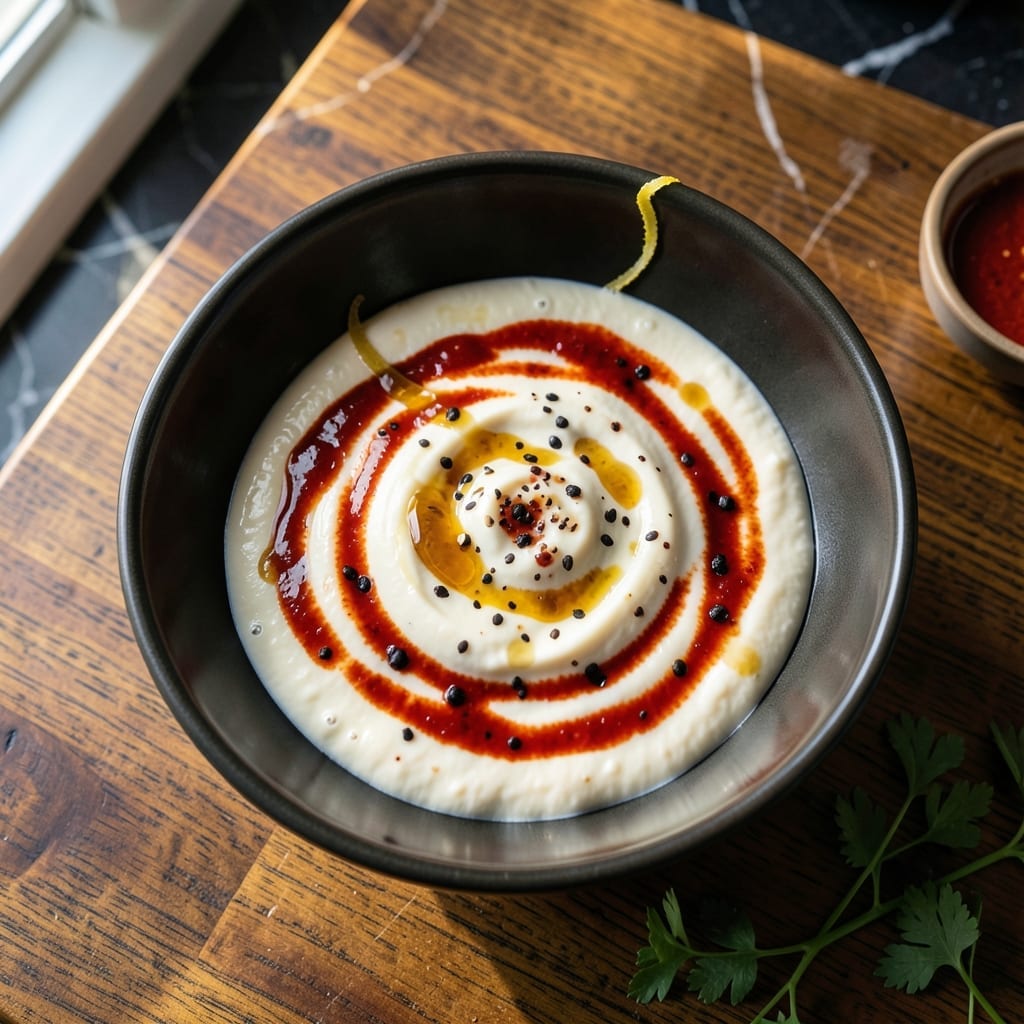
This Japanese-style spicy mayo transforms sushi from good to exceptional with its creamy heat. The balance of richness and spice makes it irresistibly versatile.
With just two core ingredients and endless customization, this quick condiment delivers restaurant-quality flavor. Perfect for sushi, sandwiches, or as a dip.
Ingredients for Spicy Mayo Recipe for Sushi
Eight ingredients create this luxurious condiment with restaurant-quality depth and heat.
| Ingredient | Amount | Notes |
|---|---|---|
| Mayonnaise 🥄 | ½ cup | Full-fat for creaminess |
| Sriracha Sauce 🌶️ | 2 tbsp | Adjust for heat preference |
| Rice Vinegar 🍚 | 1 tsp | Balances richness and spice |
| Sesame Oil 🫒 | ½ tsp | Toasted for depth |
| Soy Sauce 🥢 | ½ tsp | Low-sodium preferred |
| Honey 🍯 | 1 tsp | Optional for touch of sweetness |
| Garlic Powder 🧄 | ¼ tsp | Enhances umami depth |
| Ground Ginger 🌿 | ¼ tsp | Adds subtle warmth |
[recipe_ingredient_scaler]
The mayonnaise is non-negotiable here—Kewpie or Hellmann’s deliver the creamy base this sauce demands. Kewpie (found at Asian markets or Amazon) has that signature Japanese richness, but standard full-fat mayo works fine. Sriracha is the classic choice, but any hot sauce with garlic notes will do. Look for Huy Fong brand for consistent quality and heat level.
No Sriracha? Gochujang thinned with water or sambal oelek at half the amount (it’s spicier) work well. For a milder version, mix in a dash of paprika. The rice vinegar can be swapped for apple cider vinegar in a pinch, though the flavor profile shifts slightly. Skip the honey for vegan versions—agave or maple syrup works just as well.
This keeps beautifully in the fridge for about 1 week. The flavors meld and deepen over 24 hours, so make it ahead if possible. Store in an airtight container with plastic wrap pressed directly on the surface to prevent separation.
Why You’ll Love This Recipe
- Mix in Minutes: I just stir mayo, Sriracha, and a splash of rice vinegar—no cooking, no fuss.
- Umami Kick: The soy sauce and sesame oil add that deep, savory punch I crave in every sushi bite.
- Sushi Night Staple: Honestly, it’s my go-to for rolls, nigiri, or even as a quick dip for leftover rice.
- Stretches Far: A small batch lasts me all week, and the ingredients cost pennies compared to store-bought.
Step-by-Step Instructions for Spicy Mayo for Sushi
This straightforward method ensures a perfectly balanced, creamy sauce with just the right amount of heat.
Step 1: Combine the Base Ingredients
In a medium bowl, add the 0.5 cup Mayonnaise and 2 tbsp Sriracha Sauce. Whisk the two together until fully combined and smooth. The mayonnaise provides the creamy foundation, while the sriracha introduces the signature spicy kick.
I start with these two as the base because they form the core flavor profile of the sauce. The full-fat mayonnaise ensures a rich, velvety texture that clings beautifully to sushi rolls or sashimi.
Step 2: Incorporate the Acidic and Aromatic Elements
Add the 1 tsp Rice Vinegar, 0.5 tsp Sesame Oil, and 0.5 tsp Soy Sauce to the bowl. Stir well to distribute these liquid ingredients evenly throughout the mixture.
The rice vinegar cuts through the richness of the mayonnaise and sriracha, balancing the heat with a subtle tang. The sesame oil adds a nutty depth, while the soy sauce enhances the umami, making the sauce more complex and satisfying.
Step 3: Sweeten and Season for Depth
Next, stir in the 1 tsp Honey, 0.25 tsp Garlic Powder, and 0.25 tsp Ground Ginger. Mix thoroughly to incorporate all the ingredients, ensuring the spices and sweetener are evenly dispersed.
The honey adds a touch of sweetness that rounds out the heat and acidity, creating a harmonious balance. The garlic powder and ground ginger provide subtle warmth and depth, elevating the sauce from simple spicy mayo to something more sophisticated and layered.
Step 4: Rest and Adjust to Taste
Allow the sauce to rest for 10 minutes at room temperature. This resting period lets the flavors meld together, allowing the spices and seasonings to develop fully.
After resting, taste and adjust the seasoning if necessary. If you prefer a milder heat, you can add a bit more mayonnaise. For extra tang, a splash more rice vinegar does the trick. This step ensures the sauce is perfectly tailored to your taste preferences.
Pro Tips For Making Spicy Mayo Recipe For Sushi
- Whisk, Don’t Stir: I learned this the hard way—stirring just pushes the Sriracha to the sides. Whisk vigorously for 30 seconds to fully emulsify the mayo and hot sauce, so every bite has consistent heat and creaminess.
- Warm the Mayo First: Sounds weird, but it works: take the mayo out of the fridge 10 minutes before mixing. Cold mayo seizes up when you add soy sauce or vinegar, making the sauce clumpy instead of smooth.
- Skip the Soy Overload: Soy sauce can dominate fast. Start with just ½ teaspoon, taste, then add more if needed—it’s easier to fix bland than salty.
- Use Fresh Lime Instead: I was skeptical until I tried it—swap rice vinegar for fresh lime juice for a brighter, zingier kick that cuts through the richness of the mayo.
Common Mistakes When Making Great spicy mayo recipe for sushi
Over-Mixing the Sauce
Whisking too vigorously can cause your mayo to break and separate, leaving you with a greasy mess instead of a smooth, creamy sauce. Gently fold the ingredients together until just combined. I learned this the hard way after my first attempt turned into a runny disaster.
Skipping the Rest
Rushing straight to tasting means missing out on the full flavor development. Let your sauce rest for at least 10 minutes so the spices and seasonings can meld together properly. The difference is noticeable, trust me.
Using Low-Fat Mayo
Low-fat mayonnaise won’t give you that luxurious texture this sauce needs. Stick with full-fat mayo like Kewpie or Hellmann’s for the best results. The richness is what makes this sauce so addictive.
Overdoing the Sriracha
Adding too much hot sauce upfront can overwhelm the other flavors. Start with 2 tbsp Sriracha, then adjust to taste. You can always add more heat, but you can’t take it out once it’s in there.
Ignoring the Umami
Skipping the soy sauce or sesame oil means missing out on the depth that makes this sauce special. These ingredients add layers of flavor that balance the heat and creaminess perfectly.
Storing Improperly
Leaving your sauce exposed to air in the fridge can cause it to separate or absorb other flavors. Always store it in an airtight container with plastic wrap pressed directly on the surface. 💡
Nutrition Facts
Frequently Asked Questions
Can I use a different hot sauce?
Gochujang or sambal oelek work well. Use 1 tbsp gochujang thinned with water or 1 tbsp sambal oelek for a spicier kick.
How long does homemade spicy mayo last?
It stays fresh for about 1 week in the fridge. Store in an airtight container with plastic wrap pressed on the surface to prevent separation.
What can I use instead of honey?
For vegan versions, try agave or maple syrup. Both add sweetness without altering the texture.
Why does my sauce taste flat?
You might have skipped the soy sauce or sesame oil. These add umami depth that balances the heat and creaminess.

Trained in classic French technique but raised on slow-cooked ribs and spicy rubs, she blends culinary skill with smoke and soul.
- Recipe for Boneless Pork Chops in Cast Iron Skillet: Sear and Baste to Juicy Perfection - October 3, 2026
- Recipe for Boneless Cross Rib Roast: Slow-Roasted Beef with Herb Crust - October 3, 2026
- Hamburgers in Sauce Recipe Crock Pot: Slow-Cooked Savory Delight - October 3, 2026