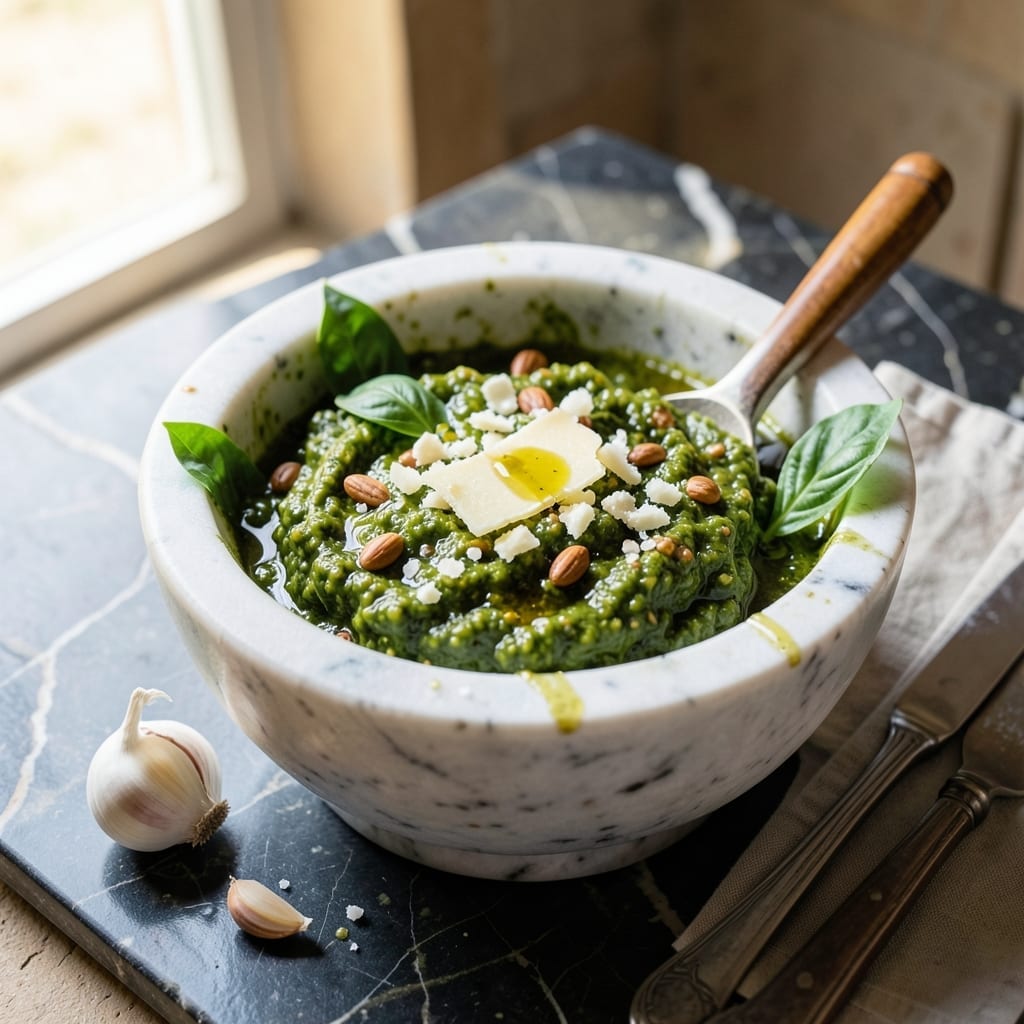
This pesto delivers basil-forward brightness with the signature pine nut crunch that defines authentic versions. The balance of fresh herbs, nuts, and cheese creates a versatile sauce that elevates any dish.
Traditional preparation methods ensure a smooth, vibrant paste. With simple ingredients and precise blending, this recipe captures the essence of classic Italian pesto perfectly.
Ingredients for Stanley Tucci Pesto
Nine premium ingredients deliver authentic Italian pesto with vibrant basil and nutty richness.
| Ingredient | Amount | Notes |
|---|---|---|
| Fresh Basil Leaves 🌿 | 2 cups | Packed, stems removed, vibrant green |
| Pine Nuts 🥜 | ½ cup | Toasted until golden and fragrant |
| Parmigiano-Reggiano Cheese 🧀 | ¾ cup | Freshly grated from wedge |
| Garlic Cloves 🧄 | 3 cloves | Peeled, roughly chopped |
| Extra-Virgin Olive Oil 🫒 | ¾ cup | High-quality, fruity, cold-pressed |
| Coarse Sea Salt 🧂 | ½ tsp | Diamond Crystal preferred |
| Freshly Ground Black Pepper 🌶️ | ¼ tsp | Coarsely ground for texture |
| Pecorino Romano Cheese 🧀 | ¼ cup | Freshly grated, optional for depth |
| Lemon Juice 🍋 | 1 tbsp | Freshly squeezed for brightness |
[recipe_ingredient_scaler]
The basil must be impeccably fresh—farmers market quality with deep green, unblemished leaves (avoid the pre-packaged stuff, which wilts too quickly). For pine nuts, Trader Joe’s offers consistent quality at a fair price, though Italian specialty stores often carry superior varieties. The Parmigiano-Reggiano must be DOP-certified; Whole Foods typically stocks authentic wedges. Grate it fresh—pre-shredded loses its texture and flavor.
Short on pine nuts? Toasted walnuts or raw cashews substitute well (though the flavor profile shifts slightly). For a nut-free version, sunflower seeds work surprisingly well. No Parmigiano? Pecorino Romano at a one-to-one ratio adds a saltier punch. The olive oil should be cold-pressed and assertive—avoid anything labeled ‘light’ or ‘pure.’ If your basil is slightly wilted, a quick ice bath revives it.
Pesto oxidizes quickly. Press plastic wrap directly onto the surface before sealing to prevent browning. Stores in the fridge for 5 days or freezes in ice cube trays for 6 months. For best results, use within 24 hours—the flavors are most vibrant fresh.
Why You’ll Love This Recipe
- 5-Minute Magic: I toss basil, pine nuts, garlic, and Parmigiano into the food processor and it’s done before the pasta boils.
- Real Italian Flavor: The sharp Parmigiano and grassy basil hit every note—no shortcuts, just Stanley’s spot-on ratio.
- Freezer Friend: I double the batch, freeze half in ice-cube trays, and drop a cube into soups or sauces anytime.
- Pantry Lifeline: Pine nuts and olive oil are the only splurges; everything else is already in my fridge on a Tuesday.
Step-by-Step Instructions for Basil Pesto with Pine Nuts
Master the technique behind this vibrant sauce with precision and restraint.
Step 1: Prepare the Pine Nuts and Garlic
Begin by toasting the 0.5 cup Pine Nuts in a dry skillet over medium-low heat for 3-4 minutes, stirring frequently. The nuts should turn a light golden brown and emit a fragrant, buttery aroma. Remove immediately to a plate to prevent over-toasting.
While the pine nuts cool, peel and roughly chop the 3 cloves Garlic Cloves. The chop doesn’t need to be fine—just enough to break them into smaller pieces. This helps the garlic incorporate evenly without overpowering the basil. Avoid using a garlic press, as it can make the flavor too sharp.
Step 2: Blend the Base Ingredients
In a food processor, combine the toasted Pine Nuts and chopped Garlic Cloves. Pulse 8-10 times until the mixture resembles coarse crumbs. The texture should still have some bite—this isn’t a paste yet.
Add the 2 cups Fresh Basil Leaves to the processor. Pulse in 1-second bursts, about 10-12 times, until the basil is finely chopped but not puréed. You want to see flecks of green, not a smooth liquid. Scrape down the sides as needed to ensure even blending.
Step 3: Emulsify with Cheese and Olive Oil
With the processor running, slowly drizzle in the 0.75 cup Extra-Virgin Olive Oil through the feed tube. This gradual addition is critical for creating a stable emulsion. Stop once to scrape the sides, then continue until the mixture is thick and creamy.
Add the 0.75 cup Parmigiano-Reggiano Cheese, 0.25 cup Pecorino Romano Cheese, 0.5 tsp Coarse Sea Salt, and 0.25 tsp Freshly Ground Black Pepper. Pulse 5-6 times just until incorporated. The cheese should be evenly distributed but still slightly visible in the mix.
Step 4: Finish and Adjust
Transfer the pesto to a bowl and stir in the 1 tbsp Lemon Juice. This final addition brightens the flavors and balances the richness of the oil and cheese. Taste and adjust the seasoning if needed, though the saltiness should already be well-balanced from the cheeses.
The finished pesto should have a thick, spoonable consistency with visible texture from the basil and pine nuts. If it’s too thick, stir in a teaspoon of water, but avoid thinning it too much—this version is meant to cling to pasta or bread.
Pro Tips For Making Stanley Tucci Pesto
- Pulse, Don’t Blend: Use short bursts in the food processor—about 1-2 seconds each—so the basil gets chopped, not puréed. I learned this the hard way after ending up with a sad, dark green paste instead of vibrant, textured pesto.
- Toast the Pine Nuts: Spread them in a dry pan over medium-low heat for 3-4 minutes until golden and fragrant. Sounds weird, but it works: this brings out their buttery depth, which balances the garlic and cheese beautifully.
- Skip the Pre-Grated Cheese: Grate the Parmigiano-Reggiano fresh—pre-shredded stuff has anti-caking agents that make the pesto grainy. My grandmother swore by this, and she was right: it melts into the sauce instead of sitting like little sand particles.
- Use Room-Temp Basil: Take the basil out of the fridge 20-30 minutes before starting. Cold leaves can turn bitter and release too much water, diluting the flavor—I was skeptical until I tried it, but the difference is noticeable.
Health Benefits of These Flavors
Rich in Antioxidants
Fresh basil is loaded with eugenol, a compound with powerful antioxidant properties that helps combat oxidative stress in your body. Just 2 cups of fresh basil provides a significant dose of these protective plant compounds. 💪
Heart-Healthy Fats
The extra-virgin olive oil in this recipe is rich in monounsaturated fats, which support cardiovascular health. These healthy fats can help lower bad cholesterol levels while maintaining good cholesterol. I always use high-quality cold-pressed oil for maximum benefit.
Bone Strength Boost
Parmesan and Pecorino Romano are excellent sources of calcium and phosphorus. A single serving of this pesto contributes about 20% of your daily calcium needs, making it a tasty way to support bone health.
Vitamin K Powerhouse
Basil is packed with vitamin K, essential for blood clotting and bone metabolism. One batch provides over 50% of your daily vitamin K requirements, which is particularly important for maintaining strong bones as we age. 🌱
Anti-Inflammatory Properties
Pine nuts contain pinolenic acid, a rare fatty acid that helps reduce inflammation in the body. Combined with the olive oil’s anti-inflammatory benefits, this pesto can help support your body’s natural healing processes.
Digestive Health
The garlic in this recipe contains allicin, which supports gut health and may help boost your immune system. I’ve found that fresh garlic adds more than just flavor—it brings real health benefits to every bite.
Nutrition Facts
Frequently Asked Questions
What’s the best way to store fresh pesto?
Press plastic wrap directly on the surface to prevent browning. It keeps in the fridge for 5 days or freezes in ice cube trays for up to 6 months.
Can I use a different nut besides pine nuts?
Yes! Walnuts or cashews work well, though the flavor will differ slightly. For a nut-free option, try sunflower seeds for a similar texture.
Why does my pesto turn bitter?
Bitterness often comes from over-processing the basil or using low-quality olive oil. Pulse in short bursts and use cold-pressed oil for best results.
Is it okay to use pre-shredded cheese?
Avoid it—pre-shredded cheese contains anti-caking agents that affect texture. Always grate Parmigiano-Reggiano fresh for the best flavor and consistency.

Trained in classic French technique but raised on slow-cooked ribs and spicy rubs, she blends culinary skill with smoke and soul.
- Meat Loaf Recipe With Beef And Pork: Homestyle Blend With Rich Gravy - October 3, 2026
- Hamburger Patty Recipe No Egg: Juicy Bind With Breadcrumbs and Milk - October 3, 2026
- Recipe for Oven Baked Halibut: Buttery White Fish with Zesty Lemon Topping - October 3, 2026