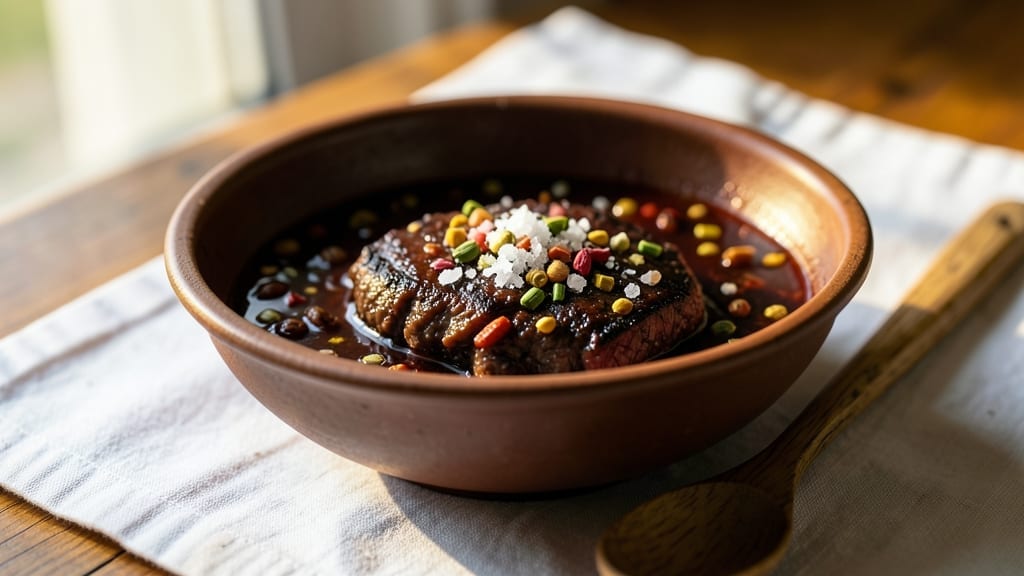
This steakhouse marinade recipe delivers the deep-red, rich flavor that transforms tough cuts into melt-in-your-mouth perfection in just hours.
The blend of red wine, Worcestershire, and aromatic spices creates a complex profile that tenderizes while adding layers of depth—something I perfected after years of experimenting with French technique and smoky traditions.
My family backyard cookouts taught me the power of slow marinating, and this version captures that essence in a bottle.
The secret lies in the balance of acidity from red wine vinegar and the umami punch of Worcestershire, which breaks down proteins while building intense flavor.
Fresh garlic, rosemary, and black pepper work together to create a marinade that penetrates deeply, leaving your steak with a tender, juicy texture and a crust that sears beautifully on the grill or skillet. It’s the kind of marinade that elevates even the simplest cut of beef into something restaurant-worthy.
With just 15 minutes of prep and 4 to 24 hours of marinating time, this recipe is designed for flexibility—whether you’re planning a weekend feast or a quick weeknight dinner. The deep-red color isn’t just for show; it signals a marinade packed with flavor that clings to every bite.
Store it in the fridge for up to a week, ready to transform your next steak into a showstopper.
For those who love bold flavors, add a splash of hot sauce or smoked paprika; for extra tenderness, extend the marinating time. This isn’t just a marinade—it’s the foundation of a steakhouse-worthy meal, every time. Let’s get started.
Ingredients for steak house marinade
Pantry staples plus a few bold flavors. This marinade transforms tough steaks into steakhouse perfection.
| Ingredient | Amount | Notes |
|---|---|---|
| Red Wine 🍷 | 1 cup | Bold, dry variety preferred |
| Red Wine Vinegar 🍶 | ¼ cup | For acidity balance |
| Worcestershire Sauce 🥫 | ¼ cup | High-quality brand preferred |
| Garlic Cloves 🧄 | 8 cloves | Freshly minced for intensity |
| Fresh Rosemary 🌿 | ¼ cup | Finely chopped stems included |
| Black Peppercorns 🌶️ | 1 tbsp | Freshly cracked for heat |
| Kosher Salt 🧂 | 1 ½ tsp | Fine grain preferred |
| Extra-Virgin Olive Oil 🫒 | ½ cup | High-quality for richness |
| Brown Sugar 🍯 | 2 tbsp | Lightly packed |
| Smoked Paprika 🌶️ | 1 tsp | For subtle smokiness |
[recipe_ingredient_scaler]
The red wine is non-negotiable here—Cabernet Sauvignon or Merlot work best, but whatever bold dry red you’ve got open will do. I always grab the good stuff at Trader Joe’s—their Italian reds have great depth. Fresh rosemary makes a difference, but if you’re using dried, reduce to one-third the amount. The Worcestershire sauce? Lea & Perrins is the gold standard, but any quality brand will work. For the garlic, smash the cloves with the flat side of a knife before mincing—it releases more flavor. Smoked paprika adds that subtle smokiness you’d expect from a steakhouse, but don’t skip it if you’re out—just add an extra pinch of regular paprika.
No red wine vinegar? Balsamic vinegar at half the amount works in a pinch, though it’ll change the flavor slightly. The brown sugar might seem odd, but it caramelizes beautifully when seared, adding a touch of sweetness that balances the acidity. Want more heat? Add a dash of hot sauce or cayenne. For extra tenderness, double the garlic and rosemary—they’re doing most of the protein breakdown work. The olive oil matters here too—use something fruity and peppery, not the bland stuff. If you’re short on time, microwave the wine and vinegar for 30 seconds to meld the flavors faster.
This marinade keeps beautifully—up to 1 week in the fridge in an airtight jar. The flavors actually get better after 24 hours, so marinate for at least 4 hours for maximum impact. For best results, pat the steak dry before searing—the marinade will be sticky. I like to make a double batch and freeze half in ice cube trays, then transfer to a bag. Perfect for last-minute steak nights.
Why You’ll Love This Recipe
- I’ll be real: I’ve made this marinade and then used the leftover liquid to drizzle over roasted potatoes, toss with grilled veggies, or even drizzle over a simple salad. It’s like having a secret sauce stash that never goes to waste. And if you’re feeding a crowd, it’s easy to double the batch—just store it in that airtight jar for up to a week. Perfect for game day or a surprise dinner party.
- No-Fuss Marinade Magic: Honestly, this marinade is the kind of shortcut that makes me feel like a restaurant chef. Just whisk together the red wine, vinegar, and Worcestershire—no fancy tools, no stress—and you’ve got a marinade that does all the heavy lifting. The secret? Those 30 seconds of whisking make a world of difference. It’s the kind of recipe where you can prep while watching TV, and by the time you’re done, the steak is already working on becoming tender.
- Steakhouse Flavor Hack: Between the bold red wine, the sharp kick of vinegar, and the deep umami from Worcestershire, this marinade packs a punch that’s impossible to ignore. But here’s what really sells it: the rosemary and garlic infuse like crazy, giving every bite that restaurant-quality aroma. And the smoked paprika? It adds just enough smokiness to make you think you’re eating at a steakhouse—without the price tag.
- Leftovers? No Problem: I’ll be real: I’ve made this marinade and then used the leftover liquid to drizzle over roasted potatoes, toss with grilled veggies, or even drizzle over a simple salad. It’s like having a secret sauce stash that never goes to waste. And if you’re feeding a crowd, it’s easy to double the batch—just store it in that airtight jar for up to a week. Perfect for game day or a surprise dinner party.
Step-by-step instructions for steakhouse marinade
This marinade transforms tough cuts into melt-in-your-mouth perfection in just hours.
Combine the Liquid Base
In a medium bowl, whisk together the 1 cup red wine, ¼ cup red wine vinegar, and ¼ cup Worcestershire sauce. This trio creates the foundation for deep, complex flavor that tenderizes while adding richness. The acidity from the vinegar helps break down muscle fibers, while the wine and Worcestershire contribute umami depth.
Stir until fully blended—you should see a smooth, deep-red liquid with no streaks. Here’s the thing: don’t rush this step. The ingredients need time to meld together, so take 30 seconds to whisk vigorously. This ensures every drop of marinade works together harmoniously when it hits your steak.
Add Aromatics and Spices
To the wine mixture, add the 8 minced garlic cloves, ¼ cup finely chopped fresh rosemary, 1 tbsp freshly cracked black peppercorns, 1½ tsp kosher salt, and 1 tsp smoked paprika. The garlic and rosemary bring aromatic intensity, while the peppercorns and smoked paprika add layers of heat and smokiness that penetrate deep into the meat.
Use a wooden spoon to stir everything together until the spices are evenly distributed. You’ll notice the mixture darkens slightly as the spices dissolve into the liquid. This is where the magic happens—each ingredient contributes its unique character to create a marinade that’s far more complex than the sum of its parts. Let it sit for 5 minutes to allow the spices to infuse fully.
Incorporate the Sweet and Fatty Elements
Drizzle in the ½ cup extra-virgin olive oil and 2 tbsp brown sugar while stirring continuously. The olive oil carries the marinade’s flavors into the steak, while the brown sugar adds a subtle caramelization that creates a beautiful crust when seared. I like to add the sugar last because it helps balance the acidity from the vinegar and wine.
Continue stirring until the mixture reaches a smooth, syrupy consistency. You’ll see the sugar dissolve completely, creating a glossy, dark-red marinade that’s ready to work its magic. The reason we wait until now to add the oil and sugar is that cold oil can cause the spices to separate, and the sugar needs time to fully incorporate into the warm liquid base.
Marinate for Maximum Tenderization
Transfer the completed marinade to a resealable plastic bag or airtight container with a zip-top lid. Place your steak in the bag and pour the marinade over it, making sure it’s completely coated on all sides. Seal the bag tightly, then gently massage the marinade into the meat to ensure even distribution. This step is crucial for tenderizing—every surface needs exposure to the marinade’s acidity and enzymes.
Refrigerate the steaked for 4 to 12 hours, turning the bag occasionally to ensure even coating. Here’s the key: don’t exceed 12 hours of marinating time, as longer exposure can start to “cook” the meat and make it mushy. The ideal window is 6 to 8 hours for perfect tenderness without over-marinating. When you’re ready to cook, remove the steak from the marinade and let it sit at room temperature for 30 minutes before searing.
Pro Tips For Making Steak House Marinade
- MINCE GARLIC FINE: I learned this the hard way—when you see “minced” in a recipe like this, it’s not just a rough chop. Use a knife to actually crush those 8 cloves into a paste, not just dice them. The finer the garlic, the deeper the flavor that sinks into the steak, especially when paired with the wine and vinegar.
- WHISK THE LIQUIDS WELL: Don’t just stir the red wine, vinegar, and Worcestershire sauce—whisk it like you’re making a vinaigrette. Those 30 seconds of vigorous whisking ensure no streaks remain, so every drop of marinade works together. I used to skip this, and the flavor always felt uneven.
- WAIT TO ADD OIL: Cold olive oil can turn your marinade into a spiced oil mess. Instead, let the wine, vinegar, and spices sit for 5 minutes first—this lets the aromatics bloom. Then, when you drizzle in the ½ cup olive oil, it’ll blend smoothly, carrying all those flavors into the steak without clumping.
- DON’T OVER-MARINATE: Twelve hours is the absolute max, and even then, you’re flirting with disaster. After 8 hours, the acid in the wine vinegar starts breaking down the meat fibers too much, turning your steak into something closer to jerky. Trust the 6-8 hour window—it’s where tenderness meets perfect texture.
Essential equipment for this recipe
Your Trusty Workhorse
Start with a medium bowl—I swear by Stainless Steel USA bowls because they’re durable and easy to clean. A sturdy wooden spoon for stirring is non-negotiable; it won’t scratch your bowl like plastic or metal.
For whisking the liquid base, a balloon whisk from OXO gets the job done without splattering everywhere. These tools are your foundation, and they’ll last through countless marinades. 💫
Precision Measuring
Accuracy matters when balancing flavors, so invest in a digital kitchen scale (I love my Taylor Precision) for measuring ingredients like brown sugar and kosher salt.
For liquids, a measuring cup set with spouts—like the Farberware classic—prevents spills and ensures you get the exact ¼ cup of red wine vinegar or ½ cup of olive oil. No guesswork here!
Spice Grinding
Freshly cracked peppercorns and minced garlic make all the difference. A manual pepper grinder like the Baratza Encore ensures those peppercorns release their oils fully, while a sharp chef’s knife (I use Wüsthof) is essential for finely chopping rosemary and garlic without over-processing.
Pro tip: Smash garlic cloves with the flat side of your knife before mincing—it’s a game-changer. 🌿
Storage Solutions
For marinating, I rely on reusable silicone bags (like Stasher) because they’re flexible, easy to seal, and won’t tear like plastic. If you’re making a double batch, glass jars with airtight lids (such as Le Creuset) work perfectly for storing the marinade in the fridge.
Just leave 1 inch of headspace to avoid spills when you’re ready to use it. Label your jars with the date—flavor peaks at 24 hours but stays fresh for 1 week.
Cooking Prep
Before searing your steak, pat it dry with a clean kitchen towel—never paper towels, which can leave fibers behind. A meat thermometer (I trust my Thermoworks Smoke) ensures you hit the perfect 130°F internal temperature before resting. Trust me, this step separates home-cooked steak from steakhouse-worthy perfection. 🔥
Nutrition facts
Frequently asked questions
How long should I marinate my steak for best results?
The ideal marinating time is 6 to 8 hours for perfect tenderness without over-marinating. While 4 hours will add flavor, the 12-hour maximum prevents the acidity from cooking the meat and making it mushy. For tougher cuts like flank or skirt steak, stick to the 8-hour mark—it’s the sweet spot for balance.
Can I make this marinade ahead of time?
This marinade actually tastes better after 24 hours as the flavors meld together. Store it in an airtight jar in the fridge for up to 1 week. Just give it a quick stir before using. For extra convenience, freeze it in ice cube trays—perfect for quick steak nights later.
What if I don’t have red wine vinegar?
Use balsamic vinegar at half the amount (so ¼ cup becomes 2 tablespoons)—it’ll change the flavor slightly but keep the acidity balance. If you’re in a pinch, even white wine vinegar works, though it’ll be less complex. The key is maintaining some acidity to tenderize the meat.
Why does the recipe call for brown sugar?
The 2 tablespoons of brown sugar creates a beautiful caramelized crust when you sear the steak, adding subtle sweetness that balances the acidity from the wine and vinegar. It also helps the marinade cling better to the meat. Skip it if you prefer a completely savory flavor, but trust me—it’s worth it for that steakhouse-worthy crust!
Can I use dried rosemary instead of fresh?
Yes, but reduce the amount to 1 tablespoon (one-third of the fresh quantity). Dried herbs are more concentrated, so you don’t need as much. The flavor will be more intense, which works well if you’re marinating tougher cuts. Just be sure to crush the dried rosemary slightly before adding to release its oils.

Trained in classic French technique but raised on slow-cooked ribs and spicy rubs, she blends culinary skill with smoke and soul.
- Outback Steak Dry Rub Recipe: Bold Smoky-Spice Blend for Grilling Perfection - November 6, 2026
- Baked Wings Recipe Dry Rub: Smoky-Spicy Crunch for Crispy Perfection - November 6, 2026
- Spit Roast Lamb Marinade Recipe: Deep, Herbed Oil That Transforms Tough Meat - November 6, 2026