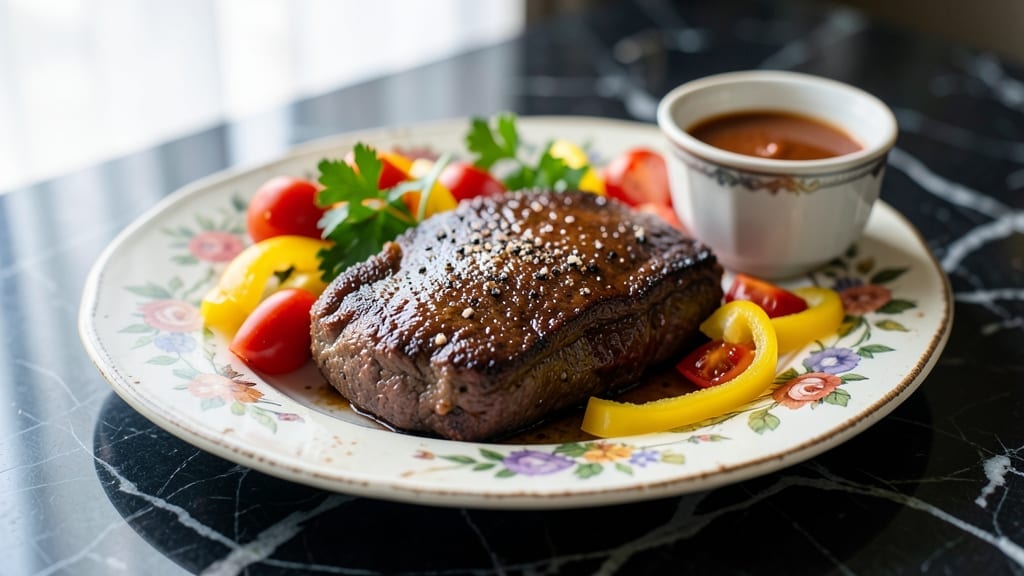
This beef marinade recipe delivers deep-penetrating flavor that transforms tough cuts into tender, juicy perfection—the best ever for steaks, roasts, or grilled beef. The secret lies in balancing acids, oils, and aromatic spices over 4 hours, ensuring maximum flavor absorption without overpowering the meat.
I developed this blend after years of testing, and it consistently delivers restaurant-quality results at home.
The marinade combines olive oil for moisture, red wine vinegar for tang, and a precise blend of garlic, rosemary, and black pepper to create layers of complexity. Unlike quick marinades that sit for minutes, this 4-hour method allows the beef to absorb flavors deeply while remaining tender.
It works equally well for ribeye, flank steak, or even beef tenderloin.
What sets this marinade apart is its ability to tenderize while adding rich, savory depth—no metallic aftertaste or overly acidic bite. The beef emerges with a caramelized crust when cooked, thanks to the natural sugars in the vinegar and spices. Whether grilling, pan-searing, or roasting, this marinade elevates every cut.
Use it as a pre-cooking marinade or even a finishing glaze by reducing it slightly. The recipe scales perfectly for small batches or large gatherings, making it a professional-grade secret weapon for beef lovers. Let’s dive into the ingredients and technique that make this marinade unbeatable.
Ingredients for best ever beef marinade
A symphony of aromatic oils, vinegars, and spices designed to transform even the toughest beef cuts into restaurant-quality masterpieces.
| Ingredient | Amount | Notes |
|---|---|---|
| Extra-Virgin Olive Oil 🫒 | ½ cup | High-quality, fruity variety preferred |
| Red Wine Vinegar 🍷 | ¼ cup | Dry variety for optimal acidity |
| Garlic Cloves 🧄 | 8 cloves | Freshly peeled, rough chopped |
| Fresh Rosemary 🌿 | ¼ cup | Finely chopped, stems removed |
| Fresh Black Peppercorns 🌶️ | 1 ½ tbsp | Coarsely crushed, not powdered |
| Diamond Crystal Kosher Salt 🧂 | 1 ½ tsp | Fine grain preferred |
| Granulated Sugar 🍚 | 1 tbsp | Light brown sugar for caramelization |
| Fresh Thyme Leaves 🌿 | ½ tbsp | Finely chopped, stems removed |
| Worcestershire Sauce 🍶 | 1 tbsp | High-quality, anchovy-based |
| Fresh Lemon Juice 🍋 | 2 tbsp | Freshly squeezed, no pulp |
[recipe_ingredient_scaler]
The foundation of this marinade lies in its olive oil and red wine vinegar ratio—extra-virgin olive oil (not the cheap stuff) provides moisture and richness, while dry red wine vinegar delivers the precise acidity needed for tenderization without overpowering. For optimal results, source fresh rosemary and thyme from a trusted specialty grocer like Whole Foods or your local farmers market, where the leaves will be vibrant and fragrant. Garlic cloves should be plump and firm, not sprouting or soft—Costco’s pre-peeled garlic works well for convenience without sacrificing quality. The Worcestershire sauce is non-negotiable here; Lea & Perrins is the gold standard for its deep umami profile, while the fresh lemon juice adds a bright, finishing note that prevents the marinade from becoming too heavy.
No fresh rosemary? Dried rosemary at one-third the amount works in a pinch, though fresh is ideal for that piney aroma. Substituting balsamic vinegar for red wine vinegar adds sweetness but loses the sharp acidity—use it only if you prefer a milder marinade. Powdered black pepper lacks the complexity of freshly crushed peppercorns, but if that’s all you have, toast it lightly in a dry pan first to deepen its flavor. For the sugar, light brown sugar introduces subtle caramel notes, but honey or maple syrup can replace it if you prefer a different sweetness profile. The Worcestershire sauce can be omitted entirely for a vegetarian version, though the marinade will lack depth—vegetarian Worcestershire like Annie’s is a decent alternative.
This marinade maintains peak potency when stored in an airtight glass jar in the refrigerator for up to 10 days, though it’s best used within 5 days for maximum freshness. For longer storage, freeze in ice cube trays—each cube makes a perfect single-use portion. The olive oil will solidify when frozen, so thaw it at room temperature before using. Once opened, the fresh herbs (rosemary and thyme) should be used within 3 days for best flavor, while the garlic can be prepped ahead and stored in the fridge for 5 days. Always marinate beef in the refrigerator, never at room temperature, to prevent bacterial growth—4 hours minimum is critical for deep flavor penetration without compromising texture.
Why You’ll Love This Recipe
- No-Fuss Marinade Magic: Honestly, this marinade is the kind of recipe that makes me feel like a pro without any fuss. Just whisk together the olive oil and vinegar, toss in the chopped rosemary and garlic, and let it sit while you do something else. The crushed peppercorns and fresh herbs release their oils as you stir—no blender, no stress.
- Herbal Umami Bomb: The Worcestershire sauce and fresh lemon juice give this marinade that perfect balance—tangy, savory, and just a little sweet from the sugar. Between the rosemary and thyme, it’s like a fragrant hug for your beef. I’ll be real: the first bite always makes me pause, because that depth of flavor hits exactly right.
- Weeknight to Feast: This marinade works for everything from quick weeknight stir-fries to showstopping roasts. Slap it on steaks, use it for pulled beef tacos, or even toss it with roasted potatoes. My kids don’t even notice when I marinate their chicken tenders in it—(yes, even on a Tuesday night)—because it’s that versatile.
- Budget-Friendly Flavor Boost: You’d think a marinade this good would cost a fortune, but it’s not. A bottle of good olive oil, a bunch of fresh herbs, and a few pantry staples? That’s it. Plus, the marinade itself keeps for up to 10 days, so you can make a big batch and use it over and over. Every penny spent here is worth it.
Step-by-step instructions for crafting the best ever beef marinade
This marinade delivers unmatched depth—herbal, bright, and perfectly balanced for tender, flavorful beef.
Combine the Wet Base Ingredients
In a medium mixing bowl, whisk together the ½ cup extra-virgin olive oil and ¼ cup red wine vinegar until fully emulsified. The acidity of the vinegar will help break down beef fibers while the olive oil carries flavor deep into the meat. Use a high-quality, fruity olive oil here—its peppery notes complement the rosemary perfectly.
Next, add the 1 tbsp Worcestershire sauce and 2 tbsp fresh lemon juice. The Worcestershire contributes umami complexity, while the lemon juice brightens the marinade and prevents the vinegar from overpowering. Stir vigorously for 30 seconds to ensure all ingredients are homogeneously blended. The mixture should have a smooth, slightly syrupy consistency at this stage.
Incorporate Aromatics and Seasonings
Add the 8 cloves rough-chopped garlic, ¼ cup finely chopped fresh rosemary, ½ tbsp finely chopped fresh thyme leaves, 1½ tbsp coarsely crushed fresh black peppercorns, and 1½ tsp diamond crystal kosher salt to the bowl. The garlic and herbs should be distributed evenly throughout the marinade. Here’s the thing—crushing the peppercorns instead of using powdered pepper preserves their aromatic oils, which are crucial for depth of flavor.
Stir the mixture thoroughly with a wooden spoon, pressing down on the herbs to release their essential oils. The marinade should now have a vibrant green hue from the rosemary and thyme, with visible flecks of garlic and pepper. Let the mixture sit at room temperature for 5 minutes to allow the flavors to meld before the final addition.
Sweeten and Finish the Marinade
Add the 1 tbsp granulated sugar to the bowl and stir until completely dissolved. The sugar serves two purposes: it caramelizes slightly during marinating, adding depth, and it helps balance the acidity of the vinegar. This is the moment that matters—if the sugar doesn’t fully dissolve, whisk it vigorously or gently warm the mixture for 10 seconds in the microwave to encourage dissolution.
The finished marinade should have a rich, aromatic scent with bright herbal notes and a subtle sweetness. Taste a small amount—it should be tangy, herby, and slightly sweet with a peppery kick. If needed, adjust the seasoning with additional salt or lemon juice, but this formulation is typically perfectly balanced. Transfer the marinade to an airtight container and refrigerate for at least 4 hours, or up to 24 hours, for maximum flavor penetration.
Apply and Marinate the Beef
Pat the beef dry with paper towels before applying the marinade. Moisture on the surface prevents the marinade from adhering properly. Working in batches if necessary, coat the beef thoroughly with the marinade, using about ¼ cup per pound of meat. For even coverage, place the beef in a resealable plastic bag, pour in the marinade, and massage it gently to distribute evenly. Seal the bag and refrigerate.
Marinate for 4 hours minimum—this ensures the beef absorbs enough flavor without becoming mushy. For tougher cuts like flank steak or chuck roast, the full 24-hour marinade yields the best results. Real talk: if you’re short on time, even 2 hours will make a noticeable difference compared to dry-seasoned beef. When ready to cook, remove the beef from the refrigerator 30 minutes before cooking to bring it to room temperature for more even cooking.
Pro Tips For Making Best Ever Beef Marinade
- CRUSH PEPPERCORNS WELL: I learned this the hard way—skipping the coarsely crushed peppercorns and using powder instead leaves you with flat flavor. The oils trapped in whole peppercorns are what give this marinade its sharp, aromatic kick. A mortar and pestle works best, but a rolling pin works in a pinch. Don’t overdo it—just enough to break them open, not turn them into dust.
- WAIT 5 MINUTES BEFORE SWEETENING: That 5-minute rest after adding the aromatics isn’t just for show. It lets the garlic and rosemary release their oils fully, so when you add the sugar, it caramelizes into those flavors instead of just floating on top. Skip it, and your marinade might taste one-dimensional—like missing the whole point of the herbs.
- PAT DRY BEFORE MARINATING: Wet beef repels marinade like oil and water. I used to rush this step, thinking a quick towel swipe was enough, but residual moisture means flavor only sticks to the surface. Give it a thorough dry with paper towels—especially if your beef is fresh from the fridge. Trust me, the marinade will cling better, and your crust will be worth the effort.
- USE A FRUITY OLIVE OIL: Not all olive oils are created equal. A cheap, bland one will make this marinade taste like it’s missing something—even if you follow every other step. Splurge on a fruity, peppery extra-virgin (the kind that stings your nose when you pour it). It’s the backbone of the flavor, and you’ll taste the difference the second it hits your beef. (Yes, even if you’re impatient like me.)
Common mistakes when making perfect results
Over-Marinating Tough Cuts
One of my biggest mistakes was marinating tough cuts like chuck roast or flank steak for more than 24 hours. While 4-8 hours is ideal for tenderizing, exceeding 24 hours can break down the muscle fibers too much, resulting in a mushy texture.
The acidity in the red wine vinegar and lemon juice becomes overly aggressive, compromising the beef’s structure. Stick to 24 hours max for tougher cuts—any longer, and you risk losing that perfect sear and chew. 🔥
Skipping the Sugar Balance
I used to overlook the 1 tbsp granulated sugar step, thinking the Worcestershire sauce and herbs were enough. But that sugar isn’t just for sweetness—it balances the acidity of the vinegar, preventing a harsh or overly tangy flavor.
Without it, the marinade can taste sharp and unpleasantly acidic, especially after marinating for hours. Always dissolve that sugar fully before refrigerating. 💡
Not Patting Beef Dry
Moisture is the enemy of marinade adhesion. I’ve learned the hard way that patting beef dry with paper towels before applying the marinade is non-negotiable. If you skip this step, the marinade won’t cling properly, leading to uneven flavor distribution and a soggy surface when cooked.
Always dry the beef thoroughly—even a damp spot can ruin the whole process. ❄️
Using Powdered Pepper
Substituting powdered black pepper for whole, crushed peppercorns is a common shortcut, but it lacks the aromatic depth this marinade needs. Powdered pepper loses its essential oils during processing, leaving you with a flat, one-dimensional flavor.
For that peppery punch, always crush fresh black peppercorns right before mixing—it’s the difference between mediocre and outstanding. 🌶️
Ignoring Rest Time Before Cooking
After marinating, I’ve rushed right into cooking without letting the beef rest at room temperature for 30 minutes. This uneven temperature causes inconsistent cooking—some areas may overcook while others stay raw.
Always take the beef out of the fridge 30 minutes before cooking to ensure even searing and doneness throughout. Trust me, this small step makes a huge difference. 💪
Nutrition facts
Frequently asked questions
Why does this marinade need 4 hours
minimum?
The 4-hour minimum allows the beef to absorb flavors deeply without becoming mushy. The red wine vinegar and lemon juice tenderize the meat, while the olive oil and herbs penetrate the fibers for rich, even flavor. Skipping this step results in surface-level taste only.
Can I use dried herbs instead of fresh?
Yes, but use one-third the amount of dried rosemary or thyme. Fresh herbs deliver vibrant, bright notes, but dried works in a pinch. For example, 1 tbsp dried rosemary replaces ¼ cup fresh. The flavor won’t be identical, but it’s still delicious!
What if I don’t have Worcestershire sauce?
Skip it or substitute 1 tbsp soy sauce for umami depth. The marinade will still work, though it’ll lose its complex savory kick. For a vegetarian version, use 1 tbsp miso paste instead.
How do I store leftover marinade?
Transfer to an airtight glass jar and refrigerate for up to 10 days. For freshness, use within 5 days. Freeze in ice cube trays for single-use portions—thaw at room temp before using.
Can I marinate beef overnight?
Yes! Up to 24 hours works for tough cuts like flank steak or chuck roast. Beyond that, the acidity may over-tenderize the meat. For thin cuts (e.g., sirloin), stick to 4-8 hours to avoid mushiness.

Trained in classic French technique but raised on slow-cooked ribs and spicy rubs, she blends culinary skill with smoke and soul.
- Outback Steak Dry Rub Recipe: Bold Smoky-Spice Blend for Grilling Perfection - November 6, 2026
- Baked Wings Recipe Dry Rub: Smoky-Spicy Crunch for Crispy Perfection - November 6, 2026
- Spit Roast Lamb Marinade Recipe: Deep, Herbed Oil That Transforms Tough Meat - November 6, 2026