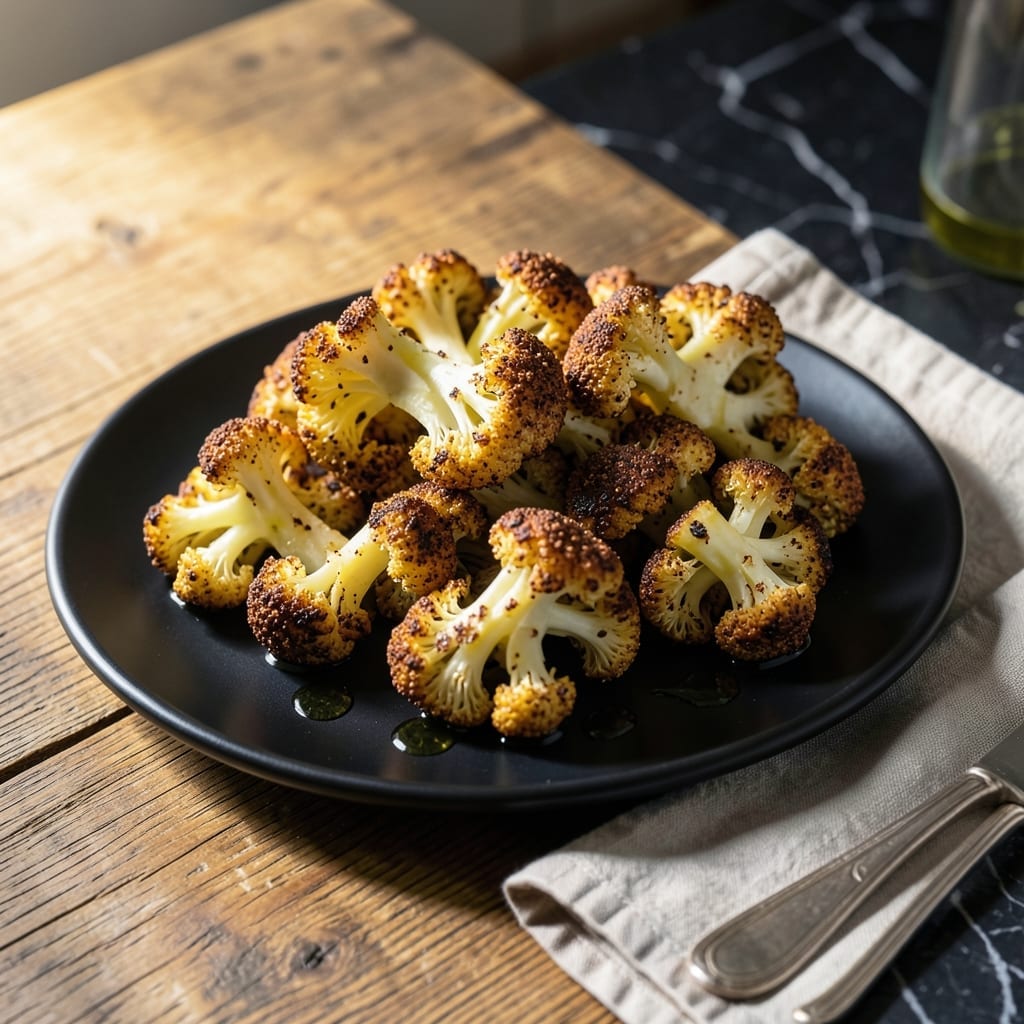
There’s nothing like the smoky depth of cauliflower kissed by live fire. This method transforms humble florets into charred, caramelized perfection with minimal effort.
Roasting on the grill brings out natural sweetness while adding that signature wood-fired flavor. The result is tender yet crisp at the edges, ideal for any meal.
Ingredients for Stonefire Grill Roasted Cauliflower
Humble florets meet fire and spice for deeply charred, caramelized perfection with minimal effort.
| Ingredient | Amount | Notes |
|---|---|---|
| Cauliflower 🥦 | 2 lb | Cut into even florets |
| Extra-Virgin Olive Oil 🫒 | 3 tbsp | Divided for brushing |
| Smoked Paprika 🌶️ | 1 ½ tsp | For smoky depth |
| Garlic Powder 🧄 | 1 tsp | Granulated preferred |
| Onion Powder 🧅 | 1 tsp | Balances smokiness |
| Ground Cumin 🌿 | ½ tsp | Earthy undertone |
| Sea Salt 🧂 | 1 tsp | Fine grain preferred |
| Freshly Ground Black Pepper 🌶️ | ½ tsp | Coarse grind ideal |
| Lemon Juice 🍋 | 2 tbsp | Freshly squeezed |
| Fresh Parsley 🌿 | ¼ cup | Chopped for garnish |
| Maple Syrup 🍁 | 1 tbsp | For caramelization |
| Apple Cider Vinegar 🍏 | 1 tsp | Balances sweetness |
[recipe_ingredient_scaler]
The cauliflower quality is paramount here. Select heads with tight, white florets—no soft spots or discoloration. Organic is ideal if available, as it tends to have better flavor and texture. For the spices, Penzeys or bulk bins at Whole Foods offer superior freshness. The smoked paprika delivers that signature fire-kissed taste—Spanish smoked paprika (pimentón) is optimal if you can source it.
No smoked paprika? Regular paprika plus a pinch of chipotle powder mimics the smokiness. Maple syrup can be swapped for agave or date syrup at a 1:1 ratio. Fresh parsley not on hand? Fresh cilantro or chives work beautifully. Apple cider vinegar can be replaced with white wine vinegar, though the flavor profile will shift slightly (worth the extra minute to find the right one).
Prep the cauliflower just before grilling to prevent browning. Leftovers keep 3-4 days in an airtight container in the fridge. For best results, reheat in a skillet or oven to restore crispness. The seasoning blend can be pre-mixed and stored in a jar for up to 3 months.
Why You’ll Love This Recipe
- One Pan Wonder: I toss everything on a sheet pan, pop it in the oven, and that’s it—no fancy techniques or extra dishes.
- Smoky & Savory: The smoked paprika and garlic powder turn plain cauliflower into something ridicuously good, with that crispy edge and tender center.
- Weeknight MVP: Honestly, it’s my go-to for busy evenings—pairs just as well with steak as it does a simple grain bowl.
- Budget Stretcher: A single head of cauliflower feeds my family for pennies, and leftovers taste even better the next day.
Step-by-Step Instructions for Stonefire Grill Roasted Cauliflower
Master these techniques to achieve perfectly charred florets with layered smoky, tangy, and sweet flavors.
Step 1: Prepare and Season the Cauliflower
Preheat your oven to 425°F. Cut the 2 lb cauliflower into even 1½-inch florets—this ensures uniform cooking. I prefer slightly larger florets for better charring and texture contrast.
In a large bowl, toss the florets with 2 tbsp extra-virgin olive oil, 1.5 tsp smoked paprika, 1 tsp garlic powder, 1 tsp onion powder, 0.5 tsp ground cumin, 1 tsp sea salt, and 0.5 tsp freshly ground black pepper. The spices should coat every surface evenly, with no dry spots.
Step 2: Achieve High-Temperature Roasting for Char
Arrange the seasoned florets in a single layer on a rimmed baking sheet, ensuring they don’t touch. Crowding causes steaming instead of roasting. Drizzle the remaining 1 tbsp extra-virgin olive oil evenly over the top.
Roast on the middle rack for 20-25 minutes, undisturbed, until the undersides develop a deep golden-brown char. The high heat is crucial—it caramelizes the natural sugars and creates those coveted crispy edges that define stonefire grill flavor.
Step 3: Glaze and Finish for Balanced Flavor
While the cauliflower roasts, whisk together 1 tbsp maple syrup, 2 tbsp lemon juice, and 1 tsp apple cider vinegar in a small bowl. This glaze balances the smokiness with brightness and subtle sweetness.
After the initial roast, carefully flip each floret and brush generously with the glaze. Return to the oven for 8-10 minutes until the tops are glossy and deeply caramelized, with some edges nearly blackened. Watch closely—the sugar in the glaze can burn quickly.
Step 4: Rest and Garnish for Maximum Impact
Remove the cauliflower from the oven and let it rest for 5 minutes on the baking sheet. This allows the glaze to set slightly and the flavors to meld. The florets should be tender inside with a crisp, sticky exterior.
Transfer to a serving platter and sprinkle with 0.25 cup chopped fresh parsley. The parsley adds a fresh, herbal contrast to the rich, smoky-sweet florets. Serve immediately while the charred edges are still crisp—they soften as they cool.
Pro Tips For Making Stonefire Grill Roasted Cauliflower
- Crank the Oven: Set it to 425°F—any lower and the cauliflower steams instead of roasting. I learned this the hard way after pulling out pale, soggy florets one too many times.
- Cut Evenly: Slice the cauliflower into uniform 1.5-inch florets so they cook at the same rate. Sounds tedious, but it’s the only way to avoid burnt bits and undercooked centers.
- Don’t Skimp on Oil: Toss the florets in about 3 tablespoons of olive oil—just enough to coat but not drown. Skimping leaves you with dry, bland bites that no amount of smoked paprika can save.
- Double the Spices: Smoked paprika loses its punch in the oven, so use 1.5 teaspoons instead of 1. My grandmother swore by this, and she was right: it’s the difference between “meh” and “wow.”
Creative Variations of stonefire grill roasted cauliflower
Spicy Chipotle Twist
Add ½ tsp chipotle powder to the spice blend for heat. I discovered this variation during a coastal ride when I stopped for spices at a specialty shop. The smoky heat complements the char perfectly. 🌶️
Mediterranean Herb Version
Replace smoked paprika with 1 tsp dried oregano and add ½ tsp dried thyme. Toss with 2 tbsp crumbled feta after roasting. This reminds me of my French technique training with an herby twist.
Buffalo Style
After roasting, toss florets with 2 tbsp melted vegan butter and 2 tbsp hot sauce. The tangy heat pairs beautifully with the smoky char. I often serve this with celery sticks and vegan ranch.
Sweet and Spicy
Increase maple syrup to 2 tbsp and add ¼ tsp cayenne to the glaze. This balance of sweet and heat is a crowd-pleaser. The caramelization from the extra syrup creates an amazing sticky coating.
Lemon-Pepper Variation
Boost lemon juice to 3 tbsp and add 1 tsp lemon zest to the seasoning. This bright, zesty version cuts through rich main dishes. I love this with grilled fish or tofu.
Smoky BBQ Glaze
Swap the maple glaze for ¼ cup BBQ sauce mixed with 1 tsp liquid smoke. Brush on during the final 10 minutes of roasting. This one takes me back to my family backyard cookouts. 💪
Nutrition Facts
Frequently Asked Questions
What oven temperature works best for charring?
Use 425°F for ideal charring and caramelization. This high heat ensures crispy edges while keeping the inside tender.
Can I make this without smoked paprika?
Yes! Substitute regular paprika with a pinch of chipotle powder. This mimics the smoky flavor beautifully.
How do I prevent the glaze from burning?
Brush the glaze only during the final 8-10 minutes and watch closely. The sugar caramelizes quickly at high temperatures.
How long should I let it rest before serving?
Rest for 5 minutes after roasting. This allows the glaze to set and flavors to fully develop.

Trained in classic French technique but raised on slow-cooked ribs and spicy rubs, she blends culinary skill with smoke and soul.
- Recipe for Boneless Pork Chops in Cast Iron Skillet: Sear and Baste to Juicy Perfection - October 3, 2026
- Recipe for Boneless Cross Rib Roast: Slow-Roasted Beef with Herb Crust - October 3, 2026
- Hamburgers in Sauce Recipe Crock Pot: Slow-Cooked Savory Delight - October 3, 2026