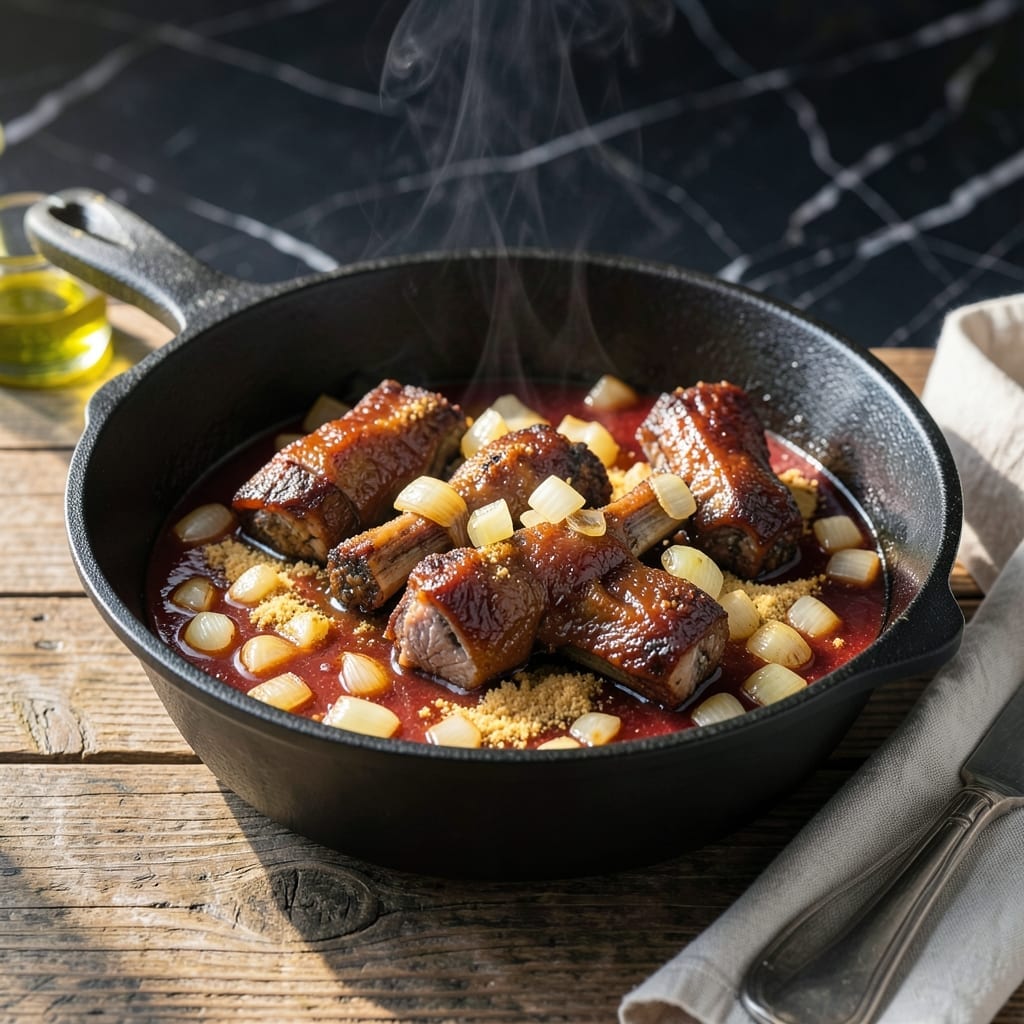
This stove-top method delivers rich braised oxtail with minimal effort. I’ve refined the process to achieve deep flavor in under three hours.
Tender meat falls off the bone, infused with herbs and a velvety sauce. No oven required—just a heavy pot and patience.
Ingredients for Stove Top Oxtail
Rich, slow-cooked oxtail requires just these carefully selected ingredients for deep, layered flavor.
| Ingredient | Amount | Notes |
|---|---|---|
| Oxtail 🥩 | 3 lb | Cut into 2-inch pieces, trimmed of excess fat |
| All-Purpose Flour 🌾 | ½ cup | For dredging oxtail |
| Kosher Salt 🧂 | 2 tsp | Diamond Crystal preferred |
| Black Pepper 🌶️ | 1 tsp | Freshly ground preferred |
| Olive Oil 🫒 | ¼ cup | High smoke point variety |
| Yellow Onion 🧅 | 1 whole | Large, finely diced |
| Carrots 🥕 | 2 whole | Medium, peeled and chopped |
| Celery Stalks 🌿 | 2 whole | Chopped, including leaves |
| Garlic Cloves 🧄 | 5 cloves | Minced for depth |
| Tomato Paste 🍅 | 3 tbsp | Double-concentrated preferred |
| Dry Red Wine 🍷 | 1 ½ cups | Bold variety like Cabernet |
| Beef Stock 🥩 | 3 cups | Low-sodium, high quality |
| Fresh Thyme Sprigs 🌿 | 4 whole | Plus 1 tsp chopped leaves |
| Bay Leaves 🍃 | 2 whole | Dried, whole leaves |
| Fresh Rosemary 🌿 | 1 whole | Sprig, stem removed |
[recipe_ingredient_scaler]
The oxtail is non-negotiable—seek out grass-fed from a reputable butcher like Whole Foods or Snake River Farms. Look for pieces with good marbling and trim any large fat deposits yourself. The flour for dredging should be all-purpose (skip the self-rising). For the wine, a bold Cabernet Sauvignon or Merlot adds the right acidity and depth. Avoid cooking wines—they’re loaded with salt.
No red wine? Substitute with additional beef stock plus 1 tbsp balsamic vinegar. Fresh herbs are ideal, but dried at one-third the amount works—just add them earlier to rehydrate. Tomato paste can be swapped for 1 cup crushed tomatoes reduced by half. If you’re missing celery, a pinch of celery seed (about 1/4 tsp) can stand in, though the texture won’t be identical.
Braised oxtail tastes even better the next day as the flavors meld. Store in an airtight container in the fridge for up to 4 days or freeze for 3 months. Reheat gently on the stove to maintain the sauce’s velvety consistency.
Why You’ll Love This Recipe
- One Pot Meal: I love that I only need a heavy pot and a handful of pantry staples like flour and olive oil to get this going.
- Deep, Rich Flavor: The oxtail slow-cooked with salt and pepper develops this melt-in-your-mouth tenderness that’s hard to beat.
- Meal Prep Magic: Honestly, it tastes even better the next day, so I always make extra for leftovers.
- Budget Stretch: A little oxtail goes a long way, and it’s way more affordable than you’d think for such a hearty dish.
Step-by-Step Instructions for Stove Top Oxtail
Here’s the method I use to achieve fall-off-the-bone tenderness with deep, complex flavor development.
Step 1: Dredge and Sear the Oxtail
Pat the 3 lb Oxtail dry with paper towels, then season with the 2 tsp Kosher Salt and 1 tsp Black Pepper. Dredge each piece in the 0.5 cup All-Purpose Flour, shaking off any excess. This creates a golden crust and thickens the braising liquid later.
Heat the 0.25 cup Olive Oil in a large, heavy pot over medium-high heat until shimmering. Working in batches to avoid crowding, sear the oxtail pieces for 3-4 minutes per side until deeply browned on all surfaces. The flour coating will turn a rich mahogany color when properly seared. Transfer to a plate and set aside.
Step 2: Build the Aromatic Base
In the same pot, add the finely diced 1 whole Yellow Onion, chopped 2 whole Carrots, and 2 whole Celery Stalks. Cook over medium heat for 5-6 minutes, stirring occasionally, until the vegetables soften and begin to caramelize around the edges.
Add the minced 5 cloves Garlic Cloves and cook for 1 minute until fragrant. Stir in the 3 tbsp Tomato Paste and cook for 2 minutes, allowing it to deepen in color and develop its natural sweetness. This step creates the flavor foundation for your braise.
Step 3: Deglaze and Add Braising Liquid
Pour in the 1.5 cups Dry Red Wine and scrape up all the browned bits from the bottom of the pot with a wooden spoon. This deglazing step captures all the concentrated flavor from the searing process. Let the wine reduce by half, about 5-7 minutes.
Return the oxtail to the pot along with any accumulated juices. Add the 3 cups Beef Stock, 4 whole Fresh Thyme Sprigs, 2 whole Bay Leaves, and 1 whole Fresh Rosemary sprig. The liquid should just cover the meat—add a splash of stock if needed.
Step 4: Braise to Perfection
Bring the mixture to a gentle simmer, then reduce heat to low. Cover the pot and let it braise for 2.5 to 3 hours, turning the oxtail pieces occasionally. You’ll know it’s ready when the meat pulls away from the bone easily with a gentle tug.
Maintain a slow, steady simmer throughout the cooking process. If the liquid reduces too much, add a bit more stock or water to keep the oxtail partially submerged. The long, slow cooking time transforms the tough collagen in the oxtail into luxurious, velvety gelatin.
Step 5: Finish and Serve
Once the oxtail is tender, remove it from the pot and set aside. Skim any excess fat from the surface of the braising liquid, then simmer it for 5-10 minutes to reduce and intensify the flavors. The sauce should coat the back of a spoon.
Return the oxtail to the pot to reheat in the sauce. Taste and adjust seasoning if needed. Serve hot, with the sauce spooned generously over each piece. The meat should be so tender it nearly falls off the bone, with a rich, deeply flavored sauce that’s perfect for mopping up with crusty bread.
Pro Tips For Making Stove Top Oxtail
- Brown the Flour: Lightly toast the all-purpose flour in olive oil for 2-3 minutes before adding the oxtail—this builds a deeper, nuttier base for your gravy. I learned this the hard way after my first few batches tasted flat.
- Pat It Dry: Blot the oxtail pieces with paper towels before seasoning. Wet meat steams instead of sears, and you’ll lose that rich crust that makes the dish worth the effort.
- Low and Slow: After the initial sear, drop the heat to medium-low and cover the pot. Rushing with high heat turns the meat tough—2.5 to 3 hours is the sweet spot for fall-off-the-bone tenderness.
- Skim the Fat: About halfway through cooking, skim off the excess fat with a spoon. It’s a messy step, but it keeps the sauce from feeling greasy and lets the real oxtail flavor shine.
Storing and Reheating stove top oxtail
Refrigerator Storage
Let your oxtail cool completely before transferring to airtight containers. I use glass containers to preserve the rich flavors. Store in the fridge at 40°F or below for up to 4 days. The flavors deepen beautifully overnight. ❄️
Freezer Storage
For longer storage, freeze in quart-sized freezer bags. Squeeze out excess air to prevent freezer burn. Label with the date and freeze for up to 3 months. Portion into individual servings for easy reheating later.
Stovetop Reheating
My preferred method: gently reheat in a heavy pot over low heat for 15-20 minutes. Add ¼ cup beef stock to loosen the sauce. This maintains the velvety texture and prevents drying out.
Oven Reheating
Preheat oven to 300°F. Place oxtail and sauce in an oven-safe dish, cover with foil, and warm for 20-25 minutes. Check occasionally and add stock if needed. This method works great for larger portions.
Microwave Reheating
For quick meals, microwave individual portions covered with a damp paper towel. Use 50% power for 2-3 minutes, stir, then continue in 1-minute intervals until reaching 165°F. 🔥
Pro Tip
Always reheat gently to preserve the sauce’s consistency. The collagen in oxtail makes it forgiving, but slow reheating ensures the meat stays tender and doesn’t toughen.
Nutrition Facts
Frequently Asked Questions
How do I know when the oxtail is done?
The meat should pull away from the bone easily with a gentle tug. After 2.5-3 hours of braising, test a piece—it should be fork-tender and nearly falling off the bone.
Can I use a different cooking liquid?
Yes! Replace red wine with additional beef stock plus 1 tbsp balsamic vinegar for acidity. For depth, try a mix of beef stock and stout beer. Always deglaze the pot to capture all the flavor.
What’s the best pot for this recipe?
A heavy, wide pot like a Dutch oven works best. It distributes heat evenly and maintains a steady simmer. Ensure it has a tight-fitting lid to retain moisture during the long braise.
Why is my sauce too thin?
Simmer uncovered for 5-10 minutes after removing the meat to reduce and thicken. If still thin, mix 1 tbsp cornstarch with water and stir in, then cook for 2 minutes.

Trained in classic French technique but raised on slow-cooked ribs and spicy rubs, she blends culinary skill with smoke and soul.
- Recipe for Boneless Pork Chops in Cast Iron Skillet: Sear and Baste to Juicy Perfection - October 3, 2026
- Recipe for Boneless Cross Rib Roast: Slow-Roasted Beef with Herb Crust - October 3, 2026
- Hamburgers in Sauce Recipe Crock Pot: Slow-Cooked Savory Delight - October 3, 2026