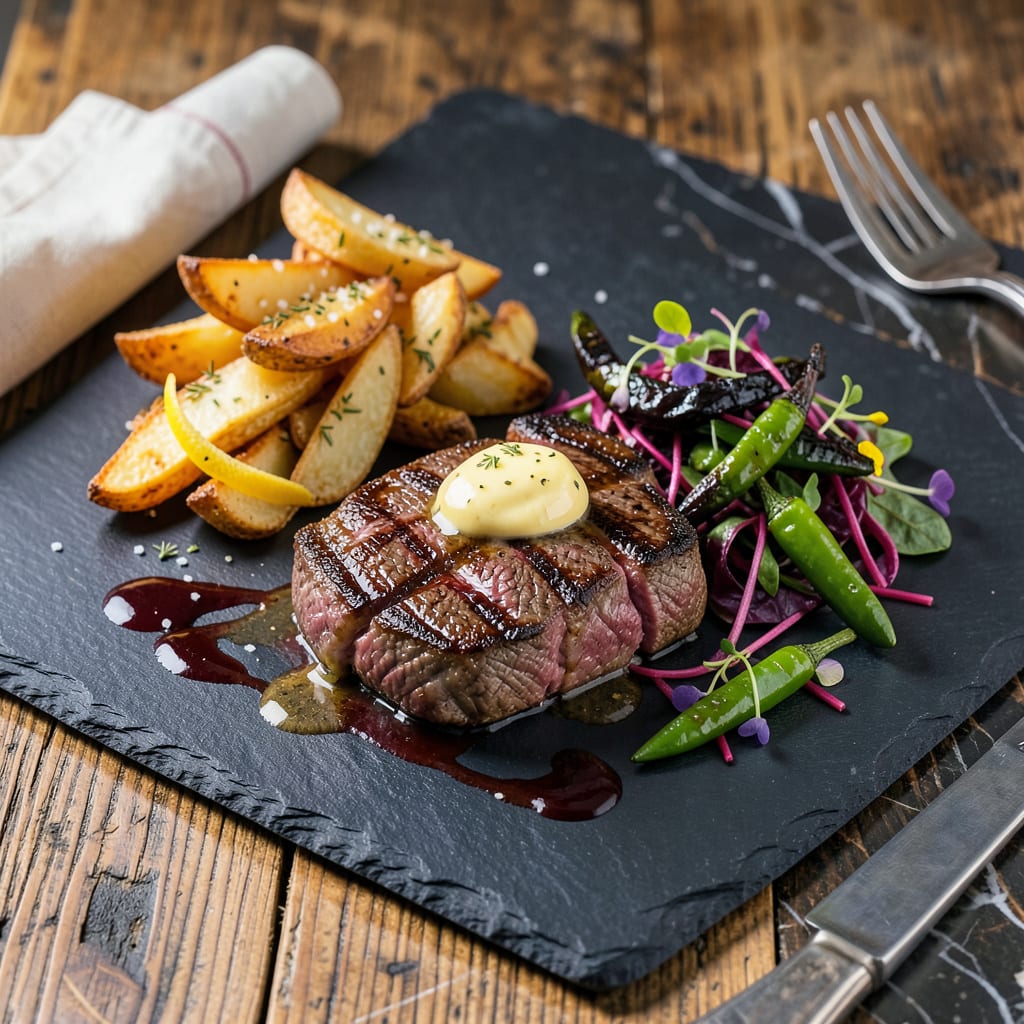
Cook striploin steak by searing it in a hot cast-iron skillet for 2-3 minutes per side for medium-rare, then resting for 5-10 minutes. Use high heat, minimal oil, and a meat thermometer to reach 130–135°F internally for best results.
This method works because the intense heat creates a flavorful crust while keeping the interior juicy—something I learned from my French training combined with my love for bold, smoky flavors. 🔥 The resting period is crucial as it allows the muscle fibers to relax and reabsorb juices, ensuring every bite is tender. I always recommend using a meat thermometer because visual cues can be misleading, especially with thicker cuts.
💡 In This Article
- Why Striploin Steak Stands Out Among Premium Cuts
- Essential Tools and Seasonings for Perfect Striploin Steak
Why Striploin Steak Stands Out Among Premium Cuts
Striploin steak, also called New York strip, comes from the short loin section of the cow—right behind the ribs. This location gives it a perfect balance of tenderness and beefy flavor that’s more robust than filet mignon but leaner than ribeye.
The muscle here does minimal work, resulting in a naturally tender texture with just enough fat marbling to keep it juicy during high-heat cooking. 🔥
What makes striploin special is its fat distribution. Unlike ribeye’s heavy marbling or filet’s near absence of fat, striploin has thin, even streaks of intramuscular fat that melt at 130-135°F—the ideal medium-rare range. This creates a buttery mouthfeel without overwhelming richness.
The fat cap along one edge renders beautifully when seared, basting the meat as it cooks. I’ve found this makes striploin particularly forgiving for home cooks compared to more temperamental cuts.
The flavor profile strikes an ideal middle ground. Striploin delivers that classic beefy intensity without the gamey notes some find in ribeye. Its firm texture holds up to aggressive seasoning and high heat, developing a perfect crust while staying tender inside.
This makes it my go-to for everything from simple salt-and-pepper preparations to bold spice rubs inspired by my coastal rides through herb-rich areas.
From a cooking perspective, striploin’s even thickness and consistent shape make it easier to cook uniformly than irregular cuts. The typical 1-1.5 inch thickness allows for that perfect 2-3 minute sear per side to achieve medium-rare.
Unlike filet which can dry out quickly or ribeye that needs careful fat management, striploin gives you a wider margin for error while still delivering restaurant-quality results. ✨
Butcher shops often age striploins longer than other cuts because the balanced fat content protects against moisture loss during aging. A properly aged striploin (21-28 days) develops deeper umami flavors while maintaining its structural integrity—something I appreciate when I’m selecting steaks for my vintage motorcycle cookout gatherings.
The aging process also tenderizes the meat naturally, reducing the need for marinades.
Compared to other premium cuts, striploin offers exceptional value. You get about 90% of ribeye’s flavor with 20% less fat, and 80% of filet’s tenderness at a fraction of the price. This makes it the smart choice when you want impressive results without the premium price tag of other high-end steaks.
The versatility is unmatched—equally at home on a cast-iron skillet, grill, or even sous vide followed by a quick sear. 💫
What most home cooks don’t realize is that striploin’s fat cap isn’t just for flavor—it’s a built-in cooking aid. When seared properly, that fat renders and creates a natural basting effect, continuously coating the meat as it cooks.
This is why I always position the steak fat-cap down first in the pan, letting that rendered fat infuse the entire cut with rich, beefy goodness during those crucial first minutes of cooking.

Trained in classic French technique but raised on slow-cooked ribs and spicy rubs, she blends culinary skill with smoke and soul.
- Recipe for Boneless Pork Chops in Cast Iron Skillet: Sear and Baste to Juicy Perfection - October 3, 2026
- Recipe for Boneless Cross Rib Roast: Slow-Roasted Beef with Herb Crust - October 3, 2026
- Hamburgers in Sauce Recipe Crock Pot: Slow-Cooked Savory Delight - October 3, 2026