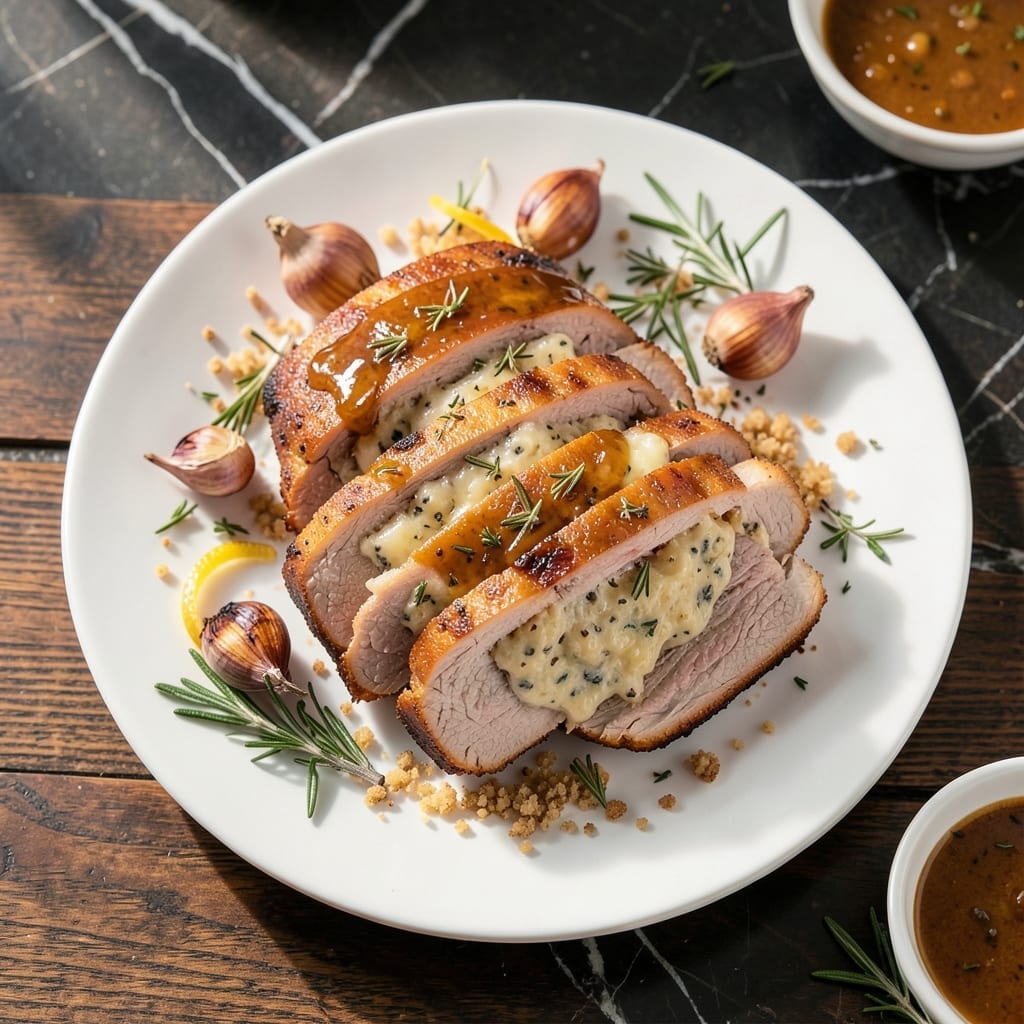
This dish transforms simple pork into tender, herb-crusted perfection with a melted cheese surprise in every bite.
I developed this method after years of refining French technique with my pitmaster skills, and it delivers restaurant-quality results every time.
Ingredients for Stuffed Pork Tenderloin
Pork tenderloin, fresh herbs, and melted cheese create this elegant, restaurant-quality dish with ease.
| Ingredient | Amount | Notes |
|---|---|---|
| Pork Tenderloin 🥩 | 1 ½ lb | Trimmed of excess fat |
| Dijon Mustard 🟡 | 2 tbsp | Smooth variety preferred |
| Fresh Rosemary 🌿 | 2 tbsp | Finely chopped, stems removed |
| Fresh Thyme 🌿 | 2 tbsp | Finely chopped, stems removed |
| Garlic Cloves 🧄 | 4 cloves | Minced for herb crust |
| Breadcrumbs 🍞 | ¾ cup | Panko for crispier texture |
| Gruyère Cheese 🧀 | 4 oz | Shredded for stuffing |
| Parmesan Cheese 🧀 | ½ cup | Freshly grated from block |
| Olive Oil 🫒 | 2 tbsp | Extra-virgin for richness |
| Kosher Salt 🧂 | 1 ½ tsp | Diamond Crystal preferred |
| Black Pepper 🌶️ | 1 tsp | Freshly ground preferred |
| Butter 🧈 | 2 tbsp | Unsalted, for searing |
| Shallot 🧅 | 1 whole | Finely minced for depth |
[recipe_ingredient_scaler]
The pork tenderloin is the star here. Optimal quality requires well-marbled, pale pink meat—avoid anything gray or with a strong odor. Whole Foods or local butchers often carry superior cuts. For the Gruyère, seek out imported Swiss varieties for authentic melt and nutty depth. Fresh herbs from the farmers market (the good stuff, not the pre-packaged kind) elevate the crust significantly.
No Gruyère? Comté or Emmental make excellent substitutes with similar melting properties. Dried herbs work at one-third the amount, though fresh is strongly preferred. Panko can be swapped for regular breadcrumbs (texture will be less crisp). For a richer crust, add chopped prosciutto to the breadcrumb mixture. The Dijon mustard provides essential tang—whole-grain works too (just strain out excess seeds).
Store the tenderloin wrapped tightly and refrigerated for up to 2 days before cooking. The herb crust mixture can be prepped 1 day ahead. Leftovers keep beautifully for 4-5 days and reheat well, though the crust softens slightly. Freezing is not recommended for optimal texture.
Why You’ll Love This Recipe
- I’ll be real: the slices reheat beautifully, so I get a gourmet lunch the next day without extra work.
- One Pan Magic: I love that I can sear the pork, stuff it, and roast it all in the same pan—minimal cleanup.
- Herb Infused Wow: The rosemary and thyme with Dijon mustard create this rich, aromatic crust that’s honestly restaurant-level good.
- Sunday or Tuesday: It’s fancy enough for company but unfussy enough for a weeknight when I want to feel fancy. (Yes, even on a Tuesday night)
Step-by-Step Instructions for Stuffed Pork Tenderloin
Master the technique for a restaurant-worthy centerpiece with a crispy herb crust and gooey cheese filling.
Step 1: Butterfly and Season the Pork Tenderloin
Place the 1.5 lb pork tenderloin on a cutting board and slice lengthwise down the center, stopping about ½ inch from the bottom. Open it like a book and cover with plastic wrap. Pound gently to an even ½-inch thickness using a meat mallet.
This creates a flat surface for stuffing while maintaining even cooking. Season both sides generously with 1.5 tsp kosher salt and 1 tsp black pepper. The seasoning should be visible but not excessive—this is your foundation of flavor.
Step 2: Prepare the Cheese and Herb Filling
In a bowl, combine the 4 oz Gruyère cheese, 0.5 cup Parmesan cheese, 2 tbsp fresh rosemary, 2 tbsp fresh thyme, 4 cloves minced garlic cloves, and 1 whole finely minced shallot. The shallot adds a subtle sweetness that balances the sharpness of the cheeses.
Spread the 2 tbsp Dijon mustard evenly over the butterflied pork, leaving a ½-inch border around the edges. This acts as both a flavor barrier and moisture seal. Distribute the cheese-herb mixture evenly over the mustard, pressing lightly to adhere. The filling should be generous but not so much that it spills out during rolling.
Step 3: Roll, Secure, and Apply the Herb Crust
Starting from the long side, tightly roll the pork into a log, using the plastic wrap to help compress it. Secure the seam with kitchen twine at 1-inch intervals. This compression prevents air pockets and ensures even cooking.
In a shallow dish, mix the 0.75 cup breadcrumbs with any remaining herb mixture from the filling. Brush the rolled pork with 2 tbsp olive oil, then roll it in the breadcrumb mixture, pressing firmly to create an even crust. The crust should fully encase the pork, creating a textural contrast to the tender interior.
Step 4: Sear and Roast to Perfection
Heat 2 tbsp butter in an oven-safe skillet over medium-high heat until foaming subsides. Sear the pork on all sides for 2-3 minutes per side until the crust is deep golden brown. The sear develops the Maillard reaction, creating complex flavors and a crispy exterior.
Transfer the skillet to a preheated 375°F oven and roast for 20-25 minutes, or until the internal temperature reaches 145°F. Use a meat thermometer inserted into the thickest part for accuracy. The pork should feel firm but springy to the touch when done.
Step 5: Rest and Slice for Service
Remove the pork from the oven and transfer it to a cutting board. Tent loosely with foil and let rest for 10 minutes. This critical step allows the juices to redistribute, ensuring the pork remains tender and the filling stays intact when sliced.
Slice the pork into 1-inch thick medallions using a sharp knife, removing the twine as you go. Each slice should reveal a perfect spiral of melted cheese and herbs encased in the crispy crust. Serve immediately while the cheese is still gooey and the crust is at its peak crispness.
Pro Tips For Making Stuffed Pork Tenderloin
- Butterfly Evenly: Slice the tenderloin lengthwise and stop ½ inch from the bottom—uneven cuts make rolling a nightmare. I learned this the hard way after my first few lopsided rolls fell apart.
- Pound the Meat: Use a rolling pin or meat mallet to flatten the butterflied pork to ½-inch thickness. It cooks more evenly and holds the stuffing better—sounds tedious, but it’s worth the 2 minutes.
- Secure with Butcher’s Twine: Tie the rolled tenderloin every 1-2 inches to keep its shape. Skip the toothpicks; they fall out and you’ll end up fishing them out of the pan mid-cook.
- Rest Before Slicing: Let the pork rest 10 minutes under foil after roasting. I was skeptical until I tried it—juices stay put instead of running all over the cutting board.
Perfect Pairings for These Flavors
Wine Pairings
A crisp Pinot Noir from Oregon’s Willamette Valley complements the herb crust beautifully with its bright acidity and red fruit notes. I also love a Chardonnay with subtle oak from Burgundy to match the richness of the melted cheese. 🍷
Beer Options
For beer lovers, a Belgian-style Tripel with its spicy yeast notes and effervescence cuts through the dish’s richness. A German Pilsner offers a crisp, clean contrast to the savory pork and cheese filling.
Side Dish Ideas
A simple roasted asparagus with lemon zest and olive oil highlights the herbs in the crust. I also recommend a wild rice pilaf with toasted almonds for texture contrast. The nutty flavors pair wonderfully with the Gruyère.
Bread and Starters
A crusty baguette is perfect for soaking up any juices from the pork. Start with a charcuterie board featuring prosciutto and cornichons to set the stage. These starters complement the French-inspired flavors of the dish.
Sauce Pairings
A light Dijon mustard cream sauce mirrors the mustard in the recipe, while a red wine reduction adds depth. Both sauces enhance the pork without overpowering its delicate herb and cheese filling.
Nutrition Facts
Frequently Asked Questions
Can I use a different type of cheese?
Try Comté or Emmental for similar melt. Fontina adds creaminess, while Gouda offers a sweeter note. Avoid hard cheeses like Parmesan alone as they won’t melt smoothly.
How do I prevent the filling from leaking out?
Roll the pork tightly and secure with twine at 1-inch intervals. Chill for 15 minutes before cooking to help set the filling. Avoid overstuffing to keep it contained.
Can I make this ahead of time?
Prepare the stuffed roll up to 1 day ahead and refrigerate. Let it sit at room temperature for 30 minutes before cooking. This keeps the crust crisp and filling intact.
What if my pork tenderloin is thicker on one end?
Pound it to an even ½-inch thickness before stuffing. Fold the thinner end under to create a uniform shape for even cooking and better presentation.

Trained in classic French technique but raised on slow-cooked ribs and spicy rubs, she blends culinary skill with smoke and soul.
- Recipe for Boneless Pork Chops in Cast Iron Skillet: Sear and Baste to Juicy Perfection - October 3, 2026
- Recipe for Boneless Cross Rib Roast: Slow-Roasted Beef with Herb Crust - October 3, 2026
- Hamburgers in Sauce Recipe Crock Pot: Slow-Cooked Savory Delight - October 3, 2026