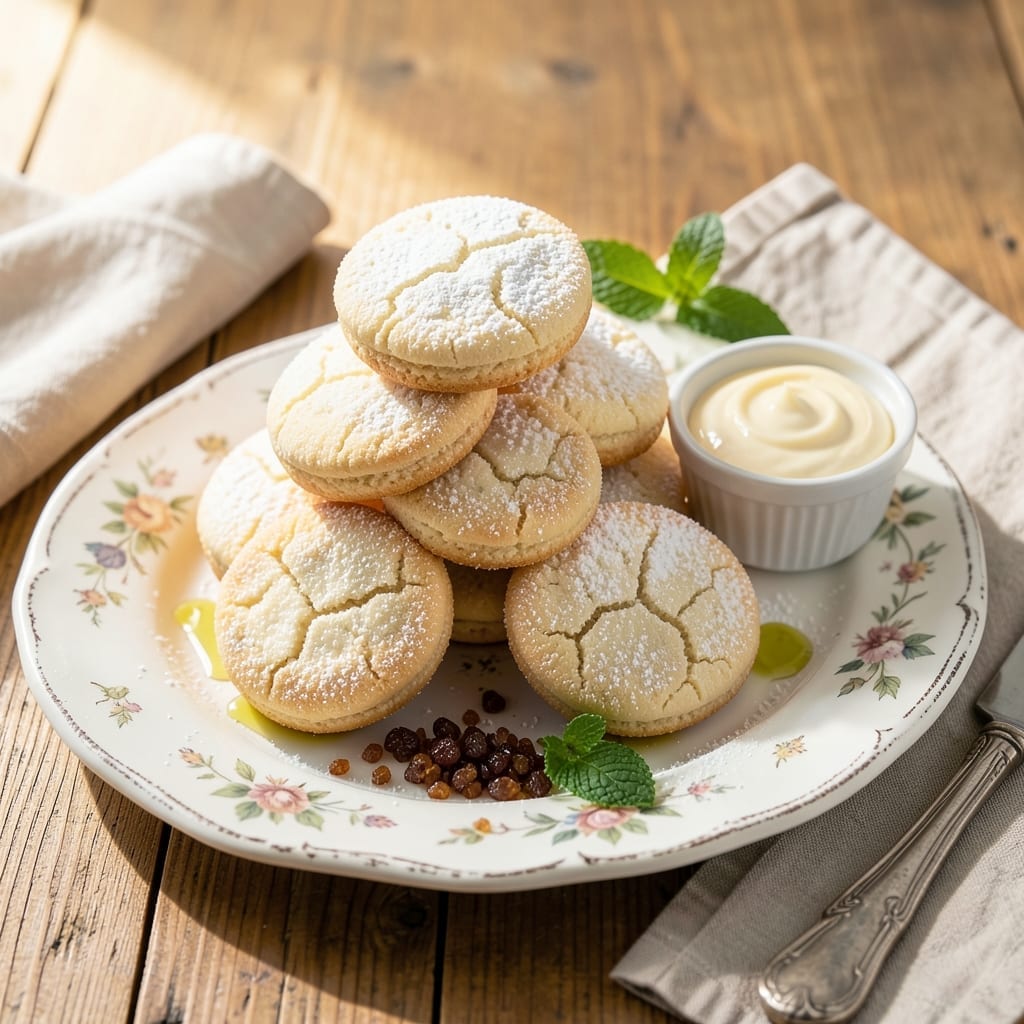
Achieving soft and buttery sugar cookies without baking soda is entirely possible with the right technique. I developed this recipe to deliver consistent results every time.
By using baking powder instead, these cookies maintain their tender texture while achieving the perfect spread. The dough comes together quickly with simple ingredients you likely already have on hand.
Ingredients for Sugar Cookie Recipe No Baking Soda
Soft, buttery cookies start with these pantry staples and one key swap.
| Ingredient | Amount | Notes |
|---|---|---|
| All-Purpose Flour 🌾 | 2 ½ cups | Spoon and level for accuracy |
| Unsalted Butter 🧈 | 1 cup | Softened to room temperature |
| Granulated Sugar 🍚 | ¾ cup | Fine white sugar preferred |
| Large Egg 🥚 | 1 whole | Room temperature for even mixing |
| Baking Powder 🧂 | 1 tsp | Aluminum-free for best flavor |
| Vanilla Extract 🌿 | 2 tsp | Pure extract, not imitation |
| Salt 🧂 | ½ tsp | Fine sea salt or table salt |
| Powdered Sugar 🍚 | ½ cup | For dusting, optional garnish |
| Whole Milk 🥛 | 1 tbsp | As needed for dough consistency |
| Lemon Zest 🍋 | 1 tsp | Freshly grated for brightness |
[recipe_ingredient_scaler]
The butter sets the stage here. Plugrá or Land O’Lakes deliver consistent fat content for reliable texture. Use unsalted to control sodium levels precisely. The flour—King Arthur or Gold Medal—should be measured by spooning into the cup and leveling (never packed). Baking powder is the hero ingredient; Clabber Girl or Rumford brands are aluminum-free and provide clean lift without metallic aftertaste.
No baking powder? Double-acting is essential—single-acting won’t provide the delayed rise needed. For a richer flavor, brown sugar can replace half the granulated (pack it firmly). The vanilla should be pure bourbon extract—Nielsen-Massey or Rodelle are professional standards. If avoiding dairy, vegan butter at 1:1 ratio works, but chilling the dough 30 minutes becomes critical.
Dough keeps 3 days refrigerated or 3 months frozen. Baked cookies stay fresh 5 days in airtight containers (add a slice of bread to maintain moisture). For make-ahead, freeze dough balls—bake straight from frozen, adding 2-3 minutes to bake time.
Why You’ll Love This Recipe
- One Bowl Wonder: I love that I can mix everything in a single bowl—no extra dishes, just flour, butter, sugar, egg, and baking powder.
- Buttery Perfection: The unsalted butter and sugar combo gives these cookies that rich, melt-in-your-mouth taste I crave.
- Holiday Ready: Honestly, these are my go-to for cookie swaps, birthdays, or just because Tuesdays need a little sweetness.
- Budget Friendly: Flour, butter, and sugar are pantry staples, so I can whip up a batch without a last-minute grocery run.
Step-by-Step Instructions for Sugar Cookies
This method ensures soft, buttery cookies with perfect edges every time.
Step 1: Cream Butter and Sugars
In a stand mixer with the paddle attachment, beat the 1 cup unsalted butter with the 0.75 cup granulated sugar on medium-high speed for 3-4 minutes. The mixture should become pale and fluffy, nearly doubling in volume.
This step is critical—proper creaming incorporates air, which gives the cookies their tender texture. Scrape down the bowl halfway through to ensure even mixing. The butter must be properly softened to room temperature for this to work effectively.
Step 2: Incorporate Wet Ingredients
Add the 1 whole large egg, 2 tsp vanilla extract, and 1 tsp lemon zest to the butter mixture. Beat on medium speed for 1 minute until fully emulsified. The lemon zest adds a bright note that balances the richness.
Stop to scrape the bowl again, then add 0.5 tsp salt. Mix for another 30 seconds to distribute evenly. The mixture should look smooth and slightly glossy at this stage.
Step 3: Combine Dry Ingredients
In a separate bowl, whisk together the 2.5 cups all-purpose flour and 1 tsp baking powder. Gradually add this to the wet ingredients with the mixer on low speed, mixing just until the flour disappears.
Overmixing at this stage develops gluten, which would make the cookies tough. The dough should be thick but workable. If it appears crumbly, add the 1 tbsp whole milk to bring it together. The baking powder provides the necessary lift without the harshness of baking soda.
Step 4: Roll, Cut, and Bake
Divide the dough into two portions, flatten into discs, and wrap in plastic. Chill for 1 hour or until firm. Roll out to ¼-inch thickness on a lightly floured surface and cut into desired shapes.
Bake at 350°F for 8-10 minutes until the edges are just beginning to turn golden brown. The centers should still look slightly soft—they’ll firm up as they cool. Rotate the pans halfway through for even baking.
Step 5: Cool and Finish
Let the cookies cool on the baking sheet for 5 minutes before transferring to a wire rack. Once completely cool, dust with 0.5 cup powdered sugar if desired. The cookies will continue to set as they cool, achieving that perfect soft yet sturdy texture.
Store in an airtight container at room temperature for up to 5 days, though they’re best enjoyed within the first 48 hours when the texture is at its peak.
Pro Tips For Making Sugar Cookie Recipe No Baking Soda
- Chill the Dough: After mixing, refrigerate the dough for at least 1 hour—I learned this the hard way when my first batch spread into a single giant cookie.
- Cream Butter Right: Beat the butter and sugar until light and fluffy, about 3-4 minutes. Sounds tedious, but it actually changes the outcome by creating pockets of air for tender cookies.
- Measure Flour Properly: Spoon the flour into your measuring cup and level it off—scooping directly from the bag packs it down and leads to dense, dry cookies.
- Rotate the Pan: Halfway through baking, turn the pan 180 degrees to guarantee even browning, especially if your oven has hot spots like mine does.
Dietary Considerations for sugar cookie recipe no baking soda
Gluten-Free Option
For gluten-free cookies, swap the all-purpose flour for King Arthur’s gluten-free measure-for-measure flour. The texture will be slightly more tender, but still delicious. I recommend chilling the dough for 30 extra minutes to prevent excessive spreading. 💡
Dairy-Free Adaptation
Use 1 cup vegan butter (I prefer Miyoko’s or Earth Balance) and replace the whole milk with 1 tbsp almond milk. The flavor remains rich, though the color may be slightly paler. Ensure your baking powder is dairy-free—Clabber Girl is a safe choice.
Egg-Free Version
Replace the large egg with ¼ cup unsweetened applesauce or 1 flax egg (1 tbsp ground flaxseed + 3 tbsp water). The cookies will be slightly denser but still soft. Let the dough rest for 10 minutes after mixing to hydrate the flax.
Lower Sugar Option
Reduce the granulated sugar to ½ cup and add 1 tsp molasses for depth. The cookies will be less sweet but still buttery. For a natural sweetener, coconut sugar works at a 1:1 ratio, though it adds a slight caramel note.
Nut Allergy Note
This recipe is naturally nut-free, but always check labels on your baking powder and vanilla extract. Some brands process in facilities with nuts. For extra safety, use homemade vanilla extract with vodka and vanilla beans.
Nutrition Facts
Frequently Asked Questions
Why use baking powder instead of baking soda?
Baking powder provides a milder rise and better flavor for delicate cookies. It contains both acid and base, so it activates with moisture and heat, creating a tender texture without the metallic aftertaste baking soda can leave.
Can I use self-rising flour for this recipe?
No, self-rising flour already contains baking powder and salt. Using it would throw off the balance of leavening agents and could make your cookies spread too much or taste overly salty.
How do I prevent my cookies from spreading too much?
Chill the dough for at least 1 hour before baking. Also, make sure your butter is properly softened but not melted, and use parchment paper on your baking sheets for even heat distribution.
Can I make these cookies ahead of time?
Yes! The dough can be refrigerated for up to 3 days or frozen for 3 months. Baked cookies stay fresh in an airtight container for up to 5 days.

Trained in classic French technique but raised on slow-cooked ribs and spicy rubs, she blends culinary skill with smoke and soul.
- Recipe for Boneless Pork Chops in Cast Iron Skillet: Sear and Baste to Juicy Perfection - October 3, 2026
- Recipe for Boneless Cross Rib Roast: Slow-Roasted Beef with Herb Crust - October 3, 2026
- Hamburgers in Sauce Recipe Crock Pot: Slow-Cooked Savory Delight - October 3, 2026