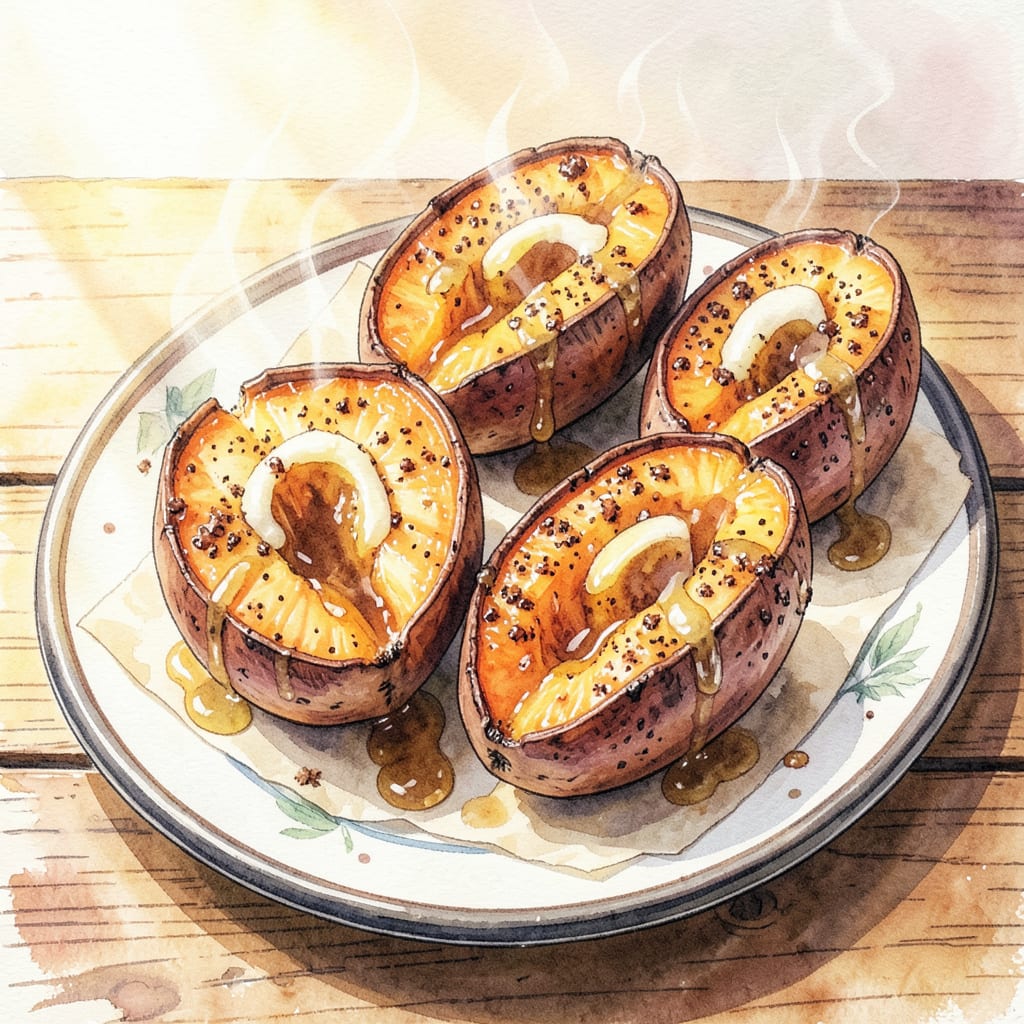
Sweet potatoes deserve more than just a side dish role—they can be the star of your meal when prepared with the right balance of caramelization and creaminess. This method transforms ordinary sweet potatoes into a dish with caramelized edges and velvety centers, using simple ingredients and precise technique.
The secret lies in roasting at high heat to develop deep caramelization while maintaining a tender interior. A touch of brown sugar enhances natural sweetness without overpowering, and the right seasoning brings out their earthy richness. Whether for weeknight dinners or holiday tables, this preparation elevates sweet potatoes beyond the expected.
Ingredients for Sugary Sam Sweet Potatoes
These carefully selected ingredients transform ordinary sweet potatoes into a dish with caramelized edges and velvety centers using precise technique.
| Ingredient | Amount | Notes |
|---|---|---|
| Sweet Potatoes, medium-sized 🍠 | 4 whole | Uniform thickness for even cooking |
| Light Brown Sugar 🍚 | 3 tbsp | Packed for accurate measurement |
| Unsalted Butter 🧈 | 4 tbsp | Melted to liquid state |
| Extra-Virgin Olive Oil 🫒 | 2 tbsp | Divided for roasting and finishing |
| Ground Cinnamon 🌿 | 1 tsp | Freshly opened for potency |
| Vanilla Extract, pure 💧 | 1 tsp | High-quality for depth |
| Kosher Salt 🧂 | 1 tsp | Diamond Crystal preferred |
| Freshly Ground Black Pepper 🌶️ | ½ tsp | Coarse grind for texture |
| Heavy Cream 🥛 | ¼ cup | Full-fat for creaminess |
| Pecans, chopped 🌰 | ⅓ cup | Lightly toasted for crunch |
| Fresh Sage Leaves 🍃 | 8 whole | Lightly bruised for aroma |
| Maple Syrup, pure 🍁 | 1 tbsp | Grade A dark preferred |
[recipe_ingredient_scaler]
Optimal quality requires **medium-sized sweet potatoes** with smooth, unblemished skins—**organic varieties** from **Whole Foods** or **Trader Joe’s** offer superior texture. The **light brown sugar** should be freshly purchased (old sugar hardens and loses moisture); **Domino** or **C&H** brands provide consistent results. **Unsalted butter** allows controlled seasoning—**Kerrygold** or **Plugrá** deliver the necessary fat content for proper caramelization without scorching.
For dietary adaptations, **coconut sugar** may replace brown sugar at a 1:1 ratio, though flavor profiles will differ slightly. **Vegan butter alternatives** like **Miyoko’s** work for dairy-free versions, but monitor closely as they brown faster. The **heavy cream** can be substituted with **full-fat coconut cream** (chilled overnight) for similar richness. **Walnuts** may replace pecans if preferred, though their bitterness requires an additional ½ tsp of maple syrup to balance.
Store unpeeled sweet potatoes in a **cool, dark pantry** for up to **2 weeks**. Prepared dish maintains quality for **4 days refrigerated** or **3 months frozen**—reheat covered at 350°F (175°C) to restore creaminess. Toast pecans separately and add post-reheating to preserve crunch. The vanilla extract and maple syrup should be kept tightly sealed in a **dark cabinet** to prevent oxidation, ensuring **6-12 months** of peak flavor.
Step-by-Step Instructions for Sugary Sam’s Sweet Potatoes
This method delivers perfectly caramelized edges with luxuriously creamy centers every time.
Step 1: Prepare and Par-Cook the Sweet Potatoes
Preheat your oven to 400°F and position racks in upper and lower thirds. Scrub the 4 whole Sweet Potatoes, medium-sized thoroughly under running water to remove any dirt, then pat completely dry with paper towels. Pierce each potato 6-8 times with a fork to allow steam to escape during cooking.
Place the potatoes directly on the oven racks (this ensures even air circulation) and bake for 30 minutes. You’ll know they’re ready for the next step when a knife inserted meets slight resistance but the flesh has begun to soften. This par-cooking stage creates the ideal texture foundation—firm enough to hold shape but tender enough to absorb the caramelized glaze.
Step 2: Create the Brown Sugar Glaze
While the potatoes par-cook, combine the 3 tbsp Light Brown Sugar, 4 tbsp Unsalted Butter, 1 tsp Ground Cinnamon, 1 tsp Vanilla Extract, pure, 1 tsp Kosher Salt, and 0.5 tsp Freshly Ground Black Pepper in a small saucepan. Cook over medium-low heat for 3-4 minutes, stirring constantly with a silicone spatula, until the mixture becomes homogeneous and begins to bubble gently at the edges.
The glaze should reach a syrupy consistency that coats the back of a spoon. Remove from heat and stir in the 0.25 cup Heavy Cream and 1 tbsp Maple Syrup, pure. This combination of brown sugar and maple syrup creates a complex caramel flavor profile that balances the natural sweetness of the potatoes.
Step 3: Apply Glaze and Develop Caramelization
Carefully remove the par-cooked potatoes from the oven and reduce temperature to 375°F. Using a pastry brush, generously coat each potato with 1 tbsp Extra-Virgin Olive Oil, then apply the brown sugar glaze evenly over all surfaces. The oil helps the glaze adhere and promotes even caramelization.
Return the potatoes to the oven, placing them on a parchment-lined baking sheet. Roast for an additional 25-30 minutes, rotating the sheet halfway through, until the glaze transforms into a deep amber, crackly crust. The edges should develop a glass-like sheen when properly caramelized.
Step 4: Add Finishing Touches and Rest
While the potatoes finish roasting, heat the remaining 1 tbsp Extra-Virgin Olive Oil in a small skillet over medium heat. Add the 0.33 cup Pecans, chopped and 8 whole Fresh Sage Leaves, cooking for 2-3 minutes until the pecans are lightly toasted and the sage leaves become crisp. The sage will darken slightly and release its aromatic oils.
Transfer the roasted potatoes to a serving platter and let rest for 5 minutes—this allows the caramelized crust to set. Just before serving, sprinkle the toasted pecan-sage mixture over the top. The contrast between the crispy caramelized exterior, creamy interior, and nutty crunch creates the signature texture profile of this dish.
Common Mistakes When Making Perfect Results
Overcooking the Potatoes
One of the biggest mistakes I see is letting sweet potatoes become mushy before they even hit the glaze. Remember, we’re aiming for slight resistance after the initial 30-minute par-cook. If your knife slides in like butter, you’ve gone too far. The potatoes should hold their shape when glazed—I learned this the hard way at my first BBQ competition when my entries turned to sweet potato pudding! 🔥
Skipping the Glaze Reduction
Rushing the glaze is a flavor crime. That 3-4 minutes of simmering isn’t just melting sugar—it’s developing deep caramel notes. If your glaze looks thin or grainy, you haven’t cooked it long enough. I always test mine by dipping a spoon and watching how it coats. Proper reduction means it should cling to the potatoes like a second skin.
Uneven Glaze Application
Slathering glaze on one side and calling it done creates sad, patchy sweet potatoes. Use a pastry brush to coat every nook—especially the ends where caramelization happens fastest. I rotate my potatoes mid-glazing to catch any drips. This attention to detail is what separates good sweet potatoes from showstopping ones.
Wrong Oven Position
Baking on a single rack leads to uneven caramelization. Position your racks in the upper and lower thirds of the oven and rotate the sheet halfway through. The top rack develops that glassy crust while the bottom ensures the underside doesn’t steam. My motorcycle rides taught me balance matters—same goes for oven heat distribution!
Neglecting the Rest
Cutting into these beauties straight from the oven sends all that caramelized goodness sliding off. Those 5 minutes of resting let the glaze set properly. I use this time to crisp my pecans and sage—multitasking that pays off in texture. Patience here means the difference between a sticky mess and restaurant-quality presentation.
Substituting Ingredients Blindly
Swapping light brown sugar for white or maple syrup for pancake syrup changes everything. The molasses in brown sugar and the complexity of pure maple are non-negotiable for that signature flavor. When I forage wild herbs, I’m picky about quality—same goes for these ingredients. Trust the recipe’s balance before experimenting. 💡
Nutrition Facts

Trained in classic French technique but raised on slow-cooked ribs and spicy rubs, she blends culinary skill with smoke and soul.
- Recipe for Boneless Pork Chops in Cast Iron Skillet: Sear and Baste to Juicy Perfection - October 3, 2026
- Recipe for Boneless Cross Rib Roast: Slow-Roasted Beef with Herb Crust - October 3, 2026
- Hamburgers in Sauce Recipe Crock Pot: Slow-Cooked Savory Delight - October 3, 2026