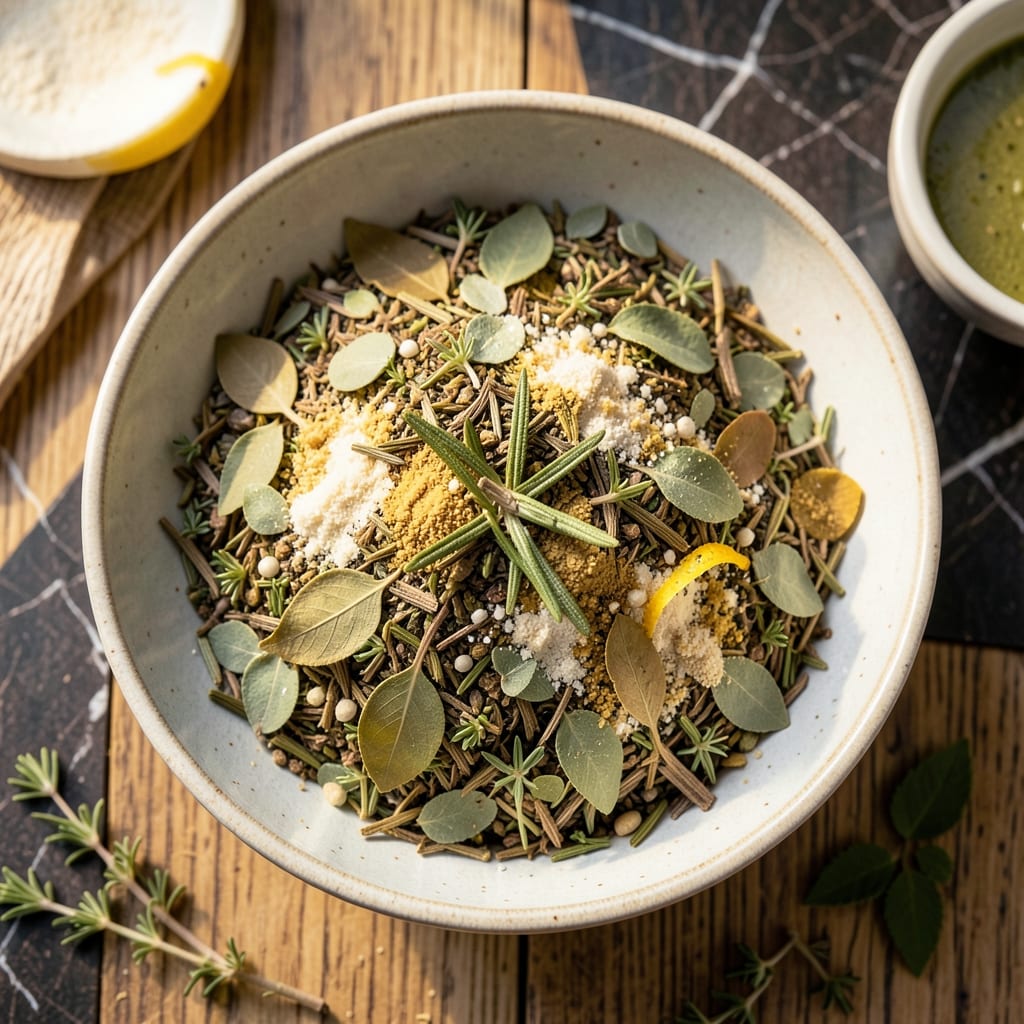
Summer savory brings a unique earthy warmth to any dish, making it a must-have in your spice collection. This blend captures its distinctive peppery, slightly minty character that enhances meats and stews beautifully.
I developed this mix to add depth to hearty dishes without overpowering them. The combination of summer savory with complementary herbs creates a versatile seasoning that works with chicken, pork, or vegetable stews.
Store this blend in an airtight container away from light for up to 6 months. The flavors will remain vibrant and ready to transform your next meal.
Use it as a dry rub, sprinkle over roasts before cooking, or stir into soups for an instant flavor boost.
Ingredients for Summer Savory
Ten herbs and spices for a versatile blend with summer savory at its heart.
| Ingredient | Amount | Notes |
|---|---|---|
| Dried Summer Savory 🌿 | 2 tbsp | Primary herb, earthy and peppery |
| Dried Thyme 🍃 | 1 tbsp | Complements savory’s warmth |
| Dried Rosemary 🌿 | 1 tbsp | Crushed for better distribution |
| Dried Marjoram 🍃 | 1 tbsp | Adds subtle sweetness |
| Garlic Powder 🧄 | 1 tbsp | Enhances umami depth |
| Onion Powder 🧅 | 1 tbsp | Balances herbaceous notes |
| Black Pepper 🌶️ | 1 tsp | Freshly ground preferred |
| Sea Salt 🧂 | 1 tsp | Fine grain for even mixing |
| Dried Sage 🌿 | ½ tsp | Optional, for extra earthiness |
| Red Pepper Flakes 🔥 | ¼ tsp | Optional, for mild heat |
[recipe_ingredient_scaler]
The summer savory is non-negotiable here—Penzeys or Mountain Rose Herbs have excellent quality. Bulk bins at Whole Foods or natural food stores are great for testing freshness (rub a little between your fingers to check aroma). I like to add a pinch of crushed dried lemon peel for brightness, but the core blend stands strong without it.
Out of dried thyme? Fresh thyme at one-third the amount works if you’re using it immediately. No marjoram? Oregano can substitute in a pinch, though it’s slightly more assertive. The garlic and onion powders add depth—granulated garlic or onion at the same volume works too. For a milder blend, reduce the black pepper to half a teaspoon.
This keeps beautifully in an airtight container for 6 months. Store away from heat and light (a dark cabinet, not above the stove). Double or triple the batch—it’s that good. Shake or stir before using, as the finer powders tend to settle at the bottom.
Why You’ll Love This Recipe
- Pantry Staples: I always have these dried herbs on hand, so no last-minute grocery runs.
- Herb Powerhouse: The combo of summer savory, thyme, and garlic powder packs a serious flavor punch.
- Endless Uses: I sprinkle this blend on roasted veggies, meats, even popcorn—honestly, it works everywhere.
- Budget Friendly: A little goes a long way, and it costs pennies per serving compared to store-bought seasonings.
Step-by-Step Instructions for Summer Savory Herb Blend
Here’s the method. Straightforward, tested, works every time.
Step 1: Crush the Rosemary for Better Distribution
Begin by crushing the 1 tbsp Dried Rosemary between your fingers or with a mortar and pestle. This releases its aromatic oils and ensures it blends evenly with the other herbs. Rosemary’s needle-like leaves can be overpowering if left whole.
I always do this first because it’s the most time-consuming part of the process. You’ll notice the scent becomes more intense as you crush—this means you’re unlocking the full flavor potential.
Step 2: Combine the Primary Herbs
In a medium bowl, add the crushed 1 tbsp Dried Rosemary along with the 2 tbsp Dried Summer Savory, 1 tbsp Dried Thyme, and 1 tbsp Dried Marjoram. These four herbs form the aromatic foundation of your blend.
The summer savory is the star here—its earthy, slightly peppery notes will dominate, while the thyme and marjoram add complementary warmth and subtle sweetness respectively. Stir gently to mix without crushing the herbs further.
Step 3: Add the Umami and Heat Elements
Now incorporate the flavor enhancers: 1 tbsp Garlic Powder, 1 tbsp Onion Powder, 1 tsp Black Pepper, and 1 tsp Sea Salt. These ingredients add depth and balance to the herbal notes.
The garlic and onion powders might seem like a lot, but they’ll mellow as the blend sits. I use fine grain sea salt to ensure it distributes evenly throughout the mixture. The black pepper adds a subtle sharpness that complements the herbs perfectly.
Step 4: Incorporate Optional Elements
For extra complexity, add the 0.5 tsp Dried Sage and 0.25 tsp Red Pepper Flakes. These are optional but highly recommended—the sage adds another layer of earthiness, while the red pepper flakes provide a gentle warmth.
If you’re sensitive to heat, you can omit the red pepper flakes, but I find that 0.25 tsp adds just the right amount of subtle kick without overpowering the blend. The sage should be rubbed between your fingers before adding to release its full aroma.
Stir all ingredients together thoroughly, making sure the finer powders are evenly distributed among the larger herb pieces. Your blend should look uniform with no visible clumps of any single ingredient.
Pro Tips For Making Summer Savory
- Toast the Herbs: Lightly toast the dried summer savory, thyme, and rosemary in a dry pan for 30 seconds before mixing—this wakes up their flavors after storage.
- Balance the Blend: Use twice as much summer savory as the other herbs; its peppery note can overpower thyme or marjoram if you’re heavy-handed.
- Skip the Stale: I learned this the hard way—dried herbs older than a year lose their punch, so check the date on your jars before blending.
- Add Garlic Last: Stir in the garlic powder after toasting the herbs to prevent it from burning, which adds a bitter edge you don’t want.
Regional Styles of This summer savory
French Tradition
In Provence, this blend often includes herbes de Provence elements like lavender. I keep it simple with just 1 tsp lavender buds for a floral touch. The French use it on lamb and grilled vegetables, where the summer savory shines alongside rosemary and thyme. 🌿
Balkan Style
Bulgarian cooks add ½ tsp smoked paprika to their summer savory mixes. This smoky variation works wonders with grilled meats and hearty bean stews. I discovered this version while traveling through Sofia and fell in love with its depth.
British Approach
English versions often focus on the classic summer savory and sage combo, perfect for stuffing. I recommend doubling the sage to 1 tsp for a more traditional flavor profile. This blend is particularly good with pork sausages.
Mediterranean Twist
Greek cooks incorporate ½ tsp dried oregano and ¼ tsp fennel seeds for a brighter, more aromatic profile. This variation excels with roasted lamb and tomato-based dishes. I add a pinch of lemon zest for extra brightness.
Canadian Classic
In Atlantic Canada, summer savory is the star of dressing for roast chicken. The traditional recipe uses just summer savory, salt, and pepper. For my version, I keep it simple but add ½ tsp celery seed for complexity.
Nutrition Facts
Frequently Asked Questions
Can I use fresh herbs instead of dried?
Use fresh herbs at 3x the amount, as drying concentrates flavors. Let them dry completely before mixing to prevent mold. Fresh summer savory has a brighter profile but works well if used immediately.
How do I know if my dried herbs are still good?
Rub a small amount between your fingers. If the aroma is strong and fragrant, they’re still potent. If weak or dusty, it’s time to replace them for best results.
What dishes pair best with this blend?
It shines with roasted chicken, pork tenderloin, or hearty bean soups. Sprinkle on vegetables before grilling or mix into bread dough for herbed focaccia.
Can I make a larger batch for gifts?
Double or triple the recipe. Store in small airtight containers and add a ribbon for a thoughtful homemade gift. Label with the date for freshness tracking.

Trained in classic French technique but raised on slow-cooked ribs and spicy rubs, she blends culinary skill with smoke and soul.
- Recipe for Boneless Pork Chops in Cast Iron Skillet: Sear and Baste to Juicy Perfection - October 3, 2026
- Recipe for Boneless Cross Rib Roast: Slow-Roasted Beef with Herb Crust - October 3, 2026
- Hamburgers in Sauce Recipe Crock Pot: Slow-Cooked Savory Delight - October 3, 2026