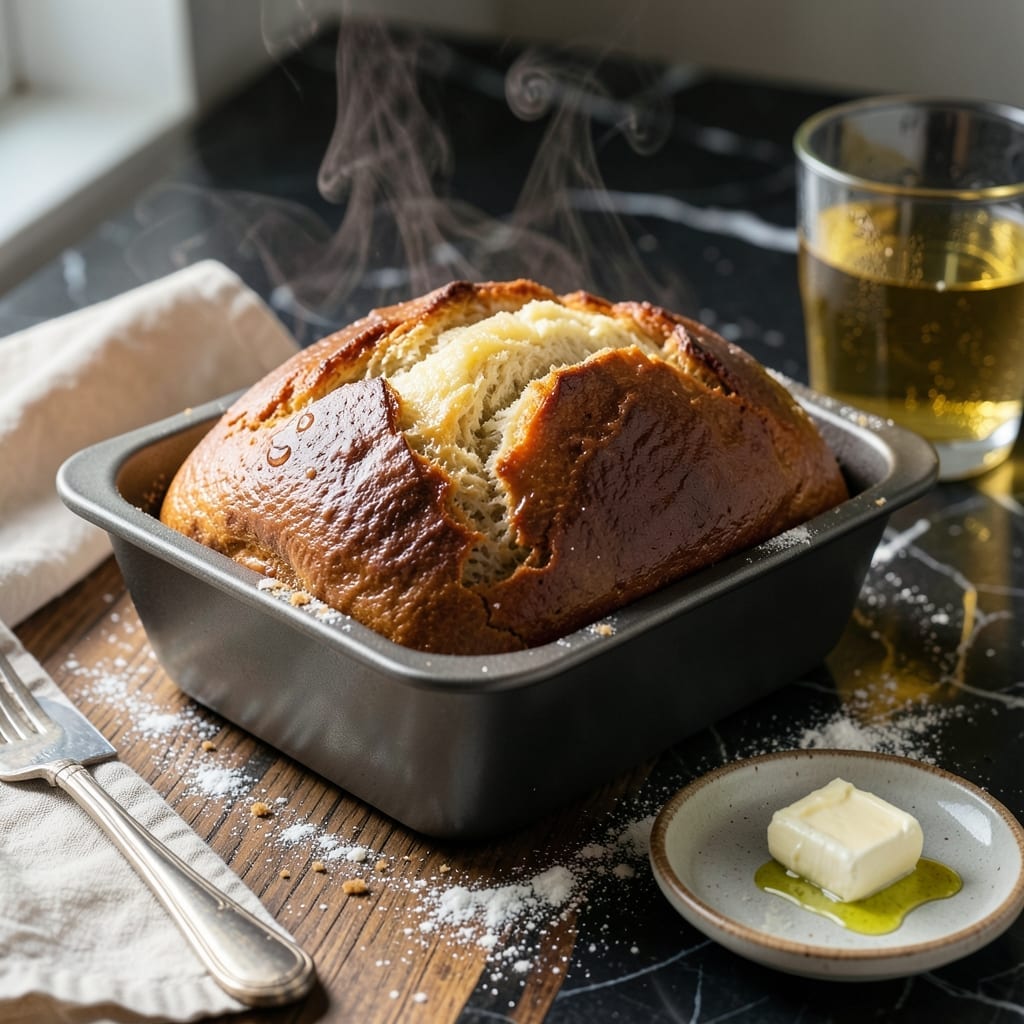
There’s nothing quite like the aroma of fresh-baked bread filling your kitchen. This method delivers perfect results with minimal effort.
Using your Sunbeam breadmaker, you’ll achieve a golden, homemade loaf with a tender crumb and crisp crust every time.
Ingredients for Sunbeam Breadmaker
Simple ingredients, your breadmaker does the work. Fresh loaf in hours, not all day.
| Ingredient | Amount | Notes |
|---|---|---|
| Bread Flour 🌾 | 3 ½ cups | All-purpose works too, slightly denser |
| Warm Water 💧 | 1 ¼ cups | 110°F, not hotter |
| Granulated Sugar 🍚 | 2 tbsp | Feeds the yeast |
| Active Dry Yeast 🍞 | 2 ¼ tsp | One packet, check expiration |
| Salt 🧂 | 1 ½ tsp | Fine grain for even distribution |
| Unsalted Butter 🧈 | 2 tbsp | Softened, cut into pieces |
| Non-Fat Dry Milk 🥛 | ¼ cup | Adds tenderness and richness |
| Honey 🍯 | 2 tbsp | Or substitute maple syrup |
| Large Egg 🥚 | 1 whole | Room temperature preferred |
| Olive Oil 🫒 | 1 tbsp | Light for baking, not extra-virgin |
| Vital Wheat Gluten 🌾 | 1 tbsp | Improves texture (optional) |
[recipe_ingredient_scaler]
The flour is the foundation—King Arthur Bread Flour is my go-to for consistent rise and texture. Gold Medal works too. Yeast is the magic ingredient here, so check that expiration date. Old yeast means sad, flat loaves. I buy mine in bulk from Costco and freeze it in portions. The water temp matters more than you think—too hot kills the yeast, too cold won’t activate it. A kitchen thermometer is worth it.
No bread flour? All-purpose plus 1 tbsp vital wheat gluten per cup. Out of honey? Maple syrup or sugar work fine. Dry milk can be skipped, but your loaf will be slightly denser. Butter can be swapped for vegetable oil in a pinch. The egg adds richness, but you can leave it out for a vegan version (just add 1 tbsp extra water).
Store flour in an airtight container to keep out moisture. Yeast lasts 6 months in the freezer, 1 month in the pantry. Baked loaves stay fresh 3-4 days in a bread box or wrapped in foil. Slice and freeze for longer storage—perfect for toast whenever the craving hits.
Why You’ll Love This Recipe
- Set and Forget: I just dump the flour, sugar, yeast, and salt into the breadmaker, add warm water, and let the machine do the work—no kneading, no watching.
- Warm, Fresh Scent: That first bite of warm, just-baked bread with its soft crumb and slightly crisp crust? Pure comfort in every slice.
- Meal Prep Hero: I make a loaf on Sunday and it fuels sandwiches, toast, and dinner sides all week long.
- Penny-Wise Loaf: Honestly, it costs me about 50 cents per loaf versus five bucks at the bakery, and my family can’t tell the difference.
Step-by-Step Instructions for Sunbeam Breadmaker Homemade Loaf
This hands-off method delivers bakery-quality results with your bread machine doing most of the work.
Step 1: Prepare and Measure All Ingredients
I always start by gathering all the components before assembling. Measure out the 3.5 cups bread flour, 1.25 cups warm water at exactly 110°F, 2 tbsp granulated sugar, 2.25 tsp active dry yeast, and 1.5 tsp salt precisely.
Check that your yeast is fresh—expired yeast won’t activate properly. Have the 2 tbsp unsalted butter softened and cut into small pieces, plus the 0.25 cup non-fat dry milk, 2 tbsp honey, 1 whole large egg, 1 tbsp olive oil, and 1 tbsp vital wheat gluten ready. Accuracy here prevents density issues in your loaf.
Step 2: Layer Ingredients in the Bread Pan
Place the bread pan in your Sunbeam machine and begin adding ingredients in this specific order: first the 1.25 cups warm water, then the 1 tbsp olive oil and 2 tbsp honey. These liquids should pool at the bottom.
Next, add the 0.25 cup non-fat dry milk, 3.5 cups bread flour, 1.5 tsp salt, 2 tbsp granulated sugar, and 1 tbsp vital wheat gluten. Create a small well in the center of the dry ingredients for the yeast. Add the 2.25 tsp active dry yeast to this well—keep it separated from the liquids to prevent premature activation.
Finally, add the 1 whole large egg and pieces of 2 tbsp unsalted butter around the edges. This layering ensures proper mixing and activation during the kneading cycle.
Step 3: Select and Start the Bread Cycle
Secure the bread pan in your Sunbeam machine and close the lid. Select the basic white bread setting with a medium crust. Most Sunbeam models have a 1.5 or 2-pound loaf option—choose based on your pan size, but this recipe works perfectly for either.
The machine will begin with a kneading cycle that lasts about 10-15 minutes. Watch through the window as it incorporates all ingredients. The dough should form a smooth, elastic ball. If it appears too dry after 5 minutes, add 1-2 tbsp warm water. If too sticky, add 1-2 tbsp bread flour. Avoid opening the lid unnecessarily during this phase.
Step 4: Monitor the Baking Process
After kneading, the machine enters the first rise cycle, lasting about 45-60 minutes. The dough should approximately double in size. Resist the urge to check on it—the consistent environment is key to proper proofing.
The final rise and bake cycles take another 1.5-2 hours depending on your machine. You’ll know it’s nearing completion when you smell that unmistakable aroma of baking bread. The machine will automatically keep the loaf warm for 1 hour after baking finishes, but I recommend removing it promptly for the best texture.
Step 5: Cool and Slice the Perfect Loaf
When the cycle completes, carefully remove the pan using oven mitts—it will be extremely hot. Turn the loaf out onto a wire rack and let it cool for at least 30 minutes before slicing. This cooling period allows the internal structure to set properly.
Use a sharp serrated knife to slice the loaf when ready. The crust should be golden brown and the interior soft with a fine, even crumb. Each slice should have a perfect, airy texture with no dense spots. Serve warm or at room temperature for the ultimate homemade bread experience.
Pro Tips For Making Sunbeam Breadmaker
- Test Your Yeast: I learned this the hard way—proof your active dry yeast in the warm water with sugar for 5-10 minutes until foamy before adding to the breadmaker. If it doesn’t bubble, your loaf won’t rise.
- Measure Flour Right: Scoop your bread flour into the measuring cup, then level it off—packing it down adds too much and makes dense bread. My first few loaves were bricks until I fixed this.
- Salt Last: Keep the salt in a separate corner of the bread pan until the liquids are added. Direct contact with yeast can slow activation, and your bread won’t rise properly.
- Use Bread Flour: Skip the all-purpose flour—bread flour’s higher protein content gives the gluten structure needed for that perfect sunbeam breadmaker loaf. I was skeptical until I tried it, and the texture improvement was undeniable.
Best Sauces and Condiments for These Flavors
Classic Butter Spread
Nothing beats the simplicity of softened unsalted butter on warm bread straight from the machine. I mix ½ cup room-temperature butter with a pinch of flaky sea salt and a drizzle of local honey for a touch of sweetness. This spread melts beautifully into the crumb. 💛
Herb-Infused Oils
I forage wild rosemary and thyme from my coastal rides, then infuse ½ cup olive oil with 2 tbsp chopped herbs for 1 week. The aromatic oil adds a sophisticated touch when brushed on slices. Basil oil works wonderfully too for a lighter, summery flavor.
Garlic Aioli
Blend ½ cup mayonnaise with 2 minced garlic cloves, 1 tbsp lemon juice, and ¼ tsp smoked paprika. This creamy aioli pairs perfectly with the bread’s mild sweetness. I like using Duke’s mayonnaise for its tangy bite.
Sweet Cinnamon Honey
Combine ¼ cup honey with 1 tsp ground cinnamon and a pinch of cayenne for warmth. Drizzle over thick slices for a quick breakfast treat. The heat from the cayenne balances the sweetness beautifully.
Savory Pesto
My go-to is a classic basil pesto with 2 cups fresh basil, ¼ cup pine nuts, ½ cup Parmesan, and ½ cup olive oil. Spread it on slices for an Italian-inspired twist. Toast the pine nuts first for deeper flavor. 🌟
Cheese Pairings
For a hearty snack, top warm slices with aged cheddar or Brie and broil until melted. I source my cheeses from local farmers markets—the sharpness of aged cheddar complements the bread’s subtle sweetness perfectly.
Nutrition Facts
Frequently Asked Questions
Do I need to use bread flour?
Bread flour gives the best texture, but all-purpose flour works in a pinch. Add 1 tbsp vital wheat gluten per cup to improve rise and crumb. The protein difference affects chewiness and structure.
Why did my loaf collapse?
This usually means the yeast was old or the water too hot. Always check yeast expiration and use 110°F water. Overproofing from opening the lid can also cause this issue.
Can I add mix-ins like nuts or fruit?
Add ½ cup of raisins, nuts, or cheese during the mix-in beep (usually after 5-10 minutes of kneading). Avoid adding too early or they’ll get crushed.
How do I clean the bread pan?
Let it cool completely, then soak in warm soapy water. Use a soft sponge—never abrasives. The non-stick coating is delicate. Dry thoroughly before storing.

Trained in classic French technique but raised on slow-cooked ribs and spicy rubs, she blends culinary skill with smoke and soul.
- Recipe for Boneless Pork Chops in Cast Iron Skillet: Sear and Baste to Juicy Perfection - October 3, 2026
- Recipe for Boneless Cross Rib Roast: Slow-Roasted Beef with Herb Crust - October 3, 2026
- Hamburgers in Sauce Recipe Crock Pot: Slow-Cooked Savory Delight - October 3, 2026