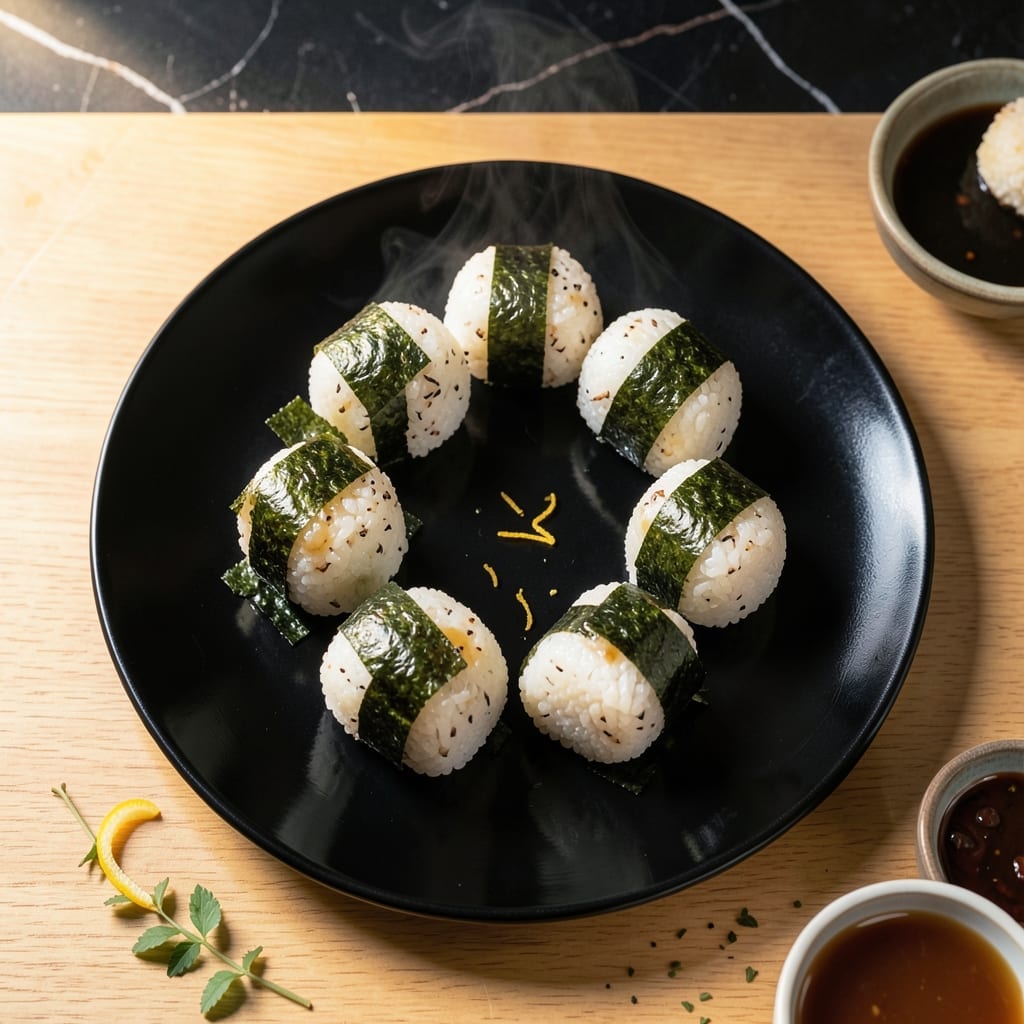
Mastering sushi rice balls requires precision in both rice preparation and shaping technique. The foundation lies in properly seasoned sushi rice that holds its form while delivering authentic flavor.
I’ve perfected a method that creates bite-sized portions with a delicate balance of vinegar, sugar and salt. The rice must be cooled slightly before handling to prevent sticking while maintaining its characteristic stickiness.
The shaping process demands gentle but firm pressure to create uniform spheres that hold their structure. Each ball should have a smooth surface with just enough compression to maintain integrity without becoming dense.
These umami pockets serve as the perfect canvas for various fillings or simply enjoy them plain with a touch of soy sauce. The result is a clean, elegant presentation that captures the essence of traditional sushi.
Ingredients for Sushi Rice Balls
Twelve ingredients transform into elegant, bite-sized umami pockets with authentic Japanese flavor and perfect texture.
| Ingredient | Amount | Notes |
|---|---|---|
| Sushi Rice 🍚 | 2 cups | Short-grain Japanese rice, rinsed thoroughly |
| Water 💧 | 2 ½ cups | For cooking rice |
| Rice Vinegar 🍶 | ⅓ cup | Seasoned rice vinegar preferred |
| Granulated Sugar 🍚 | 2 tbsp | Dissolved in vinegar mixture |
| Kosher Salt 🧂 | 1 ½ tsp | Fine grain for even distribution |
| Nori Sheets 🍣 | 2 sheets | Toasted seaweed, cut into strips |
| Soy Sauce 🫕 | ¼ cup | Low-sodium for serving |
| Sesame Seeds 🌰 | 1 tbsp | Toasted for garnish |
| Pickled Ginger 🌸 | ¼ cup | Thinly sliced for serving |
| Wasabi Paste 🟢 | 1 tbsp | Optional for spice |
| Cucumber 🥒 | ½ whole | Peeled, seeded, and julienned |
| Avocado 🥑 | 1 whole | Ripe, sliced thin for filling |
| Imitation Crab 🦀 | ½ lb | Flaked for filling |
[recipe_ingredient_scaler]
The rice is non-negotiable—short-grain Japanese sushi rice is essential for the right sticky texture. Nishiki or Koshihikari brands are reliable and widely available at Asian markets or larger supermarkets. Rinse it 4-5 times until the water runs clear to remove excess starch (worth the extra minute). For the vinegar mixture, use seasoned rice vinegar—it already contains sugar and salt, but I prefer controlling the balance myself.
No rice vinegar? Apple cider vinegar with a pinch of sugar can work in a pinch, though the flavor won’t be as clean. Skip the imitation crab for a vegetarian version and use shredded carrots or avocado instead. If your nori sheets are large, cut them into 1-inch strips for easy wrapping. The wasabi is optional but adds a nice kick—start with half the amount if you’re sensitive to spice.
Cooked rice keeps at room temp for 2 hours max—don’t let it sit longer. Store assembled rice balls in an airtight container with a damp paper towel on top to prevent drying. Best served within 4 hours of making, but you can prep components a day ahead and assemble just before serving.
Why You’ll Love This Recipe
- No Fuss Cooking: I just dump rice, water, and a quick vinegar-sugar-salt mix into the pot—no fancy techniques needed.
- Sweet-Tangy Bite: That rice vinegar and sugar combo hits the right balance, making every bite addictive.
- Party or Lunchbox: I pack these for picnics, add to bento boxes, or serve as apps—always a hit.
- Budget Stretcher: A pound of sushi rice makes a dozen balls, and the seasonings cost pennies. Honestly, my wallet loves it.
Step-by-Step Instructions for Sushi Rice Balls
Master the technique for perfectly seasoned rice and well-formed balls with these professional steps.
Step 1: Prepare and Cook the Sushi Rice
Rinse the 2 cups Sushi Rice thoroughly under cold water until the water runs clear. This removes excess starch that would make the rice gummy. Drain well in a fine-mesh sieve for 10 minutes.
Combine the drained rice with 2.5 cups Water in a rice cooker or heavy pot. Cook according to your rice cooker’s instructions, or bring to a boil then reduce to a simmer covered for 15 minutes. Let it steam off heat for 10 minutes—the grains should be tender and distinct.
Step 2: Season the Rice with Vinegar Mixture
In a small bowl, dissolve the 2 tbsp Granulated Sugar and 1.5 tsp Kosher Salt in the 0.33 cup Rice Vinegar until completely incorporated. This sweet-salty balance defines authentic sushi rice flavor.
Transfer the cooked rice to a large wooden or glass bowl. Gently fold in the vinegar mixture using a cutting motion with a rice paddle or spatula. Fan the rice while folding to cool it to room temperature and give it a glossy finish. The rice should be sticky but not mushy.
Step 3: Prepare Fillings and Toppings
Peel, seed, and julienne the 0.5 whole Cucumber into thin strips. Slice the 1 whole Avocado into thin pieces just before assembly to prevent browning. Flake the 0.5 lb Imitation Crab into small pieces for easy rolling.
Cut the 2 sheets Nori Sheets into thin strips for garnish. Toast the 1 tbsp Sesame Seeds in a dry pan over medium heat for 1-2 minutes until golden brown and fragrant. Arrange the 0.25 cup Pickled Ginger, 0.25 cup Soy Sauce, and 1 tbsp Wasabi Paste for serving.
Step 4: Shape the Rice Balls
Wet your hands with cold water to prevent sticking. Take about ¼ cup of the seasoned rice and press it into a loose ball in your palm. Use your thumb to create a small indentation in the center for the filling.
Add a small amount of cucumber, avocado, and imitation crab to the indentation. Gently enclose the filling by pressing additional rice around it, forming a compact ball. The rice should hold together firmly without cracking. Aim for 1.5-inch diameter balls for ideal bite-sized portions.
Step 5: Garnish and Serve
Roll the completed rice balls in the toasted sesame seeds, pressing gently so they adhere. Wrap a strip of nori around each ball or place it on top as a garnish. The nori should be fresh and crisp.
Serve immediately with soy sauce for dipping, pickled ginger for palate cleansing, and a small amount of wasabi paste for those who prefer heat. The rice balls should maintain their shape but yield slightly when pressed, revealing the colorful filling within.
Pro Tips For Making Sushi Rice Balls
- Rinse the Rice: Wash the sushi rice in a fine-mesh strainer until the water runs clear—this removes excess starch so your rice balls hold shape instead of turning mushy.
- Warm the Vinegar: Gently heat the rice vinegar, sugar, and salt in a small saucepan until dissolved, then cool slightly before mixing into rice—cold grains absorb the seasoning better.
- Keep Hands Wet: Dip your hands in water before shaping each rice ball to prevent sticking and get smoother, cleaner edges.
- Use Plastic Wrap: Line your bowl with plastic wrap before pressing rice for compact, uniform rice balls—peel it off and you’re done, no mess.
Perfect Pairings for This Dish
Beverage Pairings
For drinks, I love serving these with green tea—either hot or iced. The subtle grassy notes complement the rice vinegar perfectly. Sake works beautifully too, especially a dry junmai that won’t overpower the delicate flavors. 🍵
Dipping Sauces
Beyond soy sauce, try a spicy mayo by mixing 2 tbsp mayo with 1 tsp sriracha. A citrus ponzu made with 3 tbsp soy sauce, 1 tbsp yuzu juice, and 1 tsp mirin adds a bright contrast.
Fresh Accompaniments
I always include edamame tossed with sea salt for a protein boost. A seaweed salad with sesame dressing mirrors the nori flavors. These keep the meal light and balanced.
Dessert Pairing
End with mochi ice cream in green tea or mango flavors. The chewy texture and sweetness provide a satisfying contrast to the savory rice balls. I find My/Mo Mochi brand widely available. ✨
Nutrition Facts
Frequently Asked Questions
Why do I need to rinse the rice?
Rinsing removes excess starch to prevent gummy rice. Stop when the water runs clear, usually after 4-5 rinses.
Can I make these the night before?
Prep components ahead but assemble last-minute. Cooked rice keeps at room temperature for 2 hours max. Store with a damp towel to prevent drying.
What if my rice balls keep falling apart?
Wet your hands more between balls and use slightly more pressure when shaping. Ensure rice is cooled to room temperature before handling.
Can I use long-grain rice?
No, short-grain Japanese rice is essential for the right sticky texture. Long-grain varieties won’t hold together properly.

Trained in classic French technique but raised on slow-cooked ribs and spicy rubs, she blends culinary skill with smoke and soul.
- Recipe for Boneless Pork Chops in Cast Iron Skillet: Sear and Baste to Juicy Perfection - October 3, 2026
- Recipe for Boneless Cross Rib Roast: Slow-Roasted Beef with Herb Crust - October 3, 2026
- Hamburgers in Sauce Recipe Crock Pot: Slow-Cooked Savory Delight - October 3, 2026