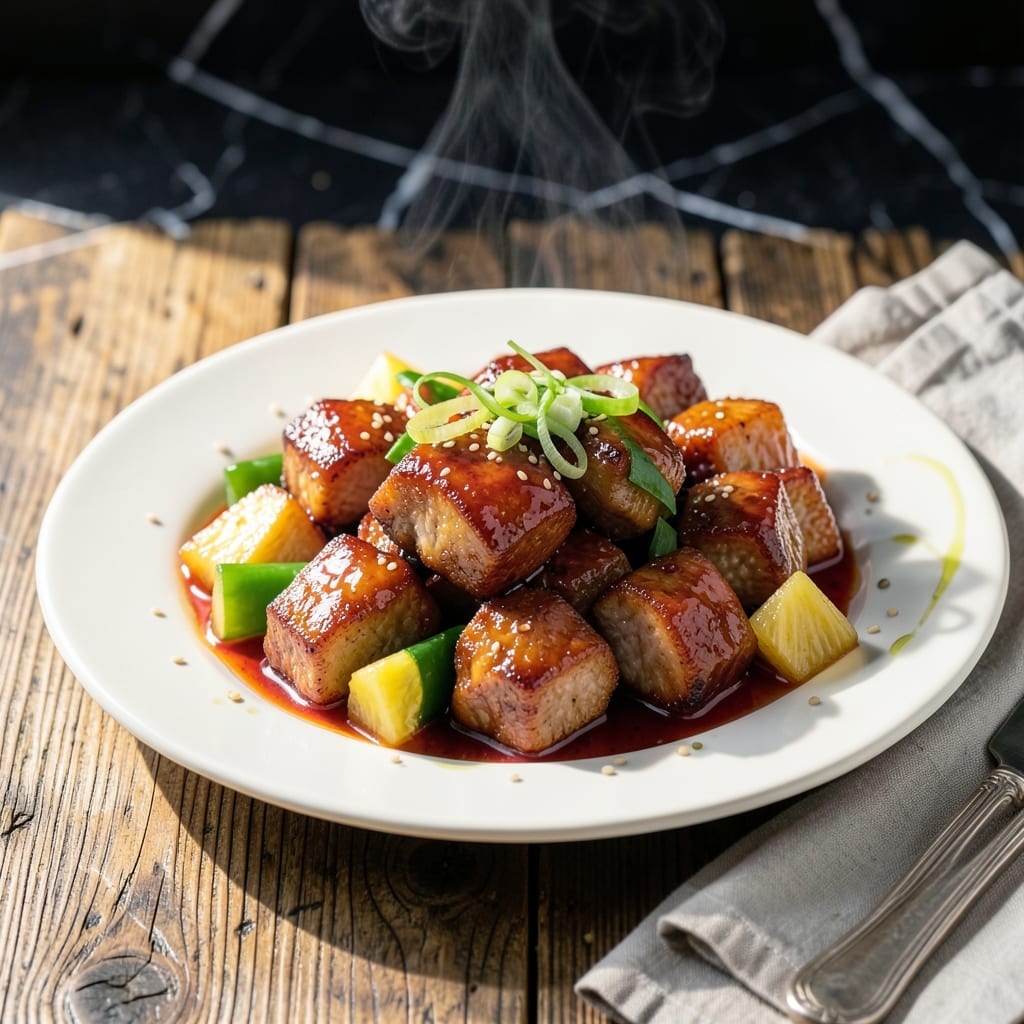
This recipe delivers crispy pork bites coated in a tangy, glossy sweet and sour glaze. I developed this method to achieve restaurant-quality texture at home.
Each piece stays tender inside while maintaining a shatteringly crispy exterior. The sauce balances bright citrus with rich sweetness for perfect harmony.
Ingredients for Sweet and Sour Pork
Pork shoulder cubes, a crispy cornstarch coating, and bright, tangy sauce ingredients create this dish.
| Ingredient | Amount | Notes |
|---|---|---|
| Pork Shoulder 🍖 | 1 ½ lb | Cut into 1-inch cubes, bone-in or boneless |
| Cornstarch 🌾 | ½ cup | For coating pork |
| Vegetable Oil 🫒 | 3 cups | For deep-frying, high smoke point |
| Rice Vinegar 💧 | ½ cup | For tangy sauce base |
| Ketchup 🍅 | ½ cup | For sweet and rich depth |
| Brown Sugar 🧈 | ½ cup | Light or dark, packed |
| Soy Sauce 🫙 | 3 tbsp | Low-sodium preferred |
| Garlic Cloves 🧄 | 4 cloves | Minced finely for sauce |
| Fresh Ginger 🌿 | 1 tbsp | Peeled and grated |
| Green Bell Pepper 🌶️ | 1 whole | Diced into 1-inch pieces |
| Red Bell Pepper 🌶️ | 1 whole | Diced into 1-inch pieces |
| Pineapple Chunks 🍍 | 1 cup | Fresh or canned, drained |
| Scallions 🧅 | 4 whole | Thinly sliced for garnish |
| Salt 🧂 | 1 tsp | Kosher or sea salt |
| Black Pepper 🌶️ | ½ tsp | Freshly ground preferred |
[recipe_ingredient_scaler]
The pork shoulder is non-negotiable for texture—bone-in adds richness, but boneless works if that’s what’s available. Look for well-marbled cuts at Whole Foods or your local butcher. For the frying oil, peanut or canola oil (with their high smoke points) are ideal, but standard vegetable oil is fine. The cornstarch must be fresh; old starch loses its crisping power. Store it in an airtight container to maintain potency.
No rice vinegar? Apple cider vinegar at a 1:1 ratio works well. For a deeper color, swap half the ketchup for hoisin sauce. Fresh pineapple adds brightness, but canned (in juice, not syrup) is acceptable—drain it well to avoid a watery sauce. If you’re out of brown sugar, coconut sugar or granulated white sugar can substitute, though the flavor will shift slightly.
Fry the pork in batches to avoid crowding the pan—this ensures each piece achieves that shatteringly crisp texture. The sauce can be made 2 days ahead and reheated gently. Leftovers keep for 3-4 days in the fridge but are best served fresh, as the coating softens over time.
Why You’ll Love This Recipe
- One Pan Wonder: I love that I only need a single pan and a few ingredients like pork shoulder and cornstarch to get this on the table.
- Tangy Perfection: The mix of rice vinegar and ketchup hits that sweet and sour balance I crave every time.
- Weeknight Hero: Honestly, it’s my go-to for busy evenings when I need something fast but still satisfying.
- Budget Stretcher: Pork shoulder is so affordable, and this recipe makes it taste like a million bucks.
Step-by-Step Instructions for Sweet and Sour Pork
Master the technique for achieving crispy pork with a glossy, tangy sauce that clings perfectly.
Step 1: Prepare and Coat the Pork
Cut the 1.5 lb pork shoulder into 1-inch cubes and pat them completely dry with paper towels. This removes excess moisture, ensuring a crispier coating. Season the pork with 1 tsp salt and 0.5 tsp black pepper, tossing gently to distribute evenly.
Place the 0.5 cup cornstarch in a large bowl. Add the seasoned pork and toss until each piece is fully coated with a thin, even layer. The cornstarch creates an ultra-crispy exterior that holds up to the sauce later. Let the coated pork rest for 5 minutes while you heat the oil.
Step 2: Deep-Fry to Crispy Perfection
Pour the 3 cups vegetable oil into a deep, heavy-bottomed pot or Dutch oven. Heat the oil over medium-high heat to 350°F. Use a deep-fry or candy thermometer for accuracy—this temperature ensures the pork cooks through without burning the coating.
Working in batches to avoid crowding, carefully lower the pork into the hot oil. Fry for 4-5 minutes until the pieces are golden brown and crispy. Stir gently with a slotted spoon to promote even browning. Transfer the fried pork to a wire rack or paper towels to drain excess oil. The pork should be crispy enough to resist sauce absorption later.
Step 3: Create the Tangy Sweet-and-Sour Glaze
In a small bowl, whisk together the 0.5 cup rice vinegar, 0.5 cup ketchup, 0.5 cup brown sugar, and 3 tbsp soy sauce until smooth. This forms the base of your glaze, balancing sweet, tangy, and umami flavors.
Heat a large wok or skillet over medium heat. Add the minced 4 cloves garlic cloves and grated 1 tbsp fresh ginger, stirring for 30 seconds until fragrant. Pour in the vinegar mixture and bring to a gentle simmer. Cook for 2-3 minutes until the sauce thickens slightly and becomes glossy.
Step 4: Toss and Finish with Fresh Ingredients
Add the diced 1 whole green bell pepper and 1 whole red bell pepper to the wok. Stir-fry for 2-3 minutes until the peppers soften slightly but retain a crisp bite. Add the 1 cup pineapple chunks and cook for 1 minute, allowing them to warm through and absorb some of the sauce.
Return the crispy pork to the wok and toss everything together gently, ensuring each piece is coated in the glaze. Cook for an additional 1-2 minutes just to marry the flavors. The sauce should cling to the pork without making it soggy—this is where the crispy coating pays off.
Garnish with thinly sliced 4 whole scallions and serve immediately. The contrast of crispy pork, tender vegetables, and the glossy, tangy sauce is what makes this dish exceptional.
Pro Tips For Making Sweet And Sour Pork
- Double Fry the Pork: Fry the pork pieces once at 350°F for 3 minutes, rest them, then fry again at 400°F for 2 minutes. I learned this the hard way—skipping the second fry leaves the coating soggy instead of crisp.
- Velvet the Meat: Marinate the pork shoulder with 1 tablespoon cornstarch and 1 tablespoon water for 20 minutes before cooking. Sounds weird, but it works—this keeps the pork juicy even after frying.
- Skip the Overcrowding: Fry in small batches with at least 1 inch between pieces, using about 2 cups of oil. After burning three batches, I finally figured out that crowded pork steams instead of crisps.
- Balance the Sauce: Use 3 parts ketchup to 1 part rice vinegar, and add a pinch of salt to cut the sweetness. My grandmother swore by this, and she was right—the sauce tastes flat without it.
Dietary Considerations for These Flavors
Gluten-Free Option
Replace the soy sauce with tamari to make this dish gluten-free. I always keep a bottle of San-J tamari in my pantry for this exact purpose. The flavor is nearly identical to regular soy sauce. 💡
Lower Sugar Version
Cut the brown sugar in half and add 2 tbsp honey or 1 tbsp stevia for a lower glycemic impact. The natural sweetness of pineapple will still shine through.
Dairy-Free Note
This recipe is naturally dairy-free since it relies on cornstarch for crispiness and plant-based ingredients for the sauce. No substitutions needed here.
Paleo Adaptation
Use coconut sugar instead of brown sugar and coconut aminos in place of soy sauce. For the coating, arrowroot powder works better than cornstarch.
Vegetarian Swap
Replace the pork with extra-firm tofu or cauliflower florets. Press the tofu for 30 minutes before coating and frying. The technique remains the same. 🌱
Nut Allergy Safe
This recipe contains no nuts or nut-derived ingredients. Just double-check your ketchup and soy sauce brands for any cross-contamination warnings.
Nutrition Facts
Frequently Asked Questions
Can I use a different cut of pork?
Pork shoulder works best for its marbling and tenderness. For a leaner option, try pork loin, but cut it into slightly larger pieces to prevent drying out.
How do I keep the coating crispy?
Fry in small batches at 350°F and avoid overcrowding. Drain on a wire rack, not paper towels, to prevent steam from softening the coating.
Can I make the sauce ahead of time?
Yes! Prepare the sauce up to 2 days ahead and store it in the fridge. Reheat gently before tossing with the pork to maintain its glossy texture.
What if my sauce is too thin?
Simmer it for an extra 2-3 minutes to thicken. For a quick fix, mix 1 tsp cornstarch with 1 tbsp water and stir it into the sauce.

Trained in classic French technique but raised on slow-cooked ribs and spicy rubs, she blends culinary skill with smoke and soul.
- Recipe for Boneless Pork Chops in Cast Iron Skillet: Sear and Baste to Juicy Perfection - October 3, 2026
- Recipe for Boneless Cross Rib Roast: Slow-Roasted Beef with Herb Crust - October 3, 2026
- Hamburgers in Sauce Recipe Crock Pot: Slow-Cooked Savory Delight - October 3, 2026