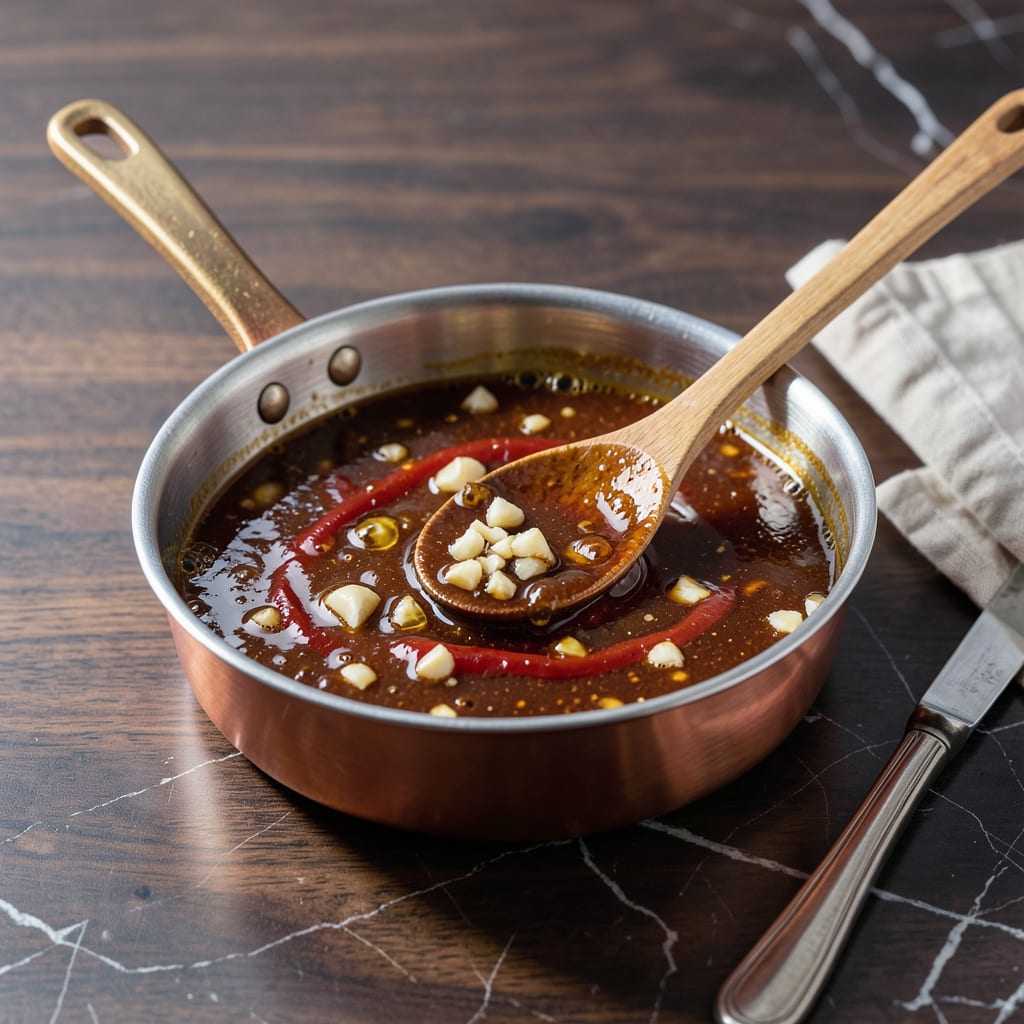
This sauce brings together sweet, tangy, and umami flavors with a hint of five-spice complexity. I developed it to elevate grilled meats and vegetables with an irresistible sticky glaze.
Perfect for brushing on ribs, chicken, or tofu during the last minutes of cooking. The balance of sweetness and depth makes it versatile for dipping or glazing.
Ingredients for Sweet Asian Bbq Sauce
Nine ingredients blend into a glossy, complex glaze you will crave on everything.
| Ingredient | Amount | Notes |
|---|---|---|
| Hoisin Sauce 🥫 | ¾ cup | Check for vegan label |
| Ketchup 🍅 | ½ cup | Organic preferred for depth |
| Rice Vinegar 🍚 | 3 tbsp | Unseasoned variety required |
| Soy Sauce 🥄 | 2 tbsp | Use low-sodium for balance |
| Brown Sugar 🏝️ | ¼ cup | Light or dark works fine |
| Honey 🍯 | 2 tbsp | Substitute maple syrup for vegan |
| Fresh Ginger 🌿 | 1 tbsp | Finely grated for texture |
| Garlic Cloves 🧄 | 3 cloves | Minced for even distribution |
| Five-Spice Powder 🌶️ | ½ tsp | Freshly ground for intensity |
| Sesame Oil 🫒 | 1 tsp | Toasted variety for nutty aroma |
[recipeingredientscaler]
The hoisin is doing most of the heavy lifting here—Koon Chun or Kikkoman are reliable brands. Check the label though, some contain fish or honey. Whole Foods or Asian markets will have the widest selection. For soy sauce, tamari works too (and it’s usually gluten-free). The five-spice powder should smell fragrant, not dusty. If it’s been in your cabinet for years, grab a fresh tin from Penzeys.
No hoisin? Mix 2 tbsp miso + 1 tbsp molasses + 1 tsp soy as a stand-in. Swap honey for maple syrup or agave (the flavor changes slightly but still works). Apple cider vinegar can replace rice vinegar if needed. Skip the five-spice? Add 1/4 tsp each cinnamon and star anise for similar warmth. The ginger and garlic are non-negotiable though—don’t even think about skipping them.
This keeps 2 weeks in the fridge, 3 months frozen. Store in a glass jar for best results. The flavors deepen after a day, so make it ahead if you can. Freeze in ice cube trays for easy portioning.
Why You’ll Love This Recipe
- 5-Minute Mix: I dump all the ingredients in a saucepan and stir. Honestly, it’s ready before the grill heats up.
- Sweet-Savory Balance: The hoisin and brown sugar give it that sticky, caramelized depth, while rice vinegar cuts through with just the right tang.
- Slather on Anything: I’ve used it on ribs, chicken skewers, even tofu—works every time. Between us, it’s my secret for making leftovers disappear.
- Pantry Staples: No special shopping needed. Soy sauce, ketchup, and the rest are already in my cupboard, saving me a trip to the store.
Step-by-Step Instructions for Sweet Asian BBQ Sauce
This sauce comes together quickly with a perfect balance of sweet, tangy, and umami depth.
Step 1: Bloom Aromatics in Sesame Oil
Heat the 1 tsp Sesame Oil in a medium saucepan over medium heat. Add the minced 3 cloves Garlic Cloves and 1 tbsp Fresh Ginger, stirring constantly for 30-45 seconds until fragrant but not browned.
This brief cooking step softens the raw edge of the garlic and ginger while releasing their essential oils. Watch closely—garlic burns easily and will turn bitter if overcooked. The sesame oil’s nutty aroma should become more pronounced as it heats.
Step 2: Combine Wet and Sweet Components
Pour in the 0.75 cup Hoisin Sauce, 0.5 cup Ketchup, 3 tbsp Rice Vinegar, and 2 tbsp Soy Sauce. Stir well to combine, then add the 0.25 cup Brown Sugar and 2 tbsp Honey.
The mixture will look thin at first, but don’t worry—the sugars will thicken it as they cook down. I always use a whisk here to fully dissolve the brown sugar into the liquid components. The hoisin’s deep molasses notes should already be noticeable at this stage.
Step 3: Simmer and Reduce to Glaze Consistency
Bring the mixture to a gentle boil, then reduce heat to maintain a steady simmer. Add the 0.5 tsp Five-Spice Powder, stirring to distribute evenly. Cook for 8-10 minutes, stirring occasionally, until the sauce reduces by about a third.
You’ll know it’s ready when it coats the back of a spoon and leaves a clear trail when you run your finger through it. The five-spice adds warmth and complexity—its cinnamon, clove, and star anise notes should come through as the sauce reduces. Keep the heat at a simmer, not a rolling boil, to prevent scorching.
Step 4: Cool and Thicken Slightly
Remove the saucepan from heat and let the sauce cool for 10 minutes. It will continue to thicken slightly as it cools. The final consistency should be similar to commercial BBQ sauce—thick enough to cling to a brush but still pourable.
Taste and adjust seasoning if needed, though the balance of sweet, salty, and tangy should be spot-on. The sauce will have a glossy sheen and a deep mahogany color. For immediate use, apply to meats during the last few minutes of grilling. For storage, transfer to a jar once completely cooled.
Pro Tips For Making Sweet Asian Bbq Sauce
- Simmer Low and Slow: Cook the sauce on medium-low heat for 8-10 minutes, stirring often—brown sugar burns easily if you rush it, and I learned this the hard way.
- Balance the Hoisin: Hoisin can overpower, so start with 3 tablespoons, then adjust; I used to dump it all in and ended up with sauce that tasted like a candy store.
- Skip the Boil: Resist the urge to crank the heat to high—it’ll thicken unevenly and turn syrupy, not glossy like you want.
- Swap for Honey: If you’re out of brown sugar, honey works in a pinch—use 2/3 cup and reduce the rice vinegar by a teaspoon to keep the sweet-tangy balance.
Essential Equipment for sweet asian bbq sauce
Saucepan Selection
For this sauce, I always reach for my 3-quart stainless steel All-Clad saucepan. The even heat distribution prevents scorching, especially important when working with sugar. A heavy bottom is non-negotiable—thin pans will cause hot spots that can burn your garlic or caramelize the sugar too quickly. 🔥
Whisk for Smoothness
Use a flat-bottomed stainless steel whisk to fully dissolve the brown sugar into the liquid components. I prefer the OXO Good Grips 11-inch—its comfortable handle and sturdy construction make quick work of combining the ingredients without scratching your cookware.
Measuring Tools
A set of stainless steel measuring cups and spoons ensures accuracy with sticky ingredients like honey and hoisin. I keep mine from Cuisinox in my kitchen at all times. For the ginger and garlic, a microplane grater gives you the finest texture without fibrous bits.
Storage Containers
Once cooled, transfer your sauce to a clean 16-ounce glass mason jar for storage. The wide mouth makes it easy to pour, and glass won’t absorb odors or stain like plastic. I label mine with masking tape and a Sharpie for easy identification in the fridge.
Optional Tools
A fine-mesh strainer comes in handy if you want ultra-smooth sauce, though I usually skip this step. For those who love gadgets, a digital instant-read thermometer helps monitor temperature during simmering, though I typically rely on visual cues and experience.
Cleanup Essentials
Keep a bench scraper nearby for transferring every last bit of sauce from pan to jar. The sticky glaze clings to surfaces, and this tool gets it all. A silicone spatula works too, but I find the metal scraper more precise for this thick sauce.
Nutrition Facts

Trained in classic French technique but raised on slow-cooked ribs and spicy rubs, she blends culinary skill with smoke and soul.
- Recipe for Boneless Pork Chops in Cast Iron Skillet: Sear and Baste to Juicy Perfection - October 3, 2026
- Recipe for Boneless Cross Rib Roast: Slow-Roasted Beef with Herb Crust - October 3, 2026
- Hamburgers in Sauce Recipe Crock Pot: Slow-Cooked Savory Delight - October 3, 2026