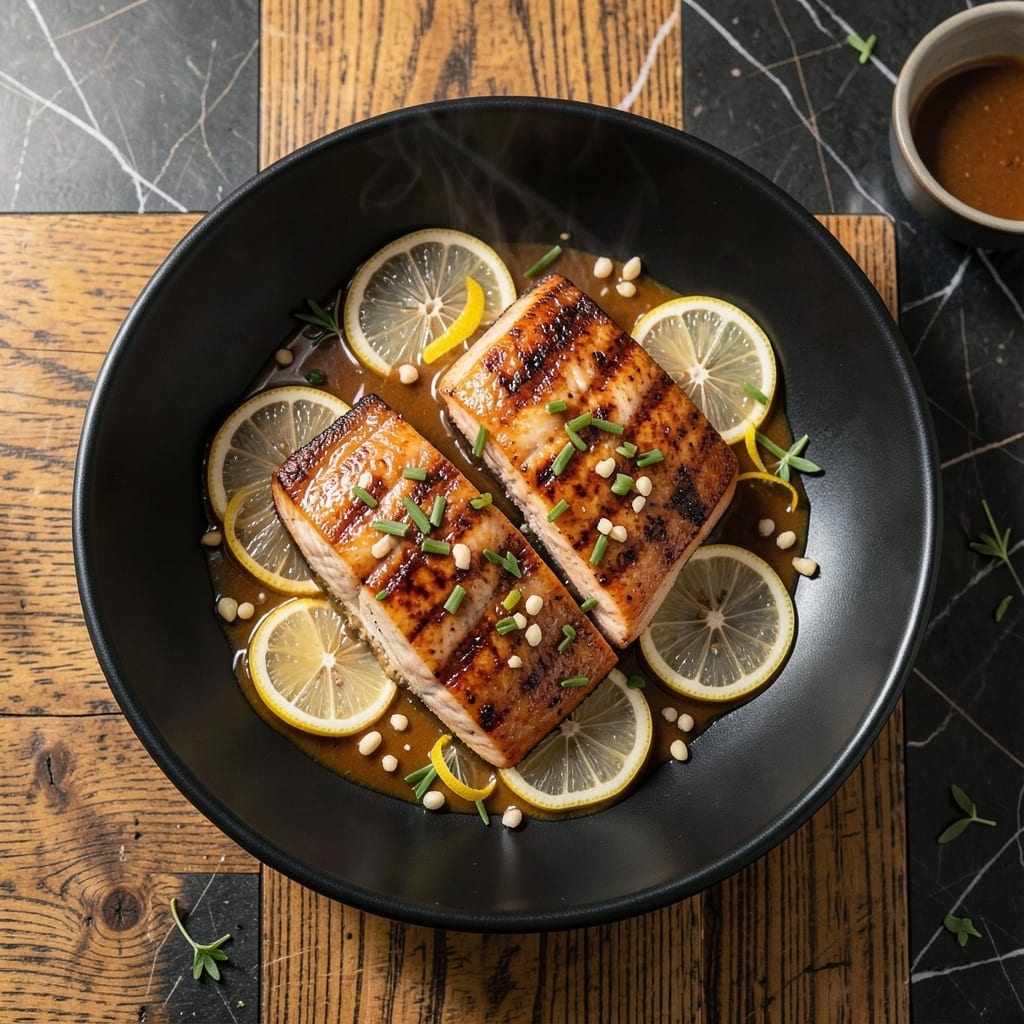
There’s nothing quite like the caramelized crust on honey-glazed salmon fresh off the grill. This method delivers tender, flaky fish with a sticky-sweet finish and bright citrus notes.
I’ve refined this technique over years of coastal cookouts, balancing sweetness with smoky char. The key is a quick, high-heat sear to lock in juices while creating a glossy, golden crust.
The honey glaze caramelizes beautifully, forming a glossy coat that contrasts with the salmon’s natural richness. A squeeze of citrus at the end cuts through the sweetness for perfect balance.
Serve this with grilled vegetables or a simple salad for a meal that feels special but comes together effortlessly.
Ingredients for Sweet Grilled Salmon
Wild salmon, honey, and citrus create this glossy, tender dish with minimal effort.
| Ingredient | Amount | Notes |
|---|---|---|
| Salmon Fillets 🐟 | 1 ½ lb | Skin-on, wild-caught preferred |
| Honey 🍯 | ¼ cup | Raw or pure variety |
| Soy Sauce 🥢 | 2 tbsp | Low-sodium for balance |
| Fresh Lemon Juice 🍋 | 2 tbsp | Newly squeezed for brightness |
| Dijon Mustard 🟡 | 1 tbsp | Smooth, not grainy |
| Garlic Cloves 🧄 | 3 cloves | Minced for even distribution |
| Olive Oil 🫒 | 2 tbsp | Extra-virgin for richness |
| Salt 🧂 | ½ tsp | Kosher or sea salt |
| Black Pepper 🌶️ | ½ tsp | Freshly ground preferred |
| Fresh Dill 🌿 | 2 tbsp | Chopped, for garnish |
| Lemon Zest 🍋 | 1 tsp | Finely grated for aroma |
| Red Pepper Flakes 🔥 | ¼ tsp | Optional for heat |
[recipe_ingredient_scaler]
The salmon quality is paramount. Wild-caught sockeye or king offer the best flavor and texture for grilling. Look for fillets with vibrant color and no fishy odor—Whole Foods or your local fishmonger are reliable sources. The skin should be intact and moist, not dried out. If buying frozen, thaw overnight in the fridge (never at room temperature).
No honey? Maple syrup or agave work in a pinch (use one-third less as they’re thinner). Soy sauce can be swapped for tamari for gluten-free. Fresh lemon is ideal, but bottled works if that’s all you have. The Dijon mustard adds depth—substitute yellow mustard at half the amount. Dried dill at one-third the quantity can replace fresh.
The glaze can be prepped 2 days ahead and stored in the fridge. Cooked salmon keeps for 2-3 days refrigerated. For best results, reheat gently in a skillet or enjoy cold in salads. Freezing cooked salmon isn’t recommended—it dries out the texture.
Why You’ll Love This Recipe
- One Pan Wonder: It’s just salmon, a quick honey-soy glaze, and 10 minutes on the grill—no extra bowls, no fuss.
- Sweet & Tangy Bite: The honey and Dijon mustard caramelize into this sticky, finger-licking crust that makes each bite ridicously good.
- Dinner or Lunch: I grill a big batch on Sunday and it’s just as good cold in salads or warm in wraps all week.
- Leftovers Hold Up: Here’s what sold me—it tastes even better the next day, and the flavors don’t fall apart in the fridge.
Step-by-Step Instructions for Sweet Grilled Salmon
Master the grill with precision timing and you’ll achieve perfectly glazed salmon with ideal flakiness.
Step 1: Create the Honey-Citrus Marinade
In a medium bowl, whisk together the 0.25 cup honey, 2 tbsp soy sauce, 2 tbsp fresh lemon juice, 1 tbsp Dijon mustard, and 3 cloves minced garlic until fully emulsified. The mixture should be smooth with no separation between the oil-based and water-based ingredients.
Add the 1 tsp lemon zest and 0.25 tsp red pepper flakes, stirring to distribute the zest evenly. I always let this marinade rest for 5 minutes to allow the flavors to meld before introducing the salmon. This brief waiting period ensures the garlic and zest fully infuse the liquid.
Step 2: Marinate and Prep the Salmon
Pat the 1.5 lb salmon fillets completely dry with paper towels. This critical step removes excess moisture that would otherwise prevent proper searing and caramelization. Place the fillets skin-side up in a shallow dish.
Pour the marinade over the salmon, turning to coat all surfaces evenly. Season with the 0.5 tsp salt and 0.5 tsp black pepper, pressing the seasoning into the flesh. Let marinate at room temperature for 15-20 minutes—no longer, as the acidic lemon juice will begin to “cook” the fish.
While the salmon marinates, brush the grill grates with 2 tbsp olive oil to prevent sticking. Preheat the grill to medium-high heat (about 400°F).
Step 3: Grill to Perfection
Place the marinated salmon fillets skin-side down on the oiled grates. Close the lid and cook undisturbed for 4-5 minutes. You’ll know it’s time to flip when the edges of the fillets turn opaque and the skin releases easily from the grates with a gentle tug.
Carefully flip the fillets using a thin, metal spatula. The glaze should be caramelizing into a glossy coating. Cook for an additional 3-4 minutes with the lid closed until the salmon reaches an internal temperature of 145°F and flakes easily with a fork.
During the final minute, spoon any remaining marinade from the dish onto the fillets to create a second layer of glaze.
Step 4: Rest and Garnish
Transfer the salmon to a serving platter and let rest for 5 minutes. This brief resting period allows the muscle fibers to relax and the juices to redistribute throughout the fillets, ensuring moist, tender flesh.
Sprinkle with the 2 tbsp fresh dill just before serving. The dill’s bright, grassy notes complement the sweetness of the honey and the acidity of the lemon perfectly. Serve immediately while the glaze is still sticky and the fish remains at its peak temperature.
Pro Tips For Making Sweet Grilled Salmon
- Pat Dry First: Always blot the salmon fillets with a paper towel before grilling—I learned this the hard way after my first few batches steamed instead of seared.
- Medium-High Heat Only: Crank the grill to medium-high (about 375-400°F) to caramelize the honey without burning it. Any hotter and the soy-honey glaze turns bitter.
- Marinate 30 Minutes: Let the salmon soak in the honey-soy-lemon-Dijon mix for exactly 30 minutes—longer makes the texture mealy, shorter and the flavors don’t stick.
- Baste While Grilling: Brush extra marinade on the fillets during the last 2 minutes of cooking for a glossy, sticky finish—just don’t add it too early or it’ll char.
Health Benefits of This Recipe
Heart Health Boost
Salmon is a powerhouse of omega-3 fatty acids, which support heart health and reduce inflammation. A 6-ounce serving delivers about 2,000mg of EPA and DHA, exceeding the American Heart Association’s weekly recommendation in one meal. 💪
Protein-Packed Meal
This fish provides 40 grams of high-quality protein per serving, complete with all nine essential amino acids. Unlike red meat, salmon offers this protein without saturated fat, making it ideal for maintaining healthy cholesterol levels.
Vitamin D Source
Each serving of salmon provides around 80% of your daily vitamin D needs. This is especially valuable during winter months when sunlight exposure is limited. I always feel more energized after including salmon in my diet.
Rich in B Vitamins
Salmon is loaded with essential B vitamins, including B12, B6, and niacin, which are crucial for energy metabolism and nervous system health. Wild-caught varieties tend to have higher concentrations of these nutrients.
Antioxidant Protection
This fish contains selenium and astaxanthin, powerful antioxidants that protect cells from damage. The astaxanthin gives salmon its pink color and supports skin health. Just 3-4 servings per week can provide significant benefits. ✨
Nutrition Facts
Frequently Asked Questions
What’s the ideal grill temperature?
Preheat your grill to medium-high heat around 400°F. This ensures the honey glaze caramelizes without burning while cooking the salmon through evenly.
Can I use a different sweetener?
Yes! Maple syrup or agave work well—use about one-third less since they’re thinner. Brown sugar mixed with a splash of water can also create a similar effect.
How do I prevent the salmon from sticking?
Oil your grill grates thoroughly and ensure they’re very hot before adding the fish. Also, pat the salmon completely dry before marinating to remove excess moisture.
Should I leave the skin on?
Yes, keeping the skin on helps hold the fillets together during grilling and adds extra flavor. The skin becomes crispy and delicious when cooked properly.

Trained in classic French technique but raised on slow-cooked ribs and spicy rubs, she blends culinary skill with smoke and soul.
- Recipe for Boneless Pork Chops in Cast Iron Skillet: Sear and Baste to Juicy Perfection - October 3, 2026
- Recipe for Boneless Cross Rib Roast: Slow-Roasted Beef with Herb Crust - October 3, 2026
- Hamburgers in Sauce Recipe Crock Pot: Slow-Cooked Savory Delight - October 3, 2026