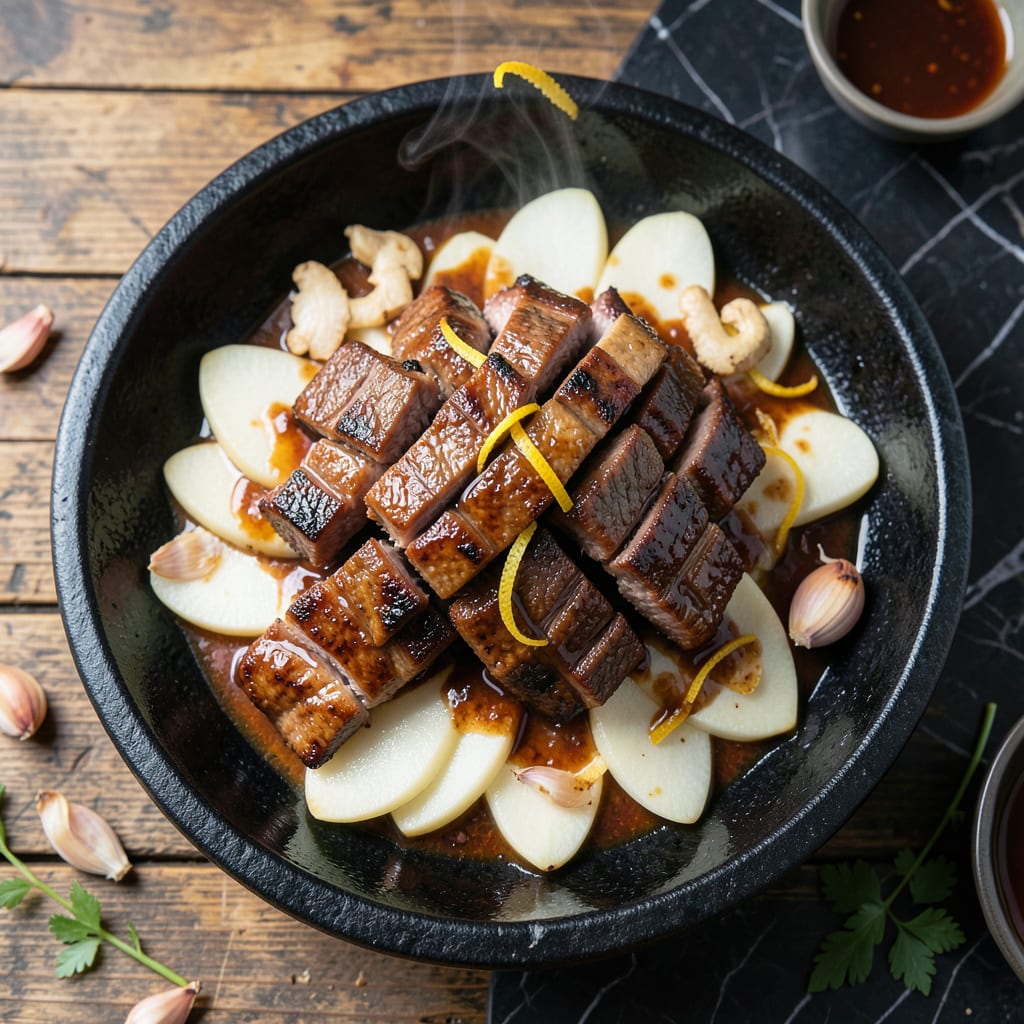
This recipe transforms ordinary grilling into a sticky-sweet masterpiece with deep Korean flavors. I developed it after years of perfecting the balance between caramelized sugars and bold spices.
The marinade creates a glossy glaze that clings to each bite, delivering restaurant-quality results at home. Simple ingredients, precise technique, and a hot grill are all you need.
Ingredients for Sweet Korean Bbq
Restaurant-quality ingredients for a sticky-sweet Korean BBQ experience at home with precision.
| Ingredient | Amount | Notes |
|---|---|---|
| Beef Short Ribs 🥩 | 2 lb | Bone-in, cut flanken-style |
| Brown Sugar 🍚 | ¾ cup | Light or dark, packed |
| Soy Sauce 🥢 | ½ cup | Low-sodium preferred |
| Asian Pear 🍐 | 1 whole | Peeled, grated for marinade |
| Garlic Cloves 🧄 | 6 cloves | Minced finely |
| Fresh Ginger 🌿 | 2 tbsp | Peeled, grated |
| Gochujang 🌶️ | 3 tbsp | Korean chili paste |
| Sesame Oil 🫒 | 2 tbsp | Toasted for depth |
| Rice Vinegar 🍶 | 2 tbsp | Unseasoned variety |
| Green Onions 🧅 | 4 whole | Thinly sliced, for garnish |
| Toasted Sesame Seeds 🌾 | 1 tbsp | For finishing |
| Vegetable Oil 💧 | 2 tbsp | Neutral flavor, for grilling |
| Black Pepper 🌶️ | 1 tsp | Freshly ground |
[recipe_ingredient_scaler]
The beef is non-negotiable for authentic flavor. Korean markets often carry pre-cut short ribs (LA galbi), but Costco offers excellent quality bone-in ribs that work perfectly. Look for good marbling—this fat renders down during cooking, creating that signature caramelization. The Asian pear is traditional (its enzymes tenderize the meat), but Bosc pears from any grocery store work in a pinch.
No gochujang? Sriracha plus 1 tsp miso paste mimics the depth, though the flavor profile shifts slightly. Fresh ginger is ideal, but ground ginger at one-third the amount can substitute. For the soy sauce, tamari offers a gluten-free alternative. The brown sugar can be swapped for coconut sugar (1:1 ratio), though it may darken the glaze more quickly. Skip the rice vinegar? Apple cider vinegar works, but reduce by 25%.
Marinate the ribs overnight for maximum flavor penetration. The prepared marinade keeps 3 days refrigerated, while the cooked ribs reheat beautifully and stay tender for 4-5 days. Freeze uncooked marinated ribs for up to 3 months—thaw in the fridge before grilling.
Why You’ll Love This Recipe
- One Pan Wonder: I marinate the beef short ribs with Asian pear and garlic the night before, then it’s just grill and serve.
- Sweet & Savory Magic: The brown sugar caramelizes with the soy sauce to create this sticky, finger-licking glaze on the ribs.
- Feeds a Crowd: I make a big batch for game day and everyone raves—even the picky eaters go back for seconds.
- Leftovers for Days: Honestly, it tastes even better the next day in tacos or over rice. Zero waste.
Step-by-Step Instructions for Sweet Korean BBQ
Master the technique behind this restaurant-quality dish with precision and finesse.
Step 1: Prepare the Marinade Base
In a large bowl, combine the 0.75 cup brown sugar, 0.5 cup soy sauce, 2 tbsp sesame oil, 2 tbsp rice vinegar, and 3 tbsp gochujang. Whisk vigorously until the brown sugar fully dissolves and the mixture becomes smooth and glossy.
I always ensure the gochujang is fully incorporated—its thick consistency can cling to the whisk, so scrape the sides of the bowl. This base delivers the signature sweet-spicy balance that defines the dish.
Step 2: Incorporate Aromatics and Fruit
Add the 1 whole Asian pear (peeled and grated), 6 cloves garlic cloves (minced), 2 tbsp fresh ginger (grated), and 1 tsp black pepper to the marinade. Stir well to distribute the aromatics evenly.
The Asian pear contains enzymes that tenderize the beef, while the garlic and ginger infuse depth. Let the marinade rest for 10 minutes to allow the flavors to meld before adding the meat.
Step 3: Marinate the Beef Short Ribs
Place the 2 lb beef short ribs in a shallow dish or resealable bag. Pour the marinade over the ribs, ensuring they are fully coated. Massage the marinade into the meat for 1-2 minutes to maximize absorption.
Cover and refrigerate for at least 4 hours, or preferably overnight. The longer marinating time allows the flavors to penetrate deeply, resulting in a more tender and flavorful final product.
Step 4: Grill to Caramelized Perfection
Preheat your grill to medium-high heat and oil the grates with 2 tbsp vegetable oil to prevent sticking. Remove the ribs from the marinade (reserve excess marinade) and grill for 4-5 minutes per side.
Baste the ribs with the reserved marinade during grilling. You’ll know they’re ready when the edges are charred and caramelized and the internal temperature reaches 145°F for medium-rare. The sugars in the marinade will create a sticky, glossy glaze.
Step 5: Rest, Slice, and Garnish
Transfer the ribs to a cutting board and let them rest for 5-10 minutes. This allows the juices to redistribute, ensuring each bite is moist and flavorful. Slice the ribs against the grain into individual portions.
Garnish with 4 whole green onions (thinly sliced) and 1 tbsp toasted sesame seeds for a fresh, nutty finish. Serve immediately while the glaze is still glistening.
Pro Tips For Making Sweet Korean Bbq
- Sear Before Marinating: I learned this the hard way—give the short ribs a quick sear in a hot pan before marinating to lock in juices and deepen the flavor. Sounds weird, but it actually changes the outcome.
- Grate the Pear: Skip the chunks and finely grate the Asian pear into the marinade so it dissolves completely, infusing the meat with natural sweetness and tenderness without texture issues.
- Don’t Overcrowd the Pan: After burning three batches, I finally figured out to cook the ribs in a single layer with space between each piece so they caramelize instead of steam.
- Rest Before Slicing: Give the meat a solid 5-10 minutes under foil after cooking—yes, even if you’re impatient like me—so the juices redistribute and don’t spill onto the cutting board.
Storing and Reheating This sweet korean bbq
Refrigerator Storage
Let cooked ribs cool for 30 minutes before transferring to airtight containers. They’ll keep in the fridge at 40°F or below for 4-5 days. The flavors actually deepen as the marinade continues to work its magic. ❄️
Freezer Storage
For longer storage, freeze cooked ribs in heavy-duty freezer bags with excess air removed. They maintain quality for 3 months. I like to portion them into meal-sized servings for easy thawing. Label with the date so you don’t forget.
Stovetop Reheating
Place ribs in a skillet with 2 tbsp water, cover, and warm over medium-low heat for 8-10 minutes. This gentle method prevents drying while keeping the glaze sticky. Turn occasionally for even heating. 🔥
Oven Reheating
Preheat oven to 300°F. Wrap ribs in aluminum foil with 1 tbsp water and heat for 15-20 minutes. This method works great for larger batches and keeps the meat incredibly tender.
Microwave Reheating
For quick meals, place ribs on a microwave-safe plate, cover with a damp paper towel, and heat on 50% power for 2-3 minutes. Let rest 1 minute before serving.
Nutrition Facts

Trained in classic French technique but raised on slow-cooked ribs and spicy rubs, she blends culinary skill with smoke and soul.
- Recipe for Boneless Pork Chops in Cast Iron Skillet: Sear and Baste to Juicy Perfection - October 3, 2026
- Recipe for Boneless Cross Rib Roast: Slow-Roasted Beef with Herb Crust - October 3, 2026
- Hamburgers in Sauce Recipe Crock Pot: Slow-Cooked Savory Delight - October 3, 2026