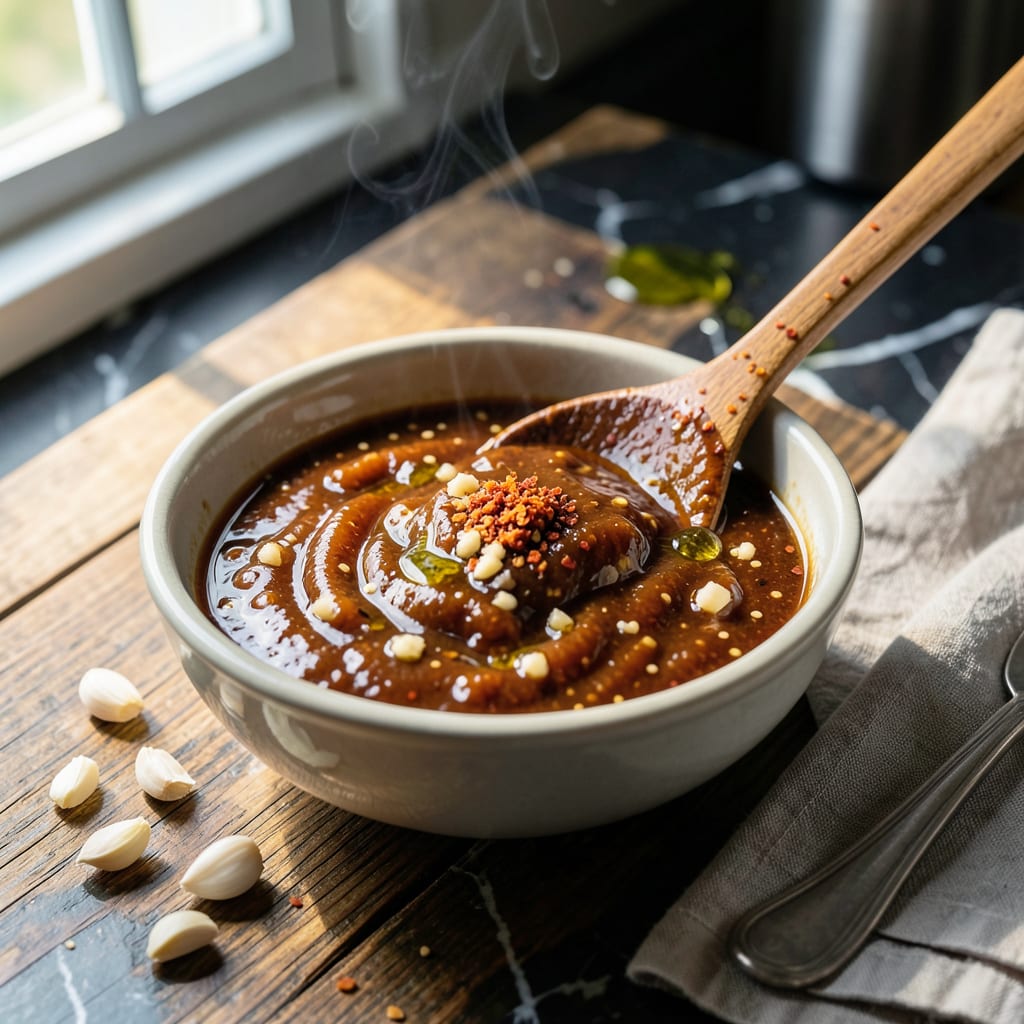
This sauce delivers the perfect balance of sweet, savory, and spicy with a glossy finish that clings to every bite. I developed it to elevate grilled meats with authentic Korean flavors.
With just 10 minutes of simmering, you’ll have a restaurant-quality glaze that’s versatile enough for marinating, dipping, or brushing on during cooking.
Ingredients for Sweet Korean Bbq Sauce
Nine ingredients transform into that glossy, clingy, umami-packed glaze you crave.
| Ingredient | Amount | Notes |
|---|---|---|
| Gochujang 🌶️ | ½ cup | Korean red pepper paste, essential for depth |
| Soy Sauce 🫒 | ½ cup | Low-sodium for controlled saltiness |
| Brown Sugar 🍚 | ⅓ cup | Light or dark, packed firmly |
| Honey 🍯 | ¼ cup | For natural sweetness and viscosity |
| Rice Vinegar 🍋 | 3 tbsp | Balances sweetness with acidity |
| Minced Garlic 🧄 | 4 cloves | Freshly minced for bold flavor |
| Fresh Ginger 🌿 | 1 tbsp | Grated finely for even distribution |
| Sesame Oil 🫒 | 1 tbsp | Toasted for nutty aroma |
| Toasted Sesame Seeds 🌾 | 1 tbsp | For texture and garnish |
[recipe_ingredient_scaler]
The gochujang is non-negotiable—look for it in the Asian aisle or at H Mart. Brands like Sempio or Chung Jung One are widely available and consistent. Don’t substitute sriracha; it won’t give you that fermented depth. The soy sauce should be Korean or Japanese (not Chinese-style) for the right salt balance. I keep a bottle of Kikkoman low-sodium on hand for this exact reason.
No gochujang? Half the amount of miso plus extra chili flakes gets you close but won’t be the same. Swap honey for maple syrup or agave if vegan’s needed. Brown sugar can be white in a pinch, though the molasses notes add complexity. The rice vinegar is key—apple cider vinegar at half the amount works but tastes sharper. Fresh ginger is better than powder, but powder at one-third the amount saves time.
This keeps 1 week in the fridge in a sealed jar. For longer storage, freeze in ice cube trays, then pop into a bag—3 months of sticky, spicy goodness on demand. The flavors meld and deepen overnight, so make it a day ahead if you can.
Why You’ll Love This Recipe
- Five Minute Mix: I just dump everything in a bowl—gochujang, soy sauce, brown sugar, honey, rice vinegar—and stir. No cooking, no fuss.
- Sweet & Spicy Balance: The honey and brown sugar mellow out the gochujang’s heat, while rice vinegar keeps it from being cloying.
- Marinade or Dip: I slather it on chicken before grilling, or set it out as a dipping sauce for dumplings. Works every time.
- Stays Fresh for Days: I make a big batch and keep it in the fridge—it lasts over a week, and the flavor only gets deeper.
Step-by-Step Instructions for Sweet Korean BBQ Sauce
Here’s the method. Simple, tested, and delivers that perfect sticky-sweet balance.
Step 1: Bloom the Aromatics for Maximum Flavor
In a medium saucepan over medium heat, warm the 1 tbsp Sesame Oil. Add the 4 cloves Minced Garlic and 1 tbsp Fresh Ginger, stirring constantly for 30-45 seconds until fragrant but not browned. This quick bloom releases their essential oils, creating a deeper flavor base for the sauce.
Watch carefully—garlic burns easily and bitterness ruins the sauce. The moment you smell that warm, pungent aroma, you’re ready for the next step. This foundation ensures every bite has that authentic Korean depth.
Step 2: Combine Wet and Sweet Base Components
To the pan, add the 0.5 cup Gochujang, 0.5 cup Soy Sauce, 0.33 cup Brown Sugar, and 0.25 cup Honey. Stir well to combine, breaking up any clumps of gochujang with a silicone spatula. The mixture will be thick at first but loosens as it heats.
Bring the mixture to a gentle simmer over medium-low heat. You’ll notice the sugar beginning to dissolve and the sauce taking on a glossy sheen. This step melds the salty, sweet, and spicy elements into a cohesive base.
Step 3: Balance with Acid and Simmer to Perfection
Pour in the 3 tbsp Rice Vinegar and stir. The vinegar cuts through the sweetness, creating that signature tangy-sweet balance Korean BBQ sauces are known for. Reduce the heat to low and let the sauce simmer for 8-10 minutes.
As it simmers, the sauce will thicken slightly and develop a deep, rich color. Stir occasionally to prevent sticking, and keep an eye on the consistency—it should coat the back of a spoon but still be pourable. The gochujang’s complex flavors will mellow and deepen during this time.
Step 4: Finish and Check for Ideal Consistency
Remove the sauce from heat and let it cool for 5 minutes. As it cools, it will thicken further. Stir in the 1 tbsp Toasted Sesame Seeds, reserving a pinch for garnish if desired. The sesame seeds add a nutty crunch and visual appeal.
Taste and adjust—if it needs more sweetness, the brown sugar can be increased slightly, but I’ve found the balance perfect as written. The finished sauce should be glossy, with a consistency that clings to meats or brushes easily. This makes enough to generously coat 4 servings of your favorite grilled proteins.
Pro Tips For Making Sweet Korean Bbq Sauce
- Simmer Low and Slow: Cook the sauce on medium-low heat for 8-10 minutes, stirring often—I learned this the hard way after scorching two batches by rushing it on high.
- Bloom the Gochujang: Heat the gochujang in the oil for 1-2 minutes first to deepen its flavor before adding liquids. Sounds weird, but it works.
- Balance the Sweetness: Taste before adding all the honey—some gochujang brands are sweeter than others, and you might need less.
- Thin with Vinegar Last: If the sauce is too thick, stir in a splash of rice vinegar at the end instead of water—it keeps the tangy kick intact.
Common Mistakes When Making This Recipe
Overcooking the Sauce
Simmering too long will make your sauce thicken into a candy-like paste instead of that glossy glaze. Keep it at a gentle simmer for no more than 10 minutes—I set a timer to avoid walking away. The moment it coats the back of a spoon, you’re done. 🔥
Skipping the Bloom
Adding garlic and ginger directly to cold liquid means you’ll miss their full aromatic potential. Always bloom them in sesame oil for 30-45 seconds first. I learned this the hard way when my early batches tasted flat.
Wrong Gochujang Ratio
Using too much gochujang will overpower the sauce with heat and fermented funk. Stick to ½ cup for balance. If you want it spicier, add a pinch of gochugaru (Korean chili flakes) instead. This maintains the complex flavor without overwhelming it.
Ignoring the Acid
The 3 tbsp rice vinegar isn’t optional—it cuts through the sweetness and brightens all the flavors. I tried skipping it once and the sauce tasted cloying. Apple cider vinegar works in a pinch, but use half the amount.
Not Tasting as You Go
Sauces change as they reduce, so taste after 5 minutes of simmering, then again at the end. I keep a spoon handy to check the balance. The gochujang’s heat mellows as it cooks, so what starts spicy may end up just right.
Storing While Hot
Always let the sauce cool completely before sealing it in a jar. Trapped heat creates condensation, which can lead to mold. I transfer mine to a clean jar once it’s room temperature, then refrigerate. It’ll keep for 1 week in the fridge. 💡
Nutrition Facts

Trained in classic French technique but raised on slow-cooked ribs and spicy rubs, she blends culinary skill with smoke and soul.
- Recipe for Boneless Pork Chops in Cast Iron Skillet: Sear and Baste to Juicy Perfection - October 3, 2026
- Recipe for Boneless Cross Rib Roast: Slow-Roasted Beef with Herb Crust - October 3, 2026
- Hamburgers in Sauce Recipe Crock Pot: Slow-Cooked Savory Delight - October 3, 2026