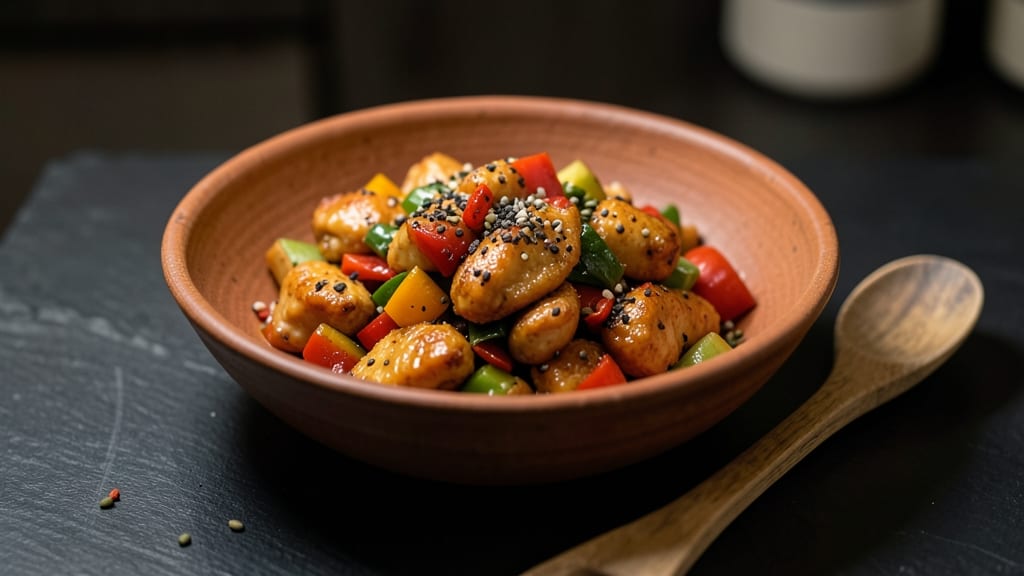
This sweet and sour chicken stir fry recipe delivers the perfect balance of crispy bites and tangy-sweet glaze that tastes like your favorite takeout.
After perfecting this dish in my Atlanta kitchen, I’ve learned the secret lies in a two-stage cooking process—first searing the chicken for maximum crispiness, then tossing it in a sauce that’s both vibrant and deeply flavorful.
The key is high heat and quick cooking, ensuring every bite has that satisfying crunch while staying juicy inside.
The recipe starts with chicken thighs cut into bite-sized pieces, marinated in a simple blend of cornstarch and salt to create that signature crispy texture. While the chicken cooks, we’ll stir-fry bell peppers, onions, and broccoli in a wok or large skillet until just tender-crisp.
This keeps the vegetables bright and adds a satisfying crunch to every forkful. The sauce, made with a mix of pineapple juice, vinegar, and a touch of sugar, simmers until thick and glossy, coating the chicken and vegetables in that addictive sweet-sour glaze.
What you’ll end up with is a dish that’s restaurant-quality but simple enough for weeknight dinners—golden-brown chicken with crisp edges, vibrant vegetables, and a sauce that’s perfectly balanced between sweet and tangy.
The aroma alone will have everyone gathering around the table, and the first bite delivers that perfect harmony of textures and flavors. Serve it over steamed rice or noodles for a meal that’s as satisfying as it is delicious.
This recipe is designed to be adaptable, so feel free to swap in your favorite vegetables or adjust the sweetness to taste. The technique is straightforward, but the results are anything but ordinary—crispy, flavorful, and impossible to resist. Let’s get cooking!
Ingredients for sweet n sour chicken stir fry
Pantry staples and fresh ingredients for that perfect sweet-sour balance.
| Ingredient | Amount | Notes |
|---|---|---|
| Boneless, Skinless Chicken Thighs 🍗 | 1 ½ lb | Cut into 1-inch bite-sized pieces |
| All-Purpose Cornstarch 🌾 | ¼ cup | For crispy coating |
| Kosher Salt 🧂 | 1 tbsp | Fine grain preferred |
| Vegetable Oil 🫒 | ½ cup | High smoke point for frying |
| Red Bell Peppers 🌶️ | 1 whole | Cut into 1-inch strips |
| Yellow Onion 🧅 | 1 whole | Sliced thinly |
| Broccoli Florets 🥦 | 3 cups | Cut into bite-sized pieces |
| Pineapple Juice 🍍 | ½ cup | Fresh or canned, no sugar added |
| White Vinegar 💧 | ¼ cup | For tangy flavor |
| Granulated Sugar 🍚 | ¼ cup | Adjust to taste |
| Soy Sauce 🍶 | ¼ cup | Light or regular |
| Garlic Cloves 🧄 | 4 cloves | Minced for sauce |
| Fresh Ginger 🌿 | 1 tbsp | Grated, fresh preferred |
| Cornstarch 🌾 | 1 tbsp | For sauce thickening |
| Sesame Oil 🫒 | 1 tsp | For aroma, optional |
[recipe_ingredient_scaler]
The chicken thighs are non-negotiable here—bone-in, skin-on stays juicier, but boneless works too. Grab the thighs over breasts for that classic stir-fry texture. Most grocery stores carry them pre-cut, but if you’re buying whole, ask the butcher to trim them. The cornstarch and salt marinade is where the magic happens—let it sit for 15-20 minutes before cooking. For the vegetables, fresh broccoli is ideal, but frozen florets in a pinch work too. The bell peppers? Red or green both work, but red adds a touch of natural sweetness that pairs perfectly with the sauce.
No pineapple juice? Orange juice or apple juice gets you close—just add a splash of vinegar to keep the tang. Short on soy sauce? Tamari or coconut aminos work great. The garlic and ginger are the flavor anchors here, so don’t skip them. Fresh is best, but powdered works in a bind. For extra crunch, toss in water chestnuts or snap peas at the end. The sauce should coat the back of a spoon—if it’s too thin, add a pinch more cornstarch. And trust me, sesame oil at the end makes all the difference.
This sauce reheats beautifully—just add a splash of water to loosen it up. Keeps in the fridge for 5 days or freeze for 3 months. For next-level flavor, make the sauce ahead and let it sit overnight. The chicken reheats best in a skillet over medium heat—just add a splash of water to keep it from drying out. Serve it over jasmine rice or noodles, and you’ve got a restaurant-quality meal in under 30 minutes.
Why You’ll Love This Recipe
- No-Pan-Fry Frustration: I’ve burned my fair share of stir-fries overcrowding the pan, but this recipe forces you to work in batches—meaning crispy, golden chicken every time, not soggy disappointment. The ½ cup vegetable oil and medium-high heat create that perfect sizzle, and honestly? It’s the only way to get that restaurant-quality crunch without stressing over temperature drops.
- Sweet-Tangy Balance Nailed: That sauce—½ cup pineapple juice, ¼ cup white vinegar, and just enough sugar—is exactly what I crave when I want something bright and complex. The garlic and ginger in the glaze? Chef’s kiss. It’s the kind of dish where one bite has you reaching for another, no matter how many times you tell yourself you’ll stop.
- Rice Bowl Rescue: Forget takeout menus—this stir-fry turns steamed rice into a 10-minute meal. My kids fight over leftovers (yes, even on a Tuesday night), and I can toss it with noodles or serve it over rice. The 1.5 lb chicken thighs feed a crowd, and the veggies—bell peppers, onion, broccoli—keep it balanced without extra effort.
- Budget-Friendly Crispy Win: Chicken thighs are cheaper than breasts, and the cornstarch coating gives you that crispy texture for pennies. I’ve made this for game days, potlucks, and lazy weeknights—it’s the kind of dish that always gets compliments. Plus, it keeps for 5 days in the fridge, so you can meal prep without guilt.
Step-by-step instructions for sweet and sour chicken stir fry
Here’s how to create restaurant-quality stir fry with perfectly crispy chicken every time.
Prepare the Chicken for Extra Crispiness
Pat the 1½ lb boneless, skinless chicken thighs dry with paper towels—this removes moisture so the cornstarch adheres better. Cut them into 1-inch bite-sized pieces for even cooking. In a large bowl, toss the chicken with ¼ cup all-purpose cornstarch and 1 tbsp kosher salt until every piece is fully coated. Let it sit for 5 minutes while you prep the vegetables.
This cornstarch coating creates a golden, crispy crust when fried. Don’t skip the salt—it enhances flavor and helps set the coating. If you notice any pieces clumping, gently separate them with your fingers for even browning later.
Stir-Fry the Chicken Until Golden Brown
Heat ½ cup vegetable oil in a large skillet or wok over medium-high heat until shimmering (about 350°F). Working in batches if needed, add the cornstarch-coated chicken and fry for 3-4 minutes per batch, stirring occasionally, until golden brown and crispy on all sides. Remove and set aside on a paper towel-lined plate to drain excess oil.
Here’s the thing—don’t overcrowd the pan. If you add too much chicken at once, the oil temperature will drop and you’ll get greasy, soggy results instead of crispy bites. The chicken should sizzle steadily when you add it; if it stops sizzling, your oil isn’t hot enough.
Cook the Vegetables Separately
In the same skillet (no need to clean it—the fond adds flavor), add ½ cup vegetable oil and heat over medium heat. Add the 1 red bell pepper and 1 yellow onion, cooking for 4-5 minutes until softened but still vibrant. Remove and set aside with the chicken.
Next, add another ½ cup vegetable oil to the skillet and heat over medium-high heat. Add the 3 cups broccoli florets and stir-fry for 3-4 minutes until bright green and just tender-crisp. Remove and combine with the other vegetables. The broccoli should hold its shape but be slightly softened—overcooking will make it mushy.
Make the Tangy-Sweet Glaze
In a small saucepan, combine ½ cup pineapple juice, ¼ cup white vinegar, ¼ cup granulated sugar, ¼ cup soy sauce, 4 minced garlic cloves, 1 tbsp fresh ginger, and 1 tbsp cornstarch. Bring to a boil over medium heat, then reduce heat to low and simmer for 5-7 minutes, stirring constantly, until the sauce thickens enough to coat the back of a spoon.
This is where the magic happens—the sugar and vinegar create that signature sweet-and-sour balance. Taste as you go and adjust the sugar if needed (some pineapple juices are sweeter than others). The sauce should coat a spoon but still be pourable. If it thickens too quickly, add 1-2 tablespoons water to reach your desired consistency.
Combine and Finish with Aroma
Return all the chicken and vegetables to the skillet. Pour the sauce over everything and stir to coat evenly. Add 1 tsp sesame oil and toss gently to combine. Cook for 1-2 minutes until everything is heated through and the sauce clings to the chicken and vegetables. Serve immediately over steamed rice or noodles.
The sesame oil adds that final aromatic touch that takes the dish from good to amazing. Each bite should deliver crispy chicken, tender vegetables, and that perfect balance of sweet, tangy, and savory flavors. If the sauce seems too thin when serving, you can always thicken it further by mixing 1 tbsp cornstarch with 1 tbsp water and stirring it in at the end.
Pro Tips For Making Sweet N Sour Chicken Stir Fry
- Fry in Batches: I used to rush this and end up with greasy, undercooked chicken—don’t make that mistake. Work with 3-4 minutes per batch at a time, and make sure the oil is actually shimmering before adding more. The sizzle should sound like a tiny firework, not a sad fizzle.
- Grate Ginger Fine: Skip the food processor for this one—grate the 1 tbsp fresh ginger by hand with a microplane or the smallest holes on a box grater. That way, it dissolves smoothly into the sauce instead of leaving stubborn chunks that ruin the texture. (Yes, even if you’re impatient like me.)
- Taste the Sauce Early: After simmering the sauce for 5 minutes, pull it off the heat and taste it raw—no waiting for the full 7 minutes. Some pineapple juices are sneaky-sweet, and you might need to cut the ¼ cup sugar down to 2 tablespoons. Better to fix it now than drown it in sweetness later.
- Save the Fond: That browned bit stuck to the pan after frying the chicken and veggies? Don’t wipe it out—it’s flavor gold. The fond adds depth to the sauce, so just add a splash of oil if needed and keep cooking. (Your future self will thank you.)
Regional styles of this sweet n sour chicken stir fry
Southern-Style Sweet Heat
In the Southeast, we like our sweet and sour with a little extra kick—think hot honey drizzled over the finished dish. I often swap the white vinegar for 1 tbsp apple cider vinegar and add ½ tsp cayenne pepper to the sauce for that signature Georgia heat.
The cornstarch coating on the chicken becomes even crispier when fried in a Lodge cast iron skillet instead of a wok, which my farm hands swear by. The result? A dish that’s tangy, sweet, and just spicy enough to make your taste buds dance. 🌶️
Chinese-American Fusion
This is where the classic takeout version comes from—think General Tso’s chicken but with a lighter touch. I’ve adapted it by adding 1 tbsp hoisin sauce to the sauce mix and finishing with crushed red pepper flakes.
The broccoli gets replaced with water chestnuts and snap peas for that signature crunch. My Charleston friends love this version because it keeps the familiar flavors but adds a little sophistication. The sauce should be glossy and cling to every bite like a second skin.
Thai-Inspired Twist
For a Thai-inspired version, I swap the soy sauce for 2 tbsp fish sauce and add 1 tbsp lime juice to the sauce. The ginger gets boosted to 2 tbsp, and I toss in 1 cup Thai basil leaves at the end for that aromatic finish.
The chicken stays crispy, but the sauce takes on a bright, citrusy complexity. I serve this over jasmine rice with a side of spicy peanut sauce for dipping—pure comfort food with a global twist.
Vietnamese-Inspired
This version leans into the fresh, bright flavors of Vietnam. I replace the pineapple juice with ½ cup coconut milk and add 1 tbsp fish sauce and 1 tbsp rice vinegar to the sauce.
The chicken gets marinated in 1 tbsp lime zest along with the cornstarch, and I stir-fry 1 cup bean sprouts and ½ cup shredded carrots with the broccoli. The result is a lighter, more refreshing take on the classic dish, with a subtle nutty depth from the coconut. 💛
Korean-Inspired Stir Fry
For a Korean twist, I swap the soy sauce for 2 tbsp gochujang (Korean chili paste) and add 1 tbsp sesame seeds to the sauce.
The chicken gets marinated in 1 tbsp gochugaru (Korean chili flakes) along with the cornstarch, and I stir-fry ½ cup shredded napa cabbage with the vegetables. The sauce becomes slightly spicy and fermented, with a depth of umami that’s hard to resist.
I finish with a sprinkle of toasted sesame seeds for extra crunch and aroma.
Nutrition facts
Frequently asked questions
Why does your recipe use chicken thighs instead of breasts?
Chicken thighs stay juicier and develop that perfect crispy exterior the cornstarch coating craves. Breasts dry out faster when stir-fried, while thighs hold moisture better even when seared quickly. The fat content also adds richness to the sauce—this is why takeout versions always use thighs!
Can I make the sauce ahead of time?
Make the sauce up to 2 days in advance and store it in an airtight container in the fridge. When ready to cook, reheat it gently over low heat while stirring until it reaches the desired consistency. The flavors actually deepen overnight, making it even more delicious.
What if my sauce turns out too thick?
Simply add 1-2 tablespoons water or pineapple juice while stirring over low heat. The cornstarch will absorb the liquid and return to a pourable consistency. You can also thin it with a splash of soy sauce if you want to balance the flavors while adjusting the thickness.
How do I reheat leftovers without drying out the chicken?
Reheat in a skillet over medium-low heat, adding a splash of water or pineapple juice to the pan. Cover loosely with foil to trap steam, stirring occasionally until everything is heated through. Avoid high heat to prevent the chicken from drying out while warming.

Trained in classic French technique but raised on slow-cooked ribs and spicy rubs, she blends culinary skill with smoke and soul.
- Veggie Hot and Sour Soup Recipe: Tangy, Spicy, Umami-Packed in One Bowl - November 28, 2026
- Bacon Chowder Soup Recipe: Smoky Creamy Comfort in One Pot - November 28, 2026
- Sweet and Sour Chicken Stir Fry Recipe: Crispy Bites with Tangy-Sweet Glaze - November 28, 2026