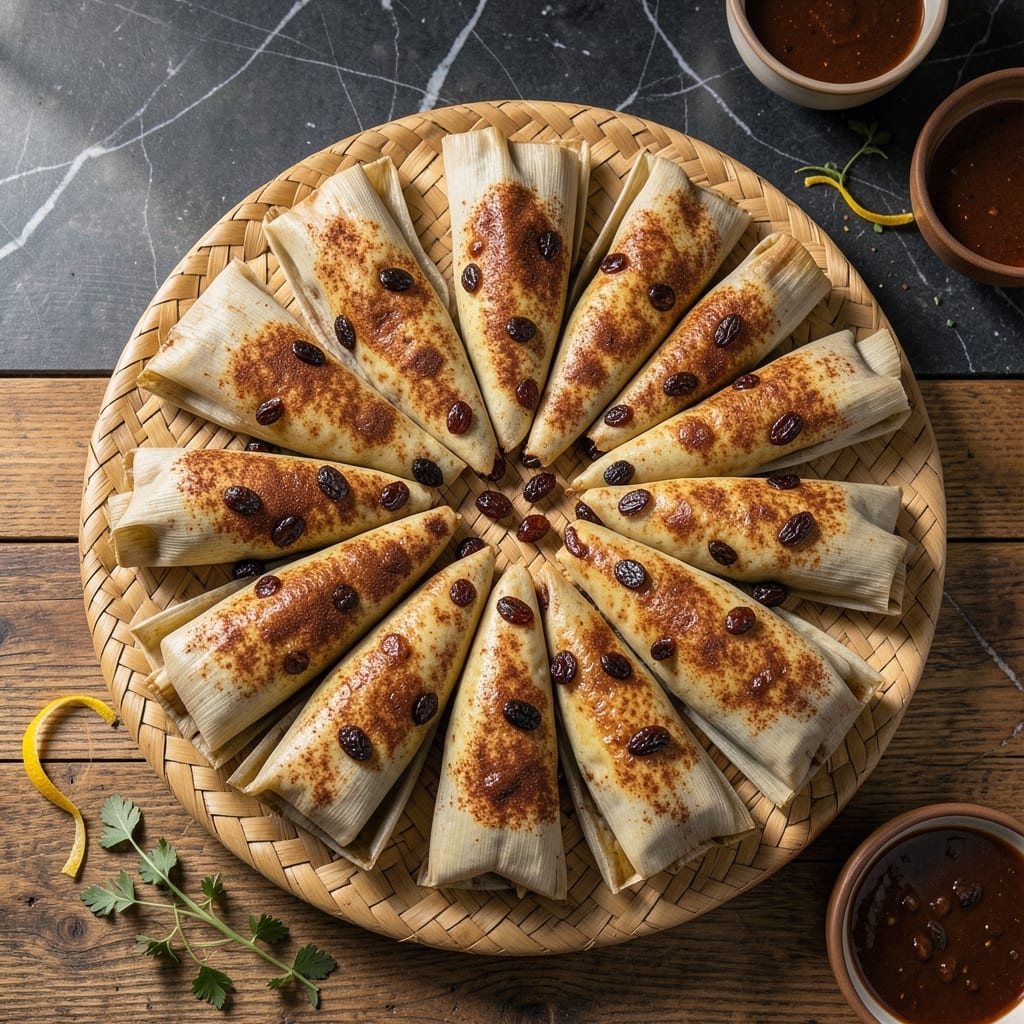
There’s an art to making pillowy sweet tamales that melt in your mouth. This recipe honors traditional techniques while simplifying the process for home cooks.
I’ve refined the masa preparation and sweet raisin filling to ensure perfect texture and balanced flavor every time. The result is a dish that feels both authentic and approachable.
Ingredients for Sweet Tamales Recipe Mexican
Traditional masa and plump raisins create authentic sweet tamales with perfect texture every time.
| Ingredient | Amount | Notes |
|---|---|---|
| Dried Corn Husk Wrappers 🌽 | 24 pieces | Soaked in warm water 1 hour |
| Masa Harina 🌾 | 4 cups | Mexican-style corn flour |
| Vegetable Shortening 🧈 | 1 ½ cups | Or lard substitute for vegetarians |
| Granulated Sugar 🍚 | ¾ cup | Divided for masa and filling |
| Baking Powder ⚪ | 2 tsp | For lift in masa dough |
| Ground Cinnamon 🌿 | 1 tsp | Freshly ground preferred |
| Salt 🧂 | 1 tsp | Fine sea salt preferred |
| Vanilla Extract 🌿 | 1 tsp | Pure extract recommended |
| Raisins 🍇 | 1 ½ cups | Plump in warm water first |
| Brown Sugar 🟤 | ½ cup | Packed, for raisin filling |
| Ground Cloves 🌿 | ¼ tsp | Optional for warmth |
| Water 💧 | 3 cups | Warm, for masa dough |
| Unsalted Butter 🧈 | 2 tbsp | Melted, for raisin mixture |
[recipe_ingredient_scaler]
The masa harina is non-negotiable—Maseca is the gold standard and widely available at Latin markets or the international aisle. Look for the yellow bag specifically for tamales. Vegetable shortening gives the classic texture; Crisco is reliable. For the corn husks, Mexican grocery stores sell them dried by the pound. If sourcing locally is tough, Amazon has them too (just check reviews for freshness).
No masa harina? Fresh masa from a tortilleria works at a 1:1 ratio, but adjust liquid as needed. Swap raisins for dried apricots or prunes—soak and chop them the same way. Brown sugar can be replaced with piloncillo (grated) for deeper molasses notes. For the shortening, coconut oil is a solid vegan alternative, though it may add a slight coconut flavor.
Dry husks keep indefinitely in a sealed bag. Once soaked, use within 2 days or they’ll dry out. Prepared masa dough can rest in the fridge for 24 hours before assembling. Tamales freeze beautifully for up to 3 months—reheat by steaming straight from frozen, adding 10 minutes to the cook time.
Why You’ll Love This Recipe
- No-Fuss Mixing: I love that the masa harina and sugar blend together in one bowl—no fancy steps, just stir and spread.
- Melt-in-Your-Mouth Sweetness: The shortening keeps them tender while the sugar gives that classic sweet tamale taste I crave.
- Holiday or Anytime: Honestly, I make these for Christmas but also just because Tuesday needs a treat.
- Budget Stretcher: A bag of masa and husks makes dozens, so I feed a crowd without breaking the bank.
Step-by-Step Instructions for Sweet Tamales With Raisin Filling
Follow this professional method for perfectly textured tamales with a spiced raisin center.
Step 1: Soak the Dried Corn Husk Wrappers
Begin by placing the 24 pieces dried corn husk wrappers in a large bowl and covering them with warm water. They need to soak for 1 hour to become pliable enough to fold without cracking. I weigh them down with a plate to ensure they’re fully submerged.
After soaking, drain and rinse the husks thoroughly to remove any debris. Pat them dry with a clean kitchen towel—excess moisture will dilute the masa. You should end up with soft, flexible husks that are easy to work with. Discard any that remain brittle or tear easily.
Step 2: Prepare the Sweet Raisin Filling
In a medium saucepan, combine the 1.5 cups raisins, 0.5 cup brown sugar, 2 tbsp unsalted butter, 1 tsp ground cinnamon, and 0.25 tsp ground cloves. Add just enough water to cover the raisins and simmer over medium heat for 10-12 minutes.
The mixture should thicken slightly and the raisins should plump up considerably. Stir occasionally to prevent sticking. When done, the filling should have a jam-like consistency that holds together when cooled. Remove from heat and let it cool completely before using.
Step 3: Make the Masa Dough
In a large mixing bowl, beat the 1.5 cups vegetable shortening with 0.75 cup granulated sugar until light and fluffy. This usually takes 3-4 minutes with an electric mixer. The mixture should look pale and creamy, which ensures a tender tamale texture.
In a separate bowl, whisk together the 4 cups masa harina, 2 tsp baking powder, and 1 tsp salt. Gradually add this dry mixture to the shortening, alternating with the 3 cups water and 1 tsp vanilla extract. Beat until the dough resembles thick hummus—it should hold its shape when pressed but still be spreadable.
Step 4: Assemble and Steam the Tamales
Lay a soaked corn husk flat with the wide end facing you. Spread about ¼ cup of the masa dough onto the husk, leaving a 1-inch border on all sides. The layer should be thin but even—press gently to ensure full coverage.
Place 1-2 teaspoons of the cooled raisin filling down the center of the masa. Fold the long sides of the husk inward to encase the filling, then fold up the bottom. Leave the top open. Arrange the tamales upright in a steamer basket, open-end up.
Steam over boiling water for 1 hour to 1 hour 15 minutes. Check the water level periodically—add more hot water if it drops below the steamer basket. The tamales are done when the husk peels away easily and the masa is firm to the touch.
Step 5: Rest and Serve
Remove the tamales from the steamer and let them rest for 10-15 minutes. This allows the masa to set fully and makes them easier to handle. The filling should be warm and gooey, with the spices perfectly balanced.
Serve warm, with the husks peeled back. Each tamale should have a perfect ratio of sweet, pillowy masa to spiced raisin filling. Store leftovers in the refrigerator for up to 5 days or freeze for longer storage.
Pro Tips For Making Sweet Tamales Recipe Mexican
- Soak Husks Longer: I learned this the hard way—give those dried corn husks at least 2 hours in hot water, or they’ll crack when you try to fold them. Sounds tedious, but flexible husks make wrapping a breeze.
- Beat the Fat: Cream the vegetable shortening and sugar together for a full 5 minutes until light and fluffy. My grandmother swore by this, and it’s the only way to get that melt-in-your-mouth texture.
- Skip Cold Masa: Always use room-temperature masa harina—cold mixes unevenly and leaves pockets of dry flour in your tamales. I skip this when I’m lazy, but the difference is noticeable.
- Test Steam First: After burning three batches, I finally figured out to check that your steamer is producing steady, rolling steam before adding the tamales. Weak steam means dense, gummy results.
Wine and Beer Pairings for This Recipe
Sweet Wine Pairings
A Moscato d’Asti from Italy is my top pick—its light effervescence and peach-apricot notes complement the cinnamon-spiced raisins beautifully. The slight sweetness matches the tamales without overpowering them. 🍷
Rich Dessert Wines
For a more indulgent pairing, try a Pedro Ximénez sherry from Spain. Its raisin and caramel flavors echo the filling, while the velvety texture enhances the pillowy masa. Serve chilled in small glasses.
Mexican Sweet Wines
A Mexican Port-style wine like L.A. Cetto offers local authenticity. The dark fruit and spice notes harmonize with the tamales’ warm cinnamon undertones. I discovered this pairing at a Oaxacan market.
Beer Options
A Mexican stout like Negra Modelo provides a surprising contrast—the roasted malt and coffee notes balance the sweetness. The carbonation cleanses your palate between bites. 🍺
Light Beer Alternatives
For a lighter option, a Mexican lager such as Pacífico works well. Its crisp, clean finish won’t compete with the tamales’ delicate flavors. The subtle citrus notes add a refreshing touch.
Non-Alcoholic Pairing
Sparkling hibiscus tea (Jamaica) offers a vibrant, tart contrast to the sweet tamales. Brew 1 cup dried hibiscus in 4 cups boiling water with ¼ cup honey, then chill and serve over ice.
Nutrition Facts
Frequently Asked Questions
Can I use fresh masa instead of masa harina?
Yes, substitute fresh masa at a 1:1 ratio, but adjust liquid as needed. The texture may vary slightly, so test consistency before assembling. Fresh masa adds authentic flavor but may require extra mixing.
Why did my tamales turn out dense?
This usually means the masa was too dry or not beaten enough. Beat the shortening and sugar until fluffy, then ensure the dough is spreadable but holds its shape. Steaming for the full 1 hour 15 minutes is also key.
Can I make these without a steamer?
Use a large pot with a heatproof rack and 1-2 inches of boiling water. Place tamales upright, cover with a damp towel, then the lid. This mimics a steamer but requires monitoring water levels closely.

Trained in classic French technique but raised on slow-cooked ribs and spicy rubs, she blends culinary skill with smoke and soul.
- Recipe for Boneless Pork Chops in Cast Iron Skillet: Sear and Baste to Juicy Perfection - October 3, 2026
- Recipe for Boneless Cross Rib Roast: Slow-Roasted Beef with Herb Crust - October 3, 2026
- Hamburgers in Sauce Recipe Crock Pot: Slow-Cooked Savory Delight - October 3, 2026