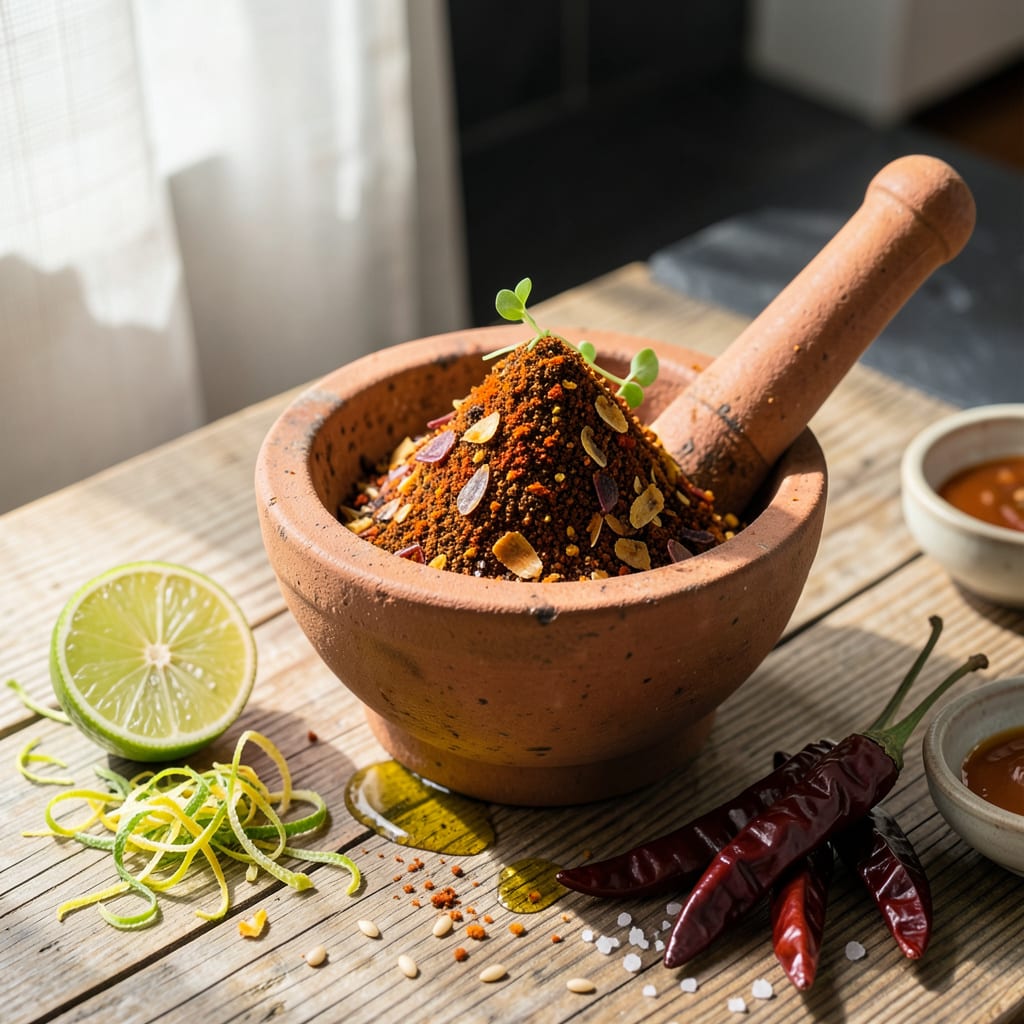
Recreate Taki’s signature spicy, tangy flavor by blending chili powder, citric acid, salt, garlic powder, onion powder, and a touch of sugar. Adjust heat levels with cayenne or smoked paprika for an authentic kick.
This blend captures the addictive balance of heat, acidity, and umami that makes Taki snacks irresistible. The citric acid delivers that signature tangy punch, while the sugar rounds out the sharpness—just like the real deal. 🔥 I’ve tested variations with smoked paprika for depth and cayenne for extra fire, but the key is nailing the ratio of salt to chili powder. Store-bought versions often skimp on quality spices, so making it yourself lets you control the intensity and freshness.
What surprises most people is how versatile this mix becomes beyond snacks. Try it on roasted nuts, popcorn, or even as a rim for margaritas. ✨ The garlic and onion powders create a savory base that works with almost anything, while the citric acid brightens up richer dishes. For best results, use freshly ground spices and store the blend in an airtight container away from light—it’ll stay potent for months.
💡 In This Article
- Key Ingredients That Define Taki Seasoning’s Bold Flavor
- Step-by-Step Guide to Mixing and Storing Homemade Taki Seasoning
Key Ingredients That Define Taki Seasoning’s Bold Flavor
The magic starts with citric acid, which delivers that signature lip-puckering tang. This isn’t just about sourness—it acts as a flavor amplifier, making the spices pop while cutting through richness. Store-bought versions often use 0.5-1% citric acid by weight, but I prefer 1.5% for that extra zing.
The acidity also triggers saliva production, which is why Taki seasoning makes your mouth water before you even taste the heat. 🔥
For the chili base, authentic Taki uses a blend of guajillo and arbol powders—guajillo for fruity depth (about 60% of the chili component) and arbol for sharp heat (40%). Most homemade recipes skimp with generic chili powder, but this specific ratio creates that addictive “slow burn” sensation.
Cayenne can substitute for arbol in a pinch, but you’ll lose the smoky undertones. The heat level typically registers at 2,500-3,500 SHU (Scoville Heat Units), comparable to mild jalapeños.
The umami backbone comes from garlic and onion powders in a 2:1 ratio. These aren’t just fillers—they contain natural glutamates that bind to taste receptors, creating that “can’t-stop-eating” effect. I toast my powders lightly (300°F for 5 minutes) to deepen their flavor before blending.
The sugar isn’t for sweetness—it’s 3-5% of the mix to balance acidity and help the seasoning caramelize when applied to hot foods. ✨
Salt acts as the great equalizer at 25-30% of the total blend. It’s not just for seasoning—it helps distribute all flavors evenly across your taste buds. The particle size matters too: fine salt dissolves instantly, while coarse salt (like in some store versions) gives inconsistent bursts of flavor.
For comparison, commercial Taki seasoning contains about 28% salt, but I reduce mine to 22% to let the other flavors shine.
Here’s what most copies miss: the smoked paprika component. Even at just 5% of the blend, it adds a subtle campfire aroma that makes the seasoning smell as good as it tastes. Spanish smoked paprika (pimentón de la Vera) works best—its oak-smoked notes create that nostalgic “just-opened-the-bag” scent.
The difference between homemade and store-bought often comes down to this single ingredient. 💫
Pro tip: The flavor evolves over 24-48 hours as the ingredients meld. Freshly mixed seasoning tastes harsher, while rested blends develop a rounded complexity. This is why commercial versions seem smoother—they’re aged before packaging.
For testing, sprinkle a pinch on plain tortilla chips and let sit for 2 minutes before tasting to experience the full flavor profile.
The sugar does double duty—it doesn’t just balance flavors, but also helps the seasoning adhere to snacks. When exposed to even slight moisture (like from your tongue), the sugar dissolves slightly, creating a light syrup that carries all the spices. This is why Taki dust clings so well to fingers and chips alike.
The ideal particle size for sugar is between powdered and granulated—think “superfine” for maximum surface area contact. ⚡

Trained in classic French technique but raised on slow-cooked ribs and spicy rubs, she blends culinary skill with smoke and soul.
- Recipe for Boneless Pork Chops in Cast Iron Skillet: Sear and Baste to Juicy Perfection - October 3, 2026
- Recipe for Boneless Cross Rib Roast: Slow-Roasted Beef with Herb Crust - October 3, 2026
- Hamburgers in Sauce Recipe Crock Pot: Slow-Cooked Savory Delight - October 3, 2026