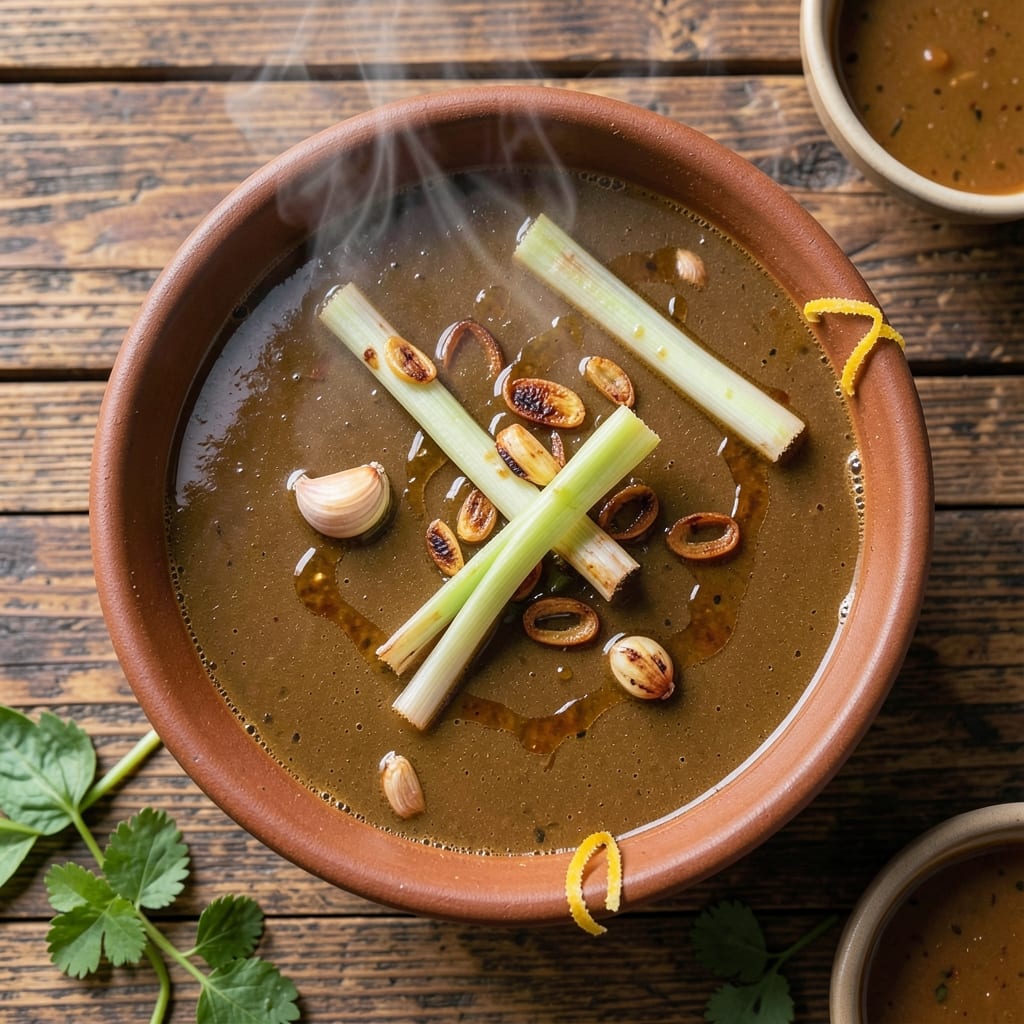
This tamarind soup base delivers the authentic tangy depth that defines Southeast Asian flavors. I developed this recipe after testing multiple batches to capture that perfect balance of sour, sweet, and umami without overpowering the dish.
The foundation combines tamarind concentrate with aromatic garlic, shallots, and a touch of palm sugar for complexity. A slow simmer allows the flavors to meld completely, creating a base that’s rich yet light enough for vegetables or tofu.
What emerges is a broth that’s boldly tangy with subtle sweetness, ready to elevate any Asian-inspired bowl. The aroma alone will transport you to street food stalls, while the taste proves authentic flavor is within reach.
Use this as your canvas for noodles, proteins, or vegetables. Here’s how to build that perfect foundation.
Ingredients for Tamarind Soup Base
Authentic Southeast Asian flavors start with these bold, tangy, and aromatic building blocks.
| Ingredient | Amount | Notes |
|---|---|---|
| Tamarind Concentrate 🍈 | ½ cup | Seedless paste preferred |
| Shallots 🧅 | 3 whole | Peeled, thinly sliced |
| Garlic Cloves 🧄 | 6 cloves | Minced for depth |
| Palm Sugar 🥥 | 2 tbsp | Substitute with coconut sugar |
| Vegetable Broth 🥕 | 6 cups | Low-sodium variety |
| Lemongrass Stalks 🌿 | 2 whole | Bruised, cut into 3-inch pieces |
| Galangal Root 🌱 | 1 whole | Sliced thinly (or ginger) |
| Kaffir Lime Leaves 🍃 | 4 whole | Fresh or dried |
| Red Chili Peppers 🌶️ | 2 whole | Thai bird's eye preferred |
| Mushroom Soy Sauce 🍄 | 3 tbsp | Vegan umami booster |
| Cilantro Stems 🌿 | ½ cup | Chopped, for brightness |
| Salt 🧂 | 1 tsp | Adjust to taste |
| Black Pepper 🌶️ | ½ tsp | Freshly cracked preferred |
| Water 💧 | 1 cup | For adjusting consistency |
[recipe_ingredient_scaler]
The tamarind concentrate is non-negotiable for that authentic sour punch. Look for seedless paste at Asian markets or the international aisle—Swad or Tamicon are reliable brands. Shallots and garlic should be fresh, not pre-minced (the jarred stuff lacks aroma). For galangal, Thai or Vietnamese grocery stores usually carry it fresh, or find it frozen. Kaffir lime leaves add complexity—dried work but fresh are worth hunting down.
No tamarind paste? Lime juice plus a touch of brown sugar gets you close, but the depth won’t be the same. Swap palm sugar for brown sugar or coconut sugar (1:1 ratio). Galangal can be replaced with ginger, though the flavor profile shifts slightly. For heat, serrano peppers work if Thai chilies aren’t available. Mushroom soy sauce is key for vegan umami—regular soy sauce works but lacks the same depth.
This base keeps beautifully. Store in an airtight container in the fridge for up to 1 week, or freeze for 3 months. The flavors actually deepen overnight, so make it ahead. For the best texture, strain the broth before using to remove fibrous bits (worth the extra minute).
Why You’ll Love This Recipe
- Five Ingredient Magic: I love that tamarind concentrate, shallots, garlic, palm sugar, and broth are all I need to build this complex base.
- Sweet-Sour Balance: The palm sugar rounds out the tamarind’s tang, while garlic and shallots add depth that’s honestly hard to resist.
- Freezer Ready: I double the batch, stash it in ice cube trays, and have a soup starter ready for busy nights.
- Pantry Staples: Between us, I already keep all these ingredients on hand, so it’s a no-brainer to throw together anytime.
Step-by-Step Instructions for Tamarind Soup Base
Master this foundation and you’ll unlock authentic Southeast Asian flavors in every bowl.
Step 1: Toast Aromatics for Depth
In a large pot over medium heat, add the 3 whole Shallots and 6 cloves Garlic Cloves without oil. Toast for 3-4 minutes until fragrant and golden at the edges. This dry toasting intensifies their sweetness and removes raw harshness.
Add the 2 whole Lemongrass Stalks (bruised and cut), 1 whole Galangal Root (sliced thinly), 4 whole Kaffir Lime Leaves, and 2 whole Red Chili Peppers. Stir for 1-2 minutes until the lemongrass releases its citrusy aroma.
Step 2: Build the Flavor Foundation
Pour in the 0.5 cup Tamarind Concentrate and 2 tbsp Palm Sugar. Stir constantly for 2-3 minutes as the mixture thickens and darkens slightly. The tamarind will transform from a paste to a glossy, deep amber liquid.
Add the 3 tbsp Mushroom Soy Sauce, 1 tsp Salt, and 0.5 tsp Black Pepper. The soy sauce should create a rich, umami backbone that balances the tamarind’s sharp tang. Cook for 1 minute to meld the flavors.
Step 3: Simmer the Broth
Pour in the 6 cups Vegetable Broth and 1 cup Water. Stir well to incorporate all the caramelized bits from the bottom of the pot. Bring to a boil, then reduce heat to medium-low for a gentle simmer.
Partially cover and let it cook for 20-25 minutes until the broth reduces slightly and the aromatics are fully infused. The liquid should take on a complex, layered character with pronounced tamarind sourness.
Step 4: Strain and Finish
Remove from heat and let the mixture steep for 5 minutes to extract maximum flavor. Strain through a fine-mesh sieve into a clean pot, pressing gently on the solids to extract all the liquid without pushing through pulp.
Stir in the 0.5 cup Cilantro Stems and let them infuse for 2 minutes off the heat. The soup base should be a balanced harmony of sour, sweet, salty, and umami with a bright, herbaceous finish. Taste and adjust seasoning if needed.
Pro Tips For Making Tamarind Soup Base
- Bloom the Aromatics: Cook shallots and garlic in oil until golden and fragrant before adding liquids—this builds depth that raw ingredients can’t match. I learned this the hard way after making bland batches.
- Dissolve Tamarind First: Mix tamarind concentrate with 2-3 tablespoons of warm vegetable broth before adding to the pot. It prevents clumping and distributes the sourness evenly.
- Balance the Palm Sugar: Add palm sugar gradually, tasting as you go—tamarind’s acidity varies, and too much sweetness early on can overwhelm the broth. Sounds obvious, but it’s easy to overshoot.
- Simmer, Don’t Boil: Once all ingredients are in, keep the heat low to let flavors meld without reducing the broth too much. A rolling boil makes the tamarind taste harsh instead of bright.
Best Sauces and Condiments for This tamarind soup base
Sweet and Spicy Dipping Sauce
Combine 3 tbsp tamarind concentrate with 2 tbsp palm sugar, 1 tbsp mushroom soy sauce, and 1 minced garlic clove. Simmer for 5 minutes until thickened, then finish with 1 tsp chopped cilantro. Perfect for spring rolls or dumplings. 🌶️
Tamarind Chili Glaze
Whisk ¼ cup tamarind concentrate with 2 tbsp chili garlic sauce and 1 tbsp honey. Brush onto grilled tofu or roasted vegetables during the last 2 minutes of cooking. The sticky-sweet heat is irresistible.
Creamy Coconut Tamarind Dressing
Blend 2 tbsp tamarind paste with ½ cup coconut milk, 1 tbsp lime juice, and 1 tsp palm sugar. Drizzle over noodle bowls or use as a salad dressing. I love this for balancing rich dishes. ✨
Quick Pickled Vegetables
Toss thinly sliced carrots, cucumbers, or radishes with 2 tbsp tamarind concentrate, 1 tbsp rice vinegar, and ½ tsp salt. Let sit for 30 minutes before serving—the tang cuts through heavy meals beautifully.
Umami Bomb Stir-Fry Sauce
Mix 3 tbsp tamarind base with 1 tbsp mushroom soy sauce and 1 tsp cornstarch. Stir into hot stir-fries to create a glossy, flavor-packed coating. Works especially well with tofu and broccoli.
Nutrition Facts
Frequently Asked Questions
Can I use lime juice instead of tamarind?
Lime juice works in a pinch but won’t deliver the same depth. Use 1/4 cup lime juice plus 1 tbsp brown sugar to mimic tamarind’s sweet-sour balance. The flavor will be brighter but less complex.
How do I fix a base that’s too sour?
Balance the acidity by adding 1 tsp palm sugar at a time until the flavor mellows. A pinch of salt can also help round out the sharpness. Taste as you go to avoid oversweetening.
Can I make this ahead of time?
The flavors deepen after 24 hours in the fridge. Store in an airtight container for up to 1 week, or freeze for 3 months. Reheat gently before using.
What if I can’t find galangal?
Substitute an equal amount of fresh ginger. While the flavor profile changes slightly, ginger still adds warmth. For best results, use young ginger as it’s less fibrous.

Trained in classic French technique but raised on slow-cooked ribs and spicy rubs, she blends culinary skill with smoke and soul.
- Recipe for Boneless Pork Chops in Cast Iron Skillet: Sear and Baste to Juicy Perfection - October 3, 2026
- Recipe for Boneless Cross Rib Roast: Slow-Roasted Beef with Herb Crust - October 3, 2026
- Hamburgers in Sauce Recipe Crock Pot: Slow-Cooked Savory Delight - October 3, 2026