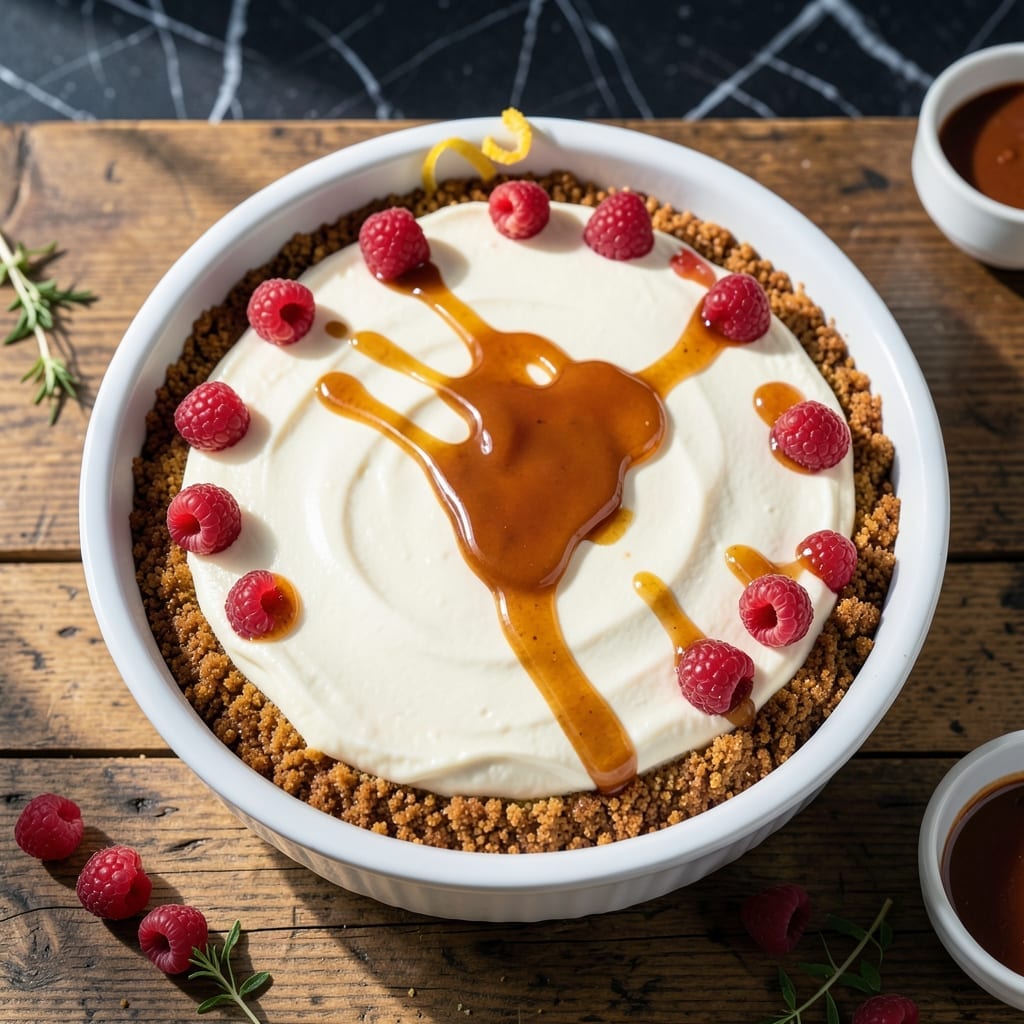
This cheesecake delivers the dense, velvety texture that defines a perfect slice. I’ve refined this recipe to ensure a smooth, crack-free surface every time.
With a buttery graham crust and rich cream cheese filling, it bakes to golden perfection. The result is a dessert that’s both impressive and approachable.
Ingredients for Taste of Home Cheesecake
Buttery graham crust and rich cream cheese filling create that signature dense, velvety texture you crave.
| Ingredient | Amount | Notes |
|---|---|---|
| Graham Cracker Crumbs 🍪 | 2 cups | Finely ground for crust |
| Granulated Sugar 🍚 | ¼ cup | Divided for crust and filling |
| Unsalted Butter 🧈 | ½ cup | Melted for crust binding |
| Full-Fat Cream Cheese 🧀 | 4 packages | 8 oz each, softened to room temperature |
| Sour Cream 🥛 | 1 cup | Full-fat for richness and creaminess |
| Pure Vanilla Extract 🌿 | 1 tbsp | High-quality for best flavor |
| Large Eggs 🥚 | 4 whole | Room temperature for even mixing |
| All-Purpose Flour 🌾 | 2 tbsp | For structural stability in filling |
| Sea Salt 🧂 | ¼ tsp | Fine grain for even distribution |
| Lemon Juice 🍋 | 1 tbsp | Freshly squeezed for brightness |
| Heavy Whipping Cream 🥛 | ½ cup | Optional for lighter texture |
[recipe_ingredient_scaler]
The cream cheese is non-negotiable for that classic Taste of Home texture. Philadelphia brand full-fat is the gold standard—avoid low-fat versions as they lack the necessary density. Graham cracker crumbs should be ultra-fine; pulse them in a food processor if store-bought are too coarse. Land O’Lakes unsalted butter melts beautifully without adding excess moisture. For the crust, pressing firmly with a glass helps create an even, compact base.
No graham crackers? Digestive biscuits or vanilla wafers work in a pinch (use 1.5 cups crumbs). Sour cream can be swapped for an equal amount of Greek yogurt, though the tang will be slightly sharper. For a citrus twist, add 1 tsp lemon zest to the filling. The vanilla extract should always be pure—not imitation—for depth of flavor. Eggs must be at room temperature to prevent cracks in the finished product.
This cheesecake keeps beautifully in the fridge for up to 5 days (covered tightly). For longer storage, freeze slices wrapped in plastic for 2 months. Always bring to room temperature before serving for the best texture. The crust can be made a day ahead—just cover and refrigerate until ready to fill and bake.
Why You’ll Love This Recipe
- No-Bake Option: I can skip the water bath and oven entirely—just mix, chill, and serve.
- Velvety Richness: The full-fat cream cheese and sour cream combo gives that melt-in-your-mouth texture I crave.
- Crowd Pleaser: Honestly, it’s the first dessert to disappear at potlucks, even with picky eaters.
- Stays Fresh: Leftovers? No problem. It keeps beautifully for days, tasting just as good (if not better) on day three.
Step-by-Step Instructions for Dense and Velvety Cheesecake
Master these precise steps for a flawless cheesecake with a buttery crust and rich, creamy filling.
Step 1: Prepare and Press the Graham Cracker Crust
Preheat your oven to 325°F. In a medium bowl, combine the 2 cups Graham Cracker Crumbs, 0.25 cup Granulated Sugar, and 0.5 cup Unsalted Butter (melted) until the mixture resembles wet sand.
Press the crust mixture firmly into the bottom of a 9-inch springform pan, using the base of a measuring cup to compact it evenly. Ensure the edges are well-defined and the surface is smooth—this creates a sturdy foundation. Bake for 10 minutes until lightly golden and fragrant, then set aside to cool while you prepare the filling.
Step 2: Cream the Cheese and Wet Ingredients
In a large mixing bowl, beat the 4 packages Full-Fat Cream Cheese (softened to room temperature) with an electric mixer on medium speed for 2 minutes until completely smooth and free of lumps. Scrape down the sides of the bowl frequently to ensure even mixing.
Add the 1 cup Sour Cream, 1 tbsp Pure Vanilla Extract, and 1 tbsp Lemon Juice, mixing for another 1-2 minutes until fully incorporated. The mixture should be velvety and slightly glossy. Avoid overmixing, as this can introduce excess air and cause cracks later.
Step 3: Incorporate Eggs and Dry Ingredients
Add the 4 whole Large Eggs one at a time, mixing on low speed for 15-20 seconds after each addition until just combined. This gradual incorporation prevents over-aeration, which is key to a dense, velvety texture.
Gently fold in the 2 tbsp All-Purpose Flour and 0.25 tsp Sea Salt using a spatula, mixing just until no streaks remain. For a lighter texture, fold in the 0.5 cup Heavy Whipping Cream at this stage. The batter should be thick but pourable, with a smooth, satiny finish.
Step 4: Bake in a Water Bath for Even Cooking
Pour the filling over the cooled crust and smooth the top with a spatula. Wrap the bottom of the springform pan tightly with heavy-duty aluminum foil to prevent water seepage. Place the pan in a larger roasting pan and add hot water until it reaches halfway up the sides of the springform pan.
Bake at 325°F for 60-70 minutes until the edges are set but the center still has a slight wobble (about 2-3 inches in diameter). Turn off the oven, crack the door open, and let the cheesecake cool inside for 1 hour to prevent sudden temperature changes that can cause cracking.
Step 5: Chill and Serve
After the initial cooling, transfer the cheesecake to the refrigerator and chill for at least 6 hours, or preferably overnight. This extended chilling time allows the filling to fully set and develop its signature creamy texture.
Once chilled, run a thin knife around the edge of the pan to loosen the cheesecake before releasing the springform ring. Slice with a warm, clean knife for smooth, professional-looking pieces. Serve as is or with fresh berries, chocolate ganache, or a dusting of powdered sugar.
Pro Tips For Making Taste Of Home Cheesecake
- Room Temp Cream Cheese: Take the cream cheese out 1-2 hours before starting—I learned this the hard way after my first three cheesecakes had lumps no amount of mixing could smooth out.
- Press Crust Firmly: Pack those graham cracker crumbs into the pan like you mean it, using the bottom of a glass to really compact them, or you’ll get a crumbly first bite instead of a solid base.
- Skip the Overmixing: Once you add the eggs, mix just until combined—overdo it and you’ll introduce air that can cause cracks during baking.
- Water Bath Every Time: Wrap the springform pan in foil and bake it in a water bath; I was skeptical until I tried it, but it actually prevents those frustrating surface cracks.
Troubleshooting This Dish
Cracks on Top
If your cheesecake develops cracks, it’s usually due to overmixing or rapid temperature changes. Always mix on low speed and avoid opening the oven door during baking. I also recommend letting it cool gradually in the oven with the door cracked for 1 hour. 💡
Soggy Crust
A soggy bottom often means the crust wasn’t fully baked or the pan wasn’t properly wrapped for the water bath. Bake the crust for the full 10 minutes until lightly golden and use heavy-duty foil to prevent water from seeping in.
Sunken Center
This happens when the cheesecake isn’t fully set before cooling. Ensure the edges are firm and the center has just a slight 2-3 inch wobble before removing it from the oven. Underbaking is the most common cause.
Grainy Texture
Graininess usually indicates the cream cheese wasn’t fully softened or the ingredients weren’t at room temperature. Let your 4 packages cream cheese sit out for at least 1-2 hours before mixing. Cold ingredients don’t blend smoothly.
Crust Pulling Away
If the crust separates from the sides, it may have been pressed too thin or the pan wasn’t greased. Press 2 cups graham crumbs firmly into the pan using a measuring cup, and always grease the springform pan lightly with butter.
Browning on Top
Excessive browning can occur if the oven runs too hot. Use an oven thermometer to verify your 325°F temperature, and tent the top with foil if it starts browning too quickly. This protects the delicate surface. ✨
Nutrition Facts
Frequently Asked Questions
Why does my cheesecake crack on top?
Cracks usually form from overmixing or sudden temperature changes. Mix on low speed and let it cool gradually in the oven with the door cracked for 1 hour.
Can I make this without a water bath?
You can, but the water bath helps prevent cracks and ensures even baking. Without it, monitor closely and remove at the first sign of light browning.
How do I know when it’s fully baked?
The edges should be set with a slight 2-3 inch wobble in the center. Turn off the oven and let it cool inside to finish setting.
Can I use low-fat cream cheese?
Full-fat cream cheese is essential for the dense, velvety texture. Low-fat versions lack the richness and may result in a grainy or less creamy filling.

Trained in classic French technique but raised on slow-cooked ribs and spicy rubs, she blends culinary skill with smoke and soul.
- Recipe for Boneless Pork Chops in Cast Iron Skillet: Sear and Baste to Juicy Perfection - October 3, 2026
- Recipe for Boneless Cross Rib Roast: Slow-Roasted Beef with Herb Crust - October 3, 2026
- Hamburgers in Sauce Recipe Crock Pot: Slow-Cooked Savory Delight - October 3, 2026