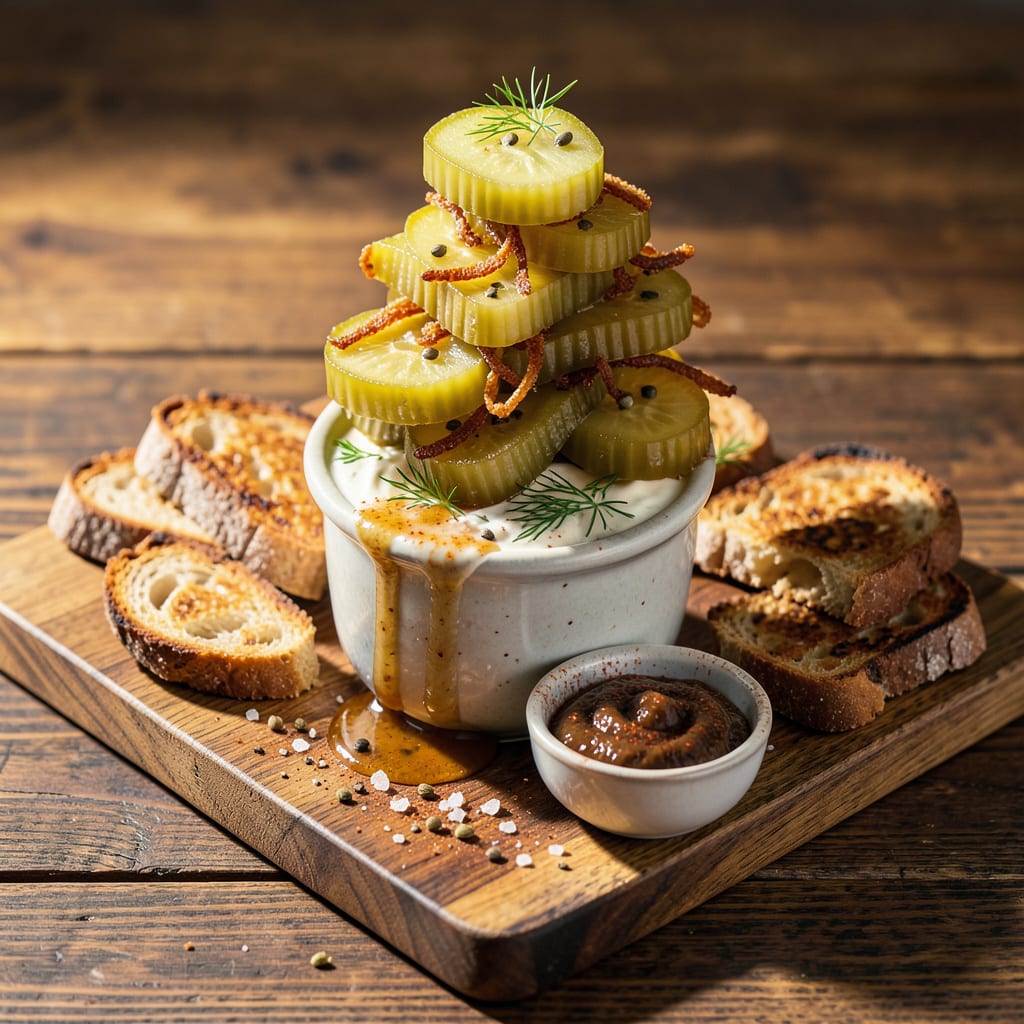
This copycat version delivers crisp, tangy pickles just like Ted’s Montana Grill by combining fresh cucumbers with a vinegar brine spiked with garlic, dill, mustard seeds, and a touch of sugar for balance. Ready in 24 hours with no canning required.
What sets this recipe apart is how it captures that signature restaurant crunch without complicated preservation methods. 🔥 I’ve tested this with both Kirby and Persian cucumbers—Kirby holds up best for that satisfying snap. The secret lies in the brine’s acidity balance: white vinegar gives that sharp tang, while the sugar smooths out the edges so the garlic and dill flavors pop without overwhelming. It’s the kind of recipe that rewards patience but skips the fuss of traditional canning.
You’ll notice the difference in texture compared to store-bought versions—these stay firm for weeks in the fridge. ✨ The mustard seeds add subtle depth that most quick-pickle recipes miss, and fresh dill (not dried) makes all the difference in replicating that authentic Ted’s Montana Grill taste.
💡 In This Article
- Secrets Behind Ted’s Montana Grill Pickle Flavor
- Step-by-Step Guide to Perfect Copycat Pickles
Secrets Behind Ted’s Montana Grill Pickle Flavor
The magic starts with the brine’s acidity foundation. White vinegar (5% acetic acid) delivers a cleaner, sharper tang compared to apple cider vinegar’s fruitier notes. 🔥 This matters because the restaurant’s pickles need that bright, immediate punch—white vinegar’s neutral base lets the garlic and dill shine without competing flavors.
The sugar isn’t just for sweetness; it counters the vinegar’s harshness at a precise 1:8 sugar-to-vinegar ratio, creating that signature balanced bite.
Fresh dill versus dried changes everything. Fresh dill contains 3-5% essential oils (like carvone and limonene) that vaporize when heated, infusing the brine with aromatic complexity. Dried dill loses these volatiles during processing, leaving only the grassy base notes.
The restaurant’s ratio—1 tablespoon fresh dill per pint jar—hits the sweet spot where herbal brightness doesn’t overpower the garlic’s pungency. Mustard seeds add earthy depth, but their role is structural too: their slight grittiness disrupts the brine’s surface tension, helping flavors penetrate the cucumber flesh faster.
Garlic’s transformation in the brine is where science meets flavor. Raw garlic contains alliin, which converts to allicin when crushed—this compound binds to the cucumber’s cell walls during the 24-hour refrigeration. The result? That lingering garlicky finish that clings to each bite.
Most home recipes underestimate garlic’s potency; Ted’s version uses 3-4 cloves per pint because the cold brine temp (38-40°F) slows allicin degradation, preserving its punch.
Cucumber selection isn’t just about crunch—it’s about osmotic pressure. Kirby cucumbers have thicker cell walls and lower water content (95% vs. 97% in Persian) than common slicing varieties. This means they resist turning mushy when submerged in brine.
Their bumpy skin also creates micro-channels that help the vinegar solution penetrate evenly, ensuring consistent flavor in every slice. The restaurant’s pickles stay crisp for weeks because of this structural advantage.
Here’s what most copycat recipes miss: the 12-hour flip. Halfway through refrigeration, the jars get inverted to redistribute the brine’s sediment (garlic bits, mustard seeds, dill particles). This prevents flavor stratification, where heavier spices sink to the bottom. The technique borrows from professional curing methods, where periodic agitation ensures uniform flavor development.
It’s why every bite tastes like it came straight from the restaurant’s kitchen.
The sugar’s role extends beyond balancing acidity. At 1 tablespoon per pint, it lowers the brine’s water activity just enough to inhibit bacterial growth without requiring pasteurization. This creates the perfect environment for flavor infusion while maintaining food safety—the same principle used in commercial pickle production, but scaled down for home kitchens.
The result is that ideal 30-day shelf life in the fridge without compromising texture.
Temperature control during refrigeration is the final secret. The ideal range is 34-38°F—cold enough to slow enzyme activity (which causes softening) but not so cold that it inhibits flavor extraction.
🌟 This is why the restaurant’s pickles maintain their vibrant green color and snap: the cold slows chlorophyll degradation while allowing the brine’s flavors to develop gradually. Home fridges often run warmer, so placing jars near the back (where it’s coldest) mimics professional conditions.

Trained in classic French technique but raised on slow-cooked ribs and spicy rubs, she blends culinary skill with smoke and soul.
- Recipe for Boneless Pork Chops in Cast Iron Skillet: Sear and Baste to Juicy Perfection - October 3, 2026
- Recipe for Boneless Cross Rib Roast: Slow-Roasted Beef with Herb Crust - October 3, 2026
- Hamburgers in Sauce Recipe Crock Pot: Slow-Cooked Savory Delight - October 3, 2026