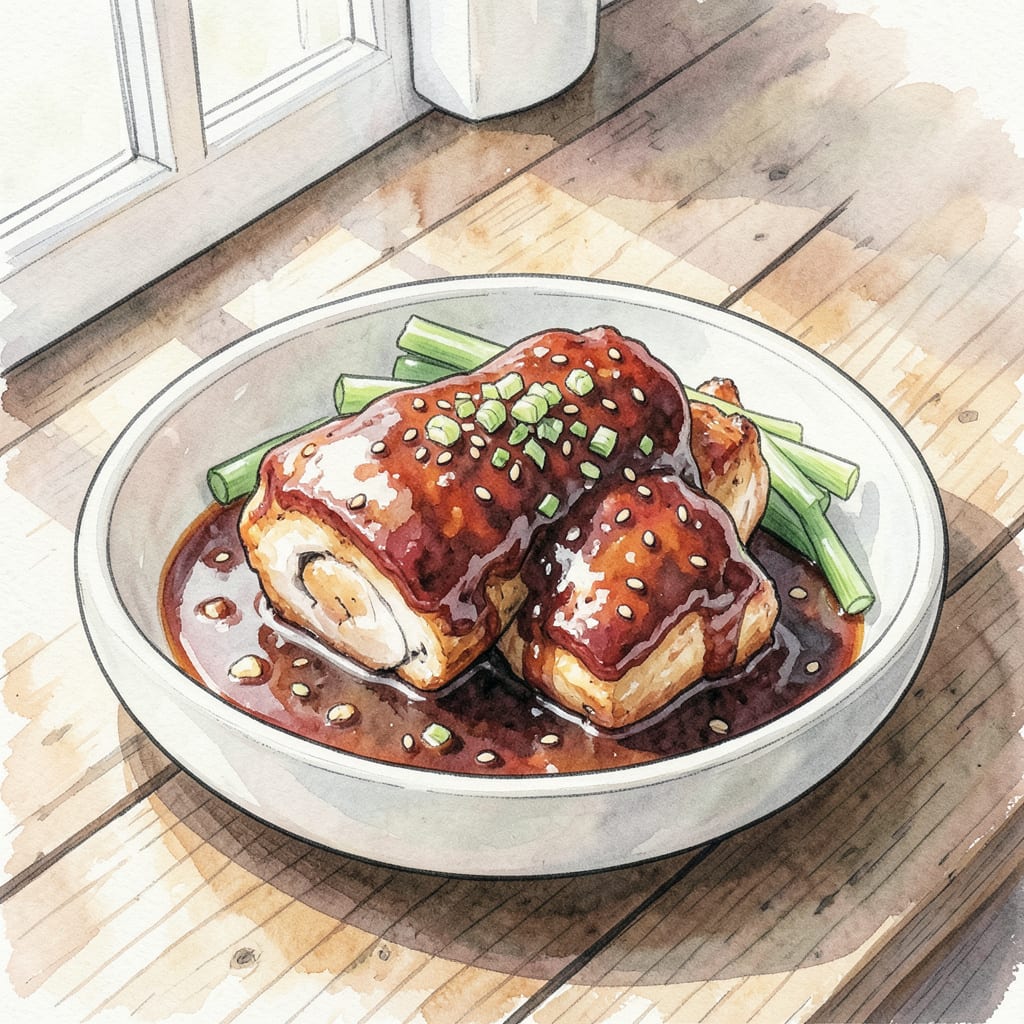
I’ve perfected my Teriyaki BBQ Marinade recipe through years of experimenting with sweet and savory flavor combinations. This marinade transforms ordinary grilled meats into extraordinary dishes with its unique blend of Asian-inspired flavors and classic BBQ.
Ready in just 5 minutes, this versatile sauce works beautifully with chicken, beef, or pork. The secret lies in balancing soy sauce, brown sugar, and ginger for depth, while garlic and sesame oil add aromatic complexity. Let’s make it!
Ingredients for Teriyaki Bbq Marinade
Quick, versatile, and packed with umami – this marinade is your new grilling best friend.
| Ingredient | Amount | Notes |
|---|---|---|
| Soy Sauce 🧂 | ¾ cup | Low-sodium preferred |
| Brown Sugar 🍮 | ½ cup | Packed, not loose |
| Rice Vinegar 🍋 | ¼ cup | White or apple cider |
| Fresh Ginger 🧄 | 2 whole | Peeled, grated |
| Garlic Cloves 🧄 | 4 cloves | Minced |
| Sesame Oil 🫒 | 2 tbsp | Toasted for nuttiness |
| Honey 🍯 | 2 tbsp | Or maple syrup |
| Black Pepper 🌶️ | 1 tsp | Freshly ground |
[recipe_ingredient_scaler]
The soy sauce is the backbone here. Low-sodium gives you control over salt. I like Kikkoman or Pearl River Bridge for that authentic umami. Fresh ginger is a must—don’t even think about the pre-ground stuff. Grate it yourself, it’s worth the 2 minutes.
No sesame oil? Peanut oil or avocado oil work too, just lose the nutty flavor. Want it sweeter? Bump the honey to 3 tbsp. For more heat, 1-2 tsp of sriracha or red pepper flakes does the trick. If you’re out of rice vinegar, apple cider vinegar or even lemon juice can save the day.
This keeps for 2 weeks in the fridge—if it lasts that long. Store it in a glass jar, not plastic. The flavors meld together beautifully over time, so it’s actually better the next day. Portion into ice cube trays if you want to freeze it for 3 months.
Step-by-Step Instructions for Teriyaki BBQ Marinade
Creating this sweet and savory marinade is straightforward and rewarding.
Step 1: Prepare the Aromatic Ingredients
Start by preparing the 2 whole Fresh Ginger and 4 cloves Garlic Cloves. Peel the ginger and grate it finely to release its oils and flavor. I like to use a microplane for this—it creates a nice, smooth texture that incorporates well into the marinade. Next, mince the garlic cloves. Be sure to mince them finely so they distribute evenly throughout the marinade.
These aromatic ingredients form the backbone of our marinade, providing that essential depth of flavor. Fresh ginger adds a warm, spicy note while garlic contributes a pungent savory quality. Together, they create a complex flavor profile that elevates whatever protein you decide to marinate.
Step 2: Combine the Wet Ingredients
In a medium bowl, whisk together 0.75 cup Soy Sauce, 0.25 cup Rice Vinegar, 2 tbsp Honey, and 2 tbsp Sesame Oil. The soy sauce provides saltiness and umami flavor, while the rice vinegar adds a touch of acidity that helps tenderize the meat. Honey contributes sweetness, balancing out the savory elements, and sesame oil brings a nutty, aromatic quality.
Whisk these ingredients until the honey is fully dissolved and the mixture is smooth. You’ll notice the marinade starts to take on a glossy appearance as the sesame oil emulsifies with the other liquids. This sheen indicates that your marinade is well combined and ready for the dry ingredients.
Step 3: Add the Dry Ingredients and Aromatics
Add 0.5 cup Brown Sugar and 1 tsp Black Pepper to the wet ingredients. Whisk until the brown sugar is fully incorporated, which might take a minute or two since it’s a dry ingredient. The brown sugar adds a rich, caramel-like sweetness that enhances the overall flavor profile. Freshly ground black pepper contributes a subtle spice that rounds out the other flavors.
Now add the prepared ginger and garlic to the mixture. Stir well to ensure they’re evenly distributed throughout the marinade. At this point, you’ll notice the marinade has taken on a fragrant, aromatic quality from the fresh ingredients. This is a good sign that your marinade is ready to use.
Step 4: Finalize and Store the Marinade
Transfer the marinade to an airtight container, such as a glass jar with a tight-fitting lid. I prefer glass containers because they won’t react with the acidic ingredients in the marinade. Store the marinade in the refrigerator until you’re ready to use it. It will keep for up to 2 weeks when properly stored.
Before using, give the marinade a good stir to recombine any ingredients that may have separated during storage. If you notice any crystallization or separation, a quick whisk should bring it back together. The marinade is now ready to use with your choice of protein—chicken, beef, pork, or tofu all work beautifully.
Flavor Customization for This Dish
Customizing the Flavor Profile
To make this Teriyaki BBQ Marinade your own, start by adjusting the sweetness level. You can increase the honey to 3 tbsp for a sweeter profile or reduce it to 1 tbsp for less sweetness. I often add a bit more 2-3 tsp brown sugar when using it for pork.
Spice It Up
For those who like a little heat, adding 1-2 tsp sriracha or red pepper flakes gives the marinade a nice kick. I like to add 1 tsp grated jalapeño along with the ginger for an extra layer of heat. You can also experiment with different types of hot sauce to find your preferred level of spiciness.
Regional Twists
To give your marinade a different regional flair, try substituting 2 tbsp rice vinegar with apple cider vinegar for a slightly fruitier taste. For a more authentic Japanese flavor, use 2 tbsp mirin instead of honey. I sometimes add 1 tsp ground white pepper for a more refined flavor profile.
Sesame Flavor Variations
The sesame oil provides a distinct nutty flavor. If you prefer a stronger sesame taste, increase it to 3 tbsp. Alternatively, you can substitute 1 tbsp tahini for added depth. For a different nutty flavor, try using peanut oil or avocado oil as a substitute.
Storage and Preparation Tips
When preparing the marinade,
Protein Pairing Suggestions
This marinade is versatile and works well with various proteins. For chicken, marinate for at least 2 hours. For beef or pork, 4-6 hours is ideal. You can also use it for tofu or tempeh for a vegetarian option. Experiment with different marinating times to find your preferred level of flavor infusion.
Nutrition Facts

Trained in classic French technique but raised on slow-cooked ribs and spicy rubs, she blends culinary skill with smoke and soul.
- Recipe for Boneless Pork Chops in Cast Iron Skillet: Sear and Baste to Juicy Perfection - October 3, 2026
- Recipe for Boneless Cross Rib Roast: Slow-Roasted Beef with Herb Crust - October 3, 2026
- Hamburgers in Sauce Recipe Crock Pot: Slow-Cooked Savory Delight - October 3, 2026