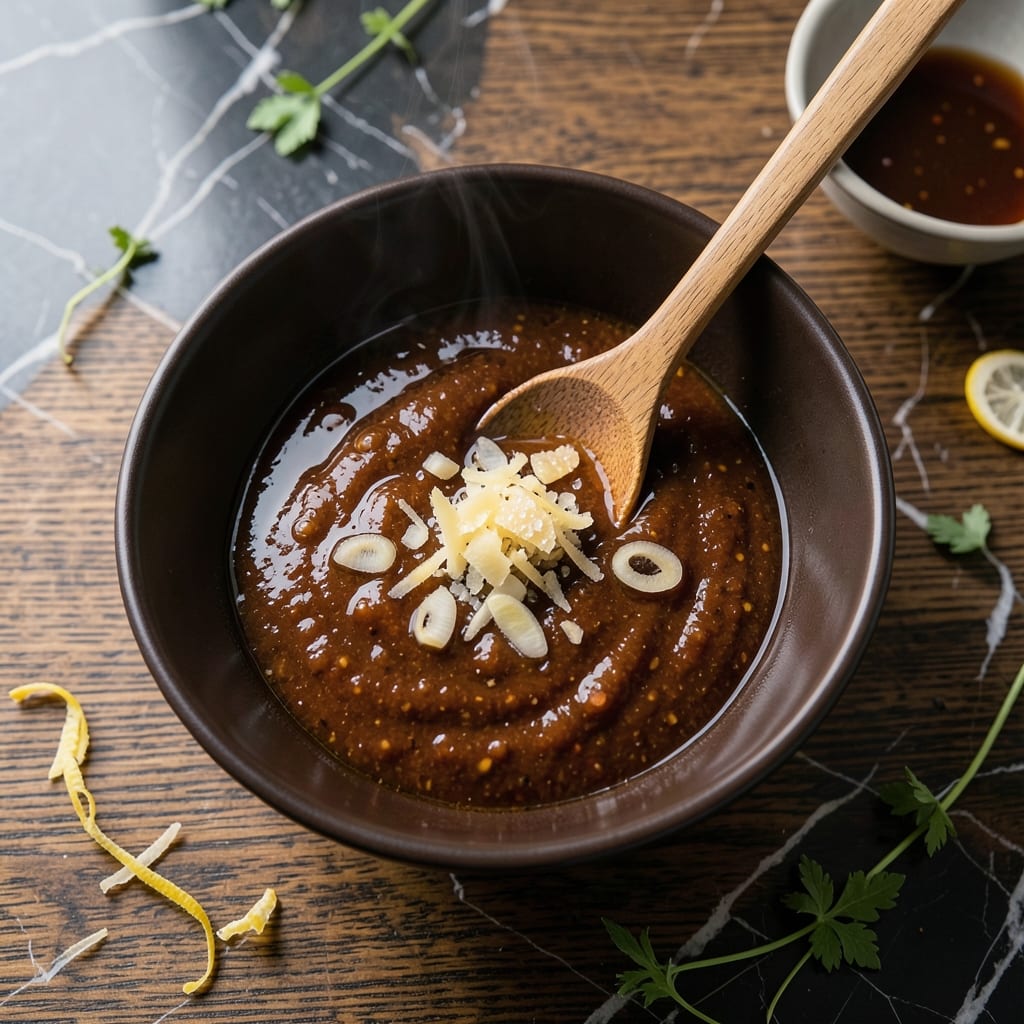
This dressing captures the essence of restaurant-quality teriyaki flavor in a smooth, pourable consistency. I developed it after years of trying to replicate my favorite Boston sushi spot’s signature drizzle.
With just a handful of pantry staples, this blend balances sweet, salty, and umami notes perfectly. The key is reducing the mixture slightly for a thicker texture that clings to greens without overpowering them.
You’ll achieve a glossy, restaurant-style finish that elevates simple salads to gourmet status. It keeps beautifully in the fridge, making it ideal for meal prep or last-minute dressing needs.
Use it on everything from crisp lettuce to grain bowls for an instant flavor boost. The versatility makes it a kitchen staple worth mastering.
Ingredients for Teriyaki Restaurant Salad Dressing
A handful of pantry staples blends into this glossy, umami-packed dressing with restaurant flair.
| Ingredient | Amount | Notes |
|---|---|---|
| Soy Sauce 🫙 | ½ cup | Low-sodium preferred for balance |
| Mirin 🍶 | ¼ cup | Sweet rice wine, essential for depth |
| Rice Vinegar 🍯 | 2 tbsp | Unseasoned for clean acidity |
| Granulated Sugar 🍚 | 2 tbsp | Dissolves smoothly into mixture |
| Garlic Cloves 🧄 | 2 cloves | Finely minced for even distribution |
| Fresh Ginger 🌿 | 1 tbsp | Peeled and grated finely |
| Sesame Oil 🫒 | 1 tsp | Toasted for nutty aroma |
| Vegetable Oil 💧 | ¼ cup | Neutral flavor, light texture |
| Dijon Mustard 🟡 | 1 tsp | Adds subtle tang and thickness |
| Water 💧 | 2 tbsp | Thins to pourable consistency |
[recipe_ingredient_scaler]
The soy sauce is non-negotiable—Kikkoman low-sodium is my go-to for balanced saltiness without overpowering. Mirin (that sweet Japanese rice wine) is what gives it that signature depth you taste in sushi spots. Find it at Whole Foods or any Asian market. Fresh ginger and garlic are worth the effort (the jarred stuff just doesn’t compare). If you’re feeling fancy, grab toasted sesame oil from the international aisle.
No mirin? Dry sherry plus a teaspoon of sugar works in a pinch. Swap rice vinegar for apple cider vinegar if that’s what’s in your cupboard. The sugar can be brown sugar for a deeper molasses note, but white sugar dissolves faster. Skip the mustard if you must, but it really ties everything together. For a gluten-free version, tamari instead of soy sauce does the trick.
This keeps for 2 weeks in the fridge—the flavors actually deepen over time. Store in a glass jar (plastic can absorb odors). If it separates, just give it a good shake before using. Perfect for meal prep since it holds up so well.
Why You’ll Love This Recipe
- Five Minute Mix: I just whisk soy sauce, mirin, rice vinegar, sugar and minced garlic together—no cooking, no fuss.
- Sweet-Savory Balance: The mirin and sugar caramelize the garlic while rice vinegar keeps it bright and tangy.
- Drizzle on Everything: I use it on greens, as a marinade for chicken, or even tossed with cold noodles for lunch.
- Pantry Staples Only: Between us, I always have these ingredients on hand, so I can make this dressing anytime without a grocery run.
Step-by-Step Instructions for Teriyaki Salad Dressing
Here’s the technique to create a restaurant-quality dressing with perfect balance and sheen.
Step 1: Infuse the Base with Aromatics
In a small saucepan, combine the 0.5 cup Soy Sauce, 0.25 cup Mirin, 2 tbsp Rice Vinegar, and 2 tbsp Granulated Sugar. Place over medium heat and stir until the sugar fully dissolves—this happens quickly, usually within 2-3 minutes.
Add the 2 cloves Garlic Cloves (finely minced) and 1 tbsp Fresh Ginger (peeled and grated). Simmer for 1 minute to mellow the sharpness and release their fragrance. You’ll smell the transformation as the raw edge softens into a warm, complex aroma.
Step 2: Emulsify with Oil and Thicken
Remove the saucepan from heat and let the mixture cool for 2 minutes. This prevents the 1 tsp Sesame Oil from losing its delicate toasted flavor when added to hot liquid. Stir in the 1 tsp Dijon Mustard, which acts as your emulsifier.
Now, slowly drizzle in the 0.25 cup Vegetable Oil while whisking vigorously. The dressing will thicken slightly and take on a glossy appearance. If it seems too thick at this stage, don’t worry—the next step will perfect the consistency.
Step 3: Adjust and Finish
Add the 2 tbsp Water and whisk until fully incorporated. This thins the dressing to the ideal pourable consistency while maintaining its body. Taste and adjust seasoning if needed, though the soy sauce typically provides sufficient saltiness.
The finished dressing should coat the back of a spoon with a light, silky film. Transfer to a jar or bottle and let it cool completely to room temperature. As it cools, the flavors will meld and deepen, creating that signature teriyaki restaurant taste.
Step 4: Chill and Store
Once cooled, seal the container and refrigerate for at least 30 minutes before using. This chilling time allows the flavors to fully marry. The dressing will keep in the refrigerator for up to 1 week—though I doubt it’ll last that long once you taste it.
Before each use, give it a good shake to re-emulsify any separated oil. The dressing should appear slightly thick but still flow easily from the bottle, creating beautiful ribbons over your greens.
Pro Tips For Making Teriyaki Restaurant Salad Dressing
- Bloom the Garlic: Cook the minced garlic in a dry pan for 30 seconds before adding liquids—this mellows the sharpness and prevents that raw garlic bite in the finished dressing.
- Dissolve Sugar First: Heat the mirin and sugar together until fully dissolved before adding soy sauce; otherwise, you’ll get gritty bits that won’t blend in no matter how much you whisk.
- Skip the Boil: Simmer gently, don’t boil, or the soy sauce will reduce too fast and turn the dressing thick and salty instead of smooth and balanced.
- Cool Before Using: Let the dressing sit for 10 minutes after mixing—it thickens slightly as it cools and the flavors meld, so it clings to greens instead of pooling at the bottom.
Troubleshooting Great teriyaki restaurant salad dressing
Too Thick or Gloppy
If your dressing comes out too thick, whisk in 1-2 tbsp warm water until it reaches a pourable consistency. I learned this the hard way in my tiny Boston kitchen—thick dressing doesn’t cling to greens properly. 💡
Oil Separation Issues
See oil floating on top? That’s normal with homemade emulsions. Just give it a vigorous shake before each use. For a more stable emulsion, try adding the Dijon mustard before the oils—it acts as a natural binder.
Overly Salty Flavor
Did you use regular soy sauce instead of low-sodium? Balance it with 1 tsp honey or brown sugar and 1 tbsp rice vinegar. This mirrors the fix I use when testing recipes for my Irish-Italian family’s varied taste preferences.
Not Sweet Enough
Add 1 tsp granulated sugar at a time, dissolving completely between additions. Remember, the sweetness should complement the umami, not overpower it—just like the balance in Nonna’s best dishes.
Grainy Texture
This usually means undissolved sugar. Warm the mixture gently while stirring until smooth. My pro tip: use superfine sugar (found at Whole Foods) for guaranteed smoothness in dressings.
Weak Umami Flavor
Boost depth with ½ tsp fish sauce or an extra 1 tbsp soy sauce. The fish sauce trick is what I discovered works wonders in small Boston neighborhood markets where authentic flavors matter. 🌟
Nutrition Facts
Frequently Asked Questions
Can I use honey instead of sugar?
Yes! Substitute 2 tbsp honey for the sugar. It adds a floral note that pairs beautifully with the teriyaki flavors. Just reduce the water by 1 tbsp to account for honey’s extra moisture.
How long does this dressing last?
Stored in an airtight container in the fridge, it stays fresh for up to 2 weeks. The flavors actually deepen over time, making leftovers taste even better.
Can I make this gluten-free?
Swap the soy sauce for tamari (naturally gluten-free). Check that your mirin is also gluten-free, as some brands contain wheat.
Why does my dressing separate?
This is normal for homemade emulsions. Just shake vigorously before each use. For a more stable blend, let the mixture cool slightly before adding the oils.

Trained in classic French technique but raised on slow-cooked ribs and spicy rubs, she blends culinary skill with smoke and soul.
- Recipe for Boneless Pork Chops in Cast Iron Skillet: Sear and Baste to Juicy Perfection - October 3, 2026
- Recipe for Boneless Cross Rib Roast: Slow-Roasted Beef with Herb Crust - October 3, 2026
- Hamburgers in Sauce Recipe Crock Pot: Slow-Cooked Savory Delight - October 3, 2026