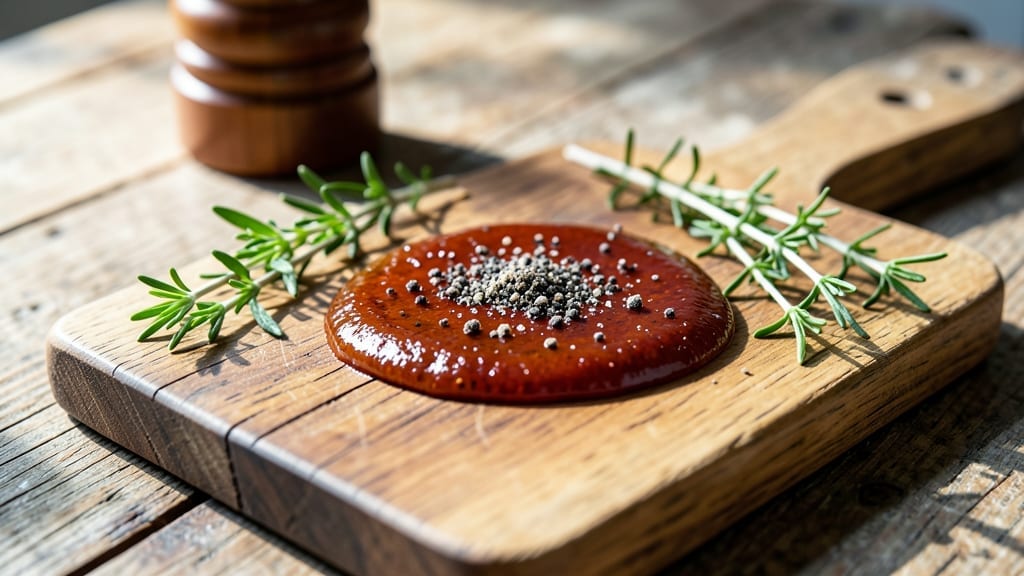
This teriyaki sauce marinade transforms simple grilled proteins into restaurant-quality masterpieces with its sticky-sweet glaze and deep umami flavor. The secret lies in balancing soy sauce, mirin, and sugar while infusing garlic and ginger for complexity—no artificial additives, just pure, professional results.
I developed this marinade after years of testing, ensuring it works equally well for chicken, tofu, or even vegetables.
The beauty of this recipe is its versatility—use it as a marinade for 30 minutes or up to 24 hours for maximum flavor penetration, or brush it on during the last 5 minutes of grilling for a caramelized glaze.
The sauce’s natural stickiness clings perfectly to seared surfaces, creating that signature glossy finish while keeping the interior tender. No advanced techniques required—just precise measurements and patience.
What you’ll end up with is a perfectly balanced teriyaki sauce that’s rich, slightly tangy, and just sweet enough to complement grilled flavors without overpowering them. The aroma alone will draw everyone to the table, and the first bite delivers that satisfying contrast of crispy exterior and juicy interior.
This is the marinade that elevates everyday meals to special occasions.
Store leftovers in the refrigerator for up to 2 weeks, or freeze for 3 months—ideal for meal prep or batch cooking. Whether you’re grilling, baking, or stir-frying, this teriyaki sauce marinade delivers professional-level results with minimal effort. Let’s get started on creating your signature glaze.
Ingredients for teriyaki sauce marinade
Balanced flavors in a single jar—this marinade delivers restaurant-quality teriyaki perfection every time.
| Ingredient | Amount | Notes |
|---|---|---|
| Soy Sauce 🍶 | ½ cup | Low-sodium preferred for balance |
| Mirin 🍶 | ¼ cup | Sweet cooking wine, not substitute |
| Brown Sugar 🍚 | ¼ cup | Light or dark, packed firmly |
| Rice Vinegar 🍶 | ¼ cup | White or seasoned variety |
| Garlic Cloves 🧄 | 4 cloves | Freshly minced, not pre-minced |
| Fresh Ginger 🌿 | 1 ½ tbsp | Grated, not powdered |
| Sesame Oil 🫒 | 1 tbsp | Toasted, not flavorless |
| Honey 🍯 | 1 tbsp | Wildflower or clover preferred |
| Cornstarch 🌾 | 1 tsp | For thickening consistency |
| Diamond Crystal Kosher Salt 🧂 | ½ tsp | Adjusts to taste after blending |
[recipe_ingredient_scaler]
The soy sauce is your flavor foundation—Kikkoman or Hondashin for authentic depth. Mirin adds that signature sweetness without overpowering; look for genuine mirin at Asian markets, not the cheaper substitutes. Brown sugar caramelizes beautifully during grilling, so don’t skimp on the amount. Fresh ginger and garlic are non-negotiable—they’re what separates homemade from store-bought. I always double-check my ginger for fibrous bits, and Trader Joe’s sells pre-peeled garlic cloves that save time without sacrificing flavor. The sesame oil should smell toasty and nutty, not stale.
No mirin? Dry sherry plus 1 tsp sugar works in a pinch, though it won’t be identical. Substitute honey with maple syrup, but reduce to 0.75 tbsp to avoid over-sweetness. Fresh ginger too spicy? Powdered ginger at half the amount tempers the heat. The cornstarch is crucial—it creates that signature sticky glaze. If you’re gluten-sensitive, use arrowroot instead. For extra umami, add 1 tsp fish sauce (trust me, it blends perfectly). And always taste before marinating—adjust the salt if needed.
This marinade doubles as a dipping sauce—store leftovers in a sealed jar in the fridge for 2 weeks or freeze for 3 months. The sauce thickens as it chills, so stir before using. For meal prep, divide into ice cube trays—perfect portions for future grilling sessions. If it separates, just whisk vigorously before using. The flavor actually improves overnight, so make extra if you’re hosting.
Why You’ll Love This Recipe
- No-Pan Needed: I make this every weeknight because it’s the kind of marinade that doesn’t demand my attention. Just toss the soy sauce, mirin, and rice vinegar in a pan, let it simmer while I prep the rest, and boom—done in under 20 minutes. The fresh garlic and ginger infuse in just 3-4 minutes, so I’m not stuck babysitting the stove.
- Sweet-Salty Balance: Honestly, the honey and sesame oil are what sell this marinade for me. That first taste—sweet from the brown sugar and honey, salty from the soy sauce, with a nutty kick from the sesame oil—is chef’s kiss. The cornstarch gives it just enough thickness to cling to chicken or tofu without being too heavy, so it’s always the perfect glaze.
- Dips, Meals, Repeat: This isn’t just for stir-fries. I marinate tofu for breakfast, use it as a sauce for grilled shrimp, and—my favorite—keep a jar in the fridge for dipping fried rice or even cold noodles. It’s the kind of versatile sauce that turns a simple meal into something special without extra effort.
- Budget-Friendly Flavor Bomb: With just pantry staples like soy sauce, mirin, and brown sugar, this marinade costs me next to nothing. A little goes a long way, and leftovers? I freeze them for months. It’s my secret weapon for feeding a crowd without breaking the bank—plus, the flavors only get better as they sit.
Step-by-step instructions for teriyaki sauce marinade
Here’s how to craft the perfect balance of sweet, salty, and umami in minutes.
Combine Wet Ingredients for the Base
In a medium saucepan, pour in the ½ cup soy sauce, ¼ cup mirin, and ¼ cup rice vinegar. Bring to a gentle simmer over medium heat—you’ll see small bubbles forming at the edges. This initial combination creates the foundational flavor profile that will develop as we add the remaining ingredients.
While heating, I like to add the ¼ cup brown sugar now. Stir it in until fully dissolved, which typically takes about 1-2 minutes. The sugar will caramelize slightly as we continue cooking, deepening the sauce’s complexity. Keep the heat at a steady simmer—too high will cause the mirin to evaporate too quickly, throwing off the balance of flavors.
Infuse with Aromatics and Natural Sweetness
Reduce the heat to medium-low and add the 4 minced garlic cloves and 1½ tablespoons grated fresh ginger. Let these aromatics cook for 3-4 minutes until they become fragrant and just begin to soften—this ensures their flavors meld without becoming bitter. You’ll notice the sauce starting to thicken slightly as the starches in the ginger begin to release.
Now’s the time to add the 1 tablespoon honey and 1 tablespoon sesame oil. Stir well to combine, then taste the mixture. The honey will add natural sweetness while the sesame oil contributes a nutty depth. If you’re using low-sodium soy sauce, you might want to add the ½ teaspoon diamond crystal kosher salt now to balance the flavors. Let this mixture simmer for another 2-3 minutes to allow all the ingredients to marry together.
Thicken to Perfect Glaze Consistency
In a small bowl, whisk together the 1 teaspoon cornstarch with 2 tablespoons water to create a smooth slurry. This is your thickening agent—it will transform the sauce from a thin marinade into a rich, sticky glaze. Return the saucepan to medium heat and slowly pour in the cornstarch mixture while whisking continuously to prevent lumps from forming.
Simmer the sauce for 3-5 minutes, stirring constantly, until it reaches your desired consistency. You’re aiming for a thick, syrupy texture that will coat proteins beautifully and create that signature teriyaki glaze. The sauce should coat the back of a spoon and leave a slight sheen when drizzled. If it’s still too thin, add another ½ teaspoon cornstarch mixed with 1 teaspoon water and simmer for another 1-2 minutes.
Cool and Perfect for Marinating
Remove the saucepan from heat and let the sauce cool to room temperature. This cooling process allows the flavors to fully develop and the sauce to thicken further as it settles. I like to transfer it to a shallow dish or resealable container that will accommodate whatever you’re marinating—whether it’s chicken, tofu, or even vegetables.
For best results, marinate your protein for at least 30 minutes in the refrigerator, though overnight marination yields even more flavor penetration. The cooled sauce will have a glossy sheen and a perfect balance of sweet, salty, and umami notes. If you’re not using it immediately, store it in an airtight container in the refrigerator for up to 1 week—it actually tastes better as the flavors continue to meld.
Pro Tips For Making Teriyaki Sauce Marinade
- STIR CONSTANTLY WHEN THICKENING: The cornstarch slurry is finicky—once you add it, don’t walk away. I learned this the hard way after coming back to find a lumpy mess that took 10 minutes to salvage. Whisk like you’re trying to win a prize, especially those first 30 seconds after pouring it in.
- MINCE GARLIC FINE, NOT FINE-ISH: Pre-minced garlic from the jar is the fast track to bland teriyaki. Freshly minced cloves release their punch immediately, but the real magic happens when you actually smash them slightly with the flat of your knife before dicing—this breaks down more cells, giving you that deep, aromatic bite the sauce needs.
- SIMMER GENTLY OR REGRET IT: That mirin is delicate. I used to crank the heat high to speed things up, but it evaporates faster than you can say “umami bomb,” leaving your sauce thin and one-dimensional. A steady simmer—just small bubbles at the edges—lets the flavors develop without turning your marinade into a sad, watery glaze.
- SALT AFTER COOLING, NOT BEFORE: Tossing in the kosher salt too early can make your sauce taste flat. Wait until the sauce has cooled slightly—then taste and adjust. The flavors mellow as they settle, and you’ll find you need less salt than you think, especially if you’re using low-sodium soy sauce. Trust the process; your future self will thank you.
Make-ahead tips for leftovers
Batch Cooking Strategy
Double the recipe and store it in glass mason jars with airtight lids for easy grab-and-go meals. The sauce thickens beautifully over time, so shake well before using.
I keep two jars in my fridge at all times—one for marinating proteins and another for stir-fry sauces. This way, I’m always prepared for spontaneous grilling nights. 🔥
Portion Control Hacks
Use ice cube trays to portion out individual servings—perfect for marinating small proteins like shrimp or chicken thighs. Once frozen, transfer cubes to a resealable bag for up to 3 months.
When ready to use, pop out a cube and let it thaw in the marinade for 15-20 minutes before grilling. This method saves time and prevents waste.
Freezer Prep Method
For long-term storage, freeze the teriyaki sauce in flat, wide-mouth containers (like Pyrex) to maximize space. Label with the date—it stays best for 3 months. When ready to use, thaw overnight in the fridge, then reheat gently on the stovetop.
I always stir in 1 tsp water to thin it slightly if it’s too thick after freezing. 💫
Marinating Timeline
Plan ahead by marinating proteins the night before grilling—this is where the magic happens. For chicken breasts, I marinate them for 6-8 hours in the fridge for maximum flavor absorption.
If short on time, even 30 minutes will enhance the taste. Just avoid marinating acidic ingredients (like citrus) too long, as they can break down the meat.
Reheating for Glazing
When using leftover marinade as a glaze, reheat it in a small saucepan over medium-low heat until bubbly. Add 1 tsp honey or ½ tsp cornstarch if it’s too thin.
Brush it on proteins during the last 2-3 minutes of grilling for a caramelized finish. This works perfectly for kebabs or grilled fish fillets. ✨
Nutrition facts
Frequently asked questions
How long should I marinate my protein in teriyaki sauce?
For best results, marinate chicken, tofu, or vegetables for at least 30 minutes in the refrigerator. If you’re short on time, even 15 minutes will enhance the flavor, but for maximum tenderness and taste, marinate overnight. The longer it sits, the more the sauce penetrates the protein, creating that perfect sticky-sweet balance.
Can I use this teriyaki marinade as a glaze instead of just for marinating?
After cooking your protein, reheat the teriyaki sauce until bubbly and brush it on during the last 2-3 minutes of grilling or baking. This creates a beautiful caramelized glaze. For extra stickiness, add a splash of water or a teaspoon of honey to thin it slightly before brushing. It works wonderfully on kebabs, fish fillets, or even grilled vegetables.
What if my teriyaki sauce separates after refrigerating?
Separation is common and easy to fix! Simply whisk the sauce vigorously until smooth before using. If it’s too thick, add 1 teaspoon water and reheat gently. The sauce will naturally thicken as it cools, so don’t worry—it’s perfectly safe to use. This happens because the cornstarch continues to work its magic as the sauce sits.
Can I substitute any ingredients if I don’t have mirin?
Yes! If you can’t find mirin, mix ¼ cup dry sherry with 1 teaspoon sugar to replicate its sweetness. Alternatively, use ¼ cup apple cider vinegar with an extra ½ teaspoon honey for a similar tangy-sweet balance. Just note that the flavor won’t be identical, but it’ll still taste delicious.
How do I store leftover teriyaki sauce for future use?
Store leftovers in an airtight container in the fridge for up to 2 weeks or freeze for 3 months. The sauce actually tastes better after a day or two in the fridge as the flavors meld. If freezing, leave some room at the top since it will expand slightly. Thaw overnight in the fridge before using. This marinade is incredibly versatile—great for stir-fries, dipping sauces, or future grilling sessions!

Trained in classic French technique but raised on slow-cooked ribs and spicy rubs, she blends culinary skill with smoke and soul.
- Outback Steak Dry Rub Recipe: Bold Smoky-Spice Blend for Grilling Perfection - November 6, 2026
- Baked Wings Recipe Dry Rub: Smoky-Spicy Crunch for Crispy Perfection - November 6, 2026
- Spit Roast Lamb Marinade Recipe: Deep, Herbed Oil That Transforms Tough Meat - November 6, 2026