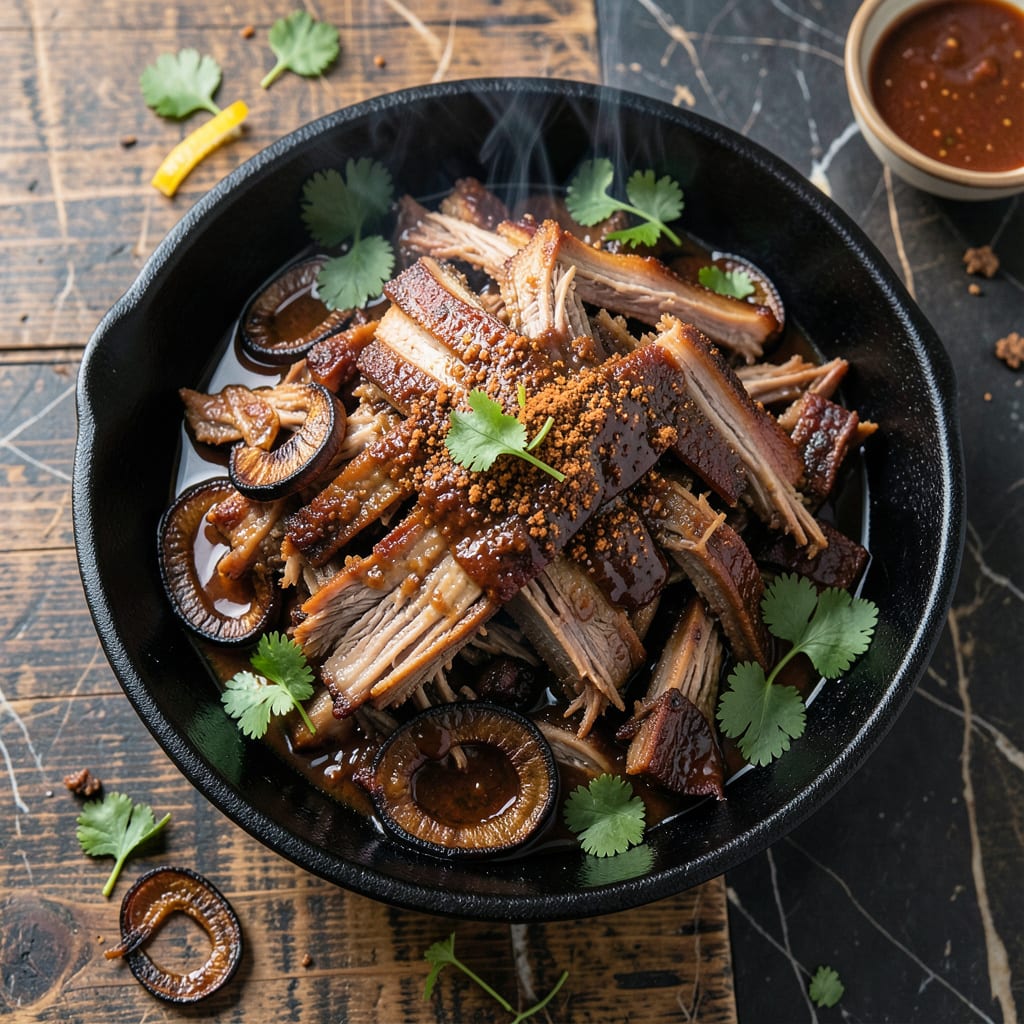
Getting my first whiff of hickory smoke at a family cookout inspired this Texas-style approach. This method turns tough pork shoulder into tender, smoky perfection.
Low and slow is the key—proper wood selection and a foolproof rub make all the difference. The result is meat that pulls apart effortlessly with authentic pitmaster flavor.
Ingredients for Texas Bbq Pulled Pork
Pork shoulder and hickory smoke create that authentic Texas pitmaster flavor. Simple rub, low and slow cooking.
| Ingredient | Amount | Notes |
|---|---|---|
| Pork Shoulder 🐖 | 4 lb | Bone-in, well-marbled preferred |
| Hickory Wood Chips 🪵 | 2 cups | Soaked in water 1 hour |
| Brown Sugar 🍚 | ½ cup | Light or dark variety |
| Paprika 🌶️ | 2 tbsp | Smoked paprika for depth |
| Garlic Powder 🧄 | 1 tbsp | Fresh ground if available |
| Onion Powder 🧅 | 1 tbsp | Fine granulation preferred |
| Ground Black Pepper 🌶️ | 1 tbsp | Coarse grind for texture |
| Kosher Salt 🧂 | 1 tbsp | Diamond Crystal brand preferred |
| Cayenne Pepper 🔥 | ½ tsp | Adjust for heat preference |
| Yellow Mustard 🟡 | ¼ cup | For rub binder |
| Apple Cider Vinegar 🍏 | ½ cup | For spritzing during cook |
| BBQ Sauce 🍯 | 1 ½ cups | Texas-style preferred |
| Hamburger Buns 🍔 | 8 whole | Soft, lightly toasted |
| Coleslaw Mix 🥬 | 4 cups | Pre-shredded for convenience |
[recipe_ingredient_scaler]
Pork shoulder is non-negotiable for authentic texture. Look for bone-in, well-marbled cuts at your butcher or Costco for value. The hickory wood chips must be 100% natural—avoid those treated with chemicals. For the rub, Penzeys or McCormick spices deliver consistent quality. Freshly ground black pepper makes a noticeable difference in the final bark formation.
No hickory chips? Pecan or oak wood provide similar smoky profiles. Short on time? Pre-made Texas-style rub works in a pinch. The apple cider vinegar can be white vinegar at a 1:1 ratio. For the BBQ sauce, Stubb’s Original captures that Texas tang perfectly. If you prefer sweeter sauce, Sweet Baby Ray’s is a crowd-pleaser that still respects the dish’s roots.
Cooked pork keeps beautifully—store in the fridge for 4-5 days or freeze for 3 months. The wood chips should be stored in a sealed container away from moisture. Always soak them before use to prevent flare-ups. Leftovers make incredible tacos or loaded nachos the next day.
Why You’ll Love This Recipe
- Set It & Forget: The pork shoulder cooks low and slow with hickory chips doing all the work—just season, smoke, and let time handle the rest.
- Smoky Sweet Magic: Brown sugar and paprika create that perfect Texas BBQ crust while garlic powder sinks deep into every juicy fiber.
- Feeds a Hungry Crowd: I’ve stretched one shoulder into tacos, sandwiches, and loaded baked potatoes for a full weekend of meals.
- Leftovers for Days: Honestly, it tastes even better the next day—pile it on nachos or freeze portions for those I-don’t-want-to-cook nights.
Step-by-Step Instructions for Texas BBQ Pulled Pork
Master the art of slow-smoked pork with these precise, time-tested techniques.
Step 1: Prepare the Rub and Season the Pork
In a bowl, combine the 0.5 cup Brown Sugar, 2 tbsp Paprika, 1 tbsp Garlic Powder, 1 tbsp Onion Powder, 1 tbsp Ground Black Pepper, 1 tbsp Kosher Salt, and 0.5 tsp Cayenne Pepper. Stir until uniformly blended.
Pat the 4 lb Pork Shoulder dry with paper towels to ensure maximum rub adhesion. Coat the pork lightly with the 0.25 cup Yellow Mustard—this acts as a binder. Apply the rub mixture generously over all surfaces, pressing firmly to create a bark that will caramelize during smoking.
Step 2: Set Up the Smoker and Begin Cooking
Soak the 2 cups Hickory Wood Chips in water for 1 hour before use. Preheat your smoker to 225°F using indirect heat. Once at temperature, add the soaked wood chips to the firebox or smoker box to produce thin, blue smoke.
Place the seasoned pork shoulder in the smoker, fat-side up. Insert a meat probe into the thickest part of the pork, avoiding the bone. Maintain the smoker temperature between 225-250°F throughout the cook.
Step 3: Smoke and Spritz for Moisture
Smoke the pork undisturbed for 6-8 hours until the internal temperature reaches 165°F. Every 2 hours, spritz the pork with the 0.5 cup Apple Cider Vinegar to keep the surface moist and enhance bark formation.
You’ll know the pork is progressing when the bark darkens to a deep mahogany and the meat begins to pull back from the bone. Resist the urge to open the smoker frequently—each peek can add 10-15 minutes to your cook time.
Step 4: Wrap and Finish the Cook
Once the pork hits 165°F, wrap it tightly in pink butcher paper or aluminum foil. Return it to the smoker and continue cooking until the internal temperature reaches 203°F and the meat probes like butter.
This wrapping step, known as the Texas crutch, helps power through the stall while keeping the meat tender. The process typically adds another 3-4 hours, but trust the probe test over the clock.
Step 5: Rest, Shred, and Serve
Remove the pork from the smoker and let it rest wrapped in a towel-lined cooler for 1 hour. This allows the juices to redistribute and the meat to become fork-tender.
Unwrap the pork and shred it using two forks, discarding any large fat chunks. Toss the pulled pork with the 1.5 cups BBQ Sauce until evenly coated. Serve on the 8 whole Hamburger Buns topped with the 4 cups Coleslaw Mix for a classic Texas-style sandwich.
Pro Tips For Making Texas Bbq Pulled Pork
- Low and Slow Wins: I learned this the hard way—keep your smoker between 225-250°F and give that pork shoulder at least 8 hours. Any hotter and you’ll dry it out before it gets tender.
- Dry the Shoulder First: Pat the pork shoulder completely dry before rubbing with brown sugar and spices. Sounds weird, but it works—moisture on the surface ruins the bark.
- Don’t Rush the Rest: After pulling it off the heat, tent the pork in foil for 30-45 minutes. I used to skip this and wondered why my pulled pork was always a little dry.
- Double the Rub: Use more brown sugar and paprika than you think—about ¼ cup each for a 5-pound shoulder. This isn’t the prettiest method, but it’s the tastiest.
Creative Variations of This Dish
Sweet Heat Twist
Add 1 tbsp chipotle powder and 2 tbsp light brown sugar to your rub for a sweet-spicy kick. The chipotle brings smoky heat while the extra sugar caramelizes beautifully. I love how this variation deepens the bark’s color and flavor complexity. 🌶️
Coffee Crust Version
Mix 2 tbsp finely ground coffee into your rub for an earthy depth that pairs perfectly with hickory smoke. Use a dark roast for boldness. The coffee enhances the pork’s natural richness without overpowering it.
Memphis Dry Rub
Swap the brown sugar for ¼ cup white sugar and add 1 tsp celery salt for a Memphis-style dry rub. This version skips the sauce entirely, letting the smoky, spicy crust shine. It’s a local BBQ competition favorite of mine.
Applewood Alternative
Replace the hickory with 2 cups soaked applewood chips for a sweeter, fruitier smoke profile. This pairs especially well with a tangy Carolina-style vinegar sauce drizzled on after shredding.
Competition-Style Glaze
Before wrapping, brush the pork with a mix of ½ cup BBQ sauce, 2 tbsp honey, and 1 tbsp apple cider vinegar. This creates a sticky, competition-worthy glaze that caramelizes during the final cook phase. 💛
Herb-Foraged Rub
Add 1 tbsp dried rosemary and 1 tbsp dried thyme (from my coastal foraging spots) to the rub for an herbal twist. The earthy notes complement the hickory smoke beautifully, giving it a gourmet touch.
Nutrition Facts

Trained in classic French technique but raised on slow-cooked ribs and spicy rubs, she blends culinary skill with smoke and soul.
- Recipe for Boneless Pork Chops in Cast Iron Skillet: Sear and Baste to Juicy Perfection - October 3, 2026
- Recipe for Boneless Cross Rib Roast: Slow-Roasted Beef with Herb Crust - October 3, 2026
- Hamburgers in Sauce Recipe Crock Pot: Slow-Cooked Savory Delight - October 3, 2026