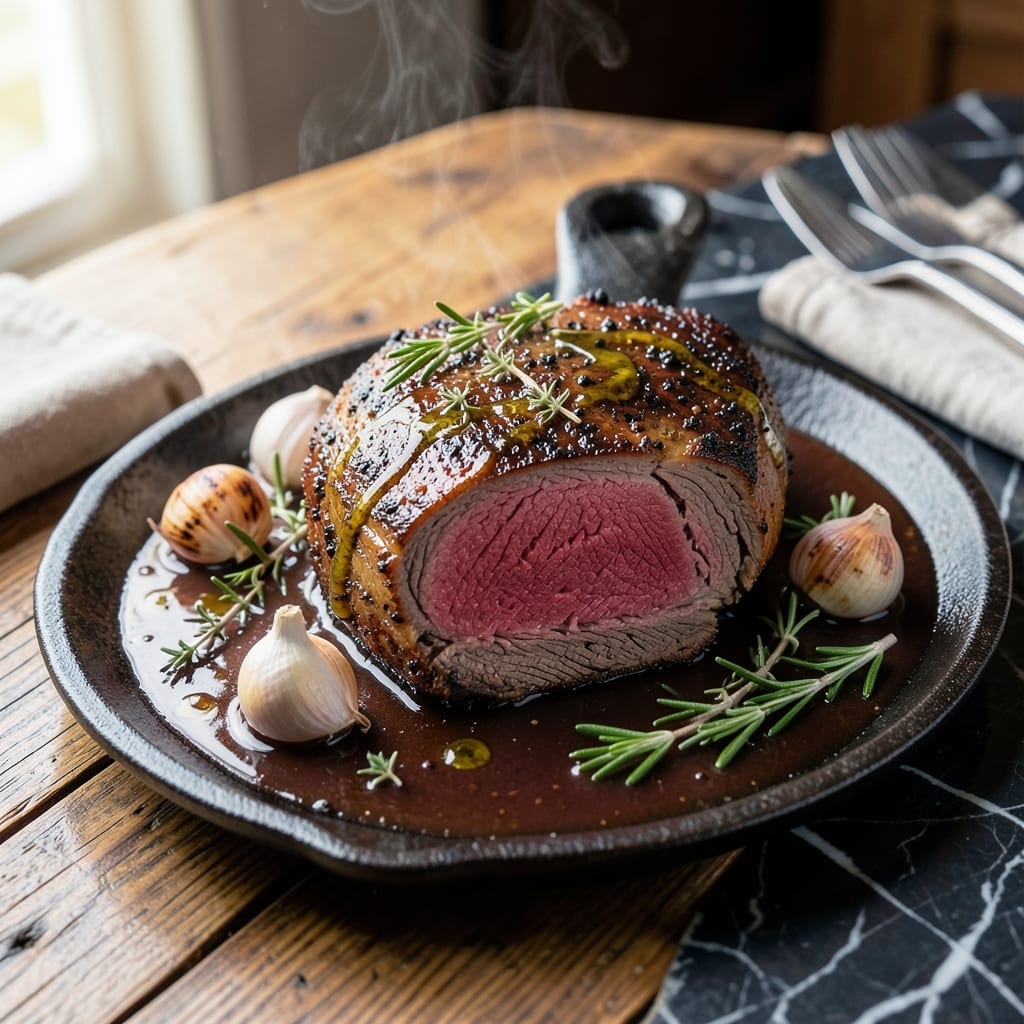
Achieving perfect prime rib with rich au jus requires precision in both cooking and sauce reduction. This method delivers the tender, juicy slices and deep, beefy jus that define steakhouse quality.
I’ve refined this technique through years of testing, balancing classic French methods with the bold flavors that make Texas Roadhouse famous. The result is restaurant-worthy every time.
Ingredients for Texas Roadhouse Prime Rib Au Jus
Prime rib and bold au jus ingredients for steakhouse-quality results at home.
| Ingredient | Amount | Notes |
|---|---|---|
| Beef Prime Rib Roast 🥩 | 4 lb | Bone-in, well-marbled preferred |
| Kosher Salt 🧂 | 2 tbsp | Diamond Crystal brand recommended |
| Freshly Ground Black Pepper 🌶️ | 2 tsp | Coarse grind for crust |
| Garlic Cloves 🧄 | 8 cloves | Smashed, unpeeled |
| Fresh Rosemary Sprigs 🌿 | 4 whole | Woody stems removed |
| Fresh Thyme Sprigs 🍃 | 4 whole | Stems included for infusion |
| Unsalted Butter 🧈 | ½ cup | Room temperature for basting |
| Dry Red Wine 🍷 | 2 cups | Cabernet Sauvignon preferred |
| Beef Stock 🥣 | 4 cups | Low-sodium for reduction control |
| Shallots 🧅 | 2 whole | Finely minced for au jus |
| Tomato Paste 🍅 | 2 tbsp | San Marzano preferred |
| Worcestershire Sauce 🍶 | 2 tbsp | Anchovy-free if preferred |
| Dijon Mustard 🟡 | 1 tbsp | Whole-grain acceptable |
[recipe_ingredient_scaler]
The prime rib is non-negotiable—bone-in, well-marbled chuck rib roast delivers the signature tenderness. Source from Whole Foods or Costco for consistent quality. The beef stock must be low-sodium to control the reduction properly. For the wine, a bold Cabernet Sauvignon adds depth without overpowering. Always use fresh herbs; dried won’t deliver the same aromatic intensity during cooking.
No red wine? Substitute with additional beef stock plus 1 tbsp balsamic vinegar. Out of fresh rosemary? Dried at one-third quantity works, but add it earlier in the cooking process. For a non-alcoholic version, beef broth with a splash of apple cider vinegar mimics the acidity. The tomato paste can be omitted, but it adds a subtle sweetness that balances the rich beef flavors beautifully.
The prime rib can rest at room temperature for 1 hour before cooking. Store raw roast in the fridge for up to 3 days, or freeze for 6-12 months. The au jus keeps in the fridge for 5 days or freezes for 3 months. Reheat gently to preserve the velvety texture.
Why You’ll Love This Recipe
- Set It & Forget It: I rub the prime rib with salt, pepper, garlic, and rosemary, then let the oven do the work—no babysitting required.
- That Au Jus Magic: The pan drippings from the roast with those same herbs and garlic create an au jus so rich I could drink it with a spoon.
- Holiday Hero: I’ve served this for Christmas, birthdays, even a random Sunday when I wanted to feel fancy.
- Leftovers for Days: One roast feeds my family for two meals, and the slices make killer sandwiches with that leftover au jus for dipping.
Step-by-Step Instructions for Texas Roadhouse Prime Rib Au Jus
Master this technique to achieve restaurant-quality results with rich, flavorful juices.
Step 1: Season and Sear the Beef Prime Rib Roast
Pat the 4 lb Beef Prime Rib Roast dry with paper towels. Rub the entire surface with the 2 tbsp Kosher Salt and 2 tsp Freshly Ground Black Pepper, pressing gently to adhere. This creates the foundation for a flavorful crust.
In a large roasting pan over medium-high heat, sear the roast on all sides until deeply browned, about 3-4 minutes per side. Add the 8 cloves Garlic Cloves, 4 whole Fresh Rosemary Sprigs, and 4 whole Fresh Thyme Sprigs to the pan during the last minute of searing to infuse their aromatics.
Step 2: Roast the Prime Rib to Perfection
Transfer the seared roast to a wire rack set over a roasting pan. Spread the 0.5 cup Unsalted Butter over the top, allowing it to melt and baste the meat as it roasts. Place the pan in a preheated 325°F oven.
Roast for approximately 1.5 to 2 hours, or until the internal temperature reaches 125°F for medium-rare. Baste the roast with the pan juices every 30 minutes to ensure even browning and moisture retention. The herbs and garlic will deepen in flavor as they cook alongside the beef.
Step 3: Prepare the Au Jus Base
While the roast cooks, finely mince the 2 whole Shallots. In a saucepan over medium heat, combine the minced shallots, 2 tbsp Tomato Paste, 2 tbsp Worcestershire Sauce, and 1 tbsp Dijon Mustard. Cook for 2-3 minutes, stirring frequently, until the mixture darkens slightly and becomes fragrant.
This step builds the flavor foundation for the au jus. The tomato paste adds depth, while the Worcestershire sauce and Dijon mustard contribute complexity and tang. Ensure the mixture does not burn—reduce the heat if necessary.
Step 4: Deglaze and Reduce the Au Jus
Once the roast is done, transfer it to a cutting board to rest. Place the roasting pan on the stovetop over medium heat. Pour in the 2 cups Dry Red Wine and scrape up all the browned bits from the bottom of the pan with a wooden spoon.
Add the 4 cups Beef Stock and the shallot mixture from Step 3. Bring to a simmer and cook for 15-20 minutes, or until the liquid reduces by about half. This concentrates the flavors and creates a rich, velvety au jus.
Strain the au jus through a fine-mesh sieve to remove solids, pressing gently on the shallots and herbs to extract all their flavor. The result should be a smooth, deeply flavored sauce ready to serve alongside your prime rib.
Pro Tips For Making Texas Roadhouse Prime Rib Au Jus
- Reverse Sear First: Start the prime rib in a 250°F oven until it hits 110°F internal, then finish with a 450°F blast for 15-20 minutes—I learned this the hard way after serving dry, overcooked slices to my in-laws.
- Salt Overnight: Rub the roast with kosher salt at least 12 hours before cooking; it draws out moisture then reabsorbs it, giving you a deeper seasoning and better crust than last-minute salting.
- Skip the Watery Au Jus: Use the roast’s drippings but reduce them first with a splash of beef stock and a crushed garlic clove—sounds weird, but it works and beats that thin, sad pan juice every time.
- Rest Under Foil: Tent the prime rib with foil and let it rest 20-30 minutes before slicing; I was skeptical until I tried it and saw how much juicier the meat stayed.
Best Sauces and Condiments for This texas roadhouse prime rib au jus
Classic Horseradish Cream
The perfect tangy contrast to rich prime rib. I mix ½ cup sour cream with 3 tbsp prepared horseradish and 1 tsp Dijon Mustard from the recipe. Add 1 tsp lemon juice and a pinch of Kosher Salt for balance. The heat cuts through the beef beautifully. 💡
Garlic-Herb Butter
Blend ½ cup Unsalted Butter with 1 minced Garlic Clove, 1 tbsp chopped Fresh Rosemary, and 1 tbsp chopped Fresh Thyme. Roll in parchment and chill. Slice over warm prime rib for an aromatic finish.
Red Wine Reduction
For extra depth, reduce 1 cup Dry Red Wine with 2 tbsp Shallots and 1 tsp Tomato Paste until syrupy. Drizzle over slices just before serving. This amplifies the au jus flavors without overpowering. 🔥
Creamy Peppercorn Sauce
Melt 2 tbsp Unsalted Butter in a pan, add 1 tbsp crushed black peppercorns, then stir in ½ cup heavy cream. Simmer until thickened. The peppery kick complements the prime rib’s crust perfectly.
Roasted Garlic Aioli
Blend ½ cup mayo with 4 roasted Garlic Cloves and 1 tsp lemon zest. The mellow sweetness of roasted garlic pairs wonderfully with the beef’s richness. I always make extra for dipping crusty bread.
Nutrition Facts
Frequently Asked Questions
What’s the ideal internal temperature for medium-rare?
Remove the roast from the oven when it reaches 125°F. It will rise to 130-135°F while resting, ensuring perfect medium-rare. Use a meat thermometer for accuracy.
Can I use a boneless roast instead?
Yes, but bone-in adds flavor and tenderness. If using boneless, reduce cooking time by 15-20 minutes and check internal temp frequently. The au jus recipe remains the same.
How long should the prime rib rest?
Let it rest for 20-30 minutes before slicing. This allows juices to redistribute, ensuring moist, flavorful meat. Skipping this step risks dry slices.
What if my au jus is too thin?
Simmer it for 5-10 more minutes to reduce further. For a quick fix, mix 1 tsp cornstarch with water, then stir into the jus until thickened. Avoid boiling after adding.

Trained in classic French technique but raised on slow-cooked ribs and spicy rubs, she blends culinary skill with smoke and soul.
- Recipe for Boneless Pork Chops in Cast Iron Skillet: Sear and Baste to Juicy Perfection - October 3, 2026
- Recipe for Boneless Cross Rib Roast: Slow-Roasted Beef with Herb Crust - October 3, 2026
- Hamburgers in Sauce Recipe Crock Pot: Slow-Cooked Savory Delight - October 3, 2026