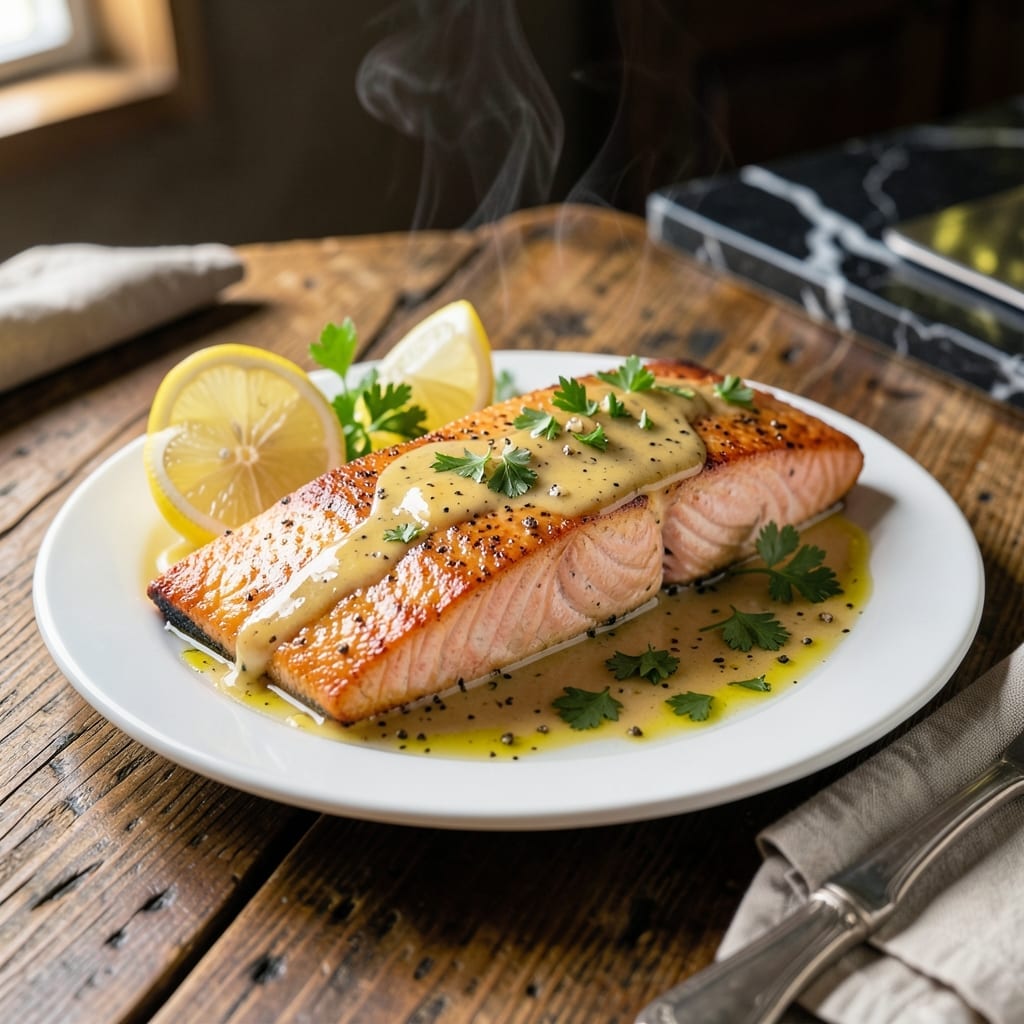
This lemon-pepper butter glazed salmon brings restaurant-quality elegance to your home kitchen without the fuss. I developed this recipe after countless attempts to replicate that signature Texas Roadhouse flavor.
The secret lies in the balance between zesty lemon and bold black pepper, complemented by a rich butter glaze that locks in moisture. A 15-minute cooking time at 400°F ensures perfectly flaky results every time.
You’ll achieve tender, buttery salmon with a lightly caramelized crust that’s both impressive and approachable. The glaze adds a luxurious finish that elevates simple ingredients into something extraordinary.
Serve with steamed asparagus or roasted potatoes for a complete meal that tastes like it came from your favorite steakhouse.
Ingredients for Texas Roadhouse Salmon
Simple ingredients deliver that signature steakhouse elegance to your kitchen tonight.
| Ingredient | Amount | Notes |
|---|---|---|
| Salmon Fillets 🐟 | 1 ½ lb | Skin-on or skinless, center-cut |
| Unsalted Butter 🧈 | ½ cup | Melted for glaze |
| Fresh Lemon Juice 🍋 | 3 tbsp | About 1 large lemon |
| Lemon Zest 🍋 | 1 tbsp | From 1 large lemon |
| Coarsely Ground Black Pepper 🌶️ | 2 tbsp | Freshly cracked preferred |
| Garlic Cloves 🧄 | 3 cloves | Minced finely |
| Honey 🍯 | 1 tbsp | For balancing acidity |
| Dijon Mustard 🟡 | 1 tbsp | Smooth variety preferred |
| Olive Oil 🫒 | 1 tbsp | For searing salmon |
| Kosher Salt 🧂 | 1 tsp | Diamond Crystal preferred |
| Fresh Parsley 🌿 | ¼ cup | Chopped, for garnish |
| Asparagus 🌱 | 1 lb | Trimmed, for serving |
| Yukon Gold Potatoes 🥔 | 1 ½ lb | Diced, for serving |
[recipe_ingredient_scaler]
The salmon quality is non-negotiable here. Wild-caught sockeye or king from Whole Foods or Costco has the rich flavor and firm texture you need. Skin-on fillets hold together better during cooking, but skinless works if that’s your preference. The butter should be high-fat European style—it browns beautifully and adds that restaurant-quality depth. Freshly cracked pepper (not pre-ground) makes all the difference in the glaze.
No honey? Maple syrup or agave at the same amount works fine. Out of Dijon? Whole-grain mustard adds a nice texture twist. The lemon can be Meyer if you’re feeling fancy (sweeter, less acidic). If you only have pre-ground pepper, use half the amount—it’s more concentrated. For the potatoes, baby reds or fingerlings roast up just as nicely as Yukons.
Salmon stays fresh for about 2 days in the fridge—cook it the day you buy it if possible. The glaze keeps for 1 week in an airtight container.Leftovers reheat gently in a skillet (microwave tends to dry it out). Parsley wilts fast—store stems in water like flowers.
Why You’ll Love This Recipe
- One Pan Wonder: I just melt butter, add lemon zest, and let the salmon soak up all that flavor—cleanup is a breeze.
- Buttery Lemon Bliss: The butter and fresh lemon juice create this rich, tangy glaze that makes every bite irresistible.
- Weeknight Hero: Honestly, it’s my go-to for busy evenings when I need something fancy but fast.
- Leftovers Luxury: The flavors taste even better the next day, so I always make extra for lunch.
Step-by-Step Instructions for Lemon-Pepper Butter Glazed Salmon
Here’s the proven method that delivers restaurant-quality results every single time.
Step 1: Prepare the Lemon-Pepper Butter Glaze
In a small saucepan over medium-low heat, melt the 0.5 cup unsalted butter until just liquid. Add the 3 tbsp fresh lemon juice, 1 tbsp lemon zest, 2 tbsp coarsely ground black pepper, minced 3 cloves garlic cloves, 1 tbsp honey, and 1 tbsp Dijon mustard. Whisk constantly for 2-3 minutes until fully combined and fragrant.
This glaze should be smooth and glossy, with visible specks of black pepper throughout. Remove from heat and let it sit while you prepare the salmon—the flavors will meld beautifully as it rests.
Step 2: Season and Sear the Salmon Fillets
Pat the 1.5 lb salmon fillets completely dry with paper towels. This step is crucial for achieving a good sear. Season both sides with the 1 tsp kosher salt, pressing gently so it adheres to the surface.
Heat the 1 tbsp olive oil in a large skillet over medium-high heat until it shimmers. Carefully place the salmon fillets skin-side up in the pan. Sear for 4-5 minutes until the bottom develops a golden-brown crust and the fish releases easily from the pan.
Step 3: Glaze and Finish the Salmon
Flip the salmon fillets and immediately pour half of the prepared lemon-pepper butter glaze over them. Spoon the glaze from the pan over the fillets repeatedly for 2-3 minutes until the salmon is cooked through and the internal temperature reaches 145°F.
The salmon is done when it flakes easily with a fork and the flesh turns opaque. Transfer the fillets to a serving platter and spoon any remaining pan glaze over the top.
Step 4: Prepare the Side Dishes
While the salmon cooks, toss the 1.5 lb diced Yukon Gold potatoes with a bit of olive oil, salt, and pepper. Roast in a 400°F oven for 25-30 minutes until golden brown and crispy. For the 1 lb asparagus, trim the tough ends and sauté in a hot pan with a touch of olive oil for 5-7 minutes until tender-crisp.
Arrange the potatoes and asparagus alongside the salmon on the platter. The bright green asparagus and golden potatoes create a beautiful contrast with the rich, glazed salmon.
Step 5: Garnish and Serve Immediately
Sprinkle the 0.25 cup chopped fresh parsley over the entire dish just before serving. This adds a pop of color and a fresh herbal note that balances the richness of the butter glaze.
Serve immediately while the salmon is hot and the glaze is still glossy. Each bite should deliver tender, flaky salmon with a bold lemon-pepper flavor that’s perfectly complemented by the crispy potatoes and fresh asparagus.
Pro Tips For Making Texas Roadhouse Salmon
- Pat Dry First: Blot the salmon fillets with paper towels before seasoning—I learned this the hard way after my first few batches steamed instead of seared.
- High Heat Start: Crank the pan to medium-high to get that golden crust on the salmon, then drop to medium to finish cooking through without burning the butter.
- Zest Before Juicing: Grate the lemon zest before cutting it in half for juice—it’s impossible to do after, and fresh zest makes a real difference in the flavor.
- Rest Before Serving: Let the salmon sit for 3-4 minutes off the heat before plating; it keeps the juices inside where they belong instead of all over your plate.
Essential Equipment for texas roadhouse salmon
Essential Pan Selection
I always reach for my 12-inch stainless steel skillet—it distributes heat evenly and gives the salmon that perfect golden crust. A heavy-bottomed pan prevents hot spots that can burn the delicate glaze. Avoid nonstick for this recipe; the high heat needed for searing can damage the coating.
Thermometer Matters
An instant-read thermometer is non-negotiable for perfect salmon. I use a ThermoWorks ThermoPop—it’s affordable, accurate, and gives readings in 2-3 seconds. Check the thickest part of the fillet to ensure it hits 145°F without overcooking. 🌡️
Whisk for Glaze
A small saucepan and silicone whisk make the glaze come together smoothly. The whisk prevents butter from separating while incorporating all those bold flavors. I keep a 2-quart saucepan dedicated for sauces—it’s the perfect size for this quantity.
Tongs for Flipping
Use locking tongs to gently flip the salmon—this prevents piercing the delicate flesh. I prefer 12-inch tongs for better control. The locking feature makes them easy to store in my tiny Boston kitchen drawer.
Baking Sheet for Sides
A half-sheet pan with a wire rack is ideal for roasting the potatoes. The rack allows heat to circulate for even browning. I line mine with parchment paper for easy cleanup—because nobody wants to scrub baked-on potato bits.
Serving Platter
Present your dish on a large wooden board or warm platter. The natural wood complements the rustic elegance of this meal. I found mine at a Boston flea market—it’s seen hundreds of family dinners and still looks beautiful. 💛
Nutrition Facts
Frequently Asked Questions
What can I use instead of Dijon mustard?
Whole-grain mustard works as a direct substitute with added texture. In a pinch, mix 1 tsp dry mustard with 1 tbsp water for similar tang. The flavor will be slightly milder but still delicious.
How do I keep the salmon from sticking to the pan?
Make sure your pan is very hot before adding oil and salmon. Pat the fillets completely dry first. Don’t move them for the first 4-5 minutes of cooking.
Can I make the glaze ahead of time?
Prepare the glaze up to 2 days ahead and store in an airtight container in the fridge. Gently reheat in a saucepan over low heat before using.
What if my salmon is thicker than average?
For fillets thicker than 1 inch, add 1-2 minutes to the cooking time per side. Always check internal temperature reaches 145°F at the thickest part.

Trained in classic French technique but raised on slow-cooked ribs and spicy rubs, she blends culinary skill with smoke and soul.
- Recipe for Boneless Pork Chops in Cast Iron Skillet: Sear and Baste to Juicy Perfection - October 3, 2026
- Recipe for Boneless Cross Rib Roast: Slow-Roasted Beef with Herb Crust - October 3, 2026
- Hamburgers in Sauce Recipe Crock Pot: Slow-Cooked Savory Delight - October 3, 2026