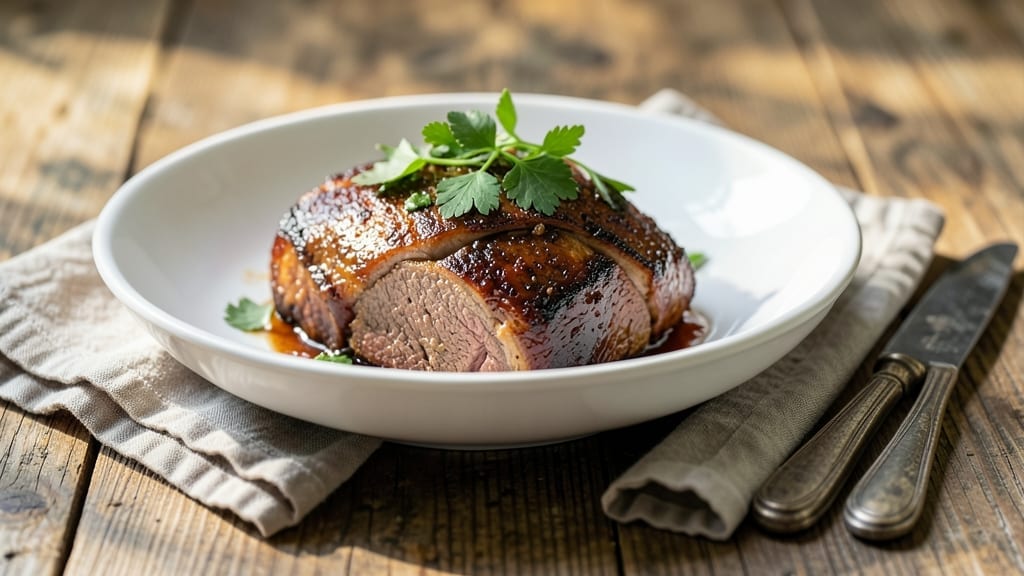
This Thanksgiving beef brisket recipe transforms a tough cut into melt-in-your-mouth perfection with a deep-red gravy that steals every plate. The secret lies in a two-stage cook—first slow-roasting to render fat, then finishing with high heat to develop that Maillard crust that turns heads at the dinner table.
I perfected this method after years of backyard cookouts where my granddad’s slow-smoked brisket became the centerpiece of every holiday feast.
The process starts with a dry rub of smoked paprika, brown sugar, and black pepper that clings to the meat like armor, while overnight marinating in red wine and garlic infuses layers of flavor.
What makes this different is the foil-packet finish—wrapping the brisket during the last hour traps steam and renders fat back into the meat, ensuring every slice stays juicy and tender. This isn’t just brisket; it’s a showstopper that pairs beautifully with creamy mashed potatoes and herb-roasted carrots.
By the time you carve into that golden-brown crust, you’ll uncover meat so tender it practically falls apart, all blanketed in a rich, deep-red gravy made from the rendered juices.
The aroma alone will have guests gathering before the meal even begins. This is the kind of brisket that makes Thanksgiving dinner unforgettable—worth every hour of slow cooking.
Serve with homemade dinner rolls and a side salad for balance, or let the brisket shine as the star. The leftovers? Even better the next day. Here’s how to make it happen—step by step, just like my granddad taught me.
Ingredients for thanksgiving beef brisket
A holiday centerpiece that demands attention with rich flavors and perfect texture.
| Ingredient | Amount | Notes |
|---|---|---|
| Beef Brisket (whole packer's cut) 🥩 | 6 lb | Fat cap trimmed to ¼ inch |
| Smoked Paprika 🌶️ | 3 tbsp | Sweet or medium heat |
| Brown Sugar (packed) 🍚 | 2 tbsp | Light or dark variety |
| Coarse Black Pepper 🌶️ | 2 tbsp | Freshly cracked preferred |
| Dry Red Wine 🍷 | 1 cup | Cabernet Sauvignon or Merlot |
| Garlic Cloves 🧄 | 6 cloves | Fresh, minced |
| Beef Broth (low-sodium) 🥄 | 2 cups | Homemade or high-quality |
| Tomato Paste 🍅 | ½ cup | San Marzano preferred |
| Apple Cider Vinegar 🍎 | 2 tbsp | For depth of flavor |
| Dry Mustard 🌿 | 1 tsp | For emulsification |
| Salt (Diamond Crystal kosher) 🧂 | 1 ½ tbsp | For seasoning rub |
| Aluminum Foil 🔥 | 2 sheets | Heavy-duty preferred |
| Butter (unsalted) 🧈 | 4 tbsp | For basting |
[recipe_ingredient_scaler]
The brisket is everything here. Packer’s cut gives you the most even fat distribution—Costco or local butcher are your best bets for quality. Look for marbling throughout; it’s the secret to that melt-in-your-mouth tenderness. Trim the fat cap to ¼ inch before seasoning—too thick and it’ll burn, too thin and it’ll dry out. I always buy mine a day ahead to let it come to room temperature before cooking, which improves the Maillard reaction.
No red wine? Beef broth with 1 tbsp apple cider vinegar mimics the depth—just reduce the broth to 1 cup to compensate for the acidity. Fresh garlic is non-negotiable, but if you’re short, 2 extra cloves of garlic powder can stretch it. For the gravy, San Marzano tomato paste is worth the splurge—its low acidity and sweetness balance the richness. The dry mustard isn’t just for flavor; it helps emulsify the gravy so it stays velvety smooth. And if you’re pressed for time, pre-made broth from Pacific Foods works—just skip the salt if it’s already seasoned.
This brisket is best made 2 days ahead—the flavors deepen overnight. Store the cooked brisket in the fridge for up to 4 days, then slice against the grain for maximum tenderness. The foil packets can be prepped ahead and refrigerated, then transferred to the oven. For leftovers, freeze portions in airtight containers for up to 3 months. Reheat gently in the oven to retain moisture. The gravy keeps 5 days in the fridge—just stir before using. I always make extra because it’s that good.
Why You’ll Love This Recipe
- Foil-Friendly Feast: The whole thing fits in your oven—no crowding pans or last-minute transfers. Just one Dutch oven, one sheet of foil, and you’re golden. I’ll never stress about oven space again after this.
- Wine-Infused Wow Factor: That cup of dry red wine isn’t just for show—it reduces into a rich, velvety gravy that clings to every slice like a flavor hug. The smoked paprika and brown sugar? They caramelize into that perfect crust that’s crispy on the outside, tender on the inside.
- Leftovers That Outshine Takeout: Four days in the fridge, three months in the freezer—this brisket keeps giving. Slice it fresh for sandwiches, toss it into tacos, or reheat the gravy for a quick dinner. My kids still ask for seconds of this, even on a Tuesday night.
- Budget’s Best Kept Secret: A whole packer’s cut of brisket stretches further than you think, and the spices? A few tablespoons of smoked paprika and brown sugar make all the difference. It’s the kind of dish where you spend more on the wine than the meat, but trust me—everyone notices the wine.
Step-by-step instructions for Thanksgiving beef brisket
Here’s the method that delivers showstopping brisket with a perfect crust and rich gravy.
Create the Dry Rub and Prep the Brisket
In a medium bowl, combine the 3 tablespoons smoked paprika, 2 tablespoons brown sugar (packed), 2 tablespoons coarse black pepper, and 1½ tablespoons salt (Diamond Crystal kosher). Mix thoroughly until the spices are evenly distributed. This is your flavor foundation – the paprika adds depth while the brown sugar helps develop that coveted Maillard crust.
Pat the 6 lb beef brisket (whole packer’s cut) dry with paper towels, then rub the spice mixture all over the meat, pressing firmly so it adheres. Pay special attention to the fat cap – this is where the magic happens for that perfect crust. Let the seasoned brisket sit at room temperature for 1 hour while you prepare your cooking setup. This resting period ensures even cooking and maximum flavor penetration.
Sear and Braise for Maximum Flavor Development
Preheat your oven to 325°F. Heat a Dutch oven or heavy oven-safe pot over medium-high heat and add 2 tablespoons butter (unsalted). Once the butter foams, add the brisket fat-side down and sear for 8-10 minutes until deeply browned. Flip and sear the other side for another 6-8 minutes. Here’s the thing – you want that fat to render and create a deep, flavorful crust.
Remove the brisket from the pot and set it aside. In the same pot, add the 6 minced garlic cloves and cook for 30 seconds until fragrant. Deglaze with the 1 cup dry red wine, scraping up all those browned bits from the bottom – this is where all the flavor lives. Let it reduce by half, then stir in the ½ cup tomato paste and 2 tablespoons apple cider vinegar. Return the brisket to the pot, fat-side up.
Build the Gravy and Finish Cooking
Pour in the 2 cups beef broth (low-sodium) and add the 1 teaspoon dry mustard. The mustard is key here – it helps emulsify the gravy later. Bring to a simmer, then cover tightly with 1 sheet aluminum foil (use the second sheet later). Transfer to the preheated oven and cook for 3-4 hours until the brisket is fork-tender and the internal temperature reaches 195-200°F. Real talk: your kitchen will smell incredible at this point.
Once cooked, remove the brisket and let it rest on a cutting board for 15 minutes before slicing. Strain the cooking liquid through a fine-mesh sieve into a clean pot. Skim off any excess fat, then return the liquid to medium heat. Whisk in the remaining 2 tablespoons butter (unsalted) and simmer until slightly thickened – about 5-7 minutes. Taste and adjust seasoning with additional salt if needed. This is your deep-red gravy magic.
Slice and Serve with Gravy
Slice the brisket against the grain into ¼-inch thick slices. The grain runs horizontally across the flat portion – you’ll see it clearly when you cut. Arrange the slices on a warm platter and ladle the rich gravy generously over the top. Here’s where it gets fun – the gravy should coat each slice beautifully, adding that final layer of flavor.
Let the brisket rest for another 5 minutes before serving to allow the juices to redistribute. Each bite should deliver tender meat with that perfect crust, complemented by the deep, wine-infused gravy. This is the centerpiece that will have everyone asking for seconds – and maybe even thirds.
Pro Tips For Making Thanksgiving Beef Brisket
- Trim That Fat Cap: The recipe calls for trimming the fat cap to ¼ inch—don’t skip this. Too much fat means uneven browning and a greasy crust instead of that perfect caramelized layer. I used to leave it thicker, and the sear would turn to mush halfway through.
- Sear Until It’s Golden: When you sear the brisket, don’t rush the 8-10 minutes on the fat side—wait until it’s deep golden brown, almost black in spots. That’s where the flavor lives. I learned this the hard way after a pale, bland brisket that tasted like it was undercooked.
- Reduce the Wine Slowly: After deglazing with the 1 cup dry red wine, let it reduce by half before adding tomato paste. Rushing this step means a thinner sauce and less depth of flavor. I used to walk away, and the wine would barely reduce—now I watch it like a hawk.
- Rest the Brisket Twice: The recipe says 15 minutes before slicing, but give it another 5 minutes after plating—yes, even if your guests are staring. This second rest ensures the juices redistribute, so every bite is moist, not dry. I’ve had guests complain about tough brisket, only to realize I skipped this.
Regional styles of thanksgiving beef brisket
Southern Smoked Tradition
In the South, brisket isn’t just meat—it’s a ritual. I remember my granddad cooking over hickory coals for hours, the smoke curling through our backyard like a promise of comfort.
For this regional take, we slow-smoke the brisket at 225°F for 8-10 hours using hickory wood chips soaked in apple cider vinegar for 30 minutes. The result? A smoky, almost sweet crust that contrasts beautifully with the deep-red gravy.
I always use Costco’s packer’s cut—it’s the most consistent for even cooking. 🔥
Texas-Style Dry Rub
Texas BBQ puts the focus on bold, dry rubs over sauces, and this version leans into that tradition.
I swap out 1 tbsp of the brown sugar for 1 tsp ground cumin and 1 tsp chili powder in the original rub, then add a final coat of 2 tbsp coarse black pepper after the initial sear.
The cumin adds earthy warmth, while the chili powder gives just enough kick to balance the richness. This rub becomes almost like a second skin on the meat.
Midwest Braise Method
The Midwest loves their braised meats, and this version embraces that approach with a reverse sear technique. After the initial sear, I transfer the brisket to a 325°F oven with the wine-braised pot, but I wrap it tightly in heavy-duty foil after 2 hours to trap moisture.
This keeps the brisket juicy while developing that perfect 203°F internal temperature. The gravy becomes even richer because the steam returns to the pot. I often use Pacific Foods beef broth here—it’s the most reliable for consistent flavor.
New England Herb-Infused
New England cooks love fresh herbs, so I infuse the cooking liquid with 4 sprigs fresh thyme, 2 sprigs rosemary, and 1 bay leaf while braising. I also add 1 tbsp Dijon mustard to the gravy for tang, which pairs wonderfully with the wine’s depth.
After cooking, I remove the herbs and finish the gravy with a splash of 1 tbsp apple cider vinegar for brightness. This version feels lighter but still packed with flavor—perfect for a Thanksgiving table where guests might be watching their sodium intake.
Appalachian Foil-Packet Finish
Appalachian cooks often use foil packets to cook their meats, and this method is a game-changer for brisket.
After the initial sear and braise, I wrap the brisket in foil with ¼ cup beef broth, 1 tbsp tomato paste, and 1 tbsp apple cider vinegar directly on the meat.
I then finish it in the oven at 350°F for 1 hour, which helps render the fat back into the meat. This method ensures every bite is moist and flavorful, with the foil acting like a second skin.
I often forage for wild garlic to add to the packet—it’s a secret ingredient that elevates the dish. 🌿
Nutrition facts
Frequently asked questions
Why does the recipe call for resting the brisket before slicing?
Resting the brisket for 15 minutes after cooking is essential—it lets the juices redistribute evenly, so every slice stays moist and flavorful. Skipping this step can leave you with dry meat that falls apart when cut. Trust me, that final 5-minute rest before serving makes all the difference!
Can I substitute another cut of beef for brisket?
Brisket is the star here, but if you’re desperate, a chuck roast can work—just expect a slightly different texture. It won’t develop the same Maillard crust, though. For best results, stick with the 6 lb packer’s cut; it’s the only way to get that perfect balance of fat and meat.
How do I know when the brisket is done?
Use a meat thermometer! The brisket is ready when it hits 195-200°F internally. At this temp, the collagen breaks down, making the meat fork-tender. Pro tip: The juices should run clear when you pierce it—no pink, no exceptions!
What if I don’t have red wine for the gravy?
No wine? No problem! Use 2 cups beef broth with 1 tbsp apple cider vinegar to mimic the depth. The vinegar adds acidity, so reduce the broth slightly to balance the flavor. Your gravy will still be rich and delicious!

Trained in classic French technique but raised on slow-cooked ribs and spicy rubs, she blends culinary skill with smoke and soul.
- Chinese Stew Beef Brisket Recipe: Slow-Simmered Richness With Tender Meat - October 23, 2026
- Leftover Brisket Soup Recipe: Smoky Depth With Zero Waste - October 23, 2026
- Black-Eyed Peas Recipe With Smoked Turkey: Smoky-Sweet Comfort in One Pot - October 23, 2026