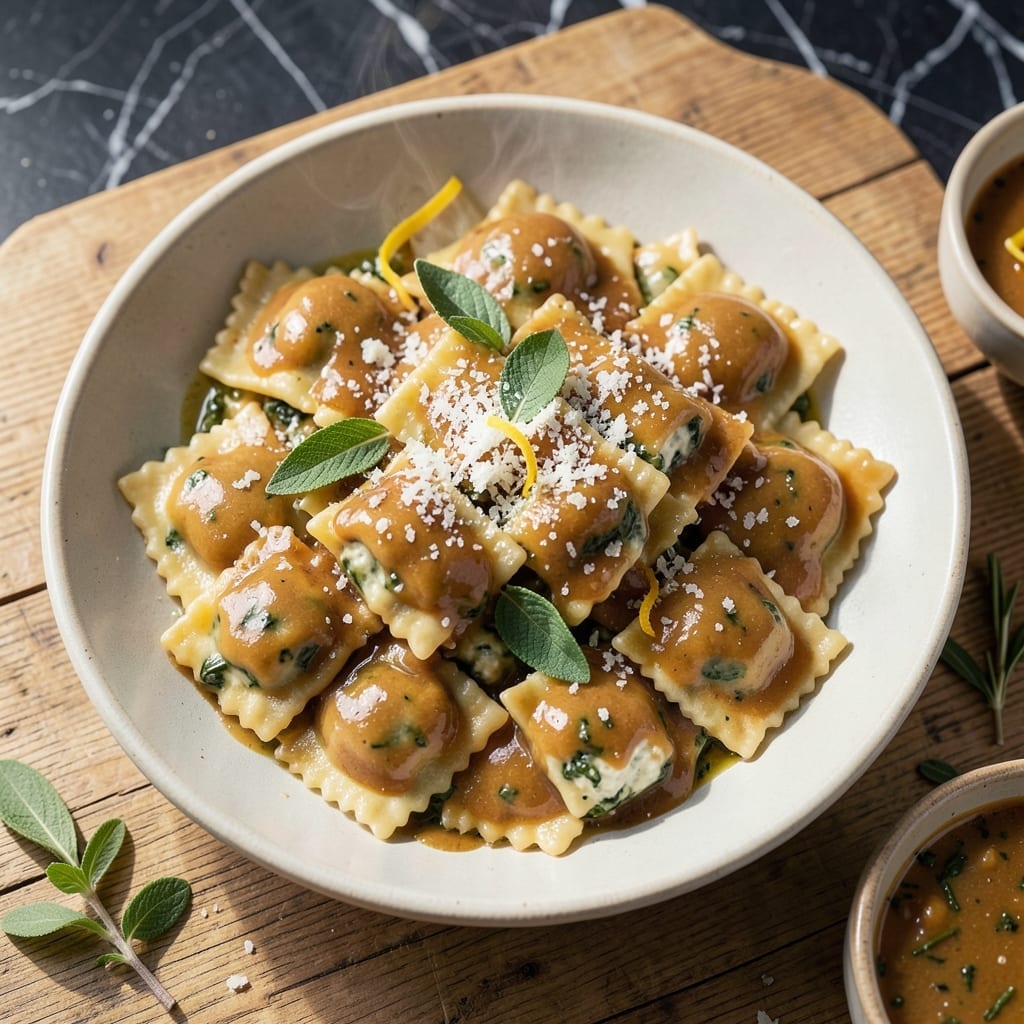
This recipe transforms fresh pasta into delicate, pillowy parcels that rival any Italian nonna’s creation.
With a simple dough and rich fillings, it delivers restaurant-quality results through precise technique and patient assembly.
Ingredients for The Best Ravioli
Fresh pasta dough and a rich spinach-ricotta filling create restaurant-quality pillowy parcels with precision.
| Ingredient | Amount | Notes |
|---|---|---|
| All-Purpose Flour 🌾 | 3 cups | Plus extra for dusting work surface |
| Large Eggs 🥚 | 4 whole | Room temperature preferred |
| Olive Oil 🫒 | 1 tbsp | Extra-virgin for richness |
| Salt 🧂 | 1 tsp | Fine sea salt for dough |
| Water 💧 | 2 tbsp | As needed for dough consistency |
| Ricotta Cheese 🧀 | 1 cup | Whole-milk for creaminess |
| Parmesan Cheese 🧀 | ½ cup | Freshly grated from wedge |
| Fresh Spinach 🥬 | 10 oz | Blanched, drained, and chopped |
| Garlic Cloves 🧄 | 2 cloves | Minced for filling |
| Ground Nutmeg 🌰 | ¼ tsp | Freshly grated preferred |
| Black Pepper 🌶️ | ½ tsp | Freshly ground for filling |
| Unsalted Butter 🧈 | 4 tbsp | For cooking and serving |
| Fresh Sage Leaves 🍃 | 8 pieces | For butter sauce |
| Lemon Zest 🍋 | 1 tsp | Finely grated for brightness |
[recipe_ingredient_scaler]
The flour quality is paramount here. King Arthur or Bob’s Red Mill all-purpose flours deliver the ideal protein content for elastic dough. Use 00 flour if you want to go fully authentic—available at Italian markets or specialty grocers. Eggs at room temperature incorporate more evenly into the dough, creating a smoother texture that’s easier to roll thin enough for delicate ravioli.
No ricotta? Cottage cheese blended smooth works in a pinch, though the texture won’t be as silky. Skip the spinach and try roasted butternut squash for a seasonal twist. The Parmesan should be Parmigiano-Reggiano—avoid the pre-grated variety, which contains anti-caking agents that affect meltability. Fresh herbs can be swapped for dried at one-third the amount, but the sage butter really sings with fresh.
Fresh pasta dough can rest in the refrigerator for up to 24 hours before rolling. Assembled ravioli freeze beautifully on a tray before cooking—store in airtight containers for up to 3 months. Cook from frozen, adding 30 seconds to the boiling time. The butter sauce is best made fresh, but leftovers keep 4 days refrigerated.
Why You’ll Love This Recipe
- No-Knead Dough: I just mix flour, eggs, and a drizzle of olive oil—no fancy equipment, no wrestling with a stiff dough.
- Rich, Simple Flavor: The eggs and olive oil give it a depth that store-bought just can’t match. Honestly, the difference is night and day.
- Freezer Friendly: I make a big batch, freeze the extras, and pull them out for a quick dinner whenever. (Yes, even on a Tuesday night)
- Pennywise Perfection: All-purpose flour and basic pantry staples keep it budget-friendly, but it tastes like a restaurant dish.
Step-by-Step Instructions for Pillowy Ravioli with Savory Fillings
Master these techniques for perfectly tender pasta with a rich, flavorful center every time.
Step 1: Prepare the Pasta Dough
On a clean work surface, create a mound with the 3 cups All-Purpose Flour and make a well in the center. Add the 4 whole Large Eggs, 1 tbsp Olive Oil, 1 tsp Salt, and 2 tbsp Water to the well.
Using a fork, gradually incorporate the flour into the wet ingredients until a shaggy dough forms. Knead by hand for 8-10 minutes until smooth and elastic. The dough should spring back when pressed—this develops the gluten for the perfect chewy texture.
Wrap the dough in plastic and let it rest at room temperature for 30 minutes. This relaxation period makes rolling easier and prevents shrinking during cooking.
Step 2: Make the Spinach-Ricotta Filling
In a bowl, combine the 1 cup Ricotta Cheese, 0.5 cup Parmesan Cheese, 10 oz Fresh Spinach (blanched, drained, and chopped), 2 cloves Garlic Cloves (minced), 0.25 tsp Ground Nutmeg, and 0.5 tsp Black Pepper.
Mix thoroughly until all ingredients are evenly distributed. The filling should hold together when pressed but remain light and fluffy. Taste and adjust seasoning—the Parmesan adds saltiness, so you may not need additional salt.
Step 3: Roll and Cut the Pasta
Divide the rested dough into four pieces. Working with one piece at a time (keep others covered), roll through a pasta machine starting at the widest setting. Fold the dough in thirds like a letter and repeat twice more at the widest setting.
Progressively narrow the setting, rolling once through each, until you reach the second-to-thinness setting. The sheet should be nearly translucent but not tearing. Lay the sheet on a floured surface and repeat with remaining dough.
Cut the pasta sheets into 3-inch circles using a round cutter. Place 1 teaspoon of filling in the center of each circle, leaving a ½-inch border. Lightly brush the edges with water to help them adhere.
Step 4: Shape and Cook the Ravioli
Fold each circle in half to create a half-moon shape, pressing firmly around the filling to seal. Crimp the edges with a fork for a decorative touch and to ensure the ravioli won’t burst during cooking. Place finished ravioli on a floured baking sheet to prevent sticking.
Bring a large pot of salted water to a rolling boil. Add the ravioli in batches, stirring gently to prevent sticking. Cook for 2-3 minutes until they float to the surface and the pasta is tender but still slightly firm to the bite.
Step 5: Prepare the Sage Butter Sauce
In a large skillet, melt the 4 tbsp Unsalted Butter over medium heat. Add the 8 pieces Fresh Sage Leaves and cook for 1-2 minutes until the butter turns golden brown and the sage becomes crisp.
Remove from heat and stir in the 1 tsp Lemon Zest. Add the cooked ravioli to the skillet and toss gently to coat in the sage butter. The sauce should glisten and cling lightly to the pasta. Serve immediately, garnished with additional Parmesan if desired.
Pro Tips For Making The Best Ravioli
- Rest the Dough: Let the pasta dough sit wrapped in plastic for at least 30 minutes—this relaxes the gluten so it rolls out smooth instead of springing back.
- Use Room-Temp Eggs: I learned this the hard way: cold eggs make the dough tight and hard to work with. Pull them out of the fridge an hour before mixing.
- Skip Overfilling: More filling than dough causes leaks and messy edges. Use about 1 teaspoon per ravioli—sounds small, but it’s all you need.
- Boil in Salted Water: Make the water taste like the sea—about 1 tablespoon of salt per quart. It’s the only chance to season the pasta itself.
Wine and Beer Pairings for This Dish
Italian Whites
For this dish, I love a crisp Pinot Grigio from Alto Adige—its bright acidity cuts through the rich ricotta and sage butter beautifully. The citrus notes complement the lemon zest without overpowering the delicate pasta. 🍷
Sparkling Options
A dry Prosecco offers effervescence that cleanses your palate between each pillowy bite. The bubbles enhance the lightness of fresh pasta, while the subtle apple and pear flavors harmonize with the spinach-ricotta filling.
Light Reds
If you prefer red wine, try a chilled Frappato from Sicily. Its light body and red berry notes won’t overwhelm the dish, and the subtle earthiness pairs well with the Parmesan and fresh herbs.
Craft Beer Pairings
A Belgian witbier with citrus and coriander notes mirrors the dish’s brightness. I particularly enjoy Hoegaarden—its creamy texture and spice profile balance the richness perfectly. 🍺
Italian Lager
For beer lovers, a crisp Peroni or Moretti offers a clean, refreshing contrast. The light bitterness cuts through the buttery sauce while the subtle malt sweetness complements the filling.
Non-Alcoholic
A sparkling San Pellegrino with a squeeze of lemon offers the same palate-cleansing effect as wine. The effervescence and citrus work beautifully with the sage and lemon zest in the dish.
Nutrition Facts
Frequently Asked Questions
Can I use store-bought pasta sheets instead of making fresh dough?
Yes, store-bought fresh pasta sheets work in a pinch. Just ensure they’re thin enough to fold without being bulky. Reduce cooking time by 30 seconds since they’re often pre-rolled thinner.
Why did my ravioli burst while cooking?
This usually happens from overfilling or not sealing edges tightly. Use exactly 1 teaspoon of filling per piece and press firmly to remove air pockets before sealing. Boiling in plenty of water prevents crowding.
How do I know when the dough is kneaded enough?
The dough is ready when it feels smooth, elastic, and springs back when pressed. This typically takes 8-10 minutes of hand kneading. Under-kneaded dough will tear when rolling.
Can I make ravioli ahead of time?
Shape and freeze uncooked ravioli on a tray first to prevent sticking, then transfer to an airtight container. Cook directly from frozen, adding 30 seconds to boiling time.

Trained in classic French technique but raised on slow-cooked ribs and spicy rubs, she blends culinary skill with smoke and soul.
- Recipe for Boneless Pork Chops in Cast Iron Skillet: Sear and Baste to Juicy Perfection - October 3, 2026
- Recipe for Boneless Cross Rib Roast: Slow-Roasted Beef with Herb Crust - October 3, 2026
- Hamburgers in Sauce Recipe Crock Pot: Slow-Cooked Savory Delight - October 3, 2026