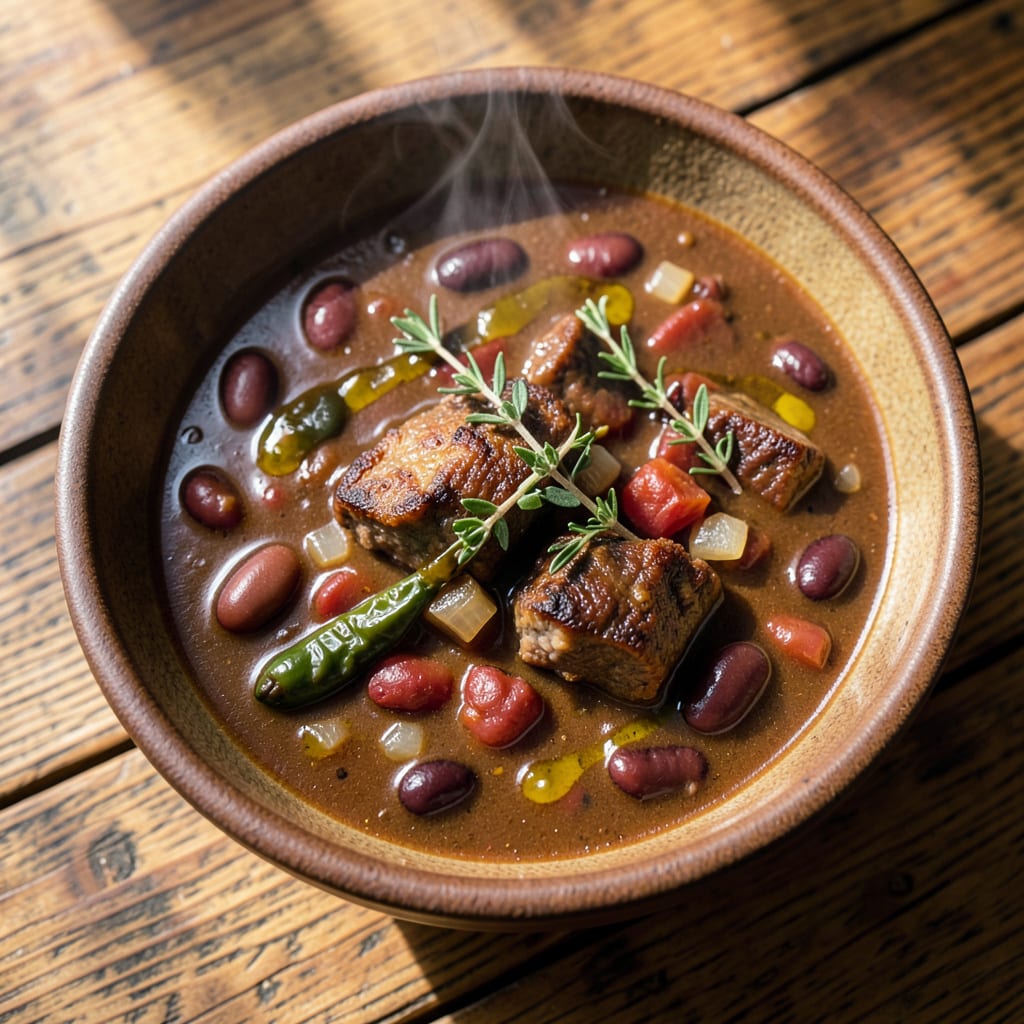
I’ll never forget the first time I added fresh thyme to my chili pot—it was one of those quiet moments that changed everything. The earthy, slightly floral notes transformed my usual bowl from good to unforgettable, adding depth that chili powder alone couldn’t achieve. This isn’t your average chili recipe; it’s the version I make when I want to impress without fussing over complicated techniques.
What makes this chili special is how the thyme works with the other spices. It doesn’t overpower like some herbs might—instead, it weaves through each bite, enhancing the smoky paprika and cumin while balancing the richness of the beef. I use fresh sprigs tied together for easy removal, but dried thyme works beautifully too if that’s what you have on hand.
The method is simple but deliberate: brown the meat well for deep flavor, bloom your spices to wake them up, then let everything simmer low and slow. By the time it’s ready, you’ll have a pot of chili with layers of flavor—each spoonful offering that perfect balance of heat, richness, and herbal brightness that keeps people coming back for seconds.
Serve it with your favorite toppings (I’m partial to sharp cheddar and fresh cilantro), or try it my way—with a sprinkle of smoked salt and a drizzle of honey for contrast. Whether it’s game day or just a chilly evening, this chili brings comfort with a sophisticated twist.
📚 In This Guide
- What You’ll Need
- Instructions
- Tips and Common Mistakes
What Youll Need
- ● Ground beef or turkey: 2 lbs (80/20 fat ratio for beef adds richness 🥩)
- ● Kidney beans: 2 (15 oz) cans, drained & rinsed (or 1.5 cups dried, soaked overnight)
- ○ Black beans: 1 (15 oz) can, drained & rinsed (optional for extra texture)
- ● Diced tomatoes: 1 (28 oz) can (fire-roasted for smoky depth 🔥)
- ● Tomato paste: 2 tbsp (for thickness)
- ● Fresh thyme: 4-5 sprigs (or 1 tbsp dried thyme—key ingredient! 🌿)
- ● Yellow onion: 1 large, diced (~2 cups)
- ● Garlic: 4 cloves, minced
- ● Chili powder: 2 tbsp (adjust for heat preference)
- ● Ground cumin: 1 tbsp
- ● Beef or vegetable broth: 2 cups (low-sodium preferred)
- ● Olive oil: 2 tbsp (or avocado oil for high heat)
- ● Salt & black pepper: To taste
- ○ Optional boosts: Chopped bell peppers (1 cup, any color)
- ● Cayenne pepper (½ tsp for heat)
- ● Dark chocolate (1 oz, for richness)
- ● Cornbread (for serving! 🍞)
- ● Large pot or Dutch oven (5-6 quart, heavy-bottomed)
- ● Wooden spoon (for stirring & scraping)
- ● Chef’s knife & cutting board
- ● Measuring cups/spoons
- ● Can opener
- ○ Optional: Slow cooker (for hands-off simmering)
Instructions for Adding Thyme to Your Chili
Here’s how to incorporate thyme for maximum flavor without overpowering your chili.
Select and Prepare Your Thyme
Start with fresh thyme sprigs rather than dried for this recipe. You’ll want about 4-5 sprigs of fresh thyme, which gives you the perfect balance of earthy flavor without dominating the pot. Fresh thyme has a more delicate, complex flavor that works beautifully in chili.
Rinse the sprigs gently under cool water and pat them completely dry with a paper towel. I like to use the stems as well as the leaves—they infuse flavor during cooking and are easy to remove later. If you’re using dried thyme instead, you’ll only need about 1 teaspoon since dried herbs are more concentrated.
Bloom the Thyme with Aromatics
Add the thyme to your pot at the same time as your other aromatics—typically when you’re sautéing onions, garlic, and peppers. The heat helps release thyme’s essential oils, creating a flavor foundation for your chili. I usually add the whole sprigs right into the pot with the onions.
Cook for about 2-3 minutes until you can smell the thyme’s fragrance mingling with the other aromatics. You’ll notice the kitchen starts to smell warm and earthy—that’s how you know the thyme is properly blooming. Stir occasionally to prevent burning while allowing the flavors to develop.
Simmer for Maximum Flavor Infusion
Once you’ve added all your ingredients and brought the chili to a simmer, let the thyme work its magic. The long cooking time allows the thyme to infuse its flavor throughout the entire pot. I recommend simmering for at least 1 hour, though 1.5-2 hours is ideal for deep flavor development.
As the chili cooks, the thyme will soften and release its flavor gradually. You’ll see the leaves start to separate from the stems, and the broth will take on a slightly more golden hue. This visual change is your sign that the thyme is properly infusing the dish with its earthy, slightly minty notes.
Remove Stems and Adjust Seasoning
After the chili has finished cooking, use tongs to remove the thyme stems. Most of the leaves will have fallen off during cooking, but you want to make sure no woody stems remain in the finished dish. Run your spoon through the chili to check for any remaining stem pieces.
Now taste your chili and adjust the seasoning. The thyme should add depth without being immediately identifiable—it should make people wonder what gives your chili such wonderful complexity. If you want more thyme flavor, you can add a pinch of dried thyme at this stage, but be cautious as the flavor will continue to develop as the chili rests.
Rest Before Serving
Let your chili rest for at least 15-20 minutes before serving. This resting period allows the thyme’s flavor to fully meld with the other ingredients. You’ll notice the chili becomes richer and more harmonious as it sits—this is the thyme working its magic even after cooking.
When you’re ready to serve, give the chili a good stir. The thyme will have transformed from individual sprigs into a subtle, earthy backbone that enhances all the other flavors in your pot. Each bite should have a warm, herbal complexity that makes your chili stand out from the ordinary.
Tips and Common Mistakes
Getting thyme to work its magic in chili is all about timing and technique. Here’s what I’ve learned from years of perfecting this subtle but transformative addition.
Timing Secret: Those 2-3 minutes in Step 2 when you’re blooming the thyme with aromatics are crucial. Don’t rush this step—you want to cook just until the kitchen fills with that warm, earthy fragrance. If you smell it, you’re doing it right. This quick bloom releases thyme’s essential oils without burning them, which would create bitterness instead of depth.
Simmering Strategy: The 1.5-2 hour simmer in Step 3 is where thyme truly transforms your chili. I’ve found that fresh thyme sprigs release their flavor gradually during this time, creating layers of complexity. Watch for the broth turning slightly more golden—that’s your visual cue that the thyme is properly infusing. If you’re short on time, the minimum 1 hour will work, but the extra time develops that rich, herbal backbone.
Resting Revelation: That 15-20 minute rest in Step 5 isn’t just about letting flavors meld—it’s when thyme’s subtle notes really come forward. I always notice the difference between chili served immediately versus after resting. The thyme’s earthy warmth becomes more pronounced, balancing the other bold flavors. Don’t skip this step, especially if you’ve used fresh sprigs.
Stem Removal Tip: When removing stems in Step 4, run your spoon through the chili in a figure-eight pattern. This helps catch any stray stem pieces that might have broken off during cooking. The stems should come out easily if you’ve simmered properly—the leaves will have mostly separated, leaving just the woody parts to remove.
Pro Tips for Thyme In Chili
- Getting thyme to work its magic in chili is all about timing and technique. Here’s what I’ve learned from years of pe…
- Timing Secret: Those 2-3 minutes in Step 2 when you’re blooming the thyme with aromatics are crucial. Don’t rush this…
- Simmering Strategy: The 1.5-2 hour simmer in Step 3 is where thyme truly transforms your chili. I’ve found that fresh…
Frequently Asked Questions
How much thyme should I add to chili?
Start with 1 teaspoon dried thyme (or 1 tablespoon fresh) for a standard 6-quart pot. Thyme is potent, so taste after 30 minutes of simmering and adjust. For smoky chili, pair it with cumin and oregano—balance is key!
When’s the best time to add thyme to chili?
Add dried thyme early with spices (when browning meat or blooming aromatics) to deepen flavors. Fresh thyme? Toss it in during the last 30 minutes of cooking to preserve its bright, herbal notes.
Can I substitute another herb if I don’t have thyme?
Yes! Try oregano (earthy), marjoram (sweeter), or rosemary (piney, use half the amount). Avoid basil—it clashes with chili’s warmth. For a thyme-like blend, mix oregano + a pinch of sage.
Why does my chili taste bitter after adding thyme?
Bitterness often comes from overcooking dried thyme or using stale herbs. Fix it by adding a pinch of sugar, a splash of vinegar, or a dollop of tomato paste. Fresh thyme rarely bitters—opt for it if possible!
Does thyme work in vegetarian or bean-heavy chili?
Absolutely! Thyme’s earthiness enhances mushrooms, lentils, and beans. In veggie chili, add it with garlic and smoked paprika for depth. Pro tip: Crush dried thyme between your palms before adding to release more flavor.
Adding thyme to your chili isn’t just a twist—it’s a game-changer! 🌿 This humble herb brings earthy warmth and aromatic depth, balancing bold spices while letting the rich flavors of your chili shine. Whether you’re simmering a classic beef chili or a hearty vegetarian pot, thyme’s subtle magic elevates every bite.
Ready to take your chili to the next level? Grab that dried or fresh thyme and start experimenting—your taste buds (and dinner guests) will thank you! For extra inspiration, try pairing it with other herbs like oregano or cumin for a flavor profile that’s truly unforgettable.

Trained in classic French technique but raised on slow-cooked ribs and spicy rubs, she blends culinary skill with smoke and soul.
- Recipe for Boneless Pork Chops in Cast Iron Skillet: Sear and Baste to Juicy Perfection - October 3, 2026
- Recipe for Boneless Cross Rib Roast: Slow-Roasted Beef with Herb Crust - October 3, 2026
- Hamburgers in Sauce Recipe Crock Pot: Slow-Cooked Savory Delight - October 3, 2026