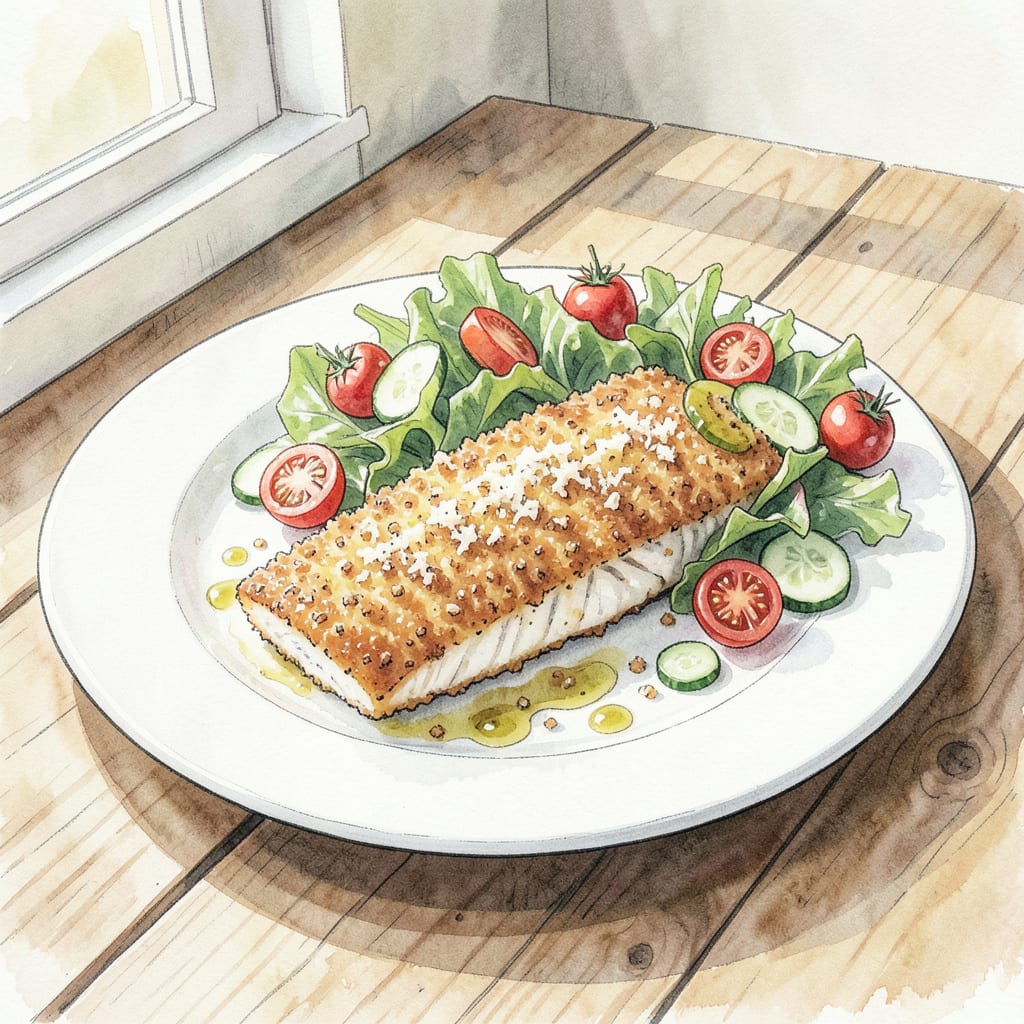
I’ve perfected a tilapia breaded recipe that yields a crispy golden crust every time. The secret lies in a light coating of seasoned breadcrumbs and a precise cooking technique that ensures the fish stays tender and moist.
By following this recipe, you’ll achieve a perfectly cooked tilapia with a crunchy exterior, served best with a side of fresh vegetables or a salad. The result is a delicious and satisfying meal that’s ready in under 30 minutes.
Ingredients for Tilapia Breaded
Simple ingredients for a restaurant-quality tilapia breaded recipe.
| Ingredient | Amount | Notes |
|---|---|---|
| Tilapia Fillets 🐟 | 4 pieces | Fresh or frozen, thawed |
| All-Purpose Flour 🌾 | 1 cup | For dredging fish |
| Panko Breadcrumbs 🍞 | 1 ½ cups | For crispy coating |
| Grated Parmesan Cheese 🧀 | ½ cup | Freshly grated preferred |
| Large Eggs 🥚 | 2 whole | Beaten for egg wash |
| Olive Oil 🫒 | ¼ cup | For frying, any variety |
| Garlic Powder 🧄 | 1 tsp | For seasoning |
| Paprika 🌶️ | 1 tsp | Smoked or sweet paprika |
| Salt 🧂 | ½ tsp | Kosher or sea salt |
| Black Pepper 🌶️ | ¼ tsp | Freshly ground preferred |
| Fresh Parsley 🌿 | ¼ cup | Chopped, for garnish |
| Lemon Wedges 🍋 | 4 pieces | For serving |
[recipe_ingredient_scaler]
For the crispiest coating, Panko breadcrumbs are essential. Look for them in the international section at most grocery stores. Fresh tilapia fillets are best, but frozen works too if thawed properly. Pat dry with paper towels before coating to remove excess moisture.
No Panko? Regular breadcrumbs work, but the texture won’t be as light. For an extra kick, add 1/2 tsp cayenne pepper to the breadcrumb mixture. If you’re out of Parmesan, nutritional yeast is a great vegan substitute. The key is to keep the fish cold before coating so the breading adheres well.
Leftover breaded tilapia can be stored in an airtight container in the fridge for up to 2 days. Reheat in the oven at 350°F to maintain crispiness. Freeze uncooked breaded fillets on a baking sheet, then transfer to a freezer bag for up to 3 months.
Step-by-Step Instructions for Crispy Breaded Tilapia
Follow these precise steps to achieve perfectly golden, crispy tilapia with a tender interior every time.
Step 1: Prepare the Breading Station
In one shallow dish, place the 1 cup All-Purpose Flour. In another, beat the 2 whole Large Eggs until well mixed. In a third dish, combine the 1.5 cups Panko Breadcrumbs and 0.5 cup Grated Parmesan Cheese, mixing thoroughly to ensure even distribution. I like to use a fork to mix the breadcrumb mixture, ensuring the cheese is evenly distributed throughout. The dry ingredients should be at room temperature for better adhesion.
Having everything ready in advance streamlines the breading process and prevents the tilapia from sitting too long between steps, which can cause it to become soggy. Make sure all your breading components are within easy reach to maintain efficiency.
Step 2: Bread the Tilapia Fillets
Take each of the 4 pieces Tilapia Fillets and coat them in the flour, shaking off any excess. I find that gently tapping the fillet against the side of the dish removes excess flour without disturbing the delicate fish. Then, dip the floured fillet into the beaten eggs, ensuring it’s fully coated. Finally, place the egg-coated fillet into the breadcrumb mixture, pressing gently to adhere the crumbs. Repeat with the remaining tilapia fillets.
The key to successful breading is gentle handling. Pressing too hard can cause the coating to fall off during cooking, while too light a touch might result in patchy coverage. I like to use a gentle pressing motion with my fingers to ensure the crumbs stick without damaging the fillet.
Step 3: Fry the Breaded Tilapia
Heat the 0.25 cup Olive Oil in a large skillet over medium-high heat until it reaches 350°F. When the oil is hot, add 2-3 breaded tilapia fillets (don’t overcrowd the pan) and fry for 3-4 minutes per side until they achieve a golden brown crust. I always check the temperature with an instant-read thermometer to ensure the oil is at the correct temperature. The fish should flake easily with a fork when done.
Be careful not to let the oil smoke – if it starts to smoke, remove it from the heat immediately and let it cool slightly before continuing. The ideal frying temperature is between 325°F and 375°F. If you’re unsure, it’s better to err on the side of lower heat to prevent burning.
Step 4: Serve with Fresh Parsley and Lemon
Once the tilapia is cooked, remove it from the oil and place it on a paper towel-lined plate to drain any excess oil. Sprinkle the hot fillets with 0.25 cup Fresh Parsley and serve immediately with 4 pieces Lemon Wedges on the side. I like to garnish with extra parsley for a fresh look. The residual heat from the fish will slightly wilt the parsley, releasing its aroma and enhancing the overall flavor profile.
Serve the crispy breaded tilapia hot, accompanied by your choice of sides. The combination of the crunchy exterior, tender fish, and bright lemon wedge creates a well-balanced and satisfying meal. For best results, serve immediately while the crust is still crispy.
Troubleshooting Perfect Results
Breading Issues
One common problem with breaded tilapia is the coating falling off during frying. To prevent this, make sure your tilapia fillets are patted dry with paper towels before breading. I like to use paper towels to gently pat the fillets dry on both sides. This helps the flour adhere better, which in turn helps the breadcrumb coating stick.
Oil Temperature Control
If your oil is not at the correct temperature (350°F), the breading can absorb too much oil or burn before the fish is cooked. Use an instant-read thermometer to ensure the oil has reached the proper temperature. I always keep my thermometer handy to double-check the oil temperature.
Overcrowding the Pan
Frying too many fillets at once can cause the oil temperature to drop, resulting in greasy or undercooked tilapia. Fry in batches of 2-3 fillets at a time, depending on the size of your skillet. This ensures that each fillet cooks evenly and stays crispy.
Undercooking or Overcooking
Tilapia cooks quickly, so it’s easy to overcook it. Use a meat thermometer to check for doneness—the internal temperature should reach 145°F. If you don’t have a thermometer, check by flaking the fish with a fork; it should flake easily but still appear moist.
Soggy Crust
If your crust turns soggy after frying, it might be due to excess moisture in the fish or insufficient draining. After frying, place the cooked tilapia on a paper towel-lined plate to absorb excess oil. You can also place the fillets on a wire rack over a baking sheet to keep them crispy while you finish frying the remaining fillets.
Reheating Leftovers
To maintain crispiness when reheating leftover breaded tilapia, use your oven rather than the microwave. Preheat your oven to 350°F and bake for 10-12 minutes, or until heated through. This helps preserve the crispy coating that can become soggy when microwaved. 🔥
Nutrition Facts

Trained in classic French technique but raised on slow-cooked ribs and spicy rubs, she blends culinary skill with smoke and soul.
- Recipe for Boneless Pork Chops in Cast Iron Skillet: Sear and Baste to Juicy Perfection - October 3, 2026
- Recipe for Boneless Cross Rib Roast: Slow-Roasted Beef with Herb Crust - October 3, 2026
- Hamburgers in Sauce Recipe Crock Pot: Slow-Cooked Savory Delight - October 3, 2026