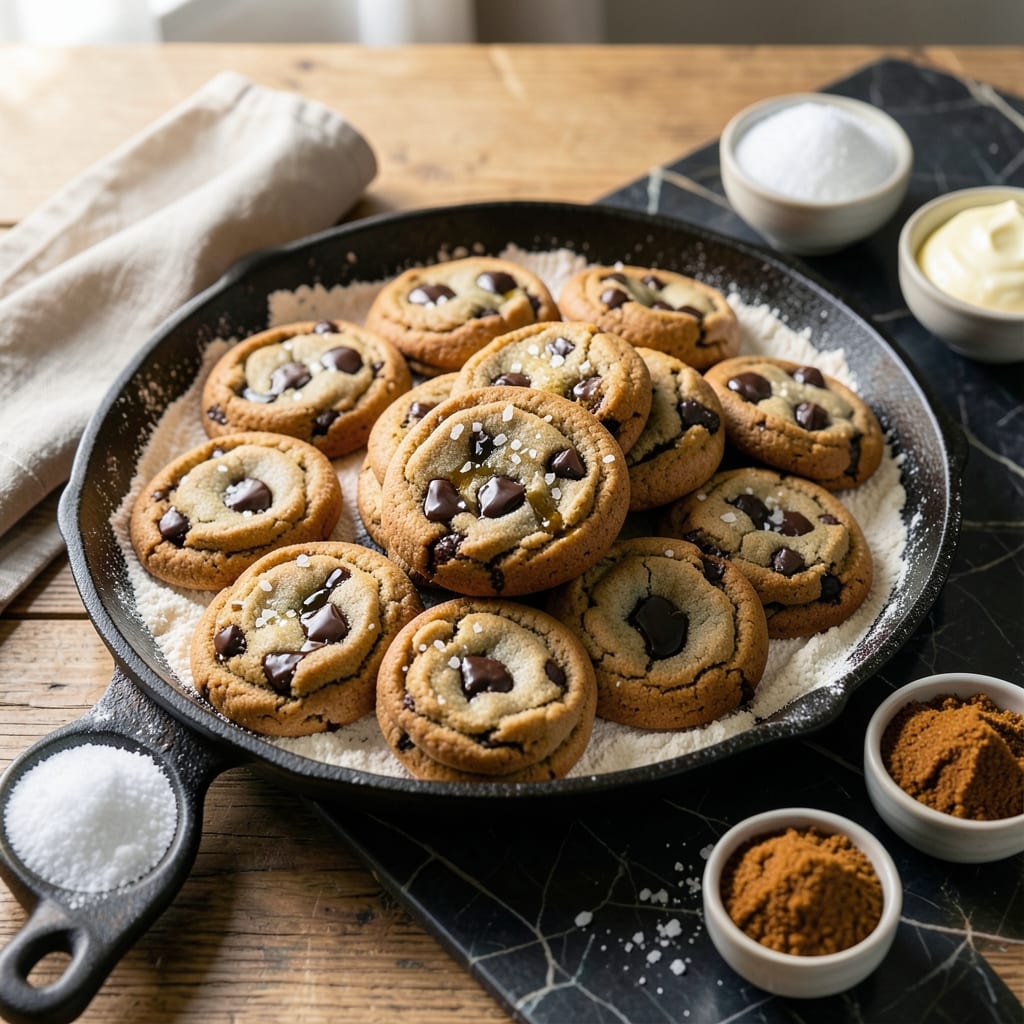
High-altitude baking presents unique challenges, but this adjusted Toll House recipe delivers perfect results every time. The key lies in precise ingredient tweaks that combat dryness and over-rising common at elevation.
I developed this version after years of testing in Denver, where the thinner air can turn cookies into cakey disappointments. The solution involves reducing leavening agents and adding extra moisture to maintain that classic chewy texture.
What you get are cookies with golden edges, soft centers, and just the right amount of spread. The chocolate chips melt into gooey pockets, and the dough holds together without being dense or crumbly.
This method accounts for elevation changes above 3,500 feet. Follow the adjustments carefully for consistently excellent cookies at high altitude.
Ingredients for Toll House Cookie Recipe High Altitude
These adjusted ingredients combat high-altitude baking challenges for classic cookie perfection.
| Ingredient | Amount | Notes |
|---|---|---|
| All-Purpose Flour 🌾 | 2 ¼ cups | Sifted for even texture |
| Baking Soda 🧂 | ½ tsp | Reduced for altitude adjustment |
| Salt 🧂 | 1 tsp | Fine sea salt preferred |
| Unsalted Butter 🧈 | 1 cup | Softened to room temperature |
| Granulated Sugar 🍚 | ¾ cup | Fine white sugar |
| Packed Brown Sugar 🟤 | ¾ cup | Light or dark variety |
| Large Eggs 🥚 | 2 whole | Room temperature for best incorporation |
| Vanilla Extract 💧 | 2 tsp | Pure extract for best flavor |
| Semisweet Chocolate Chips 🍫 | 2 cups | High-quality brand preferred |
| Chopped Walnuts 🌰 | 1 cup | Optional, toasted for extra flavor |
| Water 💧 | 2 tbsp | Extra moisture for altitude |
[recipe_ingredient_scaler]
The flour is the foundation here. King Arthur or Gold Medal all-purpose work best for structure at elevation. The baking soda is deliberately reduced—standard amounts cause over-rising in thin air. Butter should be real unsalted, not margarine, for authentic flavor. I source mine from Whole Foods for consistent quality, but any trusted grocery brand works.
No walnuts? Skip them entirely or swap in pecans or almonds. For chocolate chips, Ghirardelli or Guittard melt beautifully. If you’re out of brown sugar, white sugar plus 1 tbsp molasses per cup works in a pinch. The extra water is non-negotiable—altitude dries dough fast. Vanilla should always be pure extract, not imitation.
Dough keeps 3-4 days refrigerated or 3 months frozen. Baked cookies stay fresh 5 days in an airtight container. For longer storage, freeze baked cookies—they revive perfectly with 10 seconds in the microwave.
Why You’ll Love This Recipe
- No-Fuss Mixing: I just cream the butter and sugar, then dump in the dry ingredients—no fancy steps, no fuss.
- Buttery Richness: The unsalted butter and granulated sugar make these cookies melt-in-your-mouth sweet with that classic Toll House taste.
- Altitude Adjusted: Finally, a recipe that works at high elevation—no flat, sad cookies here, just perfect texture every time.
- Freezer Friendly: I double the batch and freeze half. Fresh-baked cookies in 10 minutes whenever the craving hits.
Step-by-Step Instructions for Toll House Cookies at High Altitude
These adjustments ensure perfect texture and spread in elevated baking conditions.
Step 1: Cream Butter and Sugars to Optimal Volume
In a stand mixer with the paddle attachment, beat the 1 cup unsalted butter with the 0.75 cup granulated sugar and 0.75 cup packed brown sugar on medium speed for 4-5 minutes. The mixture should become pale and noticeably increased in volume.
This extended creaming incorporates air that compensates for lower air pressure at altitude. Stop when the mixture holds its shape briefly when the paddle is lifted. Scrape the bowl periodically to ensure even mixing.
Step 2: Incorporate Eggs and Vanilla with Precision
Add the 2 whole large eggs one at a time, mixing on low speed for 30 seconds after each addition. Then add the 2 tsp vanilla extract and mix for another 15 seconds until fully combined.
The mixture may appear slightly curdled – this is normal. The 2 tbsp water specified in the ingredients addresses altitude’s rapid evaporation, so add it now and mix until the batter smooths out completely.
Step 3: Combine Dry Ingredients with Minimal Mixing
In a separate bowl, whisk together the 2.25 cups all-purpose flour, 0.5 tsp baking soda, and 1 tsp salt. Add this to the wet ingredients and mix on low speed for 20-25 seconds until just combined.
Overmixing develops gluten, which can make cookies tough at altitude. Stop when you see the last streaks of flour disappear. The reduced baking soda accounts for faster rising in thin air.
Step 4: Fold in Chocolate Chips and Walnuts
Using a silicone spatula, fold in the 2 cups semisweet chocolate chips and 1 cup chopped walnuts by hand. Distribute them evenly throughout the dough with 10-12 folds.
This gentle method prevents crushing the add-ins and maintains the dough’s structure. The chocolate chips should be visible throughout the dough in even distribution.
Step 5: Bake with Altitude-Specific Adjustments
Preheat oven to 375°F. Drop 2-tablespoon portions of dough onto parchment-lined baking sheets, spacing them 3 inches apart. Bake for 9-11 minutes until edges are light golden brown but centers still look slightly underdone.
At altitude, cookies set faster, so start checking at 8 minutes. The centers will continue cooking on the hot pan. Cool on the baking sheet for 5 minutes before transferring to a wire rack to complete setting.
Pro Tips For Making Toll House Cookie Recipe High Altitude
- Chill the Dough: I learned this the hard way—high altitude makes cookies spread too fast. Refrigerate the dough for 30-60 minutes before baking to keep them thick and chewy.
- Reduce Baking Soda: At elevation, leavening agents work overtime. Cut the baking soda by 1/8 teaspoon to prevent cookies from rising too much and collapsing.
- Soften Butter Right: Use butter that’s soft but still cool to the touch—about 65°F. Too warm and your cookies will flatten; too cold and the sugar won’t cream properly.
- Lower Oven Temp: After burning three batches, I finally figured out that 350°F works better than 375°F at high altitude. Bake them 1-2 minutes longer for even cooking.
Troubleshooting Great toll house cookie recipe high altitude
Cookies Spread Too Much
If your cookies flatten excessively, your butter may have been too warm. Chill the dough for 30 minutes before baking. Also, ensure you’re using the reduced 0.5 tsp baking soda—standard amounts cause over-spreading at elevation. 🌡️
Dry or Crumbly Texture
At altitude, dough dries out fast. If your cookies turn out dry, add 1 extra tbsp water to the dough next time. The 2 tbsp water in the recipe is the minimum—some days require more. Also, avoid overbaking; pull them at 9 minutes even if centers look soft.
Cakey Instead of Chewy
This usually means too much air was incorporated. Reduce creaming time to 3 minutes instead of 4-5. Also, double-check that you used the adjusted 0.5 tsp baking soda—not the standard 1 tsp. The reduced leavening prevents excessive rise.
Uneven Baking
Rotate your baking sheets halfway through the 9-11 minute bake time. Ovens at altitude can have hot spots. Also, use parchment paper and avoid dark pans, which can cause uneven browning on the bottoms before the tops are done.
Cookies Brown Too Fast
Lower your oven temperature by 25°F to 350°F and extend baking time by 1-2 minutes. At elevation, the thinner air allows cookies to brown quicker. Start checking at 10 minutes and rely on the edge color rather than the center. 💡
Dough Too Sticky
If your dough is hard to handle, add 1-2 tbsp extra flour. However, avoid adding too much, as it can make cookies tough. The dough should be soft but scoopable. Chilling for 20 minutes can also make it easier to portion without sticking.
Nutrition Facts
Frequently Asked Questions
Why do I need less baking soda at high altitude?
At elevation, lower air pressure causes baked goods to rise faster. Using the standard 1 tsp would make your cookies puff up too much and then collapse. The reduced 0.5 tsp ensures proper rise without over-expansion.
Can I skip the extra water in the recipe?
No. The 2 tbsp water compensates for rapid moisture evaporation in thin air. Without it, your cookies may turn out dry or crumbly. Some days may even require an extra 1 tbsp depending on your elevation.
How do I prevent my cookies from browning too quickly?
Lower your oven temperature by 25°F to 350°F and extend baking time by 1-2 minutes. Thin air causes faster browning, so keep an eye on the edges rather than the center.
What if my dough is too sticky to handle?
Add 1-2 tbsp extra flour or chill the dough for 20-30 minutes. The dough should be soft but scoopable. Avoid adding too much flour, as it can make your cookies tough.

Trained in classic French technique but raised on slow-cooked ribs and spicy rubs, she blends culinary skill with smoke and soul.
- Recipe for Boneless Pork Chops in Cast Iron Skillet: Sear and Baste to Juicy Perfection - October 3, 2026
- Recipe for Boneless Cross Rib Roast: Slow-Roasted Beef with Herb Crust - October 3, 2026
- Hamburgers in Sauce Recipe Crock Pot: Slow-Cooked Savory Delight - October 3, 2026