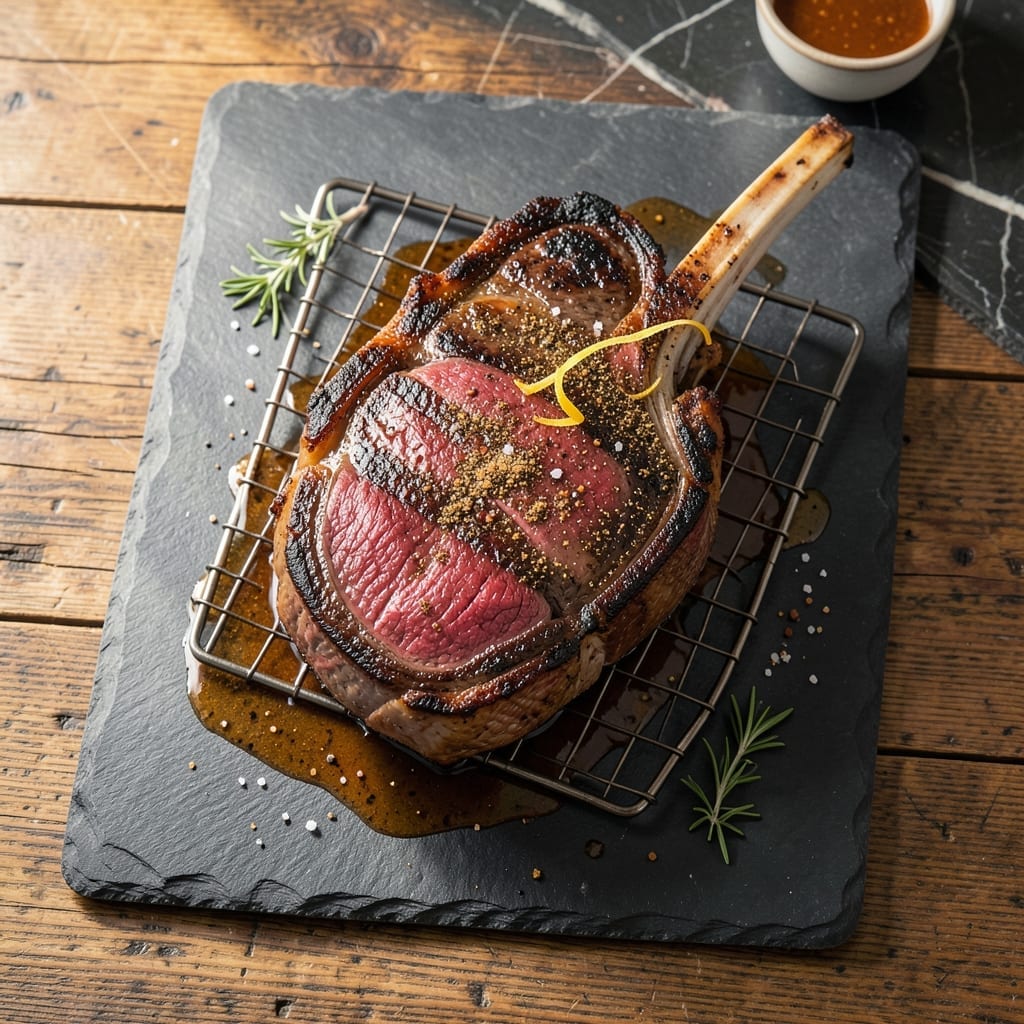
This reverse sear method transforms a thick-cut tomahawk into the most tender, juicy steak you’ll ever cook at home. I developed this technique after years of perfecting oven-to-grill transitions for competition-level results.
Starting low and slow in the oven ensures even cooking from edge to edge. The final sear creates a deep, flavorful crust while locking in every drop of natural moisture.
You’ll achieve restaurant-quality doneness throughout, with a perfect char on the outside. No expensive equipment needed—just your oven, a skillet, and a meat thermometer.
The rib bone stays intact, making this an impressive centerpiece for any special dinner. Here’s how to execute it perfectly every time.
Ingredients for Tomahawk Steak Oven
Thick-cut tomahawk and a few pantry staples. That’s all you need for restaurant-quality results.
| Ingredient | Amount | Notes |
|---|---|---|
| Tomahawk Steak 🥩 | 2 lb | Bone-in ribeye, 1.5-2 inches thick |
| Kosher Salt 🧂 | 1 tbsp | Diamond Crystal preferred for texture |
| Black Pepper 🌶️ | 1 ½ tsp | Freshly cracked coarse |
| Garlic Powder 🧄 | 1 tsp | Not garlic salt substitute |
| Onion Powder 🧅 | 1 tsp | Adds depth to dry rub |
| Smoked Paprika 🌶️ | ½ tsp | For subtle smoky note |
| Extra-Virgin Olive Oil 🫒 | 2 tbsp | High smoke point for searing |
| Unsalted Butter 🧈 | 2 tbsp | For basting during sear |
| Fresh Rosemary Sprigs 🌿 | 2 whole | Optional for aromatic basting |
| Fresh Thyme Sprigs 🌿 | 2 whole | Optional for aromatic basting |
| Vegetable Oil 🫒 | 1 tbsp | High smoke point for initial sear |
[recipe_ingredient_scaler]
The steak is everything here. Hunt for USDA Prime tomahawk at Whole Foods or a trusted butcher—Choice grade works but has less marbling. Look for bright red meat with creamy fat (the good stuff, not gray or dried out). Ask for a cut that’s at least 1.5 inches thick; anything thinner won’t hold up to the reverse sear. If you’re feeling fancy, dry-age it yourself for 2-3 days on a rack in the fridge (worth the extra minute).
No smoked paprika? Regular paprika plus a pinch of cayenne gets you there. Out of fresh herbs? Dried rosemary and thyme at half the amount still infuses flavor. The butter is non-negotiable for basting, but you can swap olive oil for the vegetable oil if that’s what you’ve got. For a stronger crust, add a crushed garlic clove to the basting butter (don’t skip this part).
Let the steak rest uncovered on the counter for 1-2 hours before cooking—this brings it to room temp for even cooking. Store raw steak in the coldest part of your fridge for up to 5 days, or freeze for 6-12 months. Leftovers? Slice thin for sandwiches the next day.
Why You’ll Love This Recipe
- I’ll be real: the next-day steak sandwiches are almost better than the original meal.
- Set and Forget: I toss the tomahawk in the oven with just salt, pepper, and those two powders, then let it do its thing while I pour a glass of wine.
- Crust You’ll Brag About: The garlic and onion powder form this ridiculous crust that makes every bite taste like it came from a steakhouse.
- Dinner Party MVP: Honestly, it looks fancy enough to impress guests but takes zero fancy skills to pull off.
Step-by-Step Instructions for Tomahawk Steak
This reverse sear method guarantees tender, juicy meat with a perfect crust every time.
Step 1: Season and Prep the Tomahawk Steak
Pat the 2 lb Tomahawk Steak completely dry with paper towels—this ensures a better sear. In a small bowl, combine the 1 tbsp Kosher Salt, 1.5 tsp Black Pepper, 1 tsp Garlic Powder, 1 tsp Onion Powder, and 0.5 tsp Smoked Paprika.
Rub this dry mix generously over every surface of the steak, including the bone and edges. I like to press it in firmly so it adheres well. Drizzle the 2 tbsp Extra-Virgin Olive Oil over the meat and rub it in evenly. Let the seasoned steak sit at room temperature for 30-45 minutes before cooking.
Step 2: Slow-Roast in the Oven
Preheat your oven to 250°F. Place the steak on a wire rack set over a baking sheet to allow air circulation. Roast for 45-60 minutes, or until the internal temperature reaches 110-115°F on an instant-read thermometer. This low-and-slow start is the key to edge-to-edge tenderness.
Watch for the meat to turn slightly rosy on the outside—this visual cue tells you it’s nearing the perfect internal temperature. The bone will act as a heat conductor, so don’t worry if the area near it looks a bit more cooked.
Step 3: Sear for a Perfect Crust
Heat the 1 tbsp Vegetable Oil in a large cast-iron skillet over high heat until it shimmers. Add the 2 tbsp Unsalted Butter, the 2 whole Fresh Rosemary Sprigs, and the 2 whole Fresh Thyme Sprigs to the pan. The herbs will infuse the butter with aromatic flavor as it melts.
Carefully place the steak in the skillet. Sear for 2-3 minutes per side, basting continuously with the butter-herb mixture. Use a spoon to pour the hot butter over the top and sides of the steak. You’ll see a deep, golden-brown crust forming—that’s your signal it’s ready to flip.
Step 4: Rest and Serve
Transfer the steak to a cutting board and tent loosely with foil. Let it rest for 10-15 minutes—this allows the juices to redistribute for maximum tenderness. The internal temperature will rise to about 125-130°F for a perfect medium-rare finish.
Slice the meat against the grain, serving it directly off the bone for a dramatic presentation. The exterior should be deeply caramelized, while the interior remains succulent and pink. Serve immediately to enjoy it at its peak.
Pro Tips For Making Tomahawk Steak Oven
- Preheat the Oven: Crank it to 450°F (230°C) and let it stabilize for at least 15 minutes—this ensures a proper sear on the tomahawk’s thick cut before switching to indirect heat.
- Season Overnight: Rub the steak with kosher salt, black pepper, garlic powder, and onion powder at least 12 hours ahead; the salt penetrates deep into the thick ribeye, boosting flavor and tenderness.
- Skip the Cold Steak: Pull the tomahawk from the fridge 1-2 hours before cooking—cooking it straight from cold means uneven doneness, and that’s a waste of good meat.
- Use a Meat Thermometer: I learned this the hard way: guesswork ruins a $50 steak. Aim for 125°F (52°C) internal for medium-rare, and pull it 5 degrees early to rest.
Creative Variations of This Recipe
Herb-Crusted Variation
Mix 2 tbsp chopped fresh rosemary and 2 tbsp chopped fresh thyme with your dry rub. The herbs create a fragrant crust during the sear. I gather wild rosemary along my coastal rides for an extra earthy note. 🌿
Coffee-Rubbed Boldness
Add 1 tbsp finely ground coffee and 1 tsp brown sugar to your seasoning mix. The coffee deepens the meat’s natural flavors without overpowering. This trick comes from my days competing in local BBQ competitions.
Garlic-Butter Baste
Mince 4 garlic cloves and add to the basting butter. The garlic infuses into the meat during the final sear. Use European-style butter for richer flavor—I always grab it from my local butcher shop.
Smokehouse Style
Sprinkle ½ tsp chipotle powder and ½ tsp ground cumin to your rub for a smoky kick. This mimics the depth you’d get from a traditional smoker. Perfect when I’m craving that fire-kissed taste without firing up the pit. 🔥
Peppercorn Crust
Crush 1 tbsp mixed peppercorns (black, green, pink) and press into the meat before searing. The peppercorns add texture and a subtle heat. I keep a dedicated mortar and pestle just for this purpose.
Wine-Infused Elegance
Deglaze your searing pan with ¼ cup red wine after removing the steak. Reduce by half, then drizzle over the rested meat. A bold Cabernet Sauvignon works beautifully with the rich beef flavors.
Nutrition Facts
Frequently Asked Questions
Do I need to cover the bone with foil during oven cooking?
No, leaving the bone exposed is fine. The bone adds flavor and helps conduct heat, but monitor it closely as it can cook faster than the meat. Use a meat thermometer to check doneness in the thickest part.
What oven temperature works best for the reverse sear?
Keep it low at 250°F for even cooking without overcooking the exterior. This slow roast ensures the center reaches 110-115°F before searing. Patience here guarantees perfect results.
Can I use a different pan for searing?
A cast-iron skillet is ideal for high heat and even searing, but a heavy stainless steel pan works too. Avoid nonstick pans as they can’t reach the necessary high heat for a good crust.
How do I know when it’s done without a thermometer?
Use the finger test: gently press the meat. Rare feels soft, medium-rare springy, and well-done firm. For accuracy, a thermometer is best for hitting 125-130°F for medium-rare.

Trained in classic French technique but raised on slow-cooked ribs and spicy rubs, she blends culinary skill with smoke and soul.
- Recipe for Boneless Pork Chops in Cast Iron Skillet: Sear and Baste to Juicy Perfection - October 3, 2026
- Recipe for Boneless Cross Rib Roast: Slow-Roasted Beef with Herb Crust - October 3, 2026
- Hamburgers in Sauce Recipe Crock Pot: Slow-Cooked Savory Delight - October 3, 2026