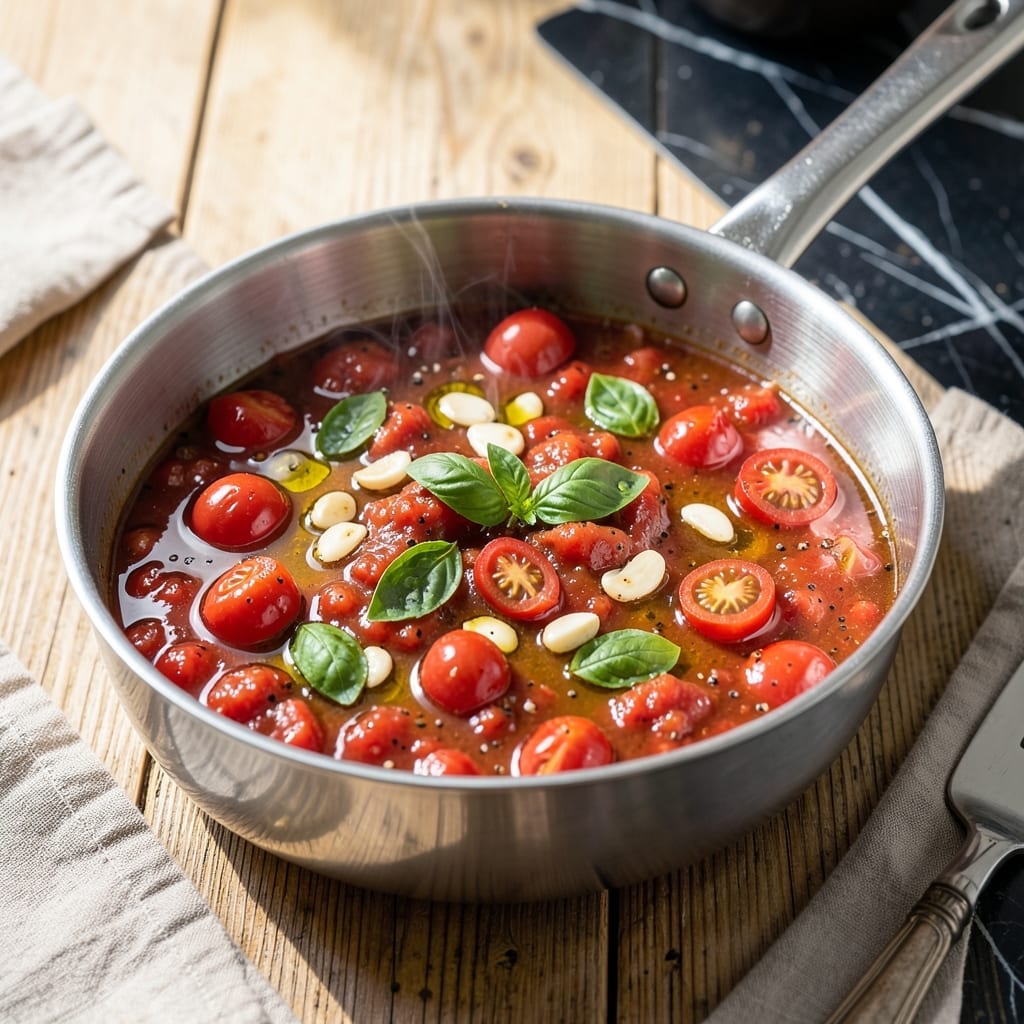
This sauce transforms fresh cherry tomatoes into a rich, sweet-tart base that elevates any dish. The natural sugars in the tomatoes caramelize as they cook, creating depth without added sweeteners.
Simmered with garlic and herbs, it develops a velvety texture perfect for pasta, pizza, or dipping. Store in airtight containers for up to five days, or freeze for later use.
Ingredients for Tomato Sauce Recipe Cherry Tomatoes
Fresh cherry tomatoes and a few pantry staples create this velvety, sweet-tart sauce base.
| Ingredient | Amount | Notes |
|---|---|---|
| Cherry Tomatoes 🍅 | 2 lbs | Fresh, ripe, halved |
| Extra-Virgin Olive Oil 🫒 | ¼ cup | High quality, fruity notes |
| Garlic Cloves 🧄 | 6 cloves | Peeled, thinly sliced |
| Fresh Basil Leaves 🌿 | ½ cup | Packed, torn by hand |
| Sea Salt 🧂 | 1 ½ tsp | Fine grain, to taste |
| Black Pepper 🌶️ | ½ tsp | Freshly ground preferred |
| Red Pepper Flakes 🌶️ | ¼ tsp | Adjust for heat preference |
| Balsamic Vinegar 💧 | 1 tbsp | Aged for depth of flavor |
[recipe_ingredient_scaler]
Optimal quality requires vine-ripened cherry tomatoes—look for bright color and firm texture at farmers markets or specialty grocers like Whole Foods. The olive oil should be extra-virgin with a peppery finish for complexity. Fresh basil is non-negotiable for authentic flavor; avoid the pre-packaged kind if possible. San Marzano tomatoes can be used if cherry are unavailable, though the flavor profile differs slightly.
No fresh basil? Dried basil at one-third the amount works in a pinch, though fresh is ideal. For garlic, granulated garlic at half the quantity can substitute, but fresh delivers superior depth. Apple cider vinegar may replace balsamic, though the sweetness will be less pronounced. If avoiding heat, simply omit the red pepper flakes—no substitution needed.
This sauce keeps 5 days refrigerated in airtight containers or 3 months frozen. For best results, cool completely before storing. The flavor intensifies after 24 hours, making it perfect for meal prep. Always use glass or BPA-free plastic for storage to preserve freshness.
Why You’ll Love This Recipe
- One Pan Wonder: I toss the cherry tomatoes in with olive oil, garlic, and basil, and let the oven do the rest.
- Burst of Summer: The sweetness of roasted cherry tomatoes with the aromatic kick of fresh basil is ridiculous.
- Meal Prep Magic: I make a big batch on Sunday and use it for pasta, pizza, or even as a soup base all week.
Step-by-Step Instructions for Tomato Sauce with Cherry Tomatoes
This method extracts maximum flavor from the tomatoes while maintaining their vibrant character.
Step 1: Prepare and Sauté the Aromatics
Heat the 0.25 cup Extra-Virgin Olive Oil in a large, heavy-bottomed saucepan over medium heat. Add the 6 cloves Garlic Cloves and cook for 1-2 minutes until just fragrant and lightly golden—do not let it brown or it will turn bitter.
Add the 0.25 tsp Red Pepper Flakes and stir for 30 seconds to bloom the spices in the warm oil. This base layer builds depth of flavor that will infuse the entire sauce.
Step 2: Cook the Cherry Tomatoes
Add the 2 lbs Cherry Tomatoes to the pan, stirring to coat them in the aromatic oil. Increase heat to medium-high and cook for 8-10 minutes, stirring occasionally, until the tomatoes begin to burst and release their juices.
As the tomatoes break down, use a wooden spoon to gently press on them, encouraging more to rupture. You’ll notice the sauce beginning to thicken as the natural pectin in the tomatoes activates during cooking.
Step 3: Season and Simmer
Stir in the 1.5 tsp Sea Salt, 0.5 tsp Black Pepper, and 1 tbsp Balsamic Vinegar. The vinegar adds a subtle sweetness and helps balance the acidity of the tomatoes.
Reduce heat to medium-low and let the sauce simmer for 15-20 minutes, stirring occasionally. The sauce should reduce slightly and develop a richer, more concentrated flavor. Watch for it to thicken to your desired consistency.
Step 4: Finish with Fresh Basil
Remove the pan from heat and stir in the 0.5 cup Fresh Basil Leaves. The residual heat will wilt the basil slightly while preserving its bright, aromatic qualities. Taste and adjust seasoning if needed, though the initial salt measurement should be sufficient.
Let the sauce rest for 5 minutes before serving to allow the flavors to meld completely. The basil will infuse the sauce with its signature fragrance during this brief rest period.
Pro Tips For Making Tomato Sauce Recipe Cherry Tomatoes
- Blister the Tomatoes: Toss cherry tomatoes in a hot pan with about 2 tablespoons of olive oil until their skins split and soften—this releases their juices faster and deepens the flavor.
- Crush the Garlic: Smash the garlic cloves with the side of your knife before mincing to release more aroma, but don’t burn it—pull the pan off heat if it starts browning too quickly.
- Salt the Tomatoes Early: Sprinkle sea salt on the tomatoes as soon as they hit the pan, not just at the end; it draws out moisture and builds flavor from the start.
- Tear the Basil: Skip the knife for basil—tearing the leaves by hand prevents bruising and keeps the fresh, bright flavor intact until the very end.
Troubleshooting Great tomato sauce recipe cherry tomatoes
🍳 Too Watery?
If your cherry tomato sauce is thin, it’s likely because the tomatoes released too much liquid. This often happens if you skip simmering long enough to evaporate excess moisture.
Quick Fix: Simmer uncovered on medium-low heat, stirring occasionally, until thickened. For faster results, mash the tomatoes with a potato masher to break them down.
🔥 Bitter or Sour?
Cherry tomatoes can turn bitter if overcooked or if their natural acids dominate. This is common with underripe tomatoes or excessive cooking time.
Quick Fix: Balance the flavor with a pinch of sugar or a splash of balsamic vinegar. Stir in a small pat of butter for richness.
🥘 Lumpy Texture?
Uneven cooking or skipping the blending step can leave chunks in your sauce. Cherry tomatoes have thick skins that may not soften completely during simmering.
Quick Fix: Use an immersion blender for a smooth texture. Alternatively, press the sauce through a fine-mesh sieve to remove skins and seeds.
⏰ Taking Too Long?
Slow simmering is key, but busy cooks need speed. If your sauce isn’t reducing fast enough, the heat may be too low or the pot too small.
Quick Fix: Increase heat slightly and use a wide, shallow pan for faster evaporation. Stir frequently to prevent burning.
Nutrition Facts

Trained in classic French technique but raised on slow-cooked ribs and spicy rubs, she blends culinary skill with smoke and soul.
- Recipe for Boneless Pork Chops in Cast Iron Skillet: Sear and Baste to Juicy Perfection - October 3, 2026
- Recipe for Boneless Cross Rib Roast: Slow-Roasted Beef with Herb Crust - October 3, 2026
- Hamburgers in Sauce Recipe Crock Pot: Slow-Cooked Savory Delight - October 3, 2026