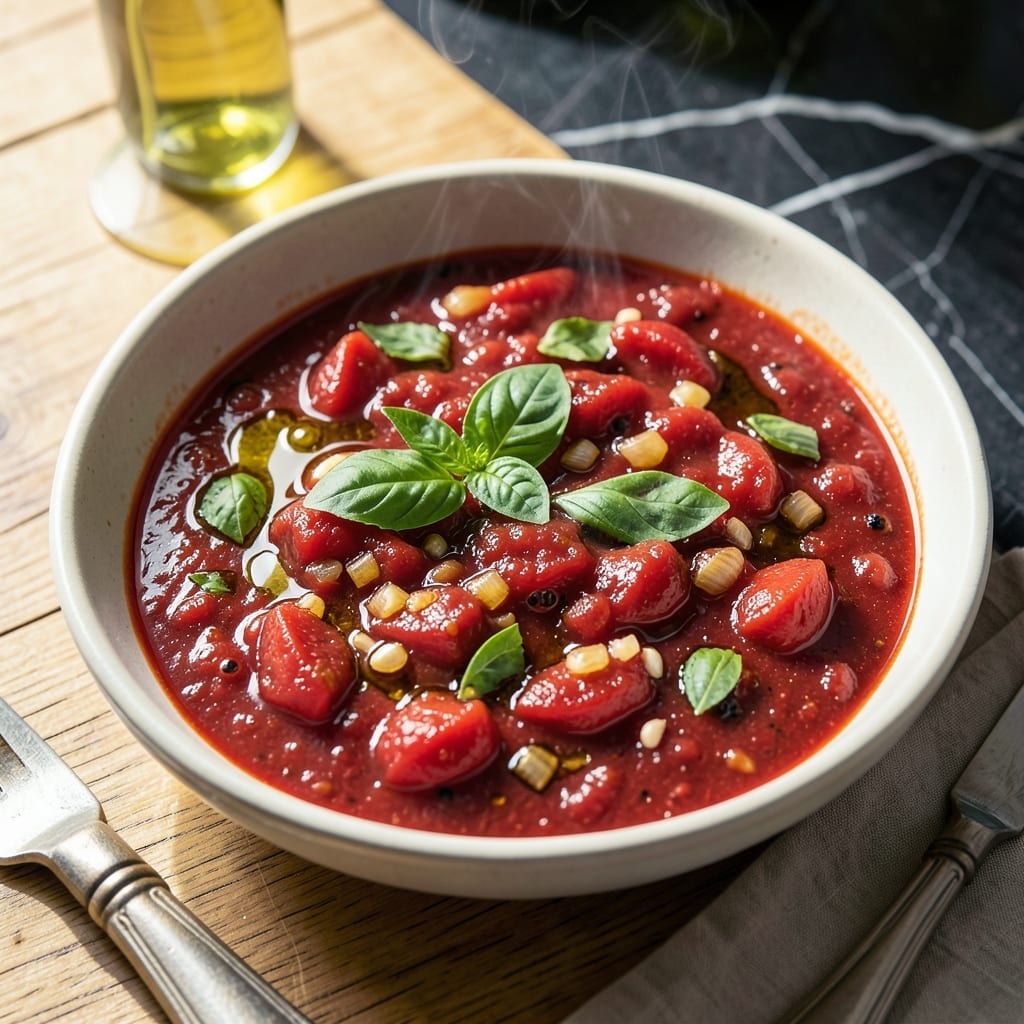
This proven method delivers a rich, versatile tomato sauce that freezes beautifully for months without losing flavor or texture. I developed this recipe to solve the problem of having restaurant-quality sauce on hand whenever needed.
By cooking it down properly and cooling it before freezing, you’ll preserve the sauce’s vibrant taste and smooth consistency. It thaws quickly and works perfectly in pasta, soups, or as a base for other dishes.
Ingredients for Tomato Sauce Recipe for Freezing
Ten simple ingredients for a rich, versatile sauce you can freeze for months.
| Ingredient | Amount | Notes |
|---|---|---|
| Canned Whole Peeled Tomatoes 🍅 | 2 cans | 28 oz each, San Marzano preferred |
| Extra-Virgin Olive Oil 🫒 | ¼ cup | High quality, fruity |
| Yellow Onion 🧅 | 1 whole | Medium, finely diced |
| Garlic Cloves 🧄 | 6 cloves | Peeled and minced |
| Tomato Paste 🍅 | 2 tbsp | Double-concentrated preferred |
| Dried Oregano 🍃 | 1 tsp | Mediterranean variety |
| Dried Basil 🌿 | 1 tsp | Crushed for best release |
| Red Pepper Flakes 🌶️ | ½ tsp | Adjust for heat preference |
| Sea Salt 🧂 | 1 ½ tsp | Fine grain, adjust to taste |
| Black Pepper 🌶️ | ½ tsp | Freshly ground |
[recipe_ingredient_scaler]
For the best results, use San Marzano whole peeled tomatoes—they’re sweeter and less acidic. Find them at Whole Foods or Italian specialty stores. The olive oil should be extra-virgin and fruity; avoid anything labeled ‘light’ or ‘pure.’ Fresh garlic and onions are non-negotiable here, so don’t reach for the pre-minced stuff in jars.
No San Marzano tomatoes? Any high-quality canned tomato works, but avoid no-name brands—they can be watery. Out of dried oregano? Fresh at triple the amount, but dried is honestly better for long cooking. Want more depth? Add a Parmesan rind while simmering (remove before freezing, as it’s not vegan). Skip the pre-minced garlic—it lacks the punch of fresh.
This sauce freezes for 6 months without texture changes. Cool completely before portioning into airtight containers. Leave 1-inch headspace for expansion. Thaw overnight in the fridge or submerge sealed bags in warm water for quick use.
Why You’ll Love This Recipe
- One Pot Wonder: I just dump the canned tomatoes, onion, and garlic into a pot—no fancy prep, and the tomato paste thickens it perfectly.
- Rich and Deep: The slow simmer of olive oil, garlic, and whole tomatoes creates this velvety, restaurant-quality base I can’t get enough of.
- Meal Prep Magic: I double the batch, freeze half, and suddenly I’ve got homemade pasta sauce or pizza base ready in minutes.
- Pantry Hero: Between us, it costs pennies per serving, and I always have the ingredients on hand for a last-minute dinner win.
Step-by-Step Instructions for Tomato Sauce for Freezing
This method ensures rich, concentrated flavor that holds up beautifully in the freezer.
Step 1: Sauté the Aromatics
Heat the 0.25 cup Extra-Virgin Olive Oil in a large, heavy pot over medium heat. Add the finely diced Yellow Onion and cook for 5-7 minutes until translucent and just beginning to turn golden at the edges.
Add the minced Garlic Cloves and cook for 30-45 seconds, stirring constantly, until fragrant but not browned. Watch carefully—garlic burns easily and bitter garlic will ruin the sauce.
Step 2: Build the Flavor Base
Stir in the 2 tbsp Tomato Paste and cook for 2-3 minutes until it deepens in color to a rich brick red. This step removes the raw taste and develops complex, concentrated flavor—critical for a sauce that will be frozen and reheated.
Add the 1 tsp Dried Oregano, 1 tsp Dried Basil, and 0.5 tsp Red Pepper Flakes. Toast the spices in the hot oil with the tomato paste for 30 seconds to release their aromatic oils.
Step 3: Add Tomatoes and Simmer
Carefully pour in the 2 cans Canned Whole Peeled Tomatoes, crushing them by hand as you add them to the pot. Stir in the 1.5 tsp Sea Salt and 0.5 tsp Black Pepper. Bring the mixture to a gentle boil.
Once boiling, reduce heat to low-medium to maintain a steady simmer. Partially cover and cook for 45-60 minutes, stirring occasionally, until the sauce thickens to your desired consistency and the tomatoes have broken down completely.
You’ll know it’s ready when the sauce has reduced by about a third and a wooden spoon leaves a temporary trail when dragged through the sauce.
Step 4: Cool and Prepare for Freezing
Remove the sauce from heat and let it cool at room temperature for 30 minutes. Stir occasionally to release heat evenly and prevent a skin from forming on the surface.
Once cooled, portion the sauce into airtight containers, leaving 1-inch headspace to allow for expansion during freezing. I use glass jars or heavy-duty freezer bags for best results. Label each container with the date before freezing.
Pro Tips For Making Tomato Sauce Recipe For Freezing
- Simmer Low and Slow: Cook the sauce at a gentle simmer for at least 45 minutes—any higher heat and the tomatoes can scorch, leaving a bitter taste.
- Crush the Tomatoes: Use your hands or a wooden spoon to break up the canned tomatoes before adding them; it saves time and ensures a thicker sauce without watery pockets.
- Skip the Garlic Powder: Fresh garlic cloves, minced and sautéed in the olive oil until just golden, add a depth that powder can’t match—I learned this the hard way.
- Cool Before Freezing: Spread the sauce in shallow containers and let it cool to room temperature first; hot sauce in the freezer can form ice crystals and ruin the texture.
Wine and Beer Pairings for This Recipe
Beer Pairings
Tomato sauce’s acidity and richness pair beautifully with beer’s carbonation and malt. A crisp Pilsner like Stella Artois cuts through the sauce’s depth with its light, citrusy notes, making it a refreshing match. For a heartier pairing, try a Brown Ale such as Newcastle—its caramel and toffee undertones complement the sauce’s sweetness while balancing its tang.
Wine Pairings
Wine lovers can elevate their tomato sauce experience with a medium-bodied Chianti or Sangiovese. These Italian reds, like Banfi Chianti Classico, offer bright acidity and cherry notes that mirror the sauce’s vibrancy. For a white option, a zesty Pinot Grigio such as Santa Margherita provides a crisp, citrusy contrast that cleanses the palate.
Non-Alcoholic Options
If you prefer non-alcoholic drinks, sparkling water with a squeeze of lemon or lime adds a refreshing fizz that enhances the sauce’s flavors. For a richer choice, try a ginger beer like Fever-Tree—its spicy warmth and sweetness pair surprisingly well with the sauce’s savory depth.
Nutrition Facts

Trained in classic French technique but raised on slow-cooked ribs and spicy rubs, she blends culinary skill with smoke and soul.
- Recipe for Boneless Pork Chops in Cast Iron Skillet: Sear and Baste to Juicy Perfection - October 3, 2026
- Recipe for Boneless Cross Rib Roast: Slow-Roasted Beef with Herb Crust - October 3, 2026
- Hamburgers in Sauce Recipe Crock Pot: Slow-Cooked Savory Delight - October 3, 2026