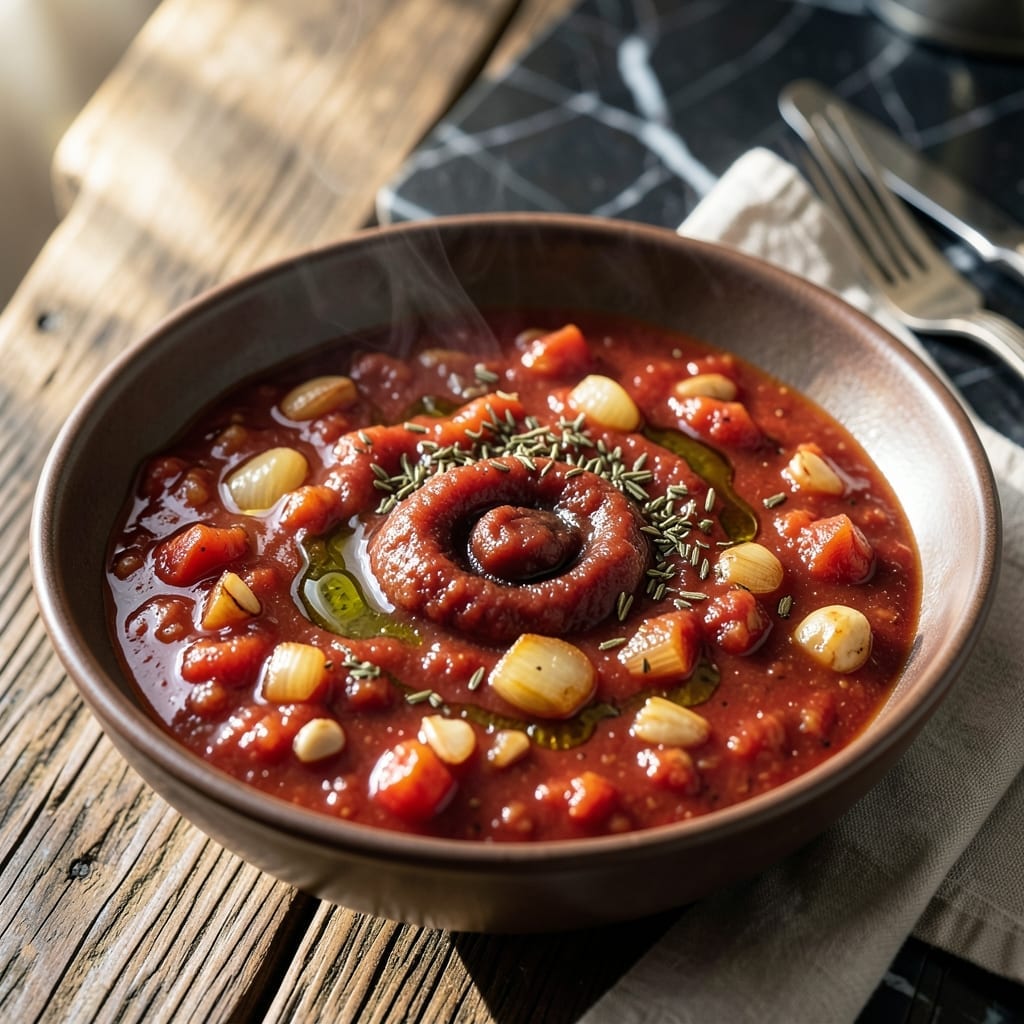
This tomato sauce transforms humble pantry staples into a rich, deeply flavored base for countless dishes. The secret lies in properly blooming the tomato paste to develop its natural sweetness and complexity.
You’ll achieve a velvety texture and concentrated flavor that elevates pasta, pizza, or stews. This versatile sauce stores beautifully in the fridge or freezer for quick meals.
Ingredients for Tomato Sauce Recipe with Tomato Paste
Pantry staples transform into rich, velvety sauce with tomato paste depth.
| Ingredient | Amount | Notes |
|---|---|---|
| Tomato Paste 🍅 | ¼ cup | Double-concentrated preferred for depth |
| Canned Crushed Tomatoes 🍅 | 2 cups | San Marzano variety ideal |
| Extra-Virgin Olive Oil 🫒 | ¼ cup | Cold-pressed for best flavor |
| Yellow Onion 🧅 | 1 whole | Finely diced for even melting |
| Garlic Cloves 🧄 | 4 cloves | Minced to release aromatic oils |
| Dried Oregano 🌿 | 1 tbsp | Mediterranean variety preferred |
| Dried Basil 🍃 | 1 tbsp | Crushed by hand for freshness |
| Sea Salt 🧂 | 1 tsp | Fine grain for even distribution |
| Black Pepper 🌶️ | ½ tsp | Freshly ground for maximum aroma |
| Red Pepper Flakes 🌶️ | ½ tsp | Adjust to desired heat level |
[recipe_ingredient_scaler]
The tomato paste is critical here—Mutti or Amore brands bloom beautifully. San Marzano crushed tomatoes add natural sweetness, but any good-quality canned variety works. For the olive oil, California Olive Ranch or a trusted imported brand ensures clean flavor. The onion should be fresh and firm, not sprouting or soft. Garlic from a local farmers market often has more pungency than grocery store cloves.
No fresh herbs? Dried oregano and basil work perfectly—just crush them between your fingers before adding. For a smoother texture, blend the crushed tomatoes briefly before cooking. Red pepper flakes can be omitted for a milder sauce or increased for heat. If you lack onion, shallots at one-third the amount provide a delicate alternative, though the flavor profile will shift slightly.
This sauce keeps 5 days refrigerated in an airtight container. For longer storage, freeze in ice cube trays for up to 6 months. The flavor deepens after a day, making leftovers ideal for quick weeknight meals. Always thaw frozen portions in the refrigerator overnight before reheating gently.
Why You’ll Love This Recipe
- Minimal Chopping Required: I just dice one onion and mince a few garlic cloves—no fancy prep here.
- Deep, Rich Taste: The tomato paste caramelizes in the oil, giving it this intense, sweet depth that crushed tomatoes alone can’t match.
- Freezes Like a Dream: I double the batch and stash half in the freezer for those nights I’m too tired to cook.
- Budget Stretch: A $2 can of paste and crushed tomatoes feeds my family for two meals—honestly, it’s my cheapest win.
Step-by-Step Instructions for Tomato Sauce With Paste
Build deep, complex flavor through careful layering of ingredients and controlled simmering.
Step 1: Sauté Aromatics in Olive Oil
Heat the 0.25 cup extra-virgin olive oil in a heavy-bottomed saucepan over medium-low heat. Add the finely diced yellow onion and cook for 8-10 minutes, stirring occasionally, until completely translucent and beginning to caramelize at the edges.
This slow cooking develops the onion’s natural sugars, creating a sweet foundation for your sauce. Avoid rushing this step—browned or burnt onions will impart bitter notes that overpower the final result.
Step 2: Bloom Spices and Incorporate Tomato Paste
Add the minced garlic cloves, 1 tbsp dried oregano, 1 tbsp dried basil, 1 tsp sea salt, 0.5 tsp black pepper, and 0.5 tsp red pepper flakes to the onions. Stir constantly for 1 minute until the garlic releases its aroma and the spices become fragrant.
Immediately add the 0.25 cup tomato paste and cook for 2-3 minutes, stirring frequently. The paste should darken slightly in color, which indicates the raw flavor has mellowed and the natural sugars have begun to caramelize. This step is crucial for developing the sauce’s depth.
Step 3: Deglaze and Simmer the Sauce
Pour in the 2 cups canned crushed tomatoes, scraping the bottom of the pan to incorporate any browned bits. Stir well to combine all ingredients. The mixture will appear thick at first but will loosen as the tomatoes release their liquid.
Increase heat to medium and bring to a gentle simmer. Once simmering, reduce heat to low and let cook uncovered for 45-60 minutes, stirring every 10-15 minutes to prevent sticking. The sauce is ready when it has thickened significantly and developed a rich, deep red color.
Step 4: Adjust Consistency and Seasoning
After simmering, check the sauce’s thickness. If it appears too thick, thin with 1-2 tablespoons of water and simmer for an additional 5 minutes. Taste and adjust seasoning if needed, though the initial measurements should provide perfect balance.
The finished sauce should coat the back of a spoon and have a velvety texture. The flavors will have melded into a harmonious blend with the tomato paste providing a rich, concentrated base and the herbs offering aromatic complexity.
Pro Tips For Making Tomato Sauce Recipe With Tomato Paste
- Cook the Paste: Sauté the tomato paste in olive oil for 2-3 minutes until it deepens in color—this removes the raw taste and builds a richer base. I learned this the hard way after wondering why my sauce tasted flat.
- Bloom the Garlic: Add minced garlic to the onions only after they’ve softened, then cook for 30 seconds max. Any longer and it turns bitter—sounds obvious, but I’ve ruined more than one batch by rushing.
- Skip the Water: Use the crushed tomatoes straight from the can without draining or adding water. The liquid helps break down the paste and creates the right consistency—no thin, sad sauce here.
- Simmer Uncovered: Once everything’s combined, let it bubble away uncovered for 20-30 minutes. This thickens the sauce naturally and concentrates the flavors—yes, even if you’re impatient like me.
Dietary Considerations for These Flavors
Vegan-Friendly Base
This sauce is naturally 100% plant-based, making it perfect for vegan diets. No animal products are used in the recipe, and it relies solely on vegetables, herbs, and olive oil for its rich, savory depth. 🌱
Gluten-Free Certified
All ingredients in this sauce—tomato paste, crushed tomatoes, olive oil, and spices—are inherently gluten-free. Just ensure your dried herbs and spices are labeled gluten-free to avoid cross-contamination.
Low-Calorie Option
Each serving contains approximately 70-80 calories, depending on portion size. The sauce is fat-free except for the healthy olive oil used, which adds heart-friendly monounsaturated fats.
Sodium Considerations
To reduce sodium, use low-sodium crushed tomatoes and no-salt-added tomato paste. I often cut the sea salt in half and let everyone adjust at the table.
Allergen-Free
This sauce is free from the top 8 common allergens: dairy, eggs, wheat, soy, fish, shellfish, peanuts, and tree nuts. Always check labels on canned goods to confirm.
Nightshade Sensitivity
Since tomatoes are nightshades, those with sensitivities should avoid this. For a nightshade-free alternative, try a cream-based sauce with roasted carrots and cashews.
Nutrition Facts
Frequently Asked Questions
Why do I need to cook the tomato paste first?
Cooking the paste first removes its raw, bitter edge and deepens its natural sweetness. This step, called blooming, takes just 2-3 minutes but makes a huge difference in flavor.
Can I use fresh tomatoes instead of crushed?
Yes, but you’ll need about 8-10 medium tomatoes for equivalent volume. Peel and seed them first for a smoother texture. Canned are more consistent for this recipe.
How do I fix a sauce that’s too acidic?
A pinch of sugar or 1/4 tsp baking soda balances acidity. Stir well and taste before adding more. The sauce will mellow as it simmers too.
What’s the best way to store leftovers?
Cool completely, then refrigerate in an airtight container for up to 5 days. For longer storage, freeze in ice cube trays for 6 months.

Trained in classic French technique but raised on slow-cooked ribs and spicy rubs, she blends culinary skill with smoke and soul.
- Recipe for Boneless Pork Chops in Cast Iron Skillet: Sear and Baste to Juicy Perfection - October 3, 2026
- Recipe for Boneless Cross Rib Roast: Slow-Roasted Beef with Herb Crust - October 3, 2026
- Hamburgers in Sauce Recipe Crock Pot: Slow-Cooked Savory Delight - October 3, 2026