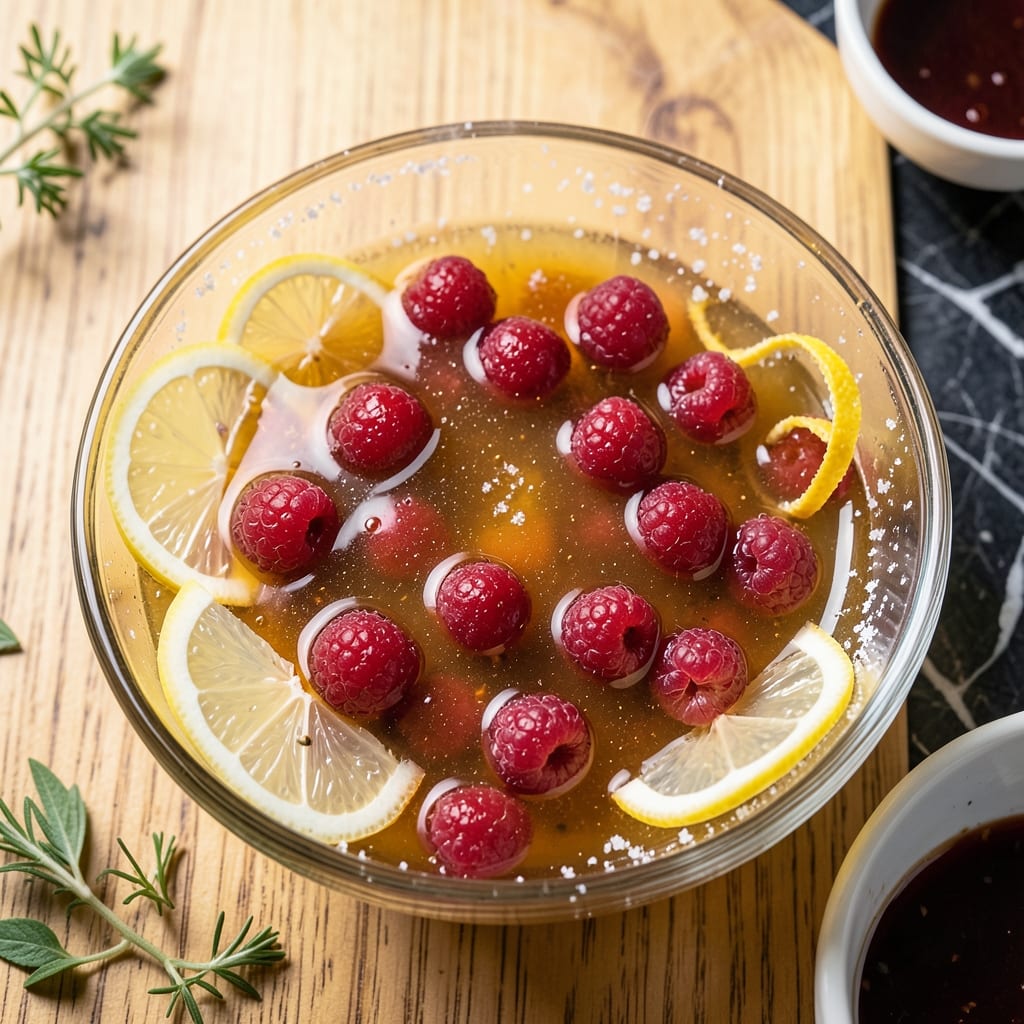
This glossy fruit glaze transforms ordinary cakes into professional-quality desserts with minimal effort. I developed this recipe after testing multiple versions to achieve that perfect mirror-like finish on fruit-topped cakes.
A simple combination of sugar, fruit juice, and gelatin creates a smooth, transparent coating that enhances the appearance of fresh fruit. The process takes less than 15 minutes and requires no special equipment.
What you get is a brilliant sheen that makes berries and other fruits look freshly polished. It sets firmly enough to hold its shape when sliced but remains tender to the bite.
Perfect for German-style fruit tarts, cheesecakes, or any dessert where you want to showcase fresh fruit. Here’s how to make it at home.
Ingredients for Tortenguss
Seven simple ingredients create that mirror-like finish for fruit-topped desserts.
| Ingredient | Amount | Notes |
|---|---|---|
| Granulated Sugar 🍚 | 1 cup | Fine white sugar preferred |
| Clear Fruit Juice 🍇 | ¾ cup | Apple or white grape works best |
| Unflavored Gelatin 💊 | 1 tbsp | Powdered, approximately 3 envelopes |
| Cold Water 💧 | ¼ cup | For blooming gelatin |
| Lemon Juice 🍋 | 1 tbsp | Freshly squeezed for brightness |
| Light Corn Syrup 🧴 | 2 tbsp | Adds gloss and prevents crystallization |
| Vanilla Extract 🌿 | ½ tsp | Pure vanilla for depth |
[recipe_ingredient_scaler]
The gelatin is key here—Knox unflavored gelatin is widely available at any grocery store. For the fruit juice, choose something light and clear like white grape or apple juice (avoid citrus, which can affect setting). The sugar should be fine granulated—C&H or Domino work perfectly. I always keep a box of gelatin in the pantry specifically for this glaze.
No gelatin? Agar-agar at equal amounts works for a vegetarian alternative (though texture differs slightly). Short on corn syrup? Honey or agave at the same quantity can substitute, but the glaze may darken. The vanilla is optional but adds wonderful depth—Nielsen-Massey is my go-to brand. For extra shine, some cooks add a teaspoon of glycerin (found at baking supply stores).
The glaze keeps in an airtight container at room temperature for 2 weeks. Once applied to fruit, the cake should be served within 2-3 days for best appearance. Don’t refrigerate the finished cake—it can make the glaze weep.
Why You’ll Love This Recipe
- 5-Minute Magic: I bloom the gelatin while the juice heats, and that’s the hardest part—honestly.
- Bright & Tangy: The lemon juice cuts the sweetness just enough that the fruit flavor pops.
- Dresses Anything: I’ve poured it over berries, sponge cake, even ice cream and it works every time.
- Keeps for Days: Leftovers set firm in the fridge, so I can slice and serve straight from the bowl.
Step-by-Step Instructions for Glossy Fruit Glaze
This method creates a mirror-like finish that transforms your cakes into showstoppers.
Step 1: Bloom the Gelatin Properly
Sprinkle the 1 tbsp Unflavored Gelatin evenly over the 0.25 cup Cold Water in a small bowl. I always use cold water here—warm water can cause the gelatin to clump. Let it sit undisturbed for 5-7 minutes until the mixture becomes thick and spongy, with no dry spots remaining.
This blooming step is crucial—it allows the gelatin to hydrate fully before heating, which ensures a smooth, lump-free glaze. Don’t stir during this time, or you’ll create unwanted clumps that will ruin the texture of your final product.
Step 2: Heat the Sugar and Liquid Base
In a small saucepan, combine the 1 cup Granulated Sugar, 0.75 cup Clear Fruit Juice, 2 tbsp Light Corn Syrup, and 1 tbsp Lemon Juice. Place over medium heat and stir just until the sugar begins to dissolve—this prevents hot spots from forming.
Once the mixture starts to bubble gently at the edges, stop stirring and let it come to a full, rolling boil. This should take about 3-4 minutes. Watch for the sugar to completely dissolve and the liquid to become slightly syrupy, but don’t let it darken or caramelize.
Step 3: Incorporate the Gelatin Mixture
Remove the sugar mixture from the heat. Now add the bloomed gelatin mixture, stirring constantly with a whisk for 1-2 minutes until the gelatin fully dissolves. The heat from the sugar syrup will melt the gelatin completely, creating a smooth, slightly thickened base.
At this point, the mixture should look clear and glossy, with no visible gelatin strands. If you notice any undissolved bits, return the pan to low heat for 30 seconds and whisk vigorously. This ensures your glaze will set perfectly later.
Step 4: Add Flavor and Cool Slightly
Stir in the 0.5 tsp Vanilla Extract and let the glaze cool at room temperature for 5-10 minutes. The vanilla adds depth, but don’t add it too early—high heat can cause the alcohol in the extract to evaporate, dulling the flavor.
As it cools, the glaze will thicken slightly but should still be pourable. Test the consistency by drizzling a small amount from a spoon—it should ribbon smoothly and pool slightly before spreading out. If it’s too thin, let it cool a bit longer.
If it thickens too much before you’re ready to use it, gently reheat over low heat for 10-15 seconds, stirring constantly. Be careful not to overheat, or the gelatin may lose its setting power.
Step 5: Apply to Cake for the Perfect Finish
Place your cake on a wire rack set over a baking sheet to catch drips. Pour the glaze over the top in a steady stream, starting at the center and working outward in a spiral motion. Use a spatula to gently coax the glaze over the edges if needed.
Let the glaze set for 15-20 minutes at room temperature. You’ll know it’s ready when it’s firm to the touch but still has a beautiful, glass-like sheen. Avoid moving the cake during this time to prevent streaks or uneven coverage.
For best results, apply the glaze to a completely cooled cake. If the cake is even slightly warm, the glaze may slide off or absorb unevenly, ruining the smooth finish you worked so hard to achieve.
Pro Tips For Making Tortenguss
- Bloom the Gelatin: Always dissolve the unflavored gelatin in cold water first and let it sit for 5-10 minutes—it’ll swell properly and prevent lumpy tortenguss. I learned this the hard way after my first three attempts came out grainy.
- Use Clear Juice Only: Skip pulpy or cloudy fruit juices; they’ll make your glaze dull instead of that beautiful glossy finish. My grandmother swore by strained apple or white grape juice for the best results.
- Heat Gently: Warm the juice and sugar mixture over low heat, stirring constantly. After burning one batch by cranking the heat, I now keep it just warm enough to dissolve the sugar without boiling.
- Add Lemon Last: Stir in the lemon juice after removing the mixture from heat. Sounds weird, but it works: adding it too early can break down the gelatin and weaken the set.
Creative Variations of This Recipe
Fruit-Infused Variations
Swap the apple or white grape juice for raspberry or strawberry juice to create a vibrant pink glaze. I use Kern’s raspberry juice from the grocery store for a bold berry flavor that pairs perfectly with mixed fruit tarts. Strain the juice first to remove pulp for the smoothest finish. 💛
Citrus Twist
Replace the lemon juice with orange or lime juice for a brighter, more complex flavor. Add 1 tsp of zest from the same citrus for extra aroma. This works especially well with tropical fruit-topped cakes like mango or pineapple.
Spiced Holiday Version
Stir in ¼ tsp ground cinnamon or ⅛ tsp ground cloves with the vanilla for a warm, spiced glaze. I love this with apple or pear desserts during the fall. The spices add depth without overpowering the fruit.
Chocolate Drizzle
Add 2 tbsp cocoa powder to the sugar mixture in Step 2 for a rich chocolate glaze. Reduce the fruit juice to ½ cup to maintain the right consistency. This creates a stunning contrast with strawberries or bananas.
Honey-Sweetened
Replace ½ cup of the sugar with ½ cup honey for a more complex, floral sweetness. This pairs beautifully with stone fruits like peaches or plums. The honey adds a subtle golden hue to the glaze.
Clear Glaze Option
For a completely transparent finish, use clear gelatin (like Great Lakes brand) and replace the sugar with 1 cup light corn syrup. This version lets the fruit colors shine through beautifully. ✨
Nutrition Facts
Frequently Asked Questions
Can I use fresh fruit instead of juice?
Yes, but strain the pureed fruit well to remove pulp. Use ¾ cup of strained puree in place of juice. The texture may be slightly thicker, so thin with 1-2 tbsp water if needed.
How long does the glaze last on a cake?
Once applied, it stays fresh for 2-3 days at room temperature. For longer storage, keep the unused glaze in an airtight container for up to 2 weeks.
Why did my glaze turn cloudy?
This usually happens if the gelatin wasn’t fully dissolved or the mixture boiled too vigorously. Next time, whisk constantly on low heat until completely clear.

Trained in classic French technique but raised on slow-cooked ribs and spicy rubs, she blends culinary skill with smoke and soul.
- Recipe for Boneless Pork Chops in Cast Iron Skillet: Sear and Baste to Juicy Perfection - October 3, 2026
- Recipe for Boneless Cross Rib Roast: Slow-Roasted Beef with Herb Crust - October 3, 2026
- Hamburgers in Sauce Recipe Crock Pot: Slow-Cooked Savory Delight - October 3, 2026