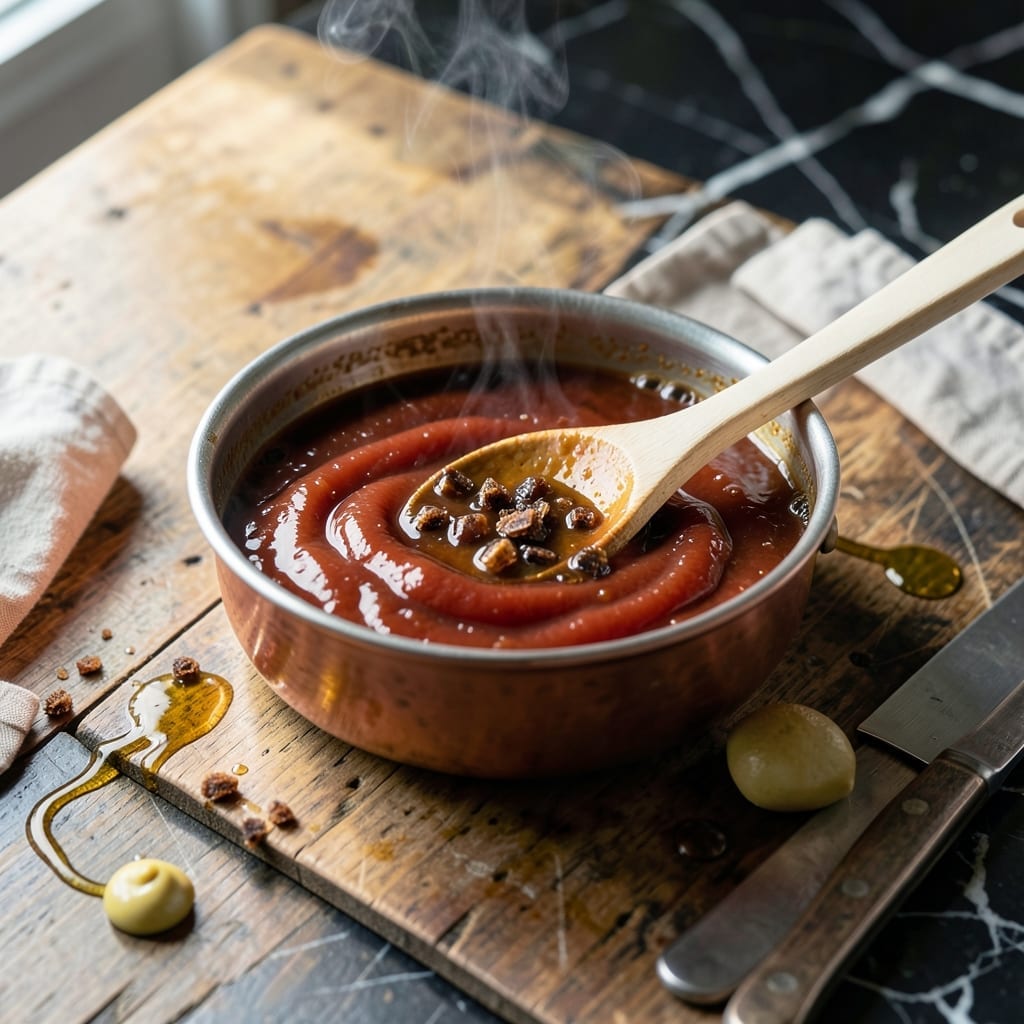
I developed this sauce after years of competing in local BBQ events, perfecting the balance between sweet molasses and tangy vinegar. It delivers that classic traditional flavor profile without any shortcuts.
The slow simmering process allows the ingredients to meld into a thick, glossy sauce that clings to ribs or chicken. This is the kind of condiment that elevates simple grilled meats to competition-level quality.
Ingredients for Traditional Barbecue Sauce
Ten ingredients meld into that classic competition-ready barbecue sauce everyone craves.
| Ingredient | Amount | Notes |
|---|---|---|
| Molasses 🍯 | 1 cup | Unsulphured for cleaner flavor |
| Apple Cider Vinegar 🍏 | ¾ cup | Raw, unfiltered preferred |
| Ketchup 🍅 | 1 ½ cups | High-quality for depth |
| Dark Brown Sugar 🧈 | ½ cup | Packed, for richness |
| Worcestershire Sauce 🫒 | 2 tbsp | Vegetarian version required |
| Dijon Mustard 🟡 | 2 tbsp | Smooth, no seeds |
| Garlic Powder 🧄 | 1 tbsp | Freshly ground preferred |
| Onion Powder 🧅 | 1 tbsp | Fine, consistent texture |
| Smoked Paprika 🌶️ | 1 tsp | For authentic smoke depth |
| Ground Black Pepper 🧂 | ½ tsp | Freshly ground for bite |
| Kosher Salt 🧂 | 1 tsp | Diamond Crystal brand ideal |
[recipe_ingredient_scaler]
The molasses and vinegar are non-negotiable for authentic depth. Unsulphured molasses avoids the bitter aftertaste of blackstrap, while raw apple cider vinegar delivers the sharp tang that defines traditional barbecue sauce. Heinz ketchup remains the professional standard, but Sir Kensington’s offers a more complex base. For the Worcestershire, Annie’s vegetarian version ensures compliance without sacrificing umami.
No molasses? Honey or dark corn syrup can substitute (though honey isn’t vegan), but expect a slightly different profile. White vinegar plus a pinch of sugar mimics apple cider vinegar in a pinch. Skip the Dijon? Yellow mustard at double the quantity works, though the flavor shifts subtly. Fresh minced garlic and onion can replace the powders at a 3:1 ratio—just cook them into the sauce first.
This sauce keeps 1 month refrigerated in an airtight container. For longer storage, freeze in ice cube trays, then transfer to bags. The flavors deepen after 24 hours, so make it a day ahead if possible.
Why You’ll Love This Recipe
- One Pot Wonder: I just dump everything in a saucepan and let it simmer—no fancy steps, no fuss.
- Sweet & Tangy Balance: Molasses and apple cider vinegar give that deep, rich flavor with just the right kick.
- Grill Night Hero: Slather it on ribs, chicken, or even veggie burgers—it works for everything.
- Makes a Jar: I always double the batch because it keeps for weeks, and I use it on literally everything.
Step-by-Step Instructions for Traditional Barbecue Sauce
This time-tested method delivers that classic balance of sweet, tangy, and smoky flavors.
Step 1: Combine the Liquid Base
In a medium saucepan, whisk together the 1 cup Molasses, 0.75 cup Apple Cider Vinegar, and 1.5 cups Ketchup until fully combined. The molasses will be thick and resist mixing at first, but persistence pays off. Place the pan over medium heat.
This liquid foundation creates the sauce’s signature depth. The molasses adds richness, the vinegar provides tang, and the ketchup contributes both sweetness and body. You’ll notice the mixture darken slightly as it begins to warm.
Step 2: Incorporate Sweet and Savory Elements
Add the 0.5 cup Dark Brown Sugar, 2 tbsp Worcestershire Sauce, and 2 tbsp Dijon Mustard. Stir continuously as the sugar dissolves, which should take 2-3 minutes. The sugar will create a glossy sheen on the surface as it melts into the liquid.
The Worcestershire sauce adds umami depth while the Dijon mustard provides a subtle sharpness that balances the sweetness. This is where the sauce begins to develop its complex flavor profile. Watch for the mixture to thicken slightly as the sugar incorporates fully.
Step 3: Build Flavor with Spices
Stir in the 1 tbsp Garlic Powder, 1 tbsp Onion Powder, 1 tsp Smoked Paprika, 0.5 tsp Ground Black Pepper, and 1 tsp Kosher Salt. The spices will bloom as they hit the warm liquid, releasing their aromas.
The smoked paprika is particularly important—it delivers that authentic barbecue character. After adding the spices, reduce the heat to medium-low to prevent burning. The mixture should now have a deep, reddish-brown color and a rich, complex aroma.
Step 4: Simmer to Perfection
Let the sauce simmer uncovered for 15-20 minutes, stirring occasionally. You’ll notice it gradually thicken and develop a glossy consistency. The sauce should reduce by about a third and coat the back of a spoon when it’s ready.
This simmering time allows all the flavors to meld together. The vinegar’s sharpness will mellow while the molasses and sugar caramelize slightly. Taste and adjust seasoning if needed, though the measured ingredients should provide perfect balance.
Pro Tips For Making Traditional Barbecue Sauce
- Simmer Low and Slow: I learned this the hard way—boiling the sauce makes the molasses and sugars separate. Keep it at a gentle simmer for 15-20 minutes, stirring often.
- Balance the Vinegar: Apple cider vinegar can overpower if you’re heavy-handed. Start with half the amount you think you need, then adjust to taste after the sauce has reduced.
- Skip the Raw Sugar: Dark brown sugar dissolves faster and smoother than raw sugar, which can leave a gritty texture. Trust me, the sauce will be silkier.
- Bloom the Spices: If you’re adding garlic or onion powder, toast them in the pot for 30 seconds before adding liquids—it wakes up the flavor. Sounds weird, but it works.
Pro Cooking Tips for Perfect Results
Perfect Simmer Technique
Keep your sauce at a gentle simmer, not a rolling boil. I use a heavy-bottomed saucepan to prevent hot spots. A candy thermometer clipped to the side helps monitor temperature—aim for 200-210°F for ideal thickening without scorching. 🌡️
Stirring Strategy
Stir every 2-3 minutes during the 15-20 minute simmer. Use a wooden spoon to scrape the bottom, preventing sugar from sticking. The sauce will darken and thicken as moisture evaporates.
Consistency Check
Test doneness by dragging your spoon through the sauce. If it leaves a clean path that slowly fills in, it’s ready. For competition-style thickness, simmer an extra 5 minutes but watch closely to avoid over-reduction.
Flavor Balancing
Taste before finalizing—this is where my French training kicks in. If too sweet, add 1 tsp vinegar. Too tangy? Stir in 1 tbsp brown sugar. Remember, flavors intensify as it cools. 💡
Resting Period
Let the sauce rest 10 minutes off heat before using. This allows flavors to fully meld. I often make it the day before—after 24 hours in the fridge, the depth is incredible.
Tool Recommendation
Invest in a silicone spatula for scraping every last drop. My go-to is OXO’s heat-resistant version. Also, a fine-mesh strainer removes any undissolved spices if needed.
Nutrition Facts
Frequently Asked Questions
Can I use honey instead of molasses?
Yes, but expect a lighter, sweeter profile. Use 3/4 cup honey to replace 1 cup molasses, as honey is sweeter. Note that this change makes it non-vegan and slightly less complex in flavor.
Why does my sauce taste too vinegary?
Balance it with 1-2 tbsp brown sugar or simmer longer to mellow the acidity. The vinegar sharpness softens as the sauce reduces, so patience often solves this issue.
How long can I store homemade sauce?
It keeps 1 month refrigerated in an airtight container. For longer storage, freeze in ice cube trays for up to 3 months. Flavor improves after 24 hours.
Can I make this sauce ahead of time?
In fact, it’s better the next day. Prepare up to 3 days in advance for maximum flavor development. Store in the fridge and reheat gently before serving.

Trained in classic French technique but raised on slow-cooked ribs and spicy rubs, she blends culinary skill with smoke and soul.
- Recipe for Boneless Pork Chops in Cast Iron Skillet: Sear and Baste to Juicy Perfection - October 3, 2026
- Recipe for Boneless Cross Rib Roast: Slow-Roasted Beef with Herb Crust - October 3, 2026
- Hamburgers in Sauce Recipe Crock Pot: Slow-Cooked Savory Delight - October 3, 2026