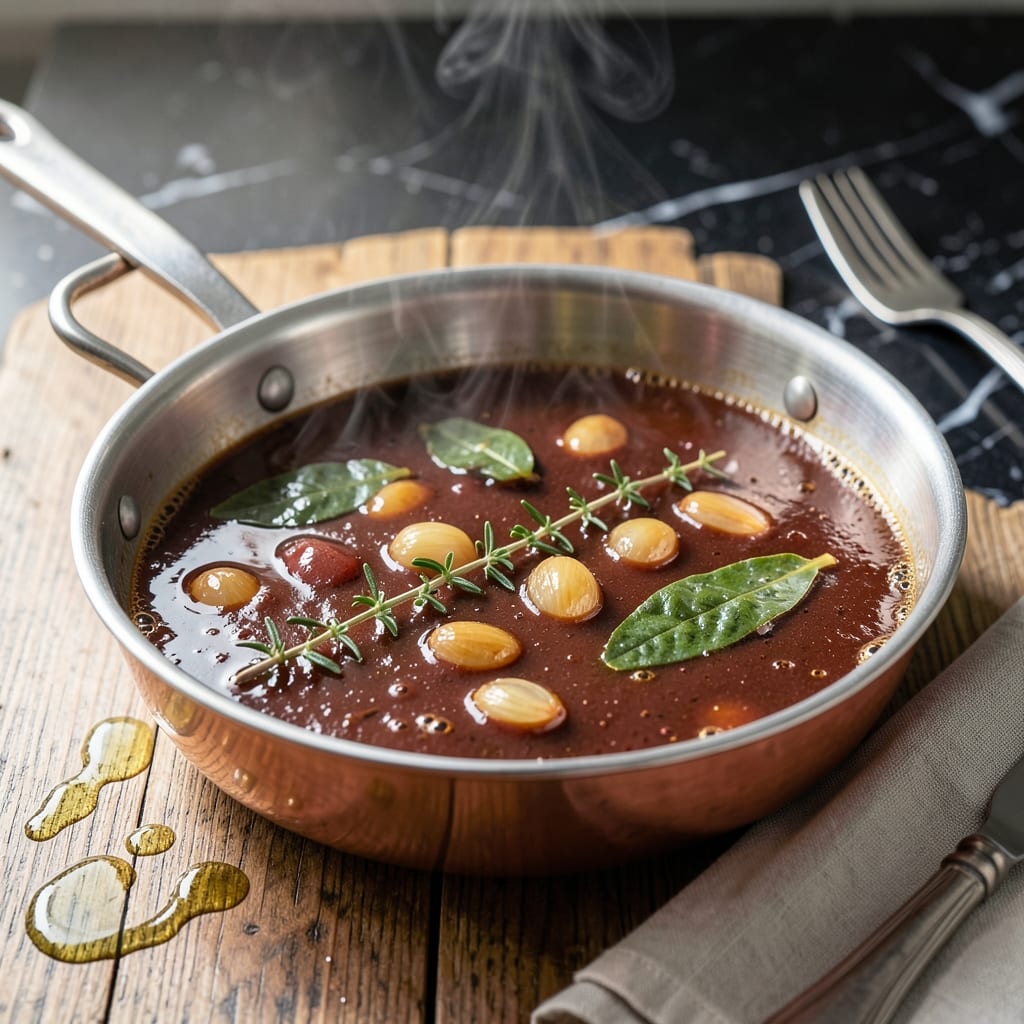
Classic French technique meets bold flavor in this authentic sauce that elevates any steak to restaurant quality. The foundation is a rich red wine reduction, slowly simmered with shallots and aromatics until deeply concentrated.
What makes this version special is the balance between tradition and practicality. The wine reduces by half, then beef stock joins the party, creating layers of complexity without hours of work. A finish of cold butter adds that signature velvety texture.
You’ll end up with a glossy, deeply flavored sauce that’s both tangy and robust. It clings perfectly to grilled meats, transforming a simple steak into something extraordinary. The process is precise but straightforward.
Use it immediately or store for up to three days. The flavor only improves with time.
Ingredients for Traditional Bordelaise Sauce
A few quality ingredients transform into a deeply concentrated, restaurant-worthy French classic.
| Ingredient | Amount | Notes |
|---|---|---|
| Dry Red Wine 🍷 | 2 cups | Bold, dry variety preferred |
| Shallots 🧅 | ½ cup | Finely minced for even flavor |
| Beef Stock 🥩 | 1 ½ cups | Low-sodium for reduction control |
| Unsalted Butter 🧈 | ½ cup | Cold, cubed for emulsification |
| Fresh Thyme Sprigs 🌿 | 4 whole | For aromatic infusion |
| Bay Leaves 🍃 | 2 whole | Dried, for depth of flavor |
| Black Peppercorns 🌶️ | 1 tsp | Lightly crushed for extraction |
| Kosher Salt 🧂 | ½ tsp | Diamond Crystal preferred for balance |
[recipe_ingredient_scaler]
The wine is critical here—opt for a bold, dry Bordeaux or Cabernet Sauvignon from a reputable producer. Whole Foods or Total Wine have solid options in the $10-$15 range. Shallots should be firm and dry, without green shoots. For the beef stock, Better Than Bouillon paste or homemade stock yields the richest results. Fresh thyme is ideal, but dried can work in a pinch.
No red wine? Substitute 1.5 cups beef broth with 0.5 cup balsamic vinegar for acidity. Shallot shortage? Yellow onion at a 1:1 ratio works, though the flavor will be slightly sharper. Dried thyme can replace fresh at one-third the amount. Skip the bay leaves if needed, but the peppercorns add essential complexity to the reduction.
This sauce keeps beautifully. Store in an airtight container in the fridge for up to 3 days—the flavors deepen over time. Reheat gently to avoid breaking the emulsion. For longer storage, freeze in ice cube trays for up to 3 months.
Why You’ll Love This Recipe
- One-Pot Wonder: I love that everything—shallots, wine, stock—simmers together in one pan while I focus on the rest of the meal.
- Deep, Rich Taste: The dry red wine and beef stock reduce down to this velvety, umami-packed sauce that clings to steak like a dream.
- Steakhouse at Home: Honestly, this is my secret to making weeknight dinners feel like a fancy night out. (Yes, even on a Tuesday night)
- Budget Luxury: A bottle of affordable red wine and a few pantry staples stretch into a sauce that tastes like it cost way more.
Step-by-Step Instructions for Traditional Bordelaise Sauce
Master the classic French technique with this authentic reduction method for a deep, wine-infused sauce.
Step 1: Reduce the Wine with Aromatics
Combine the 2 cups dry red wine and 0.5 cup shallots in a heavy saucepan over medium-high heat. I prefer a wide, shallow pan for faster reduction. Add the 4 whole fresh thyme sprigs, 2 whole bay leaves, and 1 tsp black peppercorns to the wine mixture.
Bring to a boil, then reduce heat to maintain a gentle simmer. Cook for 10-12 minutes until the liquid reduces by about half and the shallots soften. You’ll know it’s ready when the wine loses its harsh alcohol smell and takes on a deeper, more concentrated aroma. Stir occasionally to prevent sticking.
Step 2: Incorporate the Beef Stock
Add the 1.5 cups beef stock to the reduced wine mixture. Return to a simmer and continue cooking for another 8-10 minutes until the liquid reduces further. The sauce should coat the back of a spoon but still be thin enough to pour easily.
This is where the magic happens—the beef stock adds richness and body while the wine provides depth. Watch for the sauce to develop a glossy sheen as it thickens. If it reduces too quickly, lower the heat slightly. The mixture should look syrupy but not paste-like at this stage.
Step 3: Strain and Finish with Butter
Remove the sauce from heat and strain through a fine-mesh sieve into a clean saucepan, pressing gently on the shallots to extract all flavor. Discard the solids. Return the strained sauce to low heat.
Gradually whisk in the 0.5 cup cold unsalted butter, one cube at a time, until fully emulsified and the sauce takes on a velvety texture. This technique, called “monter au beurre,” gives bordelaise its signature glossy finish and luxurious mouthfeel. Season with 0.5 tsp kosher salt, adjusting to taste.
Step 4: Validate and Serve
Check the sauce’s consistency—it should nappe (coat the back of a spoon) without being too thick. If needed, adjust with a splash of water or stock. The final sauce should have a deep, complex flavor with the wine’s acidity balanced by the richness of the butter.
Serve immediately over grilled meats or roasted vegetables while still warm. Traditional bordelaise develops its full character when served fresh, as the flavors continue to meld. The sauce will thicken slightly as it cools, so keep it warm in a thermos or over a double boiler if not serving immediately.
Pro Tips For Making Traditional Bordelaise Sauce
- Reduce the Wine First: Simmer the dry red wine until it’s reduced by half before adding anything else—this concentrates the flavor and burns off the harsh alcohol. I learned this the hard way after my first batch tasted like boozy soup.
- Finely Dice Shallots: Chop the shallots as fine as you can stand; the smaller the pieces, the faster they’ll soften and distribute evenly through the sauce. Sounds tedious, but it actually changes the outcome.
- Skip the Salt Early: Hold off on seasoning until the very end, since the beef stock and wine reduction will intensify in flavor as they cook down. More than once, I’ve over-salted early and ruined a batch.
- Swirl in Cold Butter: Take the sauce off the heat and whisk in cold, cubed unsalted butter at the end for a glossy, velvety finish. My grandmother swore by this, and she was right: hot butter just melts into a greasy mess.
Pro Cooking Tips for This Dish
Wine Selection Matters
Choose a bold, dry Bordeaux or Cabernet Sauvignon for authentic flavor. I pick $10-$15 bottles from Total Wine—they reduce beautifully without breaking the bank. Avoid cooking wines; they lack depth. 🍷
Perfect Reduction Timing
Simmer the wine until it reduces by half—about 10-12 minutes. You’ll see the color deepen and the alcohol aroma disappear. A wide, shallow pan speeds this up while preventing scorching.
Butter Emulsion Technique
Whisk in cold, cubed butter off heat to create a silky texture. Add one cube at a time, waiting until fully incorporated. This “monter au beurre” method is non-negotiable for that signature velvety finish.
Aromatic Infusion
Don’t skip the thyme sprigs and bay leaves—they add subtle complexity during reduction. Gently press the shallots in the strainer to extract every bit of flavor before discarding solids.
Consistency Check
The sauce should coat the back of a spoon but remain pourable. If too thick, thin with 1-2 tbsp of warm water or stock. Test the nappe by running your finger through sauce on the spoon—it should leave a clean line. 💡
Serving Temperature
Serve warm, not boiling. Keep it in a thermos or over a double boiler if prepping ahead. The flavors meld best when served immediately over steaks or roasted veggies.
Nutrition Facts
Frequently Asked Questions
Can I use a different wine for the reduction?
Stick with a bold, dry red like Cabernet or Merlot. Avoid sweet wines as they’ll make your sauce cloying rather than rich. A $10-$15 bottle works perfectly for cooking.
Why does my sauce look separated?
Your butter may have been too warm or added too quickly. Remove from heat and whisk in an ice cube to help re-emulsify. The key is keeping everything cold during the final stage.
How do I know when it’s reduced enough?
Look for a syrupy consistency that coats a spoon. It should reduce by about half, taking 10-12 minutes for the wine stage. The color will deepen significantly when ready.
Can I make this ahead of time?
Yes, but store it without the butter. Reheat gently, then whisk in cold butter just before serving. Keeps in the fridge for up to 3 days.

Trained in classic French technique but raised on slow-cooked ribs and spicy rubs, she blends culinary skill with smoke and soul.
- Recipe for Boneless Pork Chops in Cast Iron Skillet: Sear and Baste to Juicy Perfection - October 3, 2026
- Recipe for Boneless Cross Rib Roast: Slow-Roasted Beef with Herb Crust - October 3, 2026
- Hamburgers in Sauce Recipe Crock Pot: Slow-Cooked Savory Delight - October 3, 2026