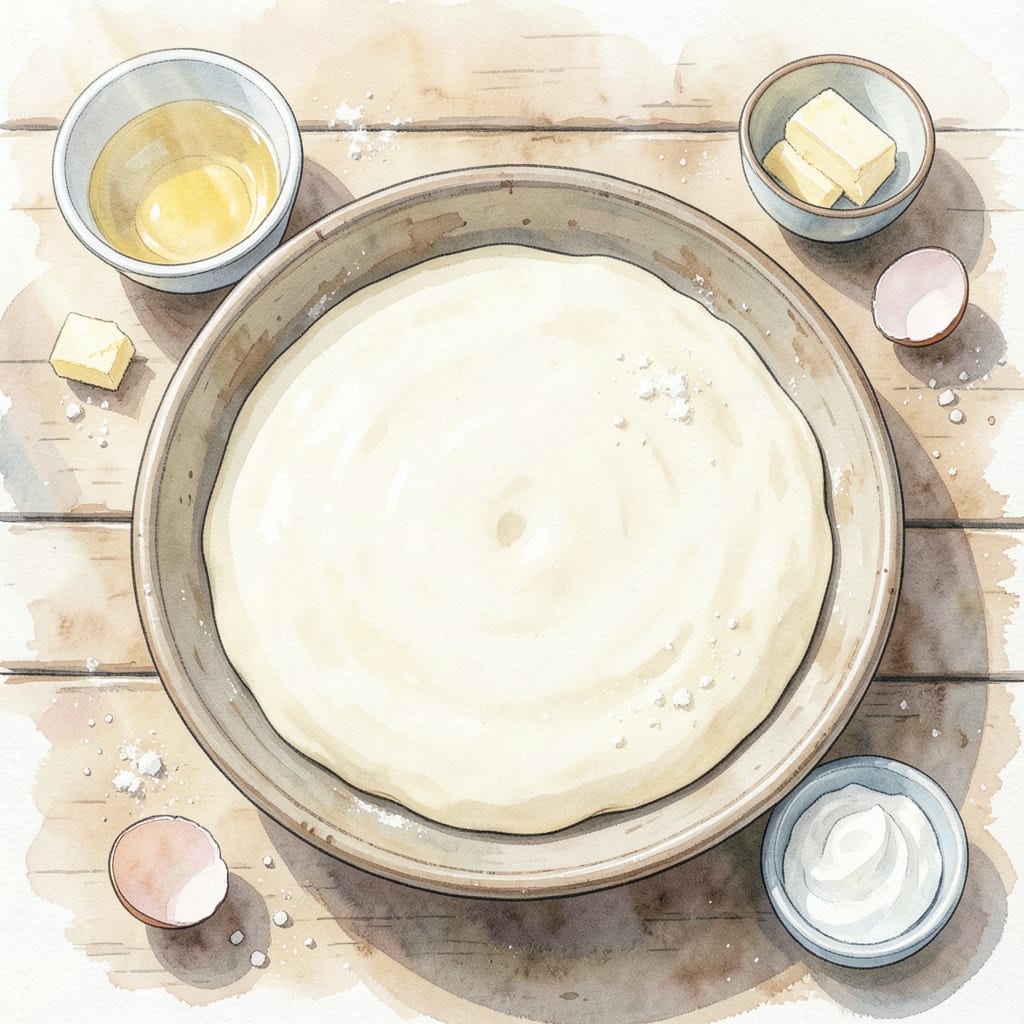
As a pitmaster with roots in traditional cooking, I’m excited to share my take on traditional pierogi dough, a staple of Polish comfort food. Making pierogi from scratch is a labor of love that requires patience and practice.
This foolproof recipe yields tender, elastic dough that’s perfect for wrapping your favorite fillings. With just a few simple ingredients – flour, water, egg, and salt – you’ll be on your way to creating delicious pierogi that are sure to become a family favorite.
Ingredients for Traditional Pierogi Dough
Gather these basic ingredients to make authentic Polish pierogi dough from scratch.
| Ingredient | Amount | Notes |
|---|---|---|
| All-Purpose Flour 🌾 | 2 ½ cups | Unbleached, all-purpose variety |
| Warm Water 💧 | 1 cup | About 100°F to 110°F |
| Large Egg 🥚 | 1 whole | Room temperature preferred |
| Salt 🧂 | 1 tsp | Kosher or sea salt |
| Sour Cream 🥛 | ¼ cup | Optional for richer dough |
| Unsalted Butter 🧈 | 2 tbsp | Melted, for dough elasticity |
[recipe_ingredient_scaler]
For the best results, use unbleached all-purpose flour with a high protein content—King Arthur or Bob’s Red Mill work well. The warm water should be about 100°F to 110°F for proper yeast activation, though there’s no yeast here. If you’re in a humid climate, reduce the water slightly.
The egg should be at room temperature for better dough incorporation. If you’re out of eggs, you can substitute with flax eggs or mashed banana, though the texture will be slightly different. For a richer dough, add sour cream—it makes the pierogi more tender.
This dough keeps well wrapped in plastic wrap at room temperature for up to 2 hours. For longer storage, refrigerate for up to 24 hours or freeze for up to 3 months. Let refrigerated dough come to room temperature before rolling out. If freezing, portion into manageable chunks first.
Step-by-Step Instructions for Traditional Pierogi Dough
Making authentic pierogi dough from scratch is easier than you think – let’s get started!
Step 1: Combine Dry Ingredients
In a large mixing bowl, whisk together 2.5 cups of All-Purpose Flour and 1 tsp of Salt until well combined. I like to use a fork for this – it’s gentler on the flour than a whisk. Make sure there are no lumps or uneven distribution of salt.
The flour should be lightly aerated after whisking – this helps create a more tender dough. Don’t skip this step, as it ensures even salt distribution throughout your dough.
Step 2: Mix Wet Ingredients and Combine Dough
In a separate bowl, whisk together 1 cup of Warm Water, 1 whole Large Egg, and 0.25 cup of Sour Cream until smooth. The mixture should be free of egg streaks and have a uniform consistency.
Create a well in the center of your dry ingredients and pour in the wet mixture. Using a fork, gently incorporate the flour into the wet ingredients, starting from the inner rim of the well. As you mix, you’ll notice the dough coming together – be careful not to overmix.
Step 3: Knead and Rest the Dough
Transfer the dough mixture to a lightly floured surface and knead for about 5-7 minutes until the dough becomes smooth and elastic. It should be slightly tacky but not sticky – if it’s too dry, add a splash of water; if too wet, add a bit more flour.
Form the dough into a ball and wrap it tightly in plastic wrap. Let it rest at room temperature for at least 30 minutes or up to 2 hours. This resting period allows the gluten to relax, making the dough easier to roll out later.
Step 4: Roll and Cut the Dough
Divide the rested dough into manageable portions – I like to cut it into quarters. Working with one piece at a time, roll it out on a lightly floured surface to about 1/8-inch thickness. Use a round cutter (about 3-4 inches diameter) to cut out circles. Gather the scraps, re-roll, and continue cutting until you’ve used all the dough.
The dough should be thin enough that you can see the outline of your hand through it when held up to the light. If it starts to stick, dust with a bit more flour as needed.
Best Sauces and Condiments for This Recipe
Traditional Polish Sauces
When it comes to serving pierogi, the right sauce can elevate the dish. Traditional Polish cuisine offers several classic options. Sour cream sauce is a popular choice, made by mixing sour cream with chopped fresh dill and a squeeze of lemon juice. You can also add some chopped chives or scallions for extra flavor.
Modern Twists
For a more modern take, consider a mushroom sauce made with sautéed wild mushrooms, garlic, and a splash of white wine. Another option is a tomato sauce with fresh tomatoes, onions, and herbs. These sauces add a rich, savory flavor to your pierogi.
Condiment Pairings
Don’t forget about condiments! Apple sauce is a classic pairing for fruit-filled pierogi, while sour cream or Greek yogurt can complement savory fillings. You can also try a horseradish sauce for a spicy kick. Experiment with different combinations to find your favorite.
Regional Inspirations
Different regions have their own unique sauce traditions. For example, some areas prefer a simple butter and onion topping, while others might use a fried bacon and sour cream combination.
Nutrition Facts

Trained in classic French technique but raised on slow-cooked ribs and spicy rubs, she blends culinary skill with smoke and soul.
- Recipe for Boneless Pork Chops in Cast Iron Skillet: Sear and Baste to Juicy Perfection - October 3, 2026
- Recipe for Boneless Cross Rib Roast: Slow-Roasted Beef with Herb Crust - October 3, 2026
- Hamburgers in Sauce Recipe Crock Pot: Slow-Cooked Savory Delight - October 3, 2026