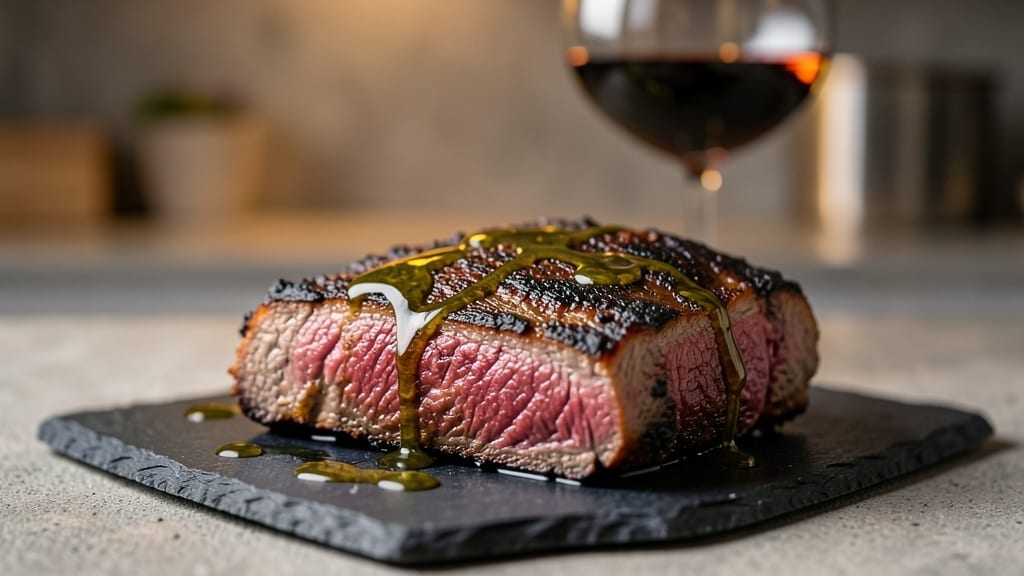
Mastering Traeger beef brisket transforms tough cuts into fall-apart tenderness that rivals any competition pit. The key lies in low-and-slow smoking paired with precise temperature control—something I perfected after years of backyard cookouts and French technique experiments.
This method ensures every bite delivers that perfect balance of smoky depth and melt-in-your-mouth texture, no matter your skill level.
The process begins with a simple yet critical preparation: trimming excess fat, applying a dry rub of salt, pepper, and smoked paprika, then letting the brisket rest overnight.
On the Traeger, we maintain a steady 225°F with hickory or oak wood chips for 12-16 hours, using the reverse sear technique to lock in juices. The result? A brisket that probes at 165°F with a bark so crisp it shatters at the slightest touch.
What you’ll end up with is a masterpiece of slow-cooked perfection—deeply aromatic, richly textured, and packed with flavor that lingers long after the last bite. The bark will be dark and caramelized, the fat cap rendered into golden flakes, and the meat so tender it practically dissolves on your tongue.
This isn’t just a brisket; it’s a centerpiece for any gathering, elevated by that unmistakable Traeger smoke.
Serve with classic sides like baked beans or a tangy coleslaw to complete the meal. The beauty of this recipe lies in its simplicity: minimal prep, hands-off cooking, and a result that feels like a professional pitmaster’s secret. Let’s get smoking!
Ingredients for traeger beef brisket
A few key ingredients transform brisket into smoky, melt-in-your-mouth perfection on the Traeger.
| Ingredient | Amount | Notes |
|---|---|---|
| Beef Brisket 🥩 | 5 lb | Flat cut, trimmed of excess fat |
| Kosher Salt 🧂 | ½ cup | Diamond Crystal preferred |
| Smoked Paprika 🌶️ | 2 tbsp | High-quality, not sweet |
| Freshly Ground Black Pepper 🌶️ | 1 tbsp | Coarse grind for texture |
| Granulated Garlic 🧄 | 1 tbsp | For even distribution |
| Onion Powder 🧅 | 1 tbsp | Freshly ground preferred |
| Brown Sugar 🍚 | 1 tbsp | Light or dark, no substitutes |
| Hickory Wood Chips 🌳 | 1 package | Or oak for milder smoke |
| Apple Cider Vinegar 🍎 | 2 tbsp | For bark development |
| Butter 🧈 | ½ cup | Unsalted, softened for basting |
| Yellow Onion 🧅 | 1 whole | Sliced for basting liquid |
| Fresh Thyme 🌿 | 4 sprigs | Or 1 tsp dried thyme |
| Beef Broth 💧 | 1 cup | Low-sodium, for spritzing |
[recipe_ingredient_scaler]
The brisket is non-negotiable here—look for flat cuts with good marbling at Costco or your local butcher. A 5-pound cut feeds a crowd, but don’t skimp on quality. Trim excess fat to 1/4-inch thickness—this helps with bark formation. For wood chips, Traeger’s own hickory is foolproof, but Oak gives a slightly sweeter profile. The kosher salt? Diamond Crystal dissolves better than table salt, so use that for the rub.
No smoked paprika? Substitute 1 tbsp regular paprika plus 1/2 tsp liquid smoke—it’s not identical, but close. Running short on time? Pre-mix the dry rub and store it in an airtight container for up to 6 months. The beef broth for spritzing can be swapped for apple juice or even water in a pinch, though it won’t add as much depth. Fresh thyme is ideal, but dried works at 1/3 the amount. Just make sure to toast it lightly in a dry pan first—trust me on this.
This brisket reheats like a dream—wrapped in foil at 300°F for 15 minutes keeps it moist. Store leftovers in the fridge for 5 days or freeze for 3 months. I always slice against the grain and portion into individual servings for easy reheating. The bark? Save the scraps—toss them in a paper bag with a splash of water and freeze for future rubs or broths.
Why You’ll Love This Recipe
- No Fuss, Just Flavor: Honestly, the dry rub with ½ cup kosher salt and 2 tbsp smoked paprika is my secret weapon—just mix it up ahead, and you’ve got a 6-month stash ready to go. No last-minute scrambling, no guessing. I’ll be real: that granulated garlic and onion powder blend hits different, but it’s all about the prep work upfront. Once you’ve got that rub prepped, the actual cooking is hands-off magic.
- Smoky Crust, Creamy Core: That ¼-inch fat cap on the brisket renders down into the butter basting for a bark so crisp it’ll make your mouth water, while the inside stays impossibly tender. The apple cider vinegar spritz every 90 minutes after the 3-hour mark? Game-changer. It keeps the bark from turning to leather while locking in that smoky depth from the hickory wood chips. You’ll want to lick the plate.
- Feeds a Crowd (or Your Cravings): This isn’t just for Sunday dinners—it’s the kind of dish that reheats like a dream (foil at 300°F for 15 minutes, thank you very much). Need leftovers? Make a double batch and freeze half for a future “I’m too tired to cook” night. My kids fight over the last slice, and honestly, that’s the best compliment. It’s also my go-to for game day or holiday gatherings because once you slice it against the grain, it’s that good.
- Budget-Friendly Luxury: A 5-pound brisket isn’t cheap, but it’s a steal when you consider how much you get—four servings that’ll have everyone begging for seconds. The low-sodium beef broth and fresh thyme keep costs down without sacrificing flavor, and that brown sugar in the rub adds just enough sweetness to balance the smokiness. It’s the kind of dish that makes you feel fancy without breaking the bank. Plus, the butcher paper wrap trick is cheaper than foil and just as effective. Win-win.
Step-by-step instructions for smoky brisket on the Traeger
Here’s the method that delivers melt-in-your-mouth tenderness with that perfect smoky crust every time.
Trim and Season the Brisket with Precision
Start by trimming the fat cap of the 5 lb beef brisket down to about ¼ inch thickness using a sharp boning knife. I leave just enough fat to protect the meat during the long cook while ensuring proper smoke penetration. Pat the surface completely dry with paper towels—this is non-negotiable for that crisp bark later.
In a small bowl, combine the ½ cup kosher salt, 2 tbsp smoked paprika, 1 tbsp freshly ground black pepper, 1 tbsp granulated garlic, 1 tbsp onion powder, and 1 tbsp brown sugar. Mix thoroughly to create an even dry rub. Apply this generously to all sides of the brisket, pressing it into the meat so it adheres well. The rub should look like it’s sticking to your fingers—this ensures maximum flavor penetration.
Prepare the Traeger for Low-and-Slow Cooking
Soak the 1 package hickory wood chips in water for at least 30 minutes before using. This prevents them from burning too quickly and creates cleaner smoke. Set your Traeger to 225°F and add the soaked wood chips. Maintain this temperature consistently—fluctuations will affect cook time and bark development.
Place the seasoned brisket fat-side up on the grill grates. The fat will render down and baste the meat as it cooks, creating that signature bark. I like to position the brisket away from direct heat sources to ensure even cooking. Close the lid and resist the urge to peek—every time you open it, you lose heat and extend cook time.
Spritz and Monitor for the Perfect Stall
Cook the brisket undisturbed for about 6 hours, or until the internal temperature reaches 165-170°F. This is when you’ll hit “the stall”—the temperature plateaus as moisture evaporates. Don’t panic; this is normal and expected. Here’s where the 2 tbsp apple cider vinegar and 1 cup beef broth come into play.
Every 90 minutes after the first 3 hours, remove the brisket and spritz both sides generously with a 50/50 mix of apple cider vinegar and beef broth. This keeps the surface moist, prevents a tough bark, and maintains that beautiful mahogany color. Return the brisket to the Traeger and continue cooking until the internal temperature reaches 200-205°F—this is when it becomes fork-tender.
Wrap and Finish for Maximum Tenderness
Once the brisket hits 200°F, it’s time to wrap it for the final push. Tear off a large piece of butcher paper (not foil—it breathes better) and place the brisket on it. Fold the paper tightly around the brisket, sealing all edges completely. This “Texas crutch” technique helps break down collagen and ensures fall-apart tenderness.
Return the wrapped brisket to the Traeger and cook until the internal temperature reaches 208-210°F, about 1-2 hours. The brisket should now be probe-tender—meaning a meat thermometer inserted into the thickest part slides in like butter with no resistance. This is the moment that matters: patience pays off here.
Rest and Slice for Juicy Perfection
Remove the brisket from the Traeger and transfer it to a cutting board. Tent loosely with foil and let it rest for at least 1 hour (I prefer 2 hours). This resting period allows the juices to redistribute throughout the meat, ensuring every slice is moist and flavorful. Don’t skip this step—it’s the difference between juicy perfection and dry disappointment.
Unwrap the brisket and locate the grain direction—you’ll see lines running through the meat. Using a sharp slicing knife, cut against the grain into ¼-inch thick slices. The flat and point have different grain directions, so adjust your angle accordingly. Serve immediately with the remaining ½ cup softened butter basted over the top and garnished with the 4 sprigs fresh thyme for an aromatic finish.
Pro Tips For Making Traeger Beef Brisket
- Soak Wood Chips Properly: I learned this the hard way—skipping the 30-minute water soak with the hickory wood chips turns your smoker into a fire hazard. The chips will burn too fast, giving you bitter smoke instead of clean, flavorful vapor. Trust me, the extra 30 minutes now saves you from a brisket tasting like a campfire.
- Press Rub Like Glue: The dry rub won’t stick if you just sprinkle it on. After mixing the ½ cup kosher salt and spices, press it into the brisket like you’re sealing an envelope—hard enough that it leaves marks on your fingers. This isn’t just seasoning; it’s flavor insurance.
- Spritz Early, Spritz Often: The stall hits around 6 hours, but if you wait until then to spritz with the apple cider vinegar and beef broth mix, you’re playing catch-up. Start every 90 minutes after the first 3 hours—this keeps the bark tender and the color rich before the critical stall phase.
- Wrap Tight, Wrap Right: Butcher paper, not foil—that’s the rule. I used foil once and ended up with a sad, steamed brisket. The paper lets just enough moisture escape to keep the meat tender while the brisket finishes. Seal those edges like you’re wrapping a gift, or you’ll regret it later.
Storing and reheating your traeger beef brisket
Fridge Storage Secrets
After your brisket cools for 2 hours post-smoking, wrap it tightly in butcher paper (not foil) and store it in an airtight container. This prevents drying out while allowing the bark to stay crisp.
I like using glass Pyrex containers because they keep the meat fresher longer. Store at 40°F or below for up to 5 days—the flavors actually deepen overnight as the spices meld together. 💡
Freezer Mastery
For long-term storage, slice your brisket against the grain first—this prevents freezer burn and makes reheating easier. Portion into freezer-safe bags (I use quart-sized for individual meals) and lay them flat to save space.
Label with the date—this brisket stays excellent for 3 months without losing texture or flavor. The key? Remove as much air as possible before sealing. ❄️
Reheating Like a Pro
My favorite method is wrapping sliced brisket in foil with a splash of beef broth and heating at 300°F for 15 minutes. This maintains that perfect bark while keeping the meat juicy.
For stovetop reheating, use a heavy-bottomed skillet on low heat with 1 tbsp water or broth per slice to prevent drying. Always check internal temp reaches 160°F before serving. 🔥
Microwave Rescue
When time is tight, microwave individual slices wrapped in a damp paper towel on 50% power for 1-2 minutes. Stir halfway and add a drizzle of beef broth if needed.
This method works best for smaller portions—just avoid overcooking the edges. I always add a sprinkle of smoked paprika after reheating to restore that smoky flavor. 💛
Bark Revival
If your brisket loses some bark crispness after reheating, don’t worry! Brush the slices with a mix of ½ cup melted butter and 1 tsp apple cider vinegar before serving. Pop it under the broiler for 2-3 minutes to revive that perfect crust.
This trick works wonders for leftovers and makes them taste almost as fresh as the day you smoked them. 🔥
Nutrition facts
Frequently asked questions
Why does my Traeger brisket need to rest after cooking?
The 1-hour to 2-hour rest lets juices redistribute evenly throughout the meat. Skipping this step means you’ll end up with dry slices instead of tender, juicy perfection. Think of it as letting the brisket “catch its breath” before serving—just like how you’d let a good steak rest before cutting!
Can I use foil instead of butcher paper for wrapping?
Butcher paper is the secret weapon here—it breathes slightly, allowing moisture to escape while keeping the brisket tender. Foil traps steam, which can make the meat soggy. If you’re in a pinch, use foil but wrap it loosely to let some air circulate. Trust me, the difference is noticeable!
How do I know when the brisket is done without a thermometer?
Look for a probe-tender test: insert a skewer or sharp knife into the thickest part. If it slides in like butter with no resistance, it’s ready! Also, the bark should be dark and crispy, and the fat cap should render into golden flakes. No thermometer? No problem!
What’s the best way to handle leftovers?
Slice against the grain first, then portion into freezer-safe bags. Reheat in foil at 300°F for 15 minutes to revive the bark. For extra flavor, brush with melted butter and a splash of apple cider vinegar before reheating. Leftovers taste almost as good as fresh—promise!
Why does my brisket have a tough bark?
A tough bark often means the surface dried out too much. Spritz with a 50/50 vinegar-broth mix every 90 minutes during cooking, and avoid opening the Traeger lid too often. If it’s already tough, try reviving it with a quick broil or a brush of butter and vinegar. Patience is key—don’t rush the process!

Trained in classic French technique but raised on slow-cooked ribs and spicy rubs, she blends culinary skill with smoke and soul.
- Smoked Brisket Recipe: Low and Slow to Fall-Apart Tenderness - November 2, 2026
- Smoked Turkey Breast Recipe: Juicy Pink Center With Crispy Skin Every Time - November 2, 2026
- Leftover Smoked Pulled Pork Chili Recipe: Rustic Flavor Revival in One Pot - November 2, 2026