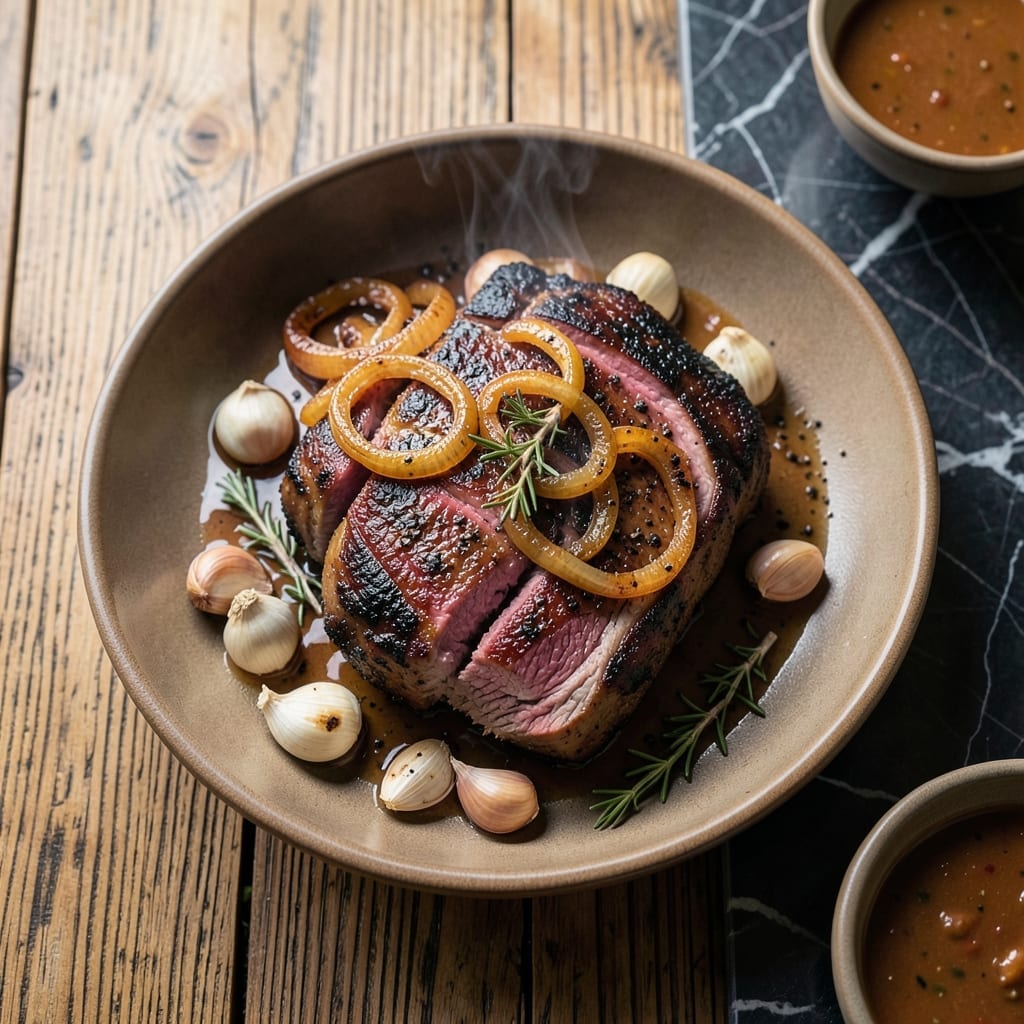
This method transforms tough chuck roast into fall-apart tender perfection with deep wood-fired flavor. The Traeger’s consistent heat and smoke infusion create a crust that locks in juices.
I developed this recipe after years of perfecting my smoke technique, blending classic French herb rubs with traditional pitmaster methods. The result is a dish that’s rich, aromatic, and restaurant-quality.
Ingredients for Traeger Grill Chuck Roast
Transform tough chuck roast with these wood-fired ingredients for fall-apart tenderness and deep flavor.
| Ingredient | Amount | Notes |
|---|---|---|
| Chuck Roast 🥩 | 3 lb | Well-marbled, trimmed of excess fat |
| Kosher Salt 🧂 | 1 ½ tbsp | Diamond Crystal preferred for even seasoning |
| Coarsely Ground Black Pepper 🌶️ | 1 tbsp | Freshly ground for maximum aroma |
| Garlic Powder 🧄 | 1 tbsp | Not garlic salt for pure flavor |
| Onion Powder 🧅 | 1 tbsp | Fine grind for even distribution |
| Dried Rosemary 🌿 | 1 tbsp | Crushed to release essential oils |
| Dried Thyme 🍃 | 1 tbsp | French variety if available |
| Smoked Paprika 🌶️ | 1 tsp | Adds depth to wood-fired profile |
| Olive Oil 🫒 | 2 tbsp | High smoke point for searing |
| Beef Broth 💧 | 1 cup | Low-sodium for controlled seasoning |
| Red Wine Vinegar 🍷 | 2 tbsp | Balances richness with acidity |
| Traeger Pellets 🪵 | 4 cups | Hickory or oak for robust smoke |
[recipe_ingredient_scaler]
The chuck roast selection is critical here. Look for heavy marbling—this fat renders down during the long cook, creating that signature tenderness. Costco or a trusted butcher typically carry well-marbled cuts. The herb rub relies on freshly ground spices for maximum potency; pre-ground loses volatility too quickly. For the pellets, hickory provides bold smoke, while oak offers a more balanced profile.
No chuck roast? Brisket flat or short ribs work well with the same method—adjust cooking time accordingly. For the vinegar, apple cider vinegar at equal volume is an acceptable substitute. If you lack dried herbs, fresh can be used at triple the quantity, but ensure they’re finely chopped. Vegetable broth can replace beef broth, though the flavor depth will be slightly diminished.
Store unused chuck roast in its original packaging, wrapped tightly, for up to 5 days in the fridge. The spice blend keeps for 6 months in an airtight container. Cooked leftovers maintain quality for 4 days refrigerated or can be frozen for 3 months without texture degradation.
Why You’ll Love This Recipe
- I’ll be real: the next-day shredded beef makes the best loaded baked potatoes with zero extra effort.
- Set It and Forget: Honestly, I just rub the chuck roast with salt, pepper, garlic and onion powder, toss it on the Traeger, and let the smoker do the work.
- Smoky Depth: That garlic and onion powder crust forms a bark that’s ridiculously good with the wood-fired flavor.
- Feeds the Crew: Between us, this one chuck roast stretches to sandwiches, tacos, and a proper Sunday dinner.
Step-by-Step Instructions for Traeger Grill Chuck Roast
Master the technique for fall-apart tender meat with deep wood-fired flavor and aromatic herbs.
Step 1: Prepare and Season the Chuck Roast
Begin by patting the 3 lb chuck roast completely dry with paper towels. This ensures the rub adheres properly and promotes even browning. In a small bowl, combine the 1.5 tbsp kosher salt, 1 tbsp coarsely ground black pepper, 1 tbsp garlic powder, 1 tbsp onion powder, 1 tbsp dried rosemary, 1 tbsp dried thyme, and 1 tsp smoked paprika.
Rub this mixture evenly over all surfaces of the roast, pressing firmly to create a flavorful crust. Let the seasoned roast sit at room temperature for 30-45 minutes while you prepare the grill—this allows the salt to begin penetrating the meat for deeper seasoning.
Step 2: Set Up the Traeger Grill for Indirect Heat
Load your Traeger with 4 cups Traeger pellets—hickory or oak work exceptionally well for this cut. Preheat the grill to 225°F with the lid closed for at least 15 minutes to stabilize the temperature. This low-and-slow approach is essential for breaking down the connective tissue in the chuck roast.
Ensure the grill grates are clean and lightly oiled to prevent sticking. Configure the grill for indirect cooking by placing a drip pan beneath the grates where the roast will sit. This setup allows the meat to cook evenly without direct exposure to the heat source.
Step 3: Sear and Smoke the Roast
Increase the grill temperature to 275°F. Heat the 2 tbsp olive oil in a cast-iron skillet on the grill grates until shimmering. Sear the roast on all sides for 2-3 minutes per side until deeply browned. This step develops a rich crust and enhances the overall flavor profile.
Return the grill temperature to 225°F and place the seared roast directly on the grill grates over the drip pan. Insert a meat probe into the thickest part of the roast, avoiding fat pockets. Close the lid and smoke for 4-5 hours, or until the internal temperature reaches 165°F.
Step 4: Braise to Tenderness
Transfer the roast to a disposable aluminum pan. Pour the 1 cup beef broth and 2 tbsp red wine vinegar around the meat, being careful not to wash off the seasoning. The liquid creates steam, which helps tenderize the meat and prevents it from drying out during the final cooking stage.
Return the pan to the grill and continue cooking at 225°F until the internal temperature reaches 200-203°F and the roast is probe-tender, about 2-3 additional hours. The vinegar balances the richness of the beef, while the broth infuses additional moisture and flavor.
Step 5: Rest and Serve
Remove the roast from the grill and transfer it to a cutting board. Tent loosely with foil and let it rest for 20-30 minutes. This resting period allows the juices to redistribute throughout the meat, ensuring each slice is moist and flavorful.
Slice against the grain or pull the meat apart with forks for serving. Serve with the braising liquid spooned over the top to maximize the wood-fired and herb-infused flavors. The result should be tender, juicy, and deeply aromatic, with a perfect balance of smokiness and seasoning.
Pro Tips For Making Traeger Grill Chuck Roast
- Season Overnight: Rub the chuck roast with kosher salt, black pepper, garlic powder, and onion powder the night before—this gives the spices time to penetrate deeply and the salt a chance to work its magic on the meat’s texture.
- Start at 275°F: I learned this the hard way—crank the Traeger to 275°F for the first hour to build a good bark, then drop to 225°F for the rest of the cook. It locks in flavor and keeps the roast from drying out.
- Skip the Water Pan: Sounds weird, but it works: skip the water pan in your Traeger. Chuck roast has enough fat to stay moist, and the dry heat gives you a better crust without steaming the meat.
- Rest Under Foil: After pulling it off at 203°F internal temp, tent the roast with foil and let it rest for 30 minutes—this keeps all the juices inside where they belong.
Wine and Beer Pairings for This Dish
Bold Red Wines
This dish pairs beautifully with full-bodied reds that can stand up to the smoky, savory flavors. I love a Cabernet Sauvignon from Napa Valley—its bold tannins and dark fruit notes complement the rich beef. Malbec from Argentina offers a more affordable option with similar depth. 🍷
Smoky Beer Options
A robust porter or stout enhances the wood-fired profile of this chuck roast. I recommend Guinness for its roasted barley notes or a local craft smoked porter if available. The carbonation cuts through the richness while the malt flavors harmonize with the smoke.
Craft IPA Pairings
For beer lovers who prefer hops, a West Coast-style IPA works surprisingly well. The citrusy, piney notes of a Sierra Nevada Torpedo or similar brew balance the meat’s richness. The bitterness also helps cleanse your palate between bites.
White Wine Surprise
If you prefer white wine, a bold oaked Chardonnay can work—its buttery texture and vanilla notes from the oak aging complement the smoky flavors. Look for one from California’s Sonoma Coast for the best results.
Non-Alcoholic Choices
For a non-alcoholic pairing, try a smoked black tea like Russian Caravan or Lapsang Souchong. The tea’s smoky aroma mirrors the wood-fired notes in the dish. Serve it iced with a lemon wedge for a refreshing contrast. 💡
Nutrition Facts
Frequently Asked Questions
What’s the ideal internal temperature for tenderness?
Cook until it reaches 200-203°F internally. At this range, the collagen breaks down, making the meat probe-tender. Below 195°F, it may still be tough.
Can I use a different wood pellet flavor?
Yes! Cherry or pecan pellets add a sweeter smoke profile, while mesquite offers a stronger, more intense flavor. Hickory and oak remain the most balanced choices.
How do I prevent the roast from drying out?
Braise it in a pan with 1 cup beef broth and 2 tbsp vinegar during the final stage. This creates steam, keeping the meat moist as it finishes cooking.
Is resting really necessary?
Letting it rest for 20-30 minutes allows juices to redistribute, ensuring every bite is flavorful and tender. Skipping this step risks dry meat.

Trained in classic French technique but raised on slow-cooked ribs and spicy rubs, she blends culinary skill with smoke and soul.
- Recipe for Boneless Pork Chops in Cast Iron Skillet: Sear and Baste to Juicy Perfection - October 3, 2026
- Recipe for Boneless Cross Rib Roast: Slow-Roasted Beef with Herb Crust - October 3, 2026
- Hamburgers in Sauce Recipe Crock Pot: Slow-Cooked Savory Delight - October 3, 2026