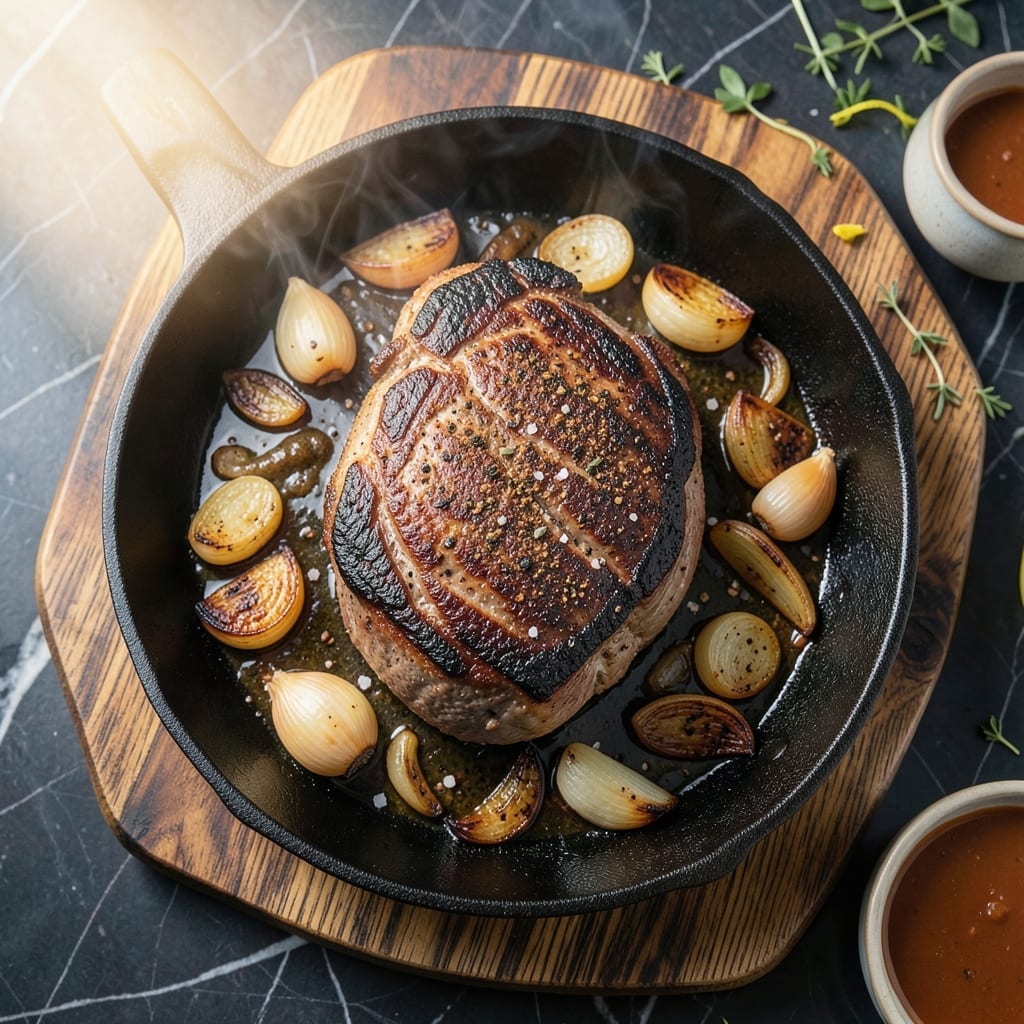
This Traeger method delivers pellet-smoked roast with perfect bark and juicy interior every time. The key is low-and-slow cooking with hardwood pellets for deep flavor.
I’ve refined this technique through years of competition BBQ, balancing smoke time with precise temperature control. The result is a roast with a dark, crusty exterior and tender meat inside.
Ingredients for Traeger Grill Roast
Quality cuts and hardwood pellets create that competition-level bark and juicy interior you expect from a Traeger.
| Ingredient | Amount | Notes |
|---|---|---|
| Beef Chuck Roast 🥩 | 3 lb | Well-marbled for best results |
| Traeger Hardwood Pellets 🪵 | 2 cups | Hickory or oak recommended |
| Coarse Kosher Salt 🧂 | 2 tbsp | Diamond Crystal preferred |
| Freshly Ground Black Pepper 🌶️ | 2 tbsp | Coarse grind for bark |
| Garlic Powder 🧄 | 1 tbsp | Not garlic salt |
| Onion Powder 🧅 | 1 tbsp | Fine grind preferred |
| Smoked Paprika 🌶️ | 1 tbsp | Sweet or hot variety |
| Yellow Mustard 🟡 | ¼ cup | Binder for dry rub |
| Apple Cider Vinegar 🍏 | ¼ cup | For spritzing during cook |
| Beef Broth 🥩 | 1 cup | Low-sodium preferred |
| Unsalted Butter 🧈 | 4 tbsp | For finishing bark |
| Worcestershire Sauce 🫒 | 2 tbsp | Lea & Perrins recommended |
[recipe_ingredient_scaler]
The beef is non-negotiable here. Chuck roast with visible marbling delivers the juiciest results—brisket or short ribs work as alternatives but require longer cook times. Source from Costco or Whole Foods for consistent quality. The pellets matter too: Traeger brand hickory or oak provides the cleanest smoke. Avoid cheap pellets with fillers (they create bitter flavors). Look for 100% hardwood on the label.
No chuck? Beef short ribs (bone-in) give similar richness but take about 50% longer to cook. For the rub, freshly toasted spices make a difference—grind whole cumin or coriander if you’re feeling fancy. The apple cider vinegar spritz can be swapped for white vinegar or beer. Mustard lovers can use Dijon instead of yellow, but it’ll add a sharper bite to the bark.
Store beef wrapped in plastic then foil for up to 5 days in the fridge. Pellets keep indefinitely when sealed, but once opened, use within 6 months. The finished roast tastes even better the next day—reheat gently in the oven with a splash of broth to keep it moist.
Why You’ll Love This Recipe
- One roast, endless options: sandwiches tonight, tacos tomorrow, hash for Sunday brunch.
- Set It and Forget: I just season the chuck roast, toss it on the Traeger, and let the hardwood pellets do the work for hours.
- Smoky Garlic Depth: That beef soaks up every bit of garlic powder and wood-fired flavor—no marinade needed.
- Feeds the Weekend: One roast, endless options: sandwiches tonight, tacos tomorrow, hash for Sunday brunch.
Step-by-Step Instructions for Traeger Grill Roast
Master the art of pellet-smoked beef with this precise method for tender results and a perfect bark.
Step 1: Prepare the Chuck Roast with a Flavorful Rub
Pat the 3 lb Beef Chuck Roast dry with paper towels to ensure the rub adheres properly. In a small bowl, combine 2 tbsp Coarse Kosher Salt, 2 tbsp Freshly Ground Black Pepper, 1 tbsp Garlic Powder, 1 tbsp Onion Powder, and 1 tbsp Smoked Paprika.
Coat the roast evenly with 0.25 cup Yellow Mustard—this acts as a binder for the dry rub. Press the spice mixture firmly onto all surfaces of the meat, creating an even layer. Allow the seasoned roast to rest at room temperature for 30-45 minutes while you prepare the smoker.
Step 2: Set Up Your Traeger for Optimal Smoke
Fill the hopper with 2 cups Traeger Hardwood Pellets—hickory or oak works best for beef. Preheat your Traeger grill to 225°F with the lid closed for at least 10-15 minutes to stabilize the temperature.
Once preheated, place the roast directly on the grill grates. Insert a meat probe into the thickest part of the roast, avoiding fat pockets. The low and slow cooking process will break down the connective tissue while infusing smoky flavor.
Step 3: Smoke and Spritz for Moisture and Bark Development
Smoke the roast undisturbed for 3-4 hours until it develops a dark, crusty bark. Every 45-60 minutes, spritz the roast with 0.25 cup Apple Cider Vinegar to keep the surface moist and enhance bark formation.
Monitor the internal temperature—when it reaches 165°F, you’ll hit the stall. This is normal; the temperature will plateau as moisture evaporates. Maintain the grill at 225°F throughout this phase.
Step 4: Wrap and Finish for Tenderness
Once the internal temperature hits 170°F, wrap the roast tightly in butcher paper or aluminum foil. Add 1 cup Beef Broth and 2 tbsp Worcestershire Sauce to the wrap for extra moisture and flavor.
Return the wrapped roast to the grill and continue cooking until the internal temperature reaches 200-203°F for optimal tenderness. This typically takes another 2-3 hours, depending on the cut’s size and your grill’s efficiency.
Step 5: Rest, Slice, and Serve with Finishing Touches
Remove the roast from the grill and let it rest, still wrapped, for 30-45 minutes. This allows the juices to redistribute and the internal temperature to stabilize. Unwrap and brush the surface with melted 4 tbsp Unsalted Butter for a glossy finish.
Slice against the grain into thick portions. The meat should pull apart easily with a fork, and the bark should have a deep, smoky crust. Serve immediately with your favorite sides to showcase the rich, pellet-smoked flavor.
Pro Tips For Making Traeger Grill Roast
- Dry the Roast: Pat the beef chuck roast completely dry with paper towels before seasoning—this guarantees a better bark and helps the salt and pepper stick where they belong.
- Smoke at 225°F: Keep your Traeger steady at 225°F for the first 2-3 hours; I learned this the hard way after rushing at higher temps and ending up with a tough, uneven cook.
- Skip the Over-Rub: Resist the urge to pile on extra garlic powder or spices—coarse kosher salt and fresh black pepper are all you need to let the beef’s flavor shine through the smoke.
- Rest Before Slicing: Pull the roast when it hits 195-200°F internal, wrap it in foil, and give it a solid 30 minutes to rest—this keeps the juices from running all over your cutting board.
Serving Suggestions for Leftovers
Classic BBQ Sides
Serve this roast with creamy coleslaw—I use a vinegar-based dressing to cut through the richness. A side of baked beans with bacon and brown sugar complements the smoky flavors beautifully. These are staples at my local BBQ competitions. 🔥
Fresh Contrasts
Balance the meal with grilled corn on the cob brushed with chili-lime butter. I also love a simple garden salad with tomatoes, cucumbers, and a tangy vinaigrette. The acidity brightens up the rich, smoky roast.
Bread Options
Offer warm cornbread or crusty sourdough to soak up all the delicious juices. I often bake cornbread in my cast iron skillet on the Traeger while the roast rests—it picks up a subtle smoke flavor that’s incredible.
Sauce Pairings
Set out small bowls of classic BBQ sauce, chipotle mayo, and horseradish cream for dipping or drizzling. I make my own BBQ sauce with a touch of bourbon for competitions. The horseradish adds a nice kick.
Beverage Matches
An iced sweet tea or cold craft IPA cuts through the richness perfectly. For non-alcoholic options, try sparkling lemonade with fresh mint. These pairings elevate the meal from great to unforgettable. ✨
Nutrition Facts
Frequently Asked Questions
What temperature should I maintain for the best bark?
Keep your Traeger at a steady 225°F for the entire cook. This low heat allows the collagen to break down slowly while the surface dries out, creating that perfect crusty exterior.
Can I use a different cut of beef?
Yes, brisket or short ribs work well but require adjustments. Brisket needs about 1.5x longer cook time, while bone-in short ribs may finish faster due to the marbling. Always monitor internal temperature.
How do I know when it’s done?
The roast is ready when it reaches 200-203°F internally and probes like butter. If it feels tough at 190°F, wrap it and keep cooking – the stall can last 1-2 hours.
Should I spritz with something other than vinegar?
Apple cider vinegar is ideal, but beer or water works in a pinch. Avoid sugary liquids—they can burn. Spritz every 45-60 minutes to build layers of flavor in the bark.

Trained in classic French technique but raised on slow-cooked ribs and spicy rubs, she blends culinary skill with smoke and soul.
- Recipe for Boneless Pork Chops in Cast Iron Skillet: Sear and Baste to Juicy Perfection - October 3, 2026
- Recipe for Boneless Cross Rib Roast: Slow-Roasted Beef with Herb Crust - October 3, 2026
- Hamburgers in Sauce Recipe Crock Pot: Slow-Cooked Savory Delight - October 3, 2026