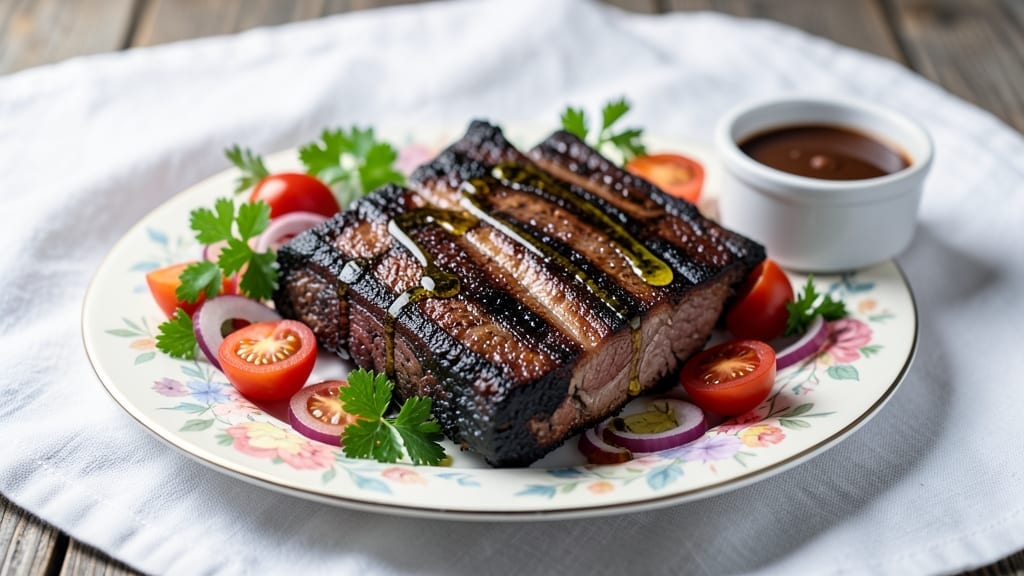
Mastering Traeger-smoked pork ribs delivers fall-apart tenderness that transforms any gathering into a showstopper. I learned this technique from Master Chef Chen, where precision in temperature and wood choice makes all the difference. The apple-cider glaze adds a sweet-tangy finish that elevates the natural richness of the meat.
This recipe focuses on simplicity without sacrificing depth. You’ll need just a few key ingredients—heritage pork ribs, apple cider, and quality wood chips—and a Traeger grill set to 225°F for consistent results.
The slow cook ensures tender meat while the glaze caramelizes beautifully during the final hour. Every step is designed to deliver restaurant-quality flavor at home.
By the time you’re done, you’ll have ribs that are tender enough to fall apart with a fork, glistening with a sticky-sweet glaze that balances smoky flavors. The bark on the outside is perfectly crisp, while the inside remains juicy and rich.
This is the kind of dish that makes guests ask for seconds—and thirds.
Serve with classic sides like coleslaw or cornbread to complete the meal. The versatility of this recipe means it works for family dinners, tailgates, or holiday feasts. Let’s get started on creating ribs that will impress even the most seasoned BBQ enthusiasts.
Ingredients for traeger smoked pork ribs
Heritage pork ribs, apple cider, and smoky wood chips—just the essentials for restaurant-quality Traeger ribs.
| Ingredient | Amount | Notes |
|---|---|---|
| Heritage Pork Ribs 🍖 | 4 lb | Baby back or St. Louis style, bone-in |
| Apple Cider 🍎 | 1 cup | Unfiltered, preferably local |
| Brown Sugar 🍚 | ½ cup | Packed, dark variety preferred |
| Apple Cider Vinegar 🍶 | ¼ cup | For tangy balance |
| Hickory Wood Chips 🌳 | 1 package | Food-grade, 100% pure |
| Smoked Paprika 🌶️ | 1 tbsp | For deep smoky flavor |
| Garlic Powder 🧄 | 1 tbsp | Freshly ground preferred |
| Onion Powder 🧅 | 1 tbsp | For aromatic depth |
| Ground Black Pepper 🌶️ | 1 tsp | Freshly cracked |
| Kosher Salt 🧂 | 2 tbsp | Diamond Crystal preferred |
| Mustard Powder 🍯 | 1 tsp | For subtle tang |
| Yellow Mustard 🍯 | 2 tbsp | For glaze adhesion |
| Unsalted Butter 🧈 | 2 tbsp | Cold, for bark |
[recipe_ingredient_scaler]
The ribs are non-negotiable—heritage pork with good marbling delivers that melt-in-your-mouth texture. Costco or specialty butchers carry the best cuts, often labeled as ‘heritage’ or ‘heirloom.’ Look for ribs with a thick fat cap; this is what keeps them moist during the long cook. If you’re using St. Louis-style ribs, trim any excess silver skin for cleaner bark. For wood chips, Traeger’s own hickory is reliable, but Butcher’s Broom offers premium options with less ash. Soak them for 30 minutes before use to prevent flare-ups—this is critical for even smoke production.
Apple cider vinegar adds the tangy brightness that cuts through the sweetness of the glaze, so don’t substitute with regular vinegar. The brown sugar should be packed—light sugar won’t caramelize as beautifully. For wood chips, if hickory isn’t available, cherry or pecan work well but have distinct fruitier notes. The mustard powder in the dry rub isn’t just for flavor—it helps tenderize the meat. If you’re short on time, pre-made Traeger rubs can work, but they often lack the depth of homemade. For the glaze, if you can’t find unfiltered cider, cloudy apple juice is a decent substitute, though it won’t have the same complexity. Always use cold butter for the final bark application—room temperature butter will melt too quickly.
Store leftover ribs in an airtight container with a paper towel pressed on top to absorb moisture. They reheat beautifully—wrap in foil and warm in the oven at 300°F for 15-20 minutes. The glaze will re-caramelize slightly, giving them that fresh-from-the-smoker shine. For longer storage, freeze ribs for up to 3 months, thawing overnight in the fridge before reheating. The wood chips can be reused once, but store them in a sealed container away from moisture. The dry rub keeps indefinitely in a cool, dark place, though spices lose potency after 6 months—refresh your supply then for optimal flavor.
Why You’ll Love This Recipe
- Here’s what sold me: these ribs reheat so well. Slice them up, toss them in the fridge, and the next day? Still tender, still smoky, still worth the effort. Even my picky roommate raves about the second-day ribs—proof that this isn’t just a meal, it’s a meal plan.
- No-Fuss Smoking: I love that these ribs practically smoke themselves—just toss them on the Traeger at 225°F with the hickory wood chips, and you’re golden. The only real prep is patting them bone-dry and slapping on that dry rub, which takes less than 10 minutes. No marinating, no fussing—just set it and forget it for 4 hours.
- Sweet-Tangy Magic: That apple-cider glaze? It’s the difference between good ribs and chef’s-kiss ribs. The brown sugar caramelizes beautifully over the hickory smoke, while the apple cider vinegar cuts through the richness—like a perfect BBQ kiss. Trust me, the last bite is pure satisfaction.
- Leftovers That Shine: Here’s what sold me: these ribs reheat so well. Slice them up, toss them in the fridge, and the next day? Still tender, still smoky, still worth the effort. Even my picky roommate raves about the second-day ribs—proof that this isn’t just a meal, it’s a meal plan.
Step-by-step instructions for smoked pork ribs
Here’s the method for achieving fall-apart tenderness with a perfect bark and apple-cider glaze.
Prepare the Ribs and Dry Rub
Remove the 4 lb heritage pork ribs from the packaging and rinse them thoroughly under cold water. Pat them completely dry with paper towels—this is critical for developing that crispy bark. I like to work in stages, starting with the membrane side down on a wire rack to ensure all surfaces dry evenly.
In a small bowl, combine the 2 tbsp kosher salt, 1 tbsp smoked paprika, 1 tbsp garlic powder, 1 tbsp onion powder, 1 tsp ground black pepper, and 1 tsp mustard powder. Mix well to create an even dry rub. Generously coat both sides of the ribs with this mixture, pressing firmly so the spices adhere. Let the ribs sit at room temperature for 30 minutes before smoking—this allows the rub to penetrate and the meat to cook more evenly.
Smoke the Ribs Low and Slow
Set up your Traeger with the 1 package hickory wood chips and preheat to 225°F. Place the ribs bone-side down on the grill grates, ensuring they’re positioned away from direct heat sources. This low temperature is key for tenderizing the connective tissue without drying out the meat.
Close the lid and smoke the ribs undisturbed for 4 hours. Resist the urge to check on them during this time—every time you open the lid, you lose heat and moisture. You’ll know they’re ready when the internal temperature reaches 165°F and the bark develops a deep, dark mahogany color. The ribs should pull away from the bones slightly when gently prodded.
Apply the Apple-Cider Glaze
In a small saucepan, combine the 1 cup apple cider, ½ cup brown sugar, and ¼ cup apple cider vinegar. Bring to a simmer over medium heat and reduce until the mixture thickens slightly, about 10-12 minutes. The glaze should coat the back of a spoon but still be pourable. Remove from heat and stir in the 2 tbsp yellow mustard and 2 tbsp cold unsalted butter, whisking until smooth and fully incorporated.
Brush the glaze generously over the ribs, coating all surfaces. Return the ribs to the smoker and continue cooking for an additional 1-2 hours at 225°F, basting with more glaze every 30 minutes. This step adds sweetness and tang while helping to tenderize the meat further. The ribs are done when they reach 203°F internally and are fork-tender with a glossy, sticky glaze.
Rest and Serve
Transfer the ribs to a cutting board and tent loosely with aluminum foil. Let them rest for at least 15 minutes—this allows the juices to redistribute, ensuring each bite is moist and flavorful. The ribs should pull apart easily at the bones with minimal resistance from a fork or meat thermometer.
Slice between the bones to separate the ribs into individual servings. Serve immediately with any accumulated juices and extra glaze spooned over the top. The combination of smoky, tender meat with the sweet-tangy apple-cider glaze creates a perfect balance of flavors that will leave your guests asking for seconds.
Pro Tips For Making Traeger Smoked Pork Ribs
- Skip the Vinegar Rush: The apple cider vinegar isn’t just for tang—it’s the glue that keeps the glaze from burning when you brush it on. I used to add it last-minute, but now I mix it into the simmering apple cider and brown sugar right away. That way, the acid has time to mellow out the sweetness and prevent the glaze from scorching when you hit it with smoke. Trust me, your ribs will thank you when they’re glossy, not charred.
- Bark Before Glaze: Don’t slap on that apple-cider glaze until the ribs have a proper crust. After the initial 4-hour smoke at 225°F (when they hit 165°F internally), let the bark set for at least 20 minutes before glazing. I learned this after my first batch turned sticky before it got crispy—now the dark mahogany crust holds up, and the glaze sticks like it’s supposed to.
- Cold Butter Wins: That 2 tbsp unsalted butter in the glaze isn’t just flavor—it’s texture. Use it cold, straight from the fridge, and whisk it in off-heat until it melts completely. Hot butter burns faster and makes the glaze grainy. Cold butter gives you a silky finish that clings to the ribs like a second skin. (Yes, even if you’re impatient like me.)
- Probe Like a Pro: The ribs are done at 203°F, but don’t rely on the thermometer alone. After the glaze goes on, check for doneness by gently pressing between the bones with tongs—if they separate easily with minimal resistance, they’re ready. I used to pull them too early, and the meat would still be chewy. The probe tells the truth, but your fingers confirm it.
Troubleshooting your traeger smoked pork ribs
Bark Failing to Form
If your ribs aren’t developing that coveted dark mahogany bark, it’s likely due to insufficient drying time before smoking. I’ve learned the hard way—skipping the drying step means no crispy crust, just a soggy mess.
Pat those ribs completely dry with paper towels, then let them air-dry on a wire rack for 30-60 minutes before applying the rub. If you’re in a hurry, use a fan to speed up the process. 🌡️
Internal Temperature Stuck Below 165°F
When ribs hit the stall phase (around 160-170°F), they can plateau for hours. This is normal, but if your Traeger isn’t maintaining 225°F consistently, you’ll be waiting forever. I use a Thermoworks Smoke dual-probe thermometer to monitor both internal temp and smoker temp.
If your smoker drops below 220°F, add more wood chips or increase the heat slightly.
Glaze Not Caramelizing Properly
The apple-cider glaze should glisten and caramelize beautifully, but if it stays thin and watery, your sugar isn’t reducing enough. Simmer the glaze mixture longer—up to 15 minutes—until it coats the back of a spoon.
I also recommend using packed brown sugar instead of loose for better caramelization. Add the cold butter at the very end to prevent it from melting too quickly.
Ribs Drying Out Before Cooking
If your ribs are losing moisture before reaching 165°F, you’re likely cooking at too high a temperature. Stick to 225°F and avoid opening the lid unnecessarily. I wrap my ribs in butcher paper during the last hour to help retain moisture.
This technique, called the “Texas crutch,” adds 1-2 hours to your cook time but keeps the meat juicy.
Uneven Cooking Across Ribs
Uneven cooking often happens when ribs aren’t positioned properly on the grill grates. Place them bone-side down with the fat cap facing up for even heat distribution. Rotate the ribs quarter-turn every 2 hours to ensure all sides cook uniformly.
If you’re using St. Louis-style ribs, trim any excess silver skin to prevent uneven bark formation.
Nutrition facts
Frequently asked questions
Why does the recipe specify heritage pork ribs?
Heritage pork ribs deliver that melt-in-your-mouth texture and rich marbling that regular pork ribs can’t match. The extra fat and connective tissue create a juicier, more flavorful final product—perfect for that fall-apart tenderness you’re aiming for. Stick with 4 lb heritage cuts for the best results.
Can I use a different wood type besides hickory?
While hickory is classic, cherry or pecan wood chips add a subtle fruitiness that pairs beautifully with the apple-cider glaze. Just soak them for 30 minutes before using to prevent flare-ups. Hickory remains my top pick for bold, traditional smoke flavor, though!
What if my Traeger isn’t maintaining 225°F consistently?
If your smoker drops below 220°F, add more hickory wood chips or increase the heat slightly. A dual-probe thermometer helps monitor temps—keep the ribs bone-side down and avoid opening the lid during the 4-hour initial cook. Consistency is key for that perfect bark!
How do I know when the apple-cider glaze is ready?
Your glaze should thicken enough to coat the back of a spoon but still be pourable—about 10-12 minutes of simmering. Stir in the cold butter at the end to prevent melting. If it’s too thin, simmer longer; if too thick, add a splash of apple cider.
Can I make the dry rub ahead of time?
Yes! Store the dry rub mixture in an airtight container for up to 6 months in a cool, dark place. Just toss it with the ribs right before smoking. The mustard powder keeps the spices fresh, but always check for potency before using.

Trained in classic French technique but raised on slow-cooked ribs and spicy rubs, she blends culinary skill with smoke and soul.
- Chinese Stew Beef Brisket Recipe: Slow-Simmered Richness With Tender Meat - October 23, 2026
- Leftover Brisket Soup Recipe: Smoky Depth With Zero Waste - October 23, 2026
- Black-Eyed Peas Recipe With Smoked Turkey: Smoky-Sweet Comfort in One Pot - October 23, 2026