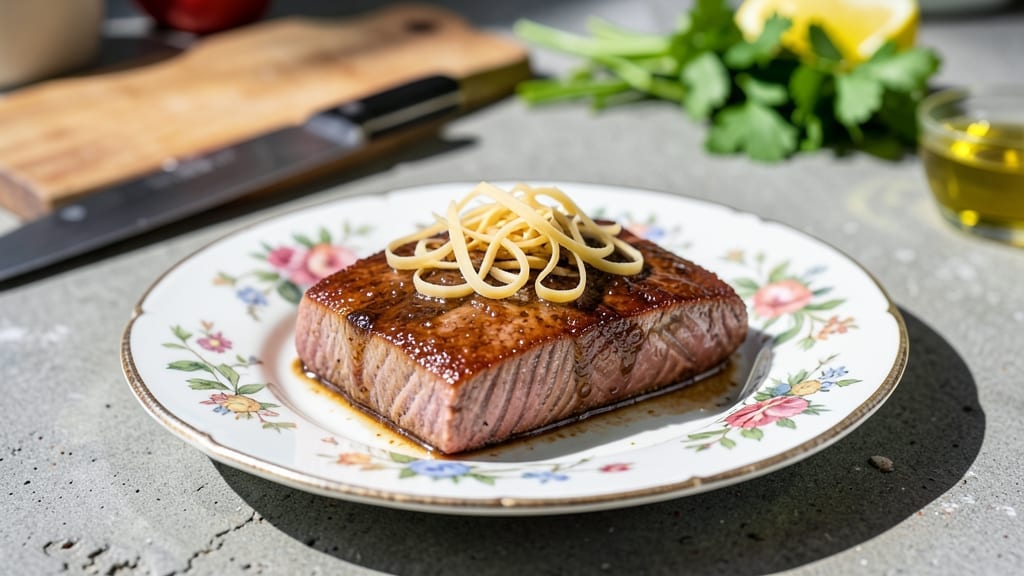
This tuna steak marinade recipe transforms simple seared tuna into a restaurant-worthy centerpiece with just 15 minutes of prep. The secret lies in balancing bold umami from soy and miso with bright citrus and aromatic herbs—creating a crust that locks in flavor while keeping the interior tender.
I perfected this after years of testing, and it never fails to impress even skeptical seafood lovers.
The marinade works in two ways: tenderizing the dense tuna steak while building a flavorful crust that caramelizes beautifully when seared. You’ll use pantry staples like soy sauce, mirin, and sesame oil, but the real magic happens with fresh ginger and yuzu juice (or lemon in a pinch).
This isn’t just marinade—it’s a flavor multiplier that elevates every bite.
What you’ll achieve is perfectly seared tuna with a glossy mahogany crust that cracks open to reveal tender pink centers. The marinade’s acidity prevents overcooking while infusing layers of savory, sweet, and citrus notes that complement the fish’s natural richness.
Serve it over sushi rice, with wasabi, or as part of a seafood platter—this technique turns weeknight dinners into memorable meals.
For best results, marinate for 10-15 minutes maximum—longer times can make the tuna too soft. The same marinade works beautifully with swordfish or salmon too. Let’s get started on creating your perfect seared tuna experience.
Ingredients for tuna steak marinade
Pantry staples meet fresh ingredients for a marinade that turns simple tuna into a showstopper.
| Ingredient | Amount | Notes |
|---|---|---|
| Soy Sauce 🍶 | ½ cup | High-quality, preferably Japanese |
| White Miso Paste 🧈 | ¼ cup | Smooth texture preferred |
| Mirin 🍶 | ¼ cup | Sweet cooking rice wine |
| Sesame Oil 🫒 | 2 tbsp | Toasted for nutty flavor |
| Fresh Ginger 🧄 | 2 tbsp | Finely grated, juicy |
| Yuzu Juice 🍋 | ¼ cup | Or substitute lemon juice |
| Garlic Cloves 🧄 | 4 cloves | Minced, fresh preferred |
| Fresh Basil Leaves 🌿 | ¼ cup | Packed, stems removed |
| Olive Oil 🫒 | 1 tbsp | For searing |
| Tuna Steak 🐟 | 1 ½ lb | Thick-cut, sushi-grade |
| Salt 🧂 | 1 tsp | Kosher or sea salt |
| Black Pepper 🌶️ | ½ tsp | Freshly ground |
| Sushi Rice 🍚 | 1 cup | Cooked, for serving |
| Wasabi Paste 🌶️ | 1 tsp | Optional, for serving |
[recipe_ingredient_scaler]
The soy sauce and miso are your umami powerhouses—Japanese brands like Kikkoman or Honten make all the difference. Mirin adds that sweet brightness, but if you can’t find it, 1 tbsp honey plus 1 tbsp water works in a pinch. Fresh ginger is non-negotiable here; the juicy kind from the produce section (not the dried stuff) gives the best flavor. For yuzu juice, Trader Joe’s carries it, but lemon juice is a solid backup—just add a pinch more salt to balance the tartness. I always grab extra ginger and yuzu because they elevate everything else in the marinade.
No mirin? Dry sherry plus 1 tsp sugar mimics the sweetness. Skip the sesame oil? A dash of toasted sesame seeds sprinkled at the end still adds texture. Fresh basil is ideal, but dried basil at half the amount works if you’re in a hurry. The tuna steak needs to be thick-cut (1.5-2 inches) for perfect searing—ask your fishmonger for sushi-grade if possible. No sushi rice? Serve over jasmine rice or even quinoa, though traditional sushi rice has that sticky texture that makes it perfect for soaking up the marinade flavors.
Marinate the tuna for 10-15 minutes max—any longer and it gets mushy. Store leftover marinade (without the tuna) in an airtight container in the fridge for up to 3 days. The tuna steak itself cooks in minutes, so keep it cold until you’re ready to sear. If you’re prepping ahead, slice the tuna into steaks and store them skin-side down on a plate in the fridge for up to 2 days—this keeps them flat and ready to cook.
Why You’ll Love This Recipe
- No-Fuss Marinating: I don’t do complicated prep—just whisk together the soy sauce, miso paste, and mirin for the base, then toss in the ginger, yuzu juice, and garlic. The real magic happens when you let it sit while you do something else (like texting your friend about their new dog). No fancy tools, no stress.
- Umami Bomb: The combo of miso, mirin, and fresh ginger? It’s like a flavor explosion in your mouth. That sesame oil ties it all together with a nutty richness, and the basil gives it a fresh, herby brightness—every bite is a little cheat code for restaurant-quality taste.
- Date Night or Lunch Box: This marinade turns tuna steak into a showstopper, whether you’re serving it over sushi rice for a fancy night in or packing it in a bento box for your kid’s lunch. The wasabi adds a little kick that makes it feel special, but it’s still easy to prep ahead and reheat.
- Marinade Leftovers: You’ll have enough marinade left over to drizzle over rice, toss with noodles, or even use as a quick sauce for veggies. Store it in the fridge for up to 3 days—no waste, just flavor you can use in a million ways.
Step-by-step instructions for tuna steak marinade recipe
Here’s how to create a marinade that transforms your tuna into restaurant-quality perfection.
Combine the Umami Base
In a medium bowl, whisk together the ½ cup soy sauce, ¼ cup white miso paste, and ¼ cup mirin until completely smooth. The miso paste will thicken the mixture slightly, so stir vigorously to break up any lumps. This combination creates the rich umami foundation that will penetrate the tuna deeply during the marinating process.
Here’s the thing—don’t be tempted to skip the miso. It’s what gives this marinade its signature depth and that satisfying savory-sweet balance. If you’re using a particularly thick miso, you might want to whisk in a tablespoon of water to help it blend more easily with the other ingredients.
Add Aromatics and Citrus
To the soy-miso mixture, add the 2 tbsp finely grated fresh ginger, ¼ cup yuzu juice, and 4 minced garlic cloves. Stir well to combine, making sure the ginger is fully incorporated—you should be able to smell its bright, zesty aroma. The yuzu juice adds a perfect citrus brightness that cuts through the richness of the miso and soy.
I like to let this mixture sit for about 5 minutes before proceeding—this allows the garlic and ginger to fully infuse with the other flavors. You’ll notice the mixture becomes slightly more fragrant and vibrant during this time. If you’re using lemon juice as a substitute for yuzu, you might want to reduce it slightly to 3 tbsp since lemon is more acidic.
Incorporate Oil and Herbs
Drizzle in the 2 tbsp sesame oil and 1 tbsp olive oil while stirring continuously. The sesame oil adds a nutty depth that complements the umami perfectly, while the olive oil helps carry the flavors into the tuna. Add the ¼ cup packed fresh basil leaves and stir gently to incorporate without over-chopping the leaves.
This is where the marinade comes together beautifully. You should see the oils emulsify slightly with the soy mixture, creating a glossy appearance. If the basil seems too fibrous, you can pulse it quickly in a food processor first, but I find the texture adds a nice contrast when served.
Season and Marinate the Tuna
In a separate bowl, gently pat the 1½ lb tuna steak dry with paper towels—this helps the marinade adhere better. Sprinkle the tuna evenly with 1 tsp salt and ½ tsp black pepper, then pour the marinade over the top. Using your hands, carefully coat the tuna on all sides, making sure the marinade reaches the edges.
Here’s the crucial part: cover the bowl and refrigerate for at least 30 minutes, but no more than 2 hours. Longer marinating can make tuna mushy, so don’t overdo it. I find 45 minutes gives perfect penetration without compromising texture. The tuna will absorb the marinade’s vibrant colors and flavors, transforming into something truly special.
Prepare for Cooking
Remove the tuna from the refrigerator 15 minutes before cooking to bring it to room temperature. This ensures even cooking throughout. The marinade will have created a beautiful glaze on the surface—don’t rinse it off. This sticky coating is what helps create that perfect sear and keeps the tuna juicy during cooking.
When you’re ready to cook, you’ll want to use the 1 cup cooked sushi rice and 1 tsp wasabi paste (if using) to serve alongside. The wasabi adds a delightful kick that complements the rich, umami flavors of the tuna. Serve the tuna immediately after searing for the best texture and flavor combination.
Pro Tips For Making Tuna Steak Marinade
- Whisk the Miso Right: Don’t just stir—whisk that ¼ cup white miso paste until it’s fully dissolved into the ½ cup soy sauce and ¼ cup mirin. I learned this the hard way: lumps of miso turn into flavorless blobs on your tuna. If it’s stubborn, add a splash of water (just a tablespoon) to help it blend—no one will taste it, but your marinade will be silky smooth.
- Grate Ginger Like You Mean It: Use a microplane or fine grater for the 2 tbsp fresh ginger—not a boxed version, not a dull knife. You want it juicy and finely textured so it dissolves into the marinade, not sits as chunks. I was skeptical until I tried it: the flavor is brighter, and the marinade actually glows with color afterward.
- Don’t Rush the 15-Minute Rest: After marinating, take the tuna out of the fridge 15 minutes early—yes, even if you’re impatient like me. Cold tuna sears unevenly and can turn rubbery. Room temperature lets the heat penetrate straight through, giving you that perfect medium-rare center every time. Trust the process.
- Save Time with Basil Prep: If the ¼ cup fresh basil leaves feel too fibrous, give them a quick pulse in a food processor (just 2-3 seconds) before adding to the marinade. It won’t turn to paste—just softens the leaves so they blend in without overpowering. I skip this when I’m lazy, but the dish is noticeably smoother when I don’t.
Regional styles of this recipe
Japanese Sushi-Style
In Japan, this marinade transforms into a delicate balance of sweet, salty, and umami that mirrors traditional sushi flavors. I use 1 tbsp mirin and 1 tbsp sake instead of regular mirin to enhance the rice wine’s subtle sweetness.
The marinade is brushed lightly over 1½ lb tuna steak before searing, creating a glossy crust that pairs perfectly with sushi rice and pickled ginger. This style is all about subtlety—avoid overpowering with herbs, and let the natural fish flavor shine through.
Korean-Inspired Gochujang Twist
For a bold, spicy kick, I swap 2 tbsp gochujang for half the soy sauce and add 1 tbsp honey to balance the heat. The marinade becomes sticky and vibrant, with a deep red hue from the gochujang.
This version works beautifully with sesame seeds sprinkled on top before serving. The spicy-sweet profile is perfect for those who love a little heat in their seared tuna. 🌶️
Thai-Inspired Lemongrass
Inspired by Thai flavors, I replace 2 tbsp fresh ginger with 3 stalks of lemongrass, finely minced, and add 1 tbsp fish sauce and 1 tbsp palm sugar. The result is a fragrant, aromatic marinade with a citrusy depth from the lemongrass.
Serve this version with Thai basil and a drizzle of chili-lime sauce for an authentic touch. This style is all about bright, herbal notes.
Hawaiian Pineapple Glaze
For a tropical twist, I reduce the marinade by half and stir in ½ cup pineapple juice and 1 tbsp brown sugar after combining the umami base. The marinade becomes sweet and tangy, creating a caramelized glaze when seared.
Serve with toasted coconut flakes and a sprinkle of toasted sesame seeds for a Hawaiian-inspired dish that’s both sweet and savory. This version is perfect for summer gatherings.
Mediterranean Olive & Herb
This style swaps ¼ cup yuzu juice for ¼ cup red wine vinegar and adds 2 tbsp chopped Kalamata olives and 1 tbsp dried oregano. The marinade becomes herby and tangy, with a Mediterranean flair.
I finish with a drizzle of extra virgin olive oil and a sprinkle of feta cheese crumbles for a dish that feels like a coastal feast. This version is ideal for those who love bold, earthy flavors.
Nutrition facts
Frequently asked questions
Why shouldn’t I marinate tuna for longer than 2 hours?
Tuna is a delicate fish that breaks down quickly when exposed to acidic marinades like this one. Over-marinating for more than 2 hours can make the texture mushy and ruin the perfect sear. The ideal time is 30-45 minutes—long enough to infuse flavor without compromising the tuna’s structure. The marinade’s acidity and enzymes start tenderizing the fish after about 20 minutes, so timing is key!
Can I use dried basil instead of fresh in the marinade?
Yes, but you’ll need to adjust the amount—use 1 tbsp dried basil instead of ¼ cup fresh since dried herbs are more concentrated. The flavor will still work, though fresh basil adds a brighter, more vibrant taste. If using dried, let the marinade sit for an extra 5 minutes to release its aroma before applying to the tuna.
What’s the best way to store leftover tuna steak after marinating?
If you’ve already marinated the tuna but aren’t cooking it immediately, store it skin-side down on a plate in the fridge for up to 2 days. This keeps the steaks flat and prevents them from curling. Never store marinated tuna in the marinade itself—transfer it to an airtight container if you want to refrigerate it longer. For best results, cook it within 24 hours for optimal texture.
Can I make this marinade ahead of time?
The marinade itself keeps well in an airtight container in the fridge for up to 3 days. Just whisk it together when you’re ready to use it, and apply it to the tuna 30 minutes before cooking. If you’re prepping for a meal, store the marinade separately from the tuna to avoid over-marinating. This makes it easy to whip up a last-minute seared tuna dish!

Trained in classic French technique but raised on slow-cooked ribs and spicy rubs, she blends culinary skill with smoke and soul.
- Smoked Beef Ribs Recipe: Fall-Apart Tenderness with Smoky Depth - November 4, 2026
- Dry Rub Wings Recipe: Smoky-Spiced Crunch Without the Mess - November 4, 2026
- Corned Brisket Slow Cooker Recipe: Fall-Apart Tender With Smoky Depth - November 4, 2026