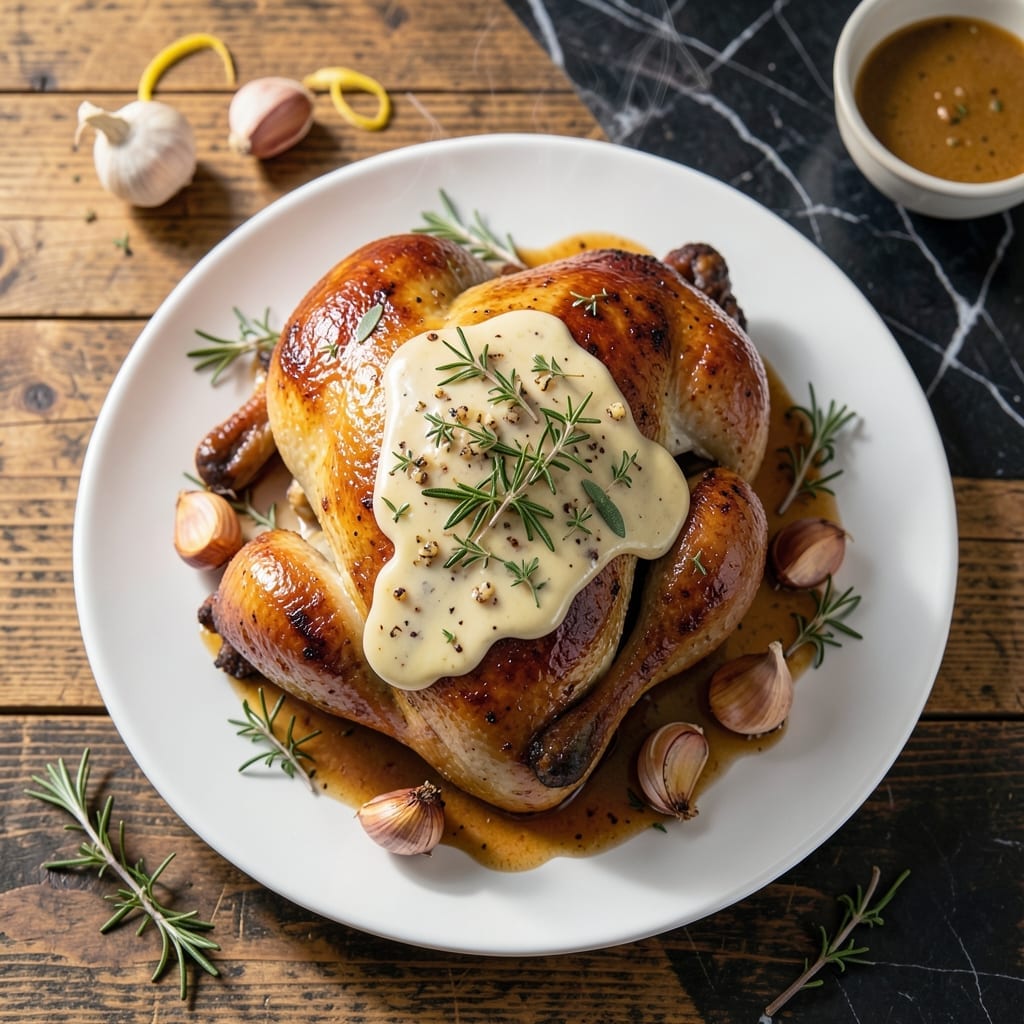
This oven-roasted turkey breast delivers juicy, flavorful results without the fuss of a whole bird. A simple herb crust creates a golden, aromatic exterior while locking in moisture.
The method is straightforward: season, roast at high heat, then rest before slicing. This ensures tender meat every time with minimal effort.
Ingredients for Turkey Breast Recipe Oven
Herb-crusted turkey breast with pantry staples and fresh aromatics delivers perfect results every time.
| Ingredient | Amount | Notes |
|---|---|---|
| Bone-in Turkey Breast 🦃 | 3 lb | Skin-on for crispiness |
| Unsalted Butter 🧈 | ½ cup | Softened to room temperature |
| Fresh Rosemary 🌿 | 2 tbsp | Finely chopped, stems discarded |
| Fresh Thyme Leaves 🍃 | 2 tbsp | Stripped from stems |
| Fresh Sage Leaves 🌿 | 1 tbsp | Finely minced |
| Garlic Cloves 🧄 | 4 cloves | Minced to fine paste |
| Diamond Crystal Kosher Salt 🧂 | 1 ½ tsp | Divided for seasoning |
| Freshly Ground Black Pepper 🌶️ | 1 tsp | Coarse grind preferred |
| Dijon Mustard 🟡 | 1 tbsp | Smooth variety for binding |
| Extra-Virgin Olive Oil 🫒 | 1 tbsp | For herb crust moisture |
| Large Yellow Onion 🧅 | 1 whole | Quartered for roasting pan |
| Carrots 🥕 | 3 whole | Peeled and cut into chunks |
| Celery Stalks 🥬 | 3 whole | Cut into large pieces |
| Low-Sodium Chicken Broth 💧 | 1 cup | For roasting pan juices |
[recipe_ingredient_scaler]
The turkey breast quality is paramount. Opt for bone-in, skin-on from a reputable butcher or Whole Foods. Look for even coloring without dark spots, and ensure the skin is intact. For the herbs, organic bunches from farmers markets offer superior aroma. The butter should be European-style for higher fat content, which creates a richer crust.
Substitutions are possible without sacrificing moisture. Boneless turkey breast works but reduces roasting time by about 25%. No fresh herbs? Dried at one-third the amount, though the flavor profile will be more concentrated. The Dijon can be replaced with whole-grain mustard for texture, or omitted entirely—just add an extra pinch of salt to the crust.
Store the raw turkey in the coldest part of your refrigerator and use within 2 days of purchase. The herb crust can be prepped 1 day ahead and refrigerated. Leftovers keep beautifully for 4-5 days and make excellent sandwiches or salads.
Why You’ll Love This Recipe
- One Pan Magic: I just rub butter and those fresh herbs under the skin, pop it in the oven, and let it do its thing.
- Herb-Perfumed Bite: The rosemary, thyme, and sage melt into the meat, giving every slice that cozy, aromatic kick.
- Holiday or Tuesday: I’ve served this for Thanksgiving and also just because it’s Wednesday and we crave comfort.
- Leftovers for Days: One bone-in breast yields sandwiches, soups, and tacos for the whole week—no waste, all flavor.
Step-by-Step Instructions for Herb-Crusted Turkey Breast
Master these techniques to achieve perfectly juicy meat with a golden herb crust every time.
Step 1: Prepare the Herb Butter and Season the Turkey
In a small bowl, combine the 0.5 cup unsalted butter (softened to room temperature), 2 tbsp fresh rosemary, 2 tbsp fresh thyme leaves, 1 tbsp fresh sage leaves, 4 cloves garlic cloves (minced to fine paste), 1 tbsp Dijon mustard, 1 tbsp extra-virgin olive oil, 1 tsp freshly ground black pepper, and 1 tsp Diamond Crystal kosher salt. Mix until fully incorporated into a cohesive paste.
Pat the 3 lb bone-in turkey breast completely dry with paper towels. This is critical for achieving crispy skin. Gently loosen the skin from the meat with your fingers, creating a pocket. Spread half of the herb butter mixture directly under the skin, massaging it evenly over the meat. Rub the remaining herb butter over the exterior of the skin. Season the outside with the remaining 0.5 tsp Diamond Crystal kosher salt.
Step 2: Prepare the Roasting Pan and Aromatics
Position a rack in the lower third of your oven and preheat to 375°F. While the oven heats, scatter the 1 whole large yellow onion (quarterd), 3 whole carrots (peeled and cut into chunks), and 3 whole celery stalks (cut into large pieces) across the bottom of a roasting pan. These vegetables will create a natural roasting rack and infuse flavor into the meat.
Pour the 1 cup low-sodium chicken broth into the pan, ensuring the vegetables are partially submerged. This liquid will steam the turkey initially, preventing dryness, then reduce into a flavorful base for pan juices. Place a roasting rack over the vegetables to elevate the turkey, allowing hot air to circulate evenly around the meat.
Step 3: Roast to Perfection
Place the turkey breast skin-side up on the rack in the prepared pan. Roast uncovered at 375°F for 1 hour 15 minutes to 1 hour 30 minutes, or until the skin is deep golden brown and the internal temperature reaches 160°F in the thickest part of the breast, away from the bone. I recommend using an instant-read thermometer for accuracy.
Baste the turkey with the pan juices every 30 minutes during roasting. This step ensures even browning and adds layers of flavor. If the skin begins to darken too quickly, tent loosely with aluminum foil. The turkey is done when the juices run clear and the thermometer confirms the temperature.
Step 4: Rest and Serve
Transfer the turkey to a cutting board and tent loosely with foil. Let it rest for at least 15 minutes before carving. This resting period allows the juices to redistribute throughout the meat, ensuring every slice remains moist and flavorful.
While the turkey rests, you can strain the pan juices and reduce them into a quick gravy if desired. Carve the turkey against the grain into ½-inch thick slices. Serve immediately with the roasted vegetables and any pan juices spooned over the top. The meat should be tender and juicy with a crisp, herb-infused skin.
Pro Tips For Making Turkey Breast Recipe Oven
- Start High, End Low: Roast at 425°F for the first 30 minutes to get that skin crispy, then drop to 350°F until it hits 160°F internal—I learned this the hard way after serving dry turkey too many times.
- Butterfly the Breast: Cut the bone-in breast almost all the way through and flatten it slightly so it cooks more evenly, about 20 minutes faster than whole.
- Use Room-Temp Butter: Mix the unsalted butter with chopped rosemary, thyme, and sage while it’s still slightly cool but soft, so it spreads easily under the skin without tearing it.
- Rest Before Carving: Tent with foil and let it sit for 15 minutes after roasting, or all those juices will spill out on the cutting board instead of staying in the meat.
Pro Cooking Tips for This Dish
Perfect Dry Brining
Pat the turkey breast completely dry before seasoning—this is non-negotiable for crispy skin. I use paper towels and press firmly to absorb all moisture. Then, season under and over the skin with the herb butter for maximum flavor penetration.
Oven Rack Position
Place your oven rack in the lower third of the oven. This prevents the skin from burning while ensuring even cooking. I learned this trick after one too many charred turkey breasts. The 375°F heat circulates perfectly at this level.
Basting Technique
Baste every 30 minutes with pan juices using a basting bulb or spoon. This keeps the skin moist and builds layers of flavor. If the skin browns too fast, tent with foil—but don’t skip basting, even with the foil on. 💡
Thermometer Accuracy
Invest in an instant-read thermometer—I use ThermoWorks. Check the thickest part of the breast, not touching bone, for 160°F. This guarantees juicy meat without overcooking. Never trust the pop-up timer that sometimes comes with the turkey.
Resting Time
Let the turkey rest 15-20 minutes before slicing. This allows juices to redistribute. I cover it loosely with foil to keep it warm. Slicing too soon results in dry meat—patience pays off here.
Carving Method
Slice against the grain into ½-inch thick pieces. For bone-in breast, remove the rack first, then carve. Use a long, sharp knife—I prefer Wüsthof—for clean cuts. Serve with pan juices spooned over the top. 🔥
Nutrition Facts
Frequently Asked Questions
What oven temperature works best?
375°F delivers perfect results with golden skin and juicy meat. This moderate heat allows even cooking without drying out the breast.
How do I prevent dry turkey?
Pat the skin completely dry before roasting and baste every 30 minutes. Letting it rest 15 minutes after cooking keeps juices locked in.
Can I use boneless turkey breast?
Yes, but reduce cooking time by about 25%. Boneless cooks faster and may dry out if left too long. Always check internal temp with a thermometer.
How thick should I slice it?
Cut against the grain into ½-inch thick slices. This thickness ensures tenderness and makes serving easier.

Trained in classic French technique but raised on slow-cooked ribs and spicy rubs, she blends culinary skill with smoke and soul.
- Recipe for Boneless Pork Chops in Cast Iron Skillet: Sear and Baste to Juicy Perfection - October 3, 2026
- Recipe for Boneless Cross Rib Roast: Slow-Roasted Beef with Herb Crust - October 3, 2026
- Hamburgers in Sauce Recipe Crock Pot: Slow-Cooked Savory Delight - October 3, 2026