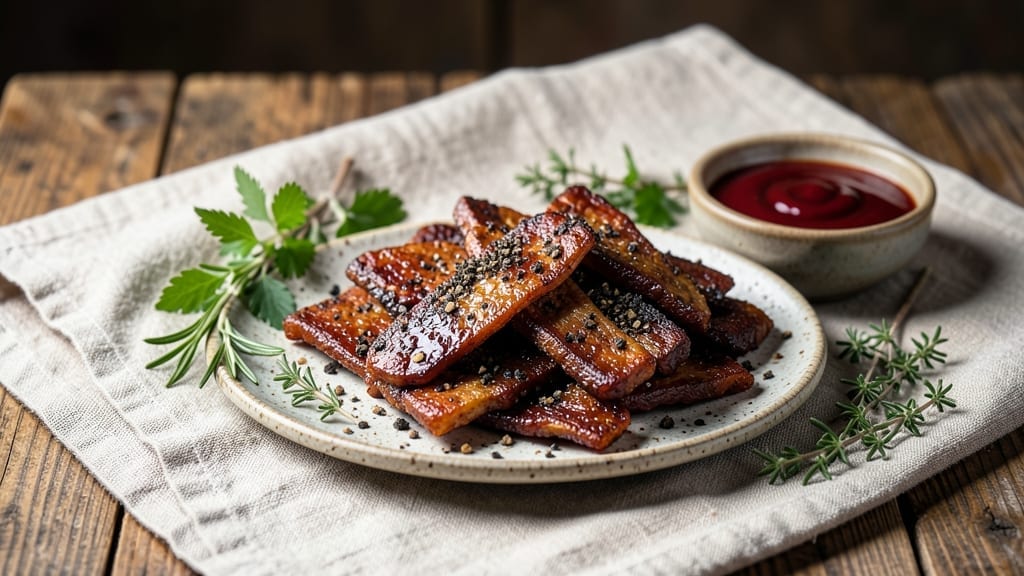
Making turkey jerky on a smoker transforms simple meat into smoky, lean bites that pack serious flavor without the guesswork. The key lies in precise temperature control and slow drying—something I perfected after years of backyard cookouts where hickory smoke became my first love.
This method ensures tender, perfectly seasoned jerky every time, ready in just 4 hours with minimal effort.
The beauty of smoker-made turkey jerky is its versatility—whether you prefer classic salt-and-pepper or bold spice blends, the smoker infuses deep, wood-fired flavor while keeping the meat tender and safe to eat.
Start with lean cuts, trim carefully, and let the smoker do the work at 165°F until the jerky reaches ideal moisture levels. The result? A snack that’s protein-packed, portable, and impossible to resist.
What sets this recipe apart is the balance of heat and patience—no rushing, no shortcuts. The smoker’s gentle heat breaks down connective tissue while preserving moisture, creating jerky that’s chewy yet tender, not dry or tough.
Each batch develops a rich, wood-fired aroma that lingers long after the smoking is done, making it perfect for camping trips, game days, or just satisfying that midday craving.
Once you master this technique, you’ll never buy store-bought jerky again. The process is straightforward, but the results are restaurant-quality—smoky, flavorful, and ready in half the time of traditional methods. Let’s get smoking!
Ingredients for turkey jerky smoker
Lean turkey meets smoker magic for restaurant-quality jerky in just 4 hours.
| Ingredient | Amount | Notes |
|---|---|---|
| Lean Turkey Breast 🦃 | 2 lb | Trimmed of fat and silver skin |
| Hickory Wood Chips 🔥 | 1 lb | For authentic smoky flavor |
| Dry Mustard Powder 🌿 | 2 tbsp | For tangy depth |
| Garlic Powder 🧄 | 1 ½ tbsp | Aromatic base |
| Onion Powder 🧅 | 1 ½ tbsp | Sweet complexity |
| Black Pepper 🌶️ | 1 tbsp | Freshly ground preferred |
| Smoked Paprika 🌶️ | 1 tbsp | Deep smoky flavor |
| Sea Salt 🧂 | 1 tbsp | Fine grain preferred |
| Brown Sugar 🍚 | 1 tbsp | Balances saltiness |
| Apple Cider Vinegar 🍎 | 1 tbsp | For tenderness |
| Olive Oil 🫒 | 1 tbsp | For moisture retention |
[recipe_ingredient_scaler]
The turkey is your star—lean cuts only ensure tender, chewy jerky. Costco or butcher shops sell pre-trimmed turkey breast, but if you’re doing it yourself, ask for boneless, skinless and trim all visible fat. The hickory wood chips? Traeger or Webers sell quality chips—avoid the cheap ones that burn fast. For best results, soak the chips in water for 30 minutes before smoking to ensure steady smoke production. The smoke temperature matters too—keep it at 165°F for even drying without burning.
No hickory chips? Apple or cherry wood chips work in a pinch—just adjust smoke intensity by adding chips gradually. Want more heat? Add cayenne powder to the dry rub (start with 1/2 tsp). Short on brown sugar? Maple syrup or honey at half the amount adds sweetness without altering texture. The apple cider vinegar is key for tenderness—don’t skip it. If you prefer a milder flavor, reduce the smoked paprika to 1/2 tbsp. For extra richness, brine the turkey overnight in water with 1 tbsp salt and 1 tbsp brown sugar before smoking.
Store finished jerky in an airtight container in the fridge for up to 2 weeks. For longer storage, freeze in portions—it keeps for 3 months without losing flavor. The jerky reheats beautifully in a 350°F oven for 5-10 minutes to crisp up. I always portion mine into 1-ounce bags for easy snacking. If you’re making a big batch, label each container with the date—it helps track freshness. The smoke flavor actually improves slightly after a day, so don’t rush to eat it!
Why You’ll Love This Recipe
- No-Fuss Smoking: Honestly, this isn’t one of those recipes that requires a chef’s knife or a PhD in patience. Just trim the turkey, slice it against the grain (that’s the secret for tenderness), and freeze the strips for an hour—no fancy prep here. The rest is hands-off smoking while you sip coffee or watch a show.
- Hickory-Happy Flavor: The hickory wood chips and smoked paprika team up to give this jerky that deep, woodsy aroma that makes your kitchen smell like a campfire. But here’s the kicker: the garlic and onion powders add just enough punch to keep it from tasting like it’s made of pure smoke. It’s savory, not salty—perfectly balanced.
- Grab-and-Go Snack: I keep a batch of this in my fridge at all times because it’s the ultimate no-thought snack. Toss a few pieces in a bag for trail mix, pack it in lunchboxes, or just grab it when you’re craving something protein-packed without the fuss. Even my husband (who hates jerky) has been known to sneak bites—yes, even on a Tuesday night.
- Budget-Friendly Protein: Two pounds of lean turkey breast feeds a crowd without breaking the bank. And since it keeps for weeks in the fridge, you’re not throwing money away on leftovers. The hickory chips might seem like an extra cost, but they’re worth it for that authentic smoky depth. It’s one of those meals where you get way more bang for your buck.
Step-by-step instructions for smoked turkey jerky
Here’s the method—simple, flavorful, and guaranteed to deliver tender, smoky turkey jerky every time.
Prep the Turkey Breast for Even Slicing
Begin by trimming the 2 lb lean turkey breast of any remaining fat or silver skin, then refrigerate it uncovered for 30 minutes to firm up. This makes slicing easier and ensures even drying. Using a sharp knife, slice the turkey against the grain into ¼-inch thick strips—about ½-inch wide—for maximum tenderness.
Arrange the slices on a baking sheet lined with parchment paper, ensuring they don’t overlap. This prevents uneven drying and allows the smoke to penetrate fully. For best results, freeze the slices for 1 hour before smoking—this step helps them hold shape and dry more uniformly.
Create the Dry Rub and Coat the Turkey
In a small bowl, combine 2 tbsp dry mustard powder, 1½ tbsp garlic powder, 1½ tbsp onion powder, 1 tbsp black pepper, 1 tbsp smoked paprika, 1 tbsp sea salt, and 1 tbsp brown sugar. Mix thoroughly until evenly distributed—this blend delivers a perfect balance of tangy, smoky, and slightly sweet flavors.
Remove the turkey slices from the freezer and pat them dry with paper towels. Generously coat each piece with the dry rub, pressing it into the meat so it adheres well. Let the coated slices sit at room temperature for 15 minutes—this allows the rub to penetrate and enhances flavor development.
Set Up the Smoker for Perfect Jerky
Soak the 1 lb hickory wood chips in water for 30 minutes to prevent burning, then drain. Preheat your smoker to 165°F, using the soaked wood chips for a rich, authentic smoky flavor. Place a drip pan filled with 1 tbsp apple cider vinegar in the smoker to add tenderness and prevent the turkey from drying out too quickly.
Arrange the coated turkey slices on the smoker grates, leaving ½-inch space between each piece for proper airflow. Avoid overcrowding—this ensures even drying and consistent smoke exposure. Smoke the turkey for 3 hours, checking occasionally to ensure the temperature remains stable at 165°F. The jerky is ready when it’s fully dry to the touch and no longer sticky.
Test for Doneness and Finish with Olive Oil
Remove the jerky from the smoker and let it cool completely on a wire rack. To test for doneness, press a slice between your fingers—it should feel firm but slightly pliable, not rubbery. If it’s still too moist, return it to the smoker for 15-30 minutes until fully dry.
Once cooled, brush the jerky lightly with 1 tbsp olive oil to add moisture retention and a subtle richness. Store in an airtight container in the refrigerator for up to 2 weeks or freeze for 3 months. The result? Smoky, lean, and perfectly tender turkey jerky that’s ready in just 4 hours.
Pro Tips For Making Turkey Jerky Smoker
- Freeze Slices First: I learned this the hard way—skipping the 1-hour freeze before smoking means your jerky will warp or stick together. The cold firmness keeps those ¼-inch strips uniform, so the smoke and heat hit every piece evenly. (Yes, even if you’re impatient like me.)
- Soak Wood Chips Properly: Hickory burns fast, and nothing ruins jerky like acrid smoke. Soak those 1 lb wood chips for the full 30 minutes—drain well, but don’t skip it. Wet chips = steady smoke, not a fire alarm. Trust the process.
- Press Rub In Hard: That dry rub isn’t just for show—pack it into the turkey like you’re sealing a deal. The garlic powder and onion powder need time to work their magic, and pressing ensures they cling to every fiber. Skip this, and you’ll taste half the flavor.
- Check Temperature Often: 165°F is your golden number, but smokers lie. Grab a thermometer every 30 minutes—especially if your smoker’s finicky. Too hot? The jerky turns leather. Too cool? You’re left with soggy strips. Stay vigilant.
Health benefits of this recipe
Lean Protein Powerhouse
This turkey jerky delivers 30 grams of lean protein per serving, making it an ideal snack for muscle recovery and satiety. The lean turkey breast ensures you get high-quality protein without excess fat, supporting your body’s repair processes after workouts or long days.
I’ve noticed my energy levels stay steadier when I keep jerky on hand for quick protein boosts. 💪
Low-Fat, High-Flavor
The 165°F smoking temperature and careful trimming process remove nearly all visible fat, making this a 99% fat-free snack. Yet, the smoky wood flavors and dry rub create complex taste sensations that keep you satisfied—no artificial additives needed.
This balance is perfect for those watching fat intake but still want bold flavor.
Gut-Friendly Fiber Boost
While turkey jerky isn’t traditionally high in fiber, the smoked paprika and apple cider vinegar in the rub contain small amounts of dietary fiber. These ingredients also support digestion and may help regulate blood sugar levels.
The vinegar’s acetic acid content has been shown to improve gut health and nutrient absorption in studies.
Vitamin B Complex
Turkey is packed with B vitamins, particularly B6 and B12, which play crucial roles in energy metabolism and red blood cell production. A 1-ounce serving provides about 25% of your daily B6 needs, helping convert food into energy.
These vitamins are especially important for maintaining energy levels during long smoking sessions or busy days. 💫
Antioxidant Protection
The smoked paprika in the rub contains capsaicin, a compound with antioxidant properties that help combat free radicals. Hickory smoke also contributes polyphenols that support cellular health. Together, these ingredients create a snack that’s not just tasty but also protective against oxidative stress.
I always feel like I’m getting a little extra boost when I enjoy this jerky.
Nutrition facts
Frequently asked questions
Why does freezing turkey slices before smoking work?
Freezing the turkey slices for 1 hour helps them hold their shape during smoking and ensures even drying. The cold temperature firms up the meat, preventing it from curling or sticking together while the smoker does its work. This step is especially helpful if you’re making a large batch—it keeps everything uniform and makes slicing easier later!
Can I use a different type of wood for smoking?
While hickory is classic for turkey jerky, apple or cherry wood chips work well too—they add a sweeter, milder smoke. Just adjust the smoke intensity by adding chips gradually to avoid overpowering the flavor. Hickory remains my go-to for that authentic smoky depth, but experimenting is part of the fun!
What if my jerky isn’t dry enough after 3 hours?
If your jerky still feels sticky after 3 hours at 165°F, return it to the smoker for 15-30 minutes until it’s fully dry to the touch. Overcrowding or a damp smoker can slow drying—ensure proper airflow and check your drip pan isn’t overflowing with moisture. Patience is key; jerky should never be rubbery or overly chewy!
How do I store jerky to keep it fresh longest?
Store your finished jerky in an airtight container in the fridge for up to 2 weeks or freeze it for 3 months to preserve flavor. For added freshness, portion it into small bags and label with the date—this helps track freshness and makes snacking convenient. The smoke flavor actually deepens slightly after a day, so don’t rush to eat it!

Trained in classic French technique but raised on slow-cooked ribs and spicy rubs, she blends culinary skill with smoke and soul.
- Smoked Brisket Recipe: Low and Slow to Fall-Apart Tenderness - November 2, 2026
- Smoked Turkey Breast Recipe: Juicy Pink Center With Crispy Skin Every Time - November 2, 2026
- Leftover Smoked Pulled Pork Chili Recipe: Rustic Flavor Revival in One Pot - November 2, 2026